
Front Desk AI Training: The Conversation Practices Skip
The morning you announce an AI receptionist, somebody at your front desk goes home and searches for what it means for their job. By your first training session, they have already read the answer.
Table of Contents8 sections
The morning you announce an AI receptionist, somebody at your front desk goes home and searches for what it means for their job. What they find is trade press with headlines about the end of the front desk as we know it. By the time you run your first training session, the person you are training has already read that.
Most advice about staff buy-in treats this as a communication problem to be handled with the right framing. It is not. The concern is reasonable, the articles are real, and a rollout that opens with reassurance nobody believes has spent its credibility before day one. Published reviews of adoption failures name the same causes repeatedly: insufficient training, staff resistance, and workload that went up rather than down, with top-down implementation and minimal frontline consultation driving the resistance.
This post covers the conversation to have first, what actually changes about the job, how to train on failures rather than on the demo, and which metric will turn your team against the system within a month.
The fear is rational, and pretending otherwise is the mistake
Start by answering the question everyone is asking privately. Are jobs going away, are hours changing, is anyone being replaced. Whatever the true answer is at your practice, saying it plainly costs less than letting people work it out from your evasions over 6 weeks.
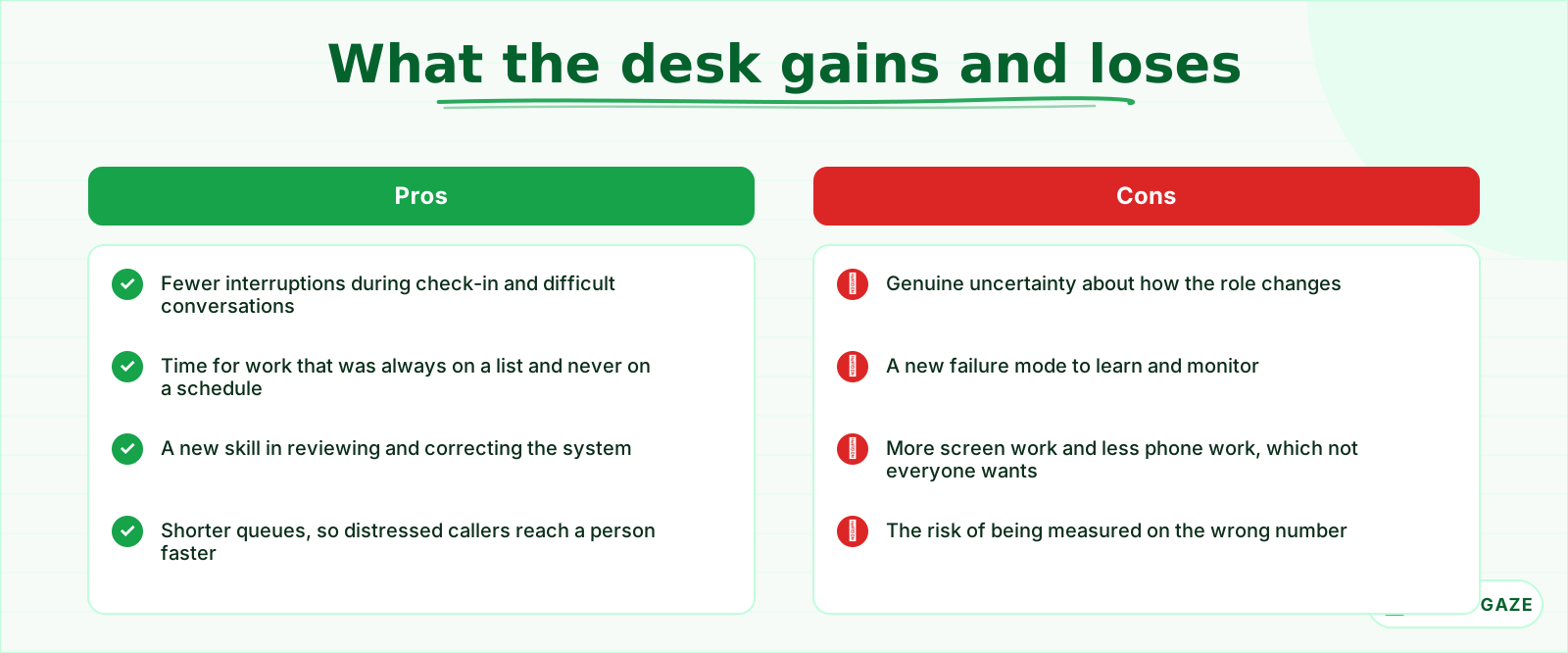 Both columns are real. Naming the right one is what buys trust.
At most small practices the honest answer is that the volume of work does not fall, it moves. Calls that used to interrupt are handled elsewhere, and the time that frees up goes into the work that only a person can do: the difficult conversation, the insurance problem, the patient standing at the desk who needs somebody to actually look at them.
There is a version of this conversation that goes badly in the opposite direction, where an owner promises that nothing will change. Nothing changing is not the plan, and staff know it, because a system that changes nothing would not have been worth buying. Say what will change and be specific about it.
What actually changes about the job
Sitting down and mapping the tasks makes the abstract concrete, and it usually reassures people more than any speech. Most of what a front desk does is invisible until it is written out, and most of it is not answering the phone.
| Task | Who does it today | Who does it after |
|---|---|---|
| Answering routine booking calls | The desk, when free | The system, always |
| Reading back insurance details | The desk | The system, then verified by the desk |
| Handling a distressed caller | The desk | The desk, faster, because the queue is shorter |
| Checking a patient in | The desk | The desk |
| Chasing a missing referral | Nobody, usually | The desk, with time it did not have |
| Reviewing what the system got wrong | Did not exist | The desk, and this is the new skill |
What the table also shows is where the work goes. Practices routinely find that tasks nobody had time for, chasing a referral, following up an unscheduled treatment plan, calling back a patient who left a message last week, suddenly have somebody available to do them. Those tasks were always on a list. They were never on a schedule.
The last row is the one worth dwelling on. Reviewing and correcting an automated system is a real job with real judgement in it, and it is the part of the new arrangement that is genuinely a promotion rather than a consolation.
Involve the desk before you pick a vendor
The people who answer your phone know things you do not. They know which questions callers ask in what words, which insurance plans generate confusion, which times of day collapse, and which patients need handling carefully. That knowledge is the raw material for the configuration, and there is no way to extract it from a call report.
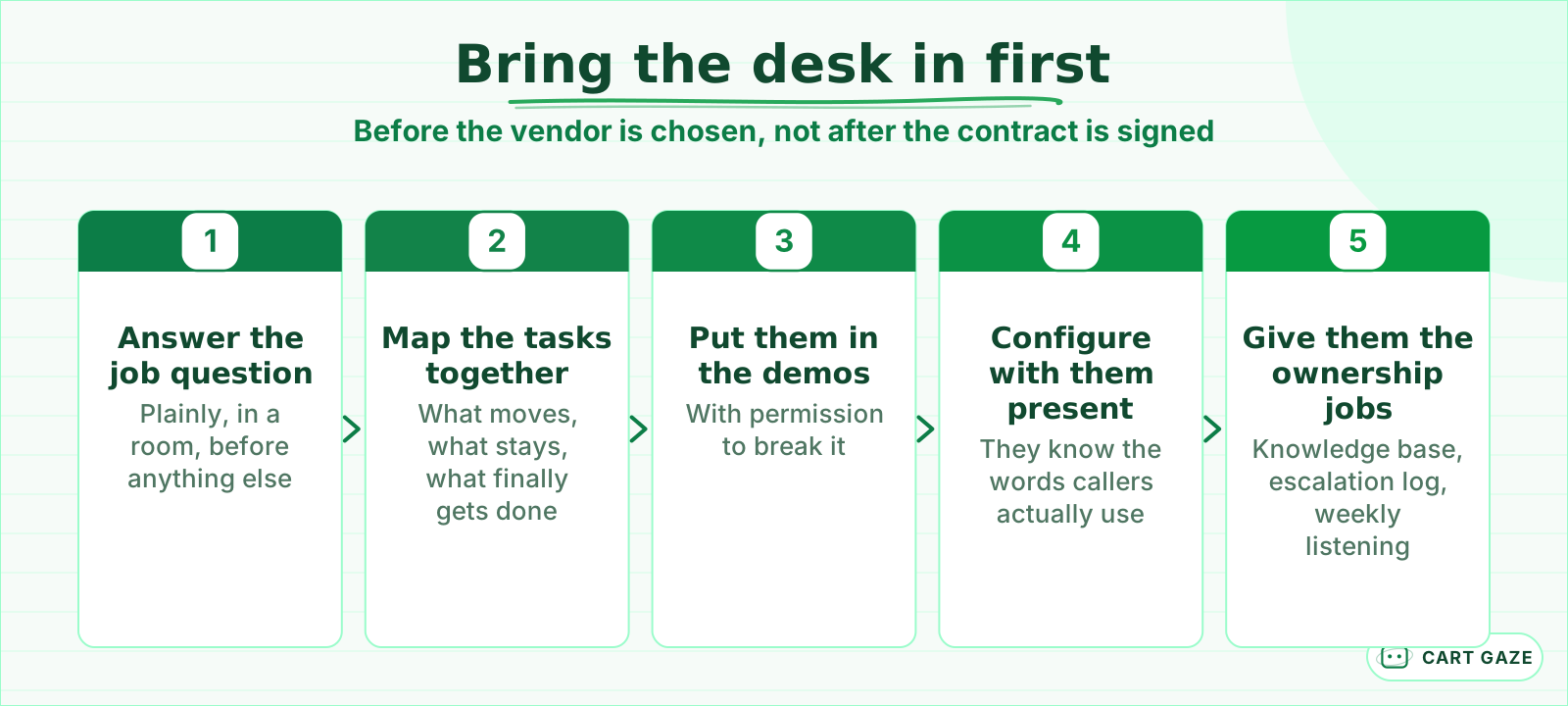 Somebody who helped choose it defends it in week two.
Practically, that means bringing one or two of them into vendor demos and giving them explicit permission to break the thing. A receptionist who has spent 6 years on your line will find the failure in a demo faster than you will, because they know what a real caller sounds like at 4:45 p.m. on a Friday.
This is also the cheapest quality-assurance you will ever get. Vendors test against a script they wrote. Your receptionist tests against six years of patients, and the questions they think to ask are the questions the configuration actually needs answers for.
It also changes the politics. Somebody who helped choose a system defends it when it stumbles in week two. Somebody who had it announced to them is waiting for it to fail, and will be able to produce three examples by Thursday.
Train on the failures, not the demo
Vendor training shows the system working, which is the wrong material entirely. Your staff will spend almost none of their time watching it work and all of it on the exceptions. What they need is the failure catalogue: what it mishears, where it gets confused, and how to take a call back cleanly.
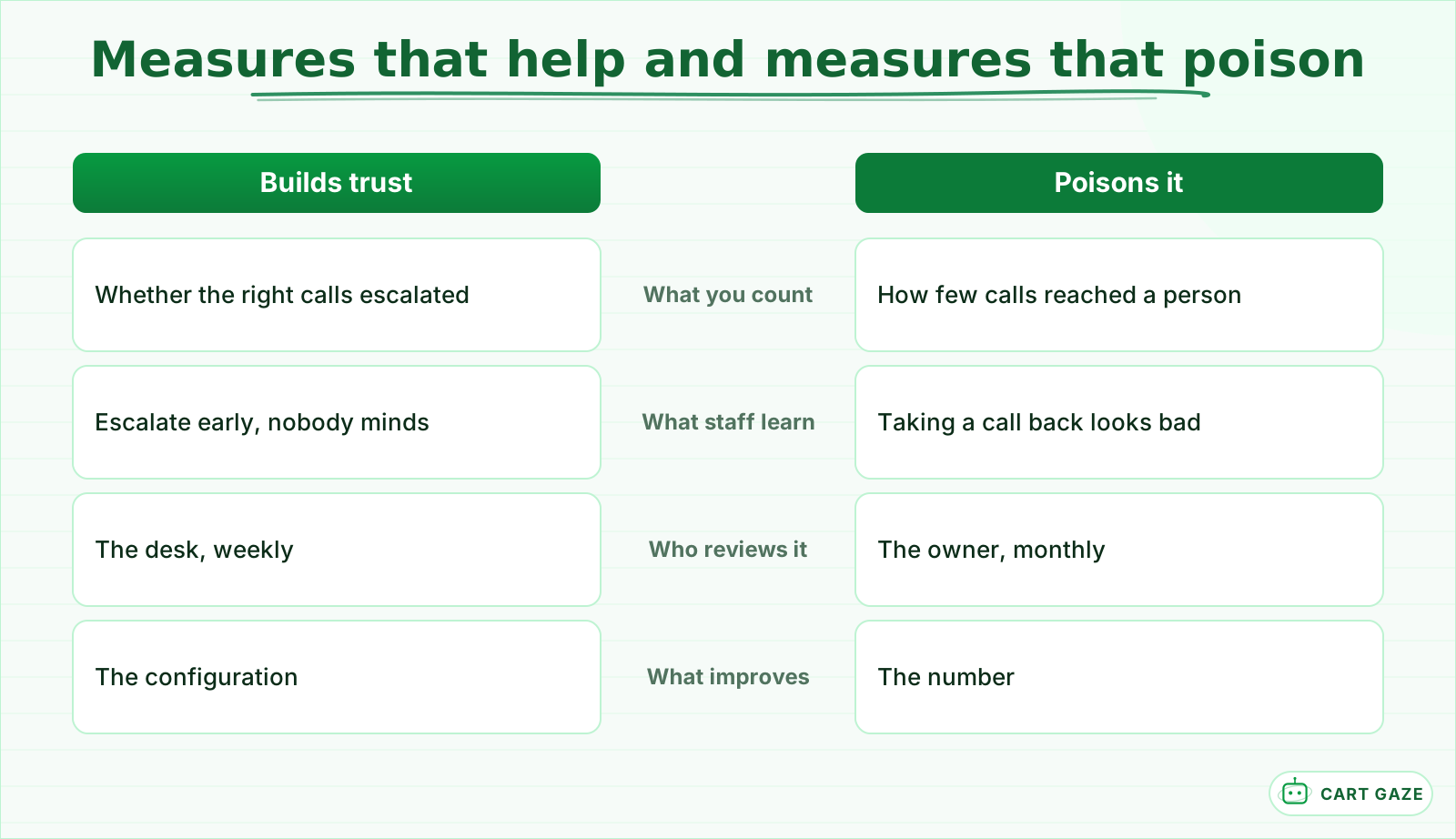 Same system, two dashboards, completely different behaviour at the desk.
Run the practice sessions in a controlled setting before any patient hears the system, which is standard guidance for training staff on AI tools in healthcare and is skipped constantly. Have people call in from their mobiles and deliberately do the awkward things: mumble a surname, ask for a person immediately, go silent for 20 seconds, describe a symptom.
Write the failure catalogue down as you find it, rather than relying on people to remember. A short shared document listing what the system struggles with, updated as new cases appear, is worth more after three months than any training session, and it doubles as the list you take to the vendor.
Then have them practise the recovery. Taking over a call that an automated system has been handling is a specific skill: you have to establish what the caller already said without making them repeat it, and apologise once without making it a thing. That is learnable in an afternoon and nobody teaches it.
Who owns what after go-live
Rollouts stall in the gap where everyone assumes somebody else is watching. Three jobs need names attached before you go live, and all three can belong to the same person at a small practice as long as the time is real rather than notional.
Somebody owns the knowledge base, meaning what the system knows and when it is updated. Somebody reads the escalation log weekly and asks whether the right calls escalated. And somebody listens to a small sample of calls each week for the first month, ideally with the person who handles them most.
The weekly listening session is the one that gets dropped first and matters most. Half an hour, a handful of calls, and two people in a room is enough to catch the drift that no report surfaces, and it stops being necessary after about 8 weeks once the obvious problems are gone.
Giving those jobs to the front desk rather than to the practice owner is the single strongest signal you can send about who this system belongs to. The knowledge-base side of that work is covered in what to load and who keeps it true.
The metric that will turn your team against it
Every vendor reports containment, meaning the share of calls handled without a person. It is the number on the dashboard and it is a trap. The moment containment becomes a target, every transfer looks like a failure, and the people transferring calls are your staff.
Within a month of making containment a goal, you get a desk that hesitates before taking a call back, because taking it back makes the number look worse. That is precisely the reflex you least want on a healthcare phone line, where the whole safety argument rests on people escalating early and often.
There is a fair counter-argument. Containment does measure something real, and a system that escalates everything is not doing its job. The distinction is between watching a number and rewarding it. Watch containment as a diagnostic, and if it is very low, go and find out why rather than telling anyone to lower it.
Measure the things that make the system better instead: how many calls escalated and whether they should have, how often a caller repeated themselves, and how many bookings were made outside office hours. The reasoning behind that choice sits alongside how the escalation path should be designed.
A four-week rollout that works
Four weeks is enough for a small practice and rushing it saves nothing. Each week carries one job, and the order matters more than the duration, because every stage depends on trust built in the one before it. Skip the first week and the fourth one will not hold.
Week 1 is the honest conversation and the task mapping. Week 2 is configuration with the desk in the room. Week 3 is failure drills on a line no patient reaches. Week 4 is a narrow live slice, usually after-hours only, with a transcript review at the end of it.
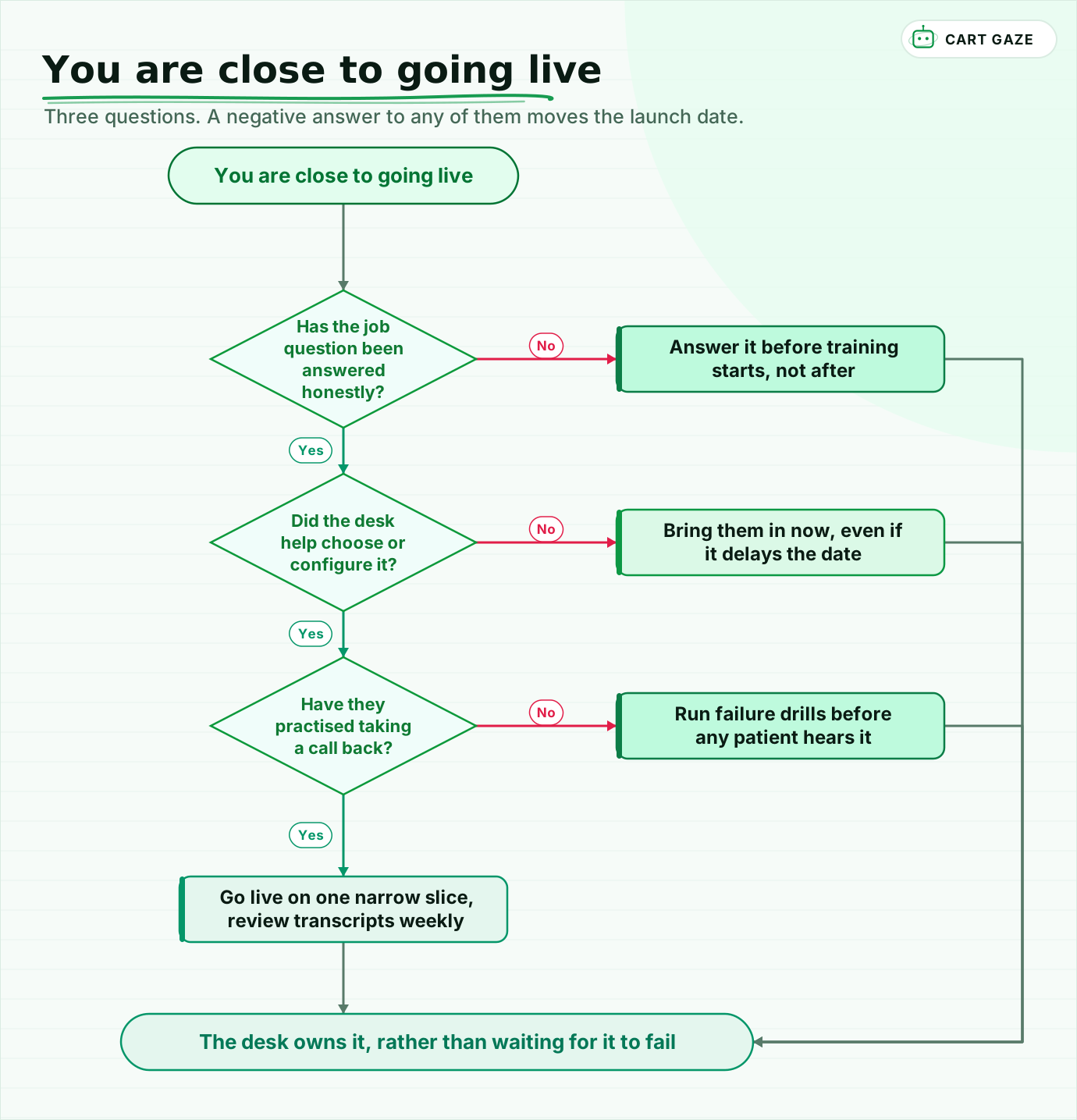 Three questions. A negative answer to any of them moves the launch date.
Walk the readiness check once. If nobody has answered the job question honestly, do that before training starts. If the desk had no hand in choosing or configuring it, bring them in even at the cost of the launch date. If they have not practised taking a call back, run the drills first. And when all three are true, go live on one narrow slice rather than the whole line.
The practices that do well with this are not the ones with the best software. They are the ones where the person who answers the phone helped decide what it says, and who spent the first month correcting it rather than competing with it. If you are still deciding what the system should do at all, what an AI receptionist actually does is the place to start, and the free Growth Leak Audit will size the problem before you ask anyone to change how they work.
Fair questions.
How do I tell my front desk staff we are getting an AI receptionist?
Directly, and answer the job question first. Whether roles are changing, whether hours are affected, and whether anyone is being replaced. Staff have already read trade press predicting the end of the front desk, so opening with reassurance they do not believe spends your credibility before training begins.
Why do AI rollouts at medical practices stall?
Published reviews point to insufficient training, staff resistance, and workload that rose rather than fell, and specifically identify top-down implementation with minimal frontline consultation as a driver of resistance. Most organisations also lack the workflow-redesign capacity to move a tool past its pilot.
What should front desk staff actually be trained on?
The failures, not the demo. What the system mishears, where it gets confused, how to tell a caller has been stuck in a loop, and how to take a call back cleanly. Recovery is a specific skill: establish what the caller already said without making them repeat it, and apologise once.
Should we measure how many calls the AI handles without a person?
Watch it as a diagnostic, never set it as a target. Once fewer transfers becomes the goal, staff hesitate before taking a call back because it makes the number look worse, and early escalation is exactly the reflex a healthcare phone line depends on.
How long should an AI receptionist rollout take at a small practice?
About 4 weeks, with one job per week: the honest conversation and task mapping, then configuration with the desk in the room, then failure drills on a line no patient reaches, then a narrow live slice such as after-hours only with a transcript review at the end.
Sources.
- [1]AI adoption challenges from healthcare providers perspectives
- [2]AI adoption outpaces workforce readiness
- [3]How healthcare organizations should train staff on AI use
- [4]Leading organizational change for AI adoption in healthcare
- [5]How AI-powered tools are transforming specialty practices
- [6]The rise of artificial intelligence and the front desk
- [7]Medical software report: costs and AI adoption
Written by

Muhammad Qasim Hammad
Founder, Cart Gaze
Qasim builds AI receptionists and front-office automation for medical and dental practices at Cart Gaze. Posts here start from published sources and real call data, not vendor claims, and every number links back to where it came from.
Keep reading.
 Practice Automation PlaybooksAI Receptionist Implementation: A Realistic Week-by-Week Guide10 min read
 Practice Automation PlaybooksThe Practice Daily Digest That Owners Actually Read10 min read
 Practice Automation PlaybooksWhat to Automate First: A 90-Day Practice Sequencing Plan10 min read
 Practice Automation PlaybooksThe Front Office Automation Stack for Medical Practices10 min read
 Practice Automation PlaybooksPractice Phone System Migration: Move Lines Without Losing Calls10 min read
 Practice Automation PlaybooksPractice Merger Call Continuity: Keep the Phones Answered12 min read