
AI Receptionist for a Cardiology Practice: Safe Call Routing
Cardiology calls carry chest pain, syncope, and device alerts, so escalation design is the whole buying decision. Here is the split between what an AI receptionist can safely handle and what it must route to a person.
Table of Contents8 sections
- What a cardiology front desk answers all day
- The cardiology calls an AI receptionist must never touch
- Where an AI receptionist genuinely earns its place in cardiology
- Device clinic and remote monitoring calls need their own lane
- What it costs against the alternatives
- What to verify before it answers a cardiology line
- Where to start this week
- Fair questions
A patient calls your cardiology office at 4:50 p.m. and uses the word chest. What happens in the next 20 seconds is a clinical event, not a customer service moment. Every other call that afternoon, the refill question, the echo reschedule, the insurance card that never got scanned, is ordinary front desk work stacking up behind it.
That is what makes automating a cardiology phone line different. The published miss rates disagree with each other, from 23% of calls in Talkdesk's 2025 report to 42% in a study of 7,000 calls, so neither is your number. What is consistent is how fast healthcare callers quit: more than 60% hang up after one minute on hold, against an average hold time of 4.4 minutes. Speed alone will not save you, because a slice of those calls has to reach a licensed human right away.
This post splits a cardiology line into the calls software can take and the calls it must never take, covers the device clinic traffic that vendor pages leave out, prices the realistic options, and gives you a way to audit a vendor's escalation path before you sign anything.
What a cardiology front desk answers all day
A cardiology front desk works four recurring queues: scheduling and rescheduling procedures, medication and result questions, referrals arriving from primary care, and device or monitoring traffic. Volume is steady, individual calls run long, and the mix carries more clinical content than most outpatient specialties handle.
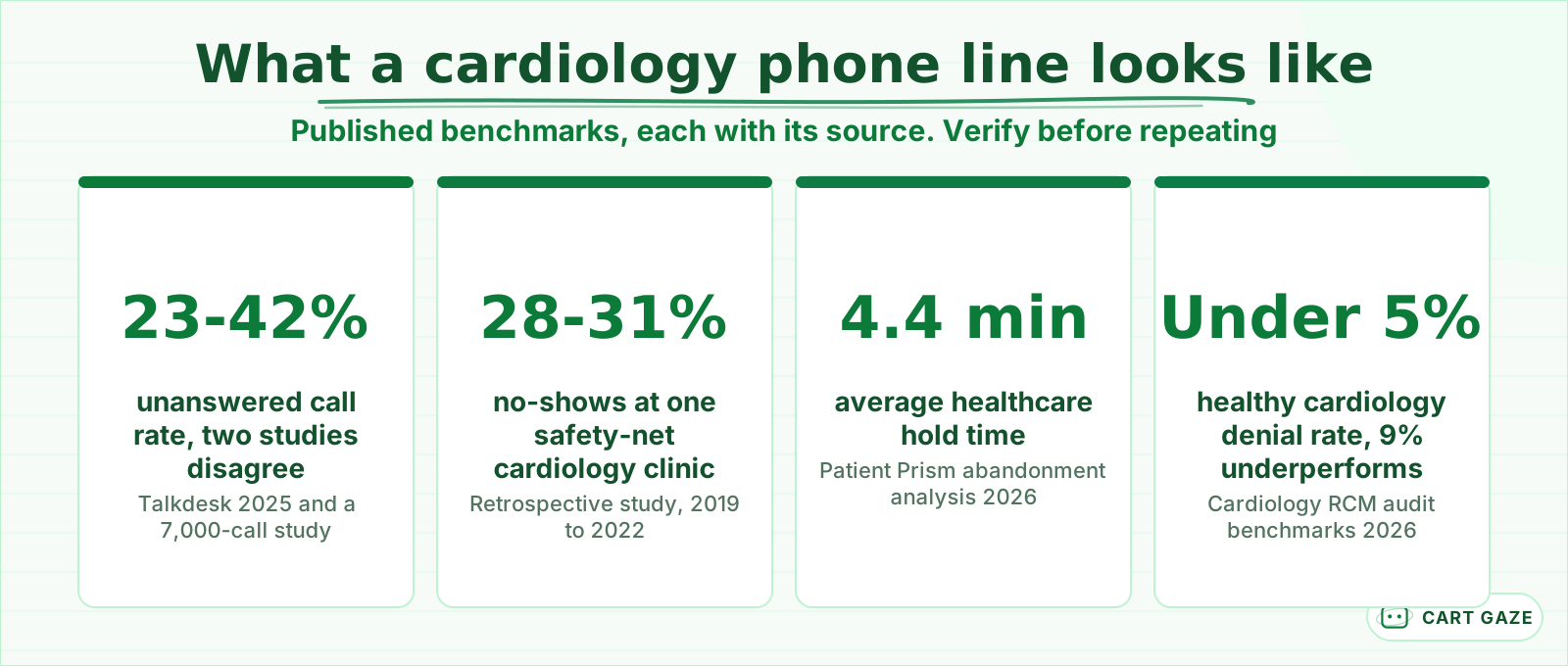 Published ranges with sources. Benchmarks to measure against, not results to expect.
The scheduling queue is heavier than a general practice because so much of cardiology is multi-step. A new patient becomes an echo, then a stress test, then a follow-up to review results, and each of those is a separate appointment with its own prep instructions and its own chance to be moved. Published no-show rates vary enormously by setting: a retrospective study of a safety-net cardiology clinic recorded 28.1% in 2019 rising to 30.6% by 2022, well above the 5% to 8% usually quoted as a cross-specialty average. Only your own number matters, and in cardiology a missed slot is often an hour of idle imaging capacity.
The referral queue is its own bottleneck. Primary care sends a patient over, the referral sits in a fax queue or a portal, and nobody calls the patient for four days. By then the patient has either been booked by a competing group or has stopped worrying about it.
Then there is the money. Cardiology billing analysts put a healthy denial rate under 5%, with the strongest operations near 3%, and treat a practice sitting at 9% as underperforming. A large share of that gap is front desk work: eligibility nobody verified, a prior authorization nobody obtained, a referral that never made it onto the file. The highest-reimbursing studies are exactly the ones payers gate behind prior authorization.
The cardiology calls an AI receptionist must never touch
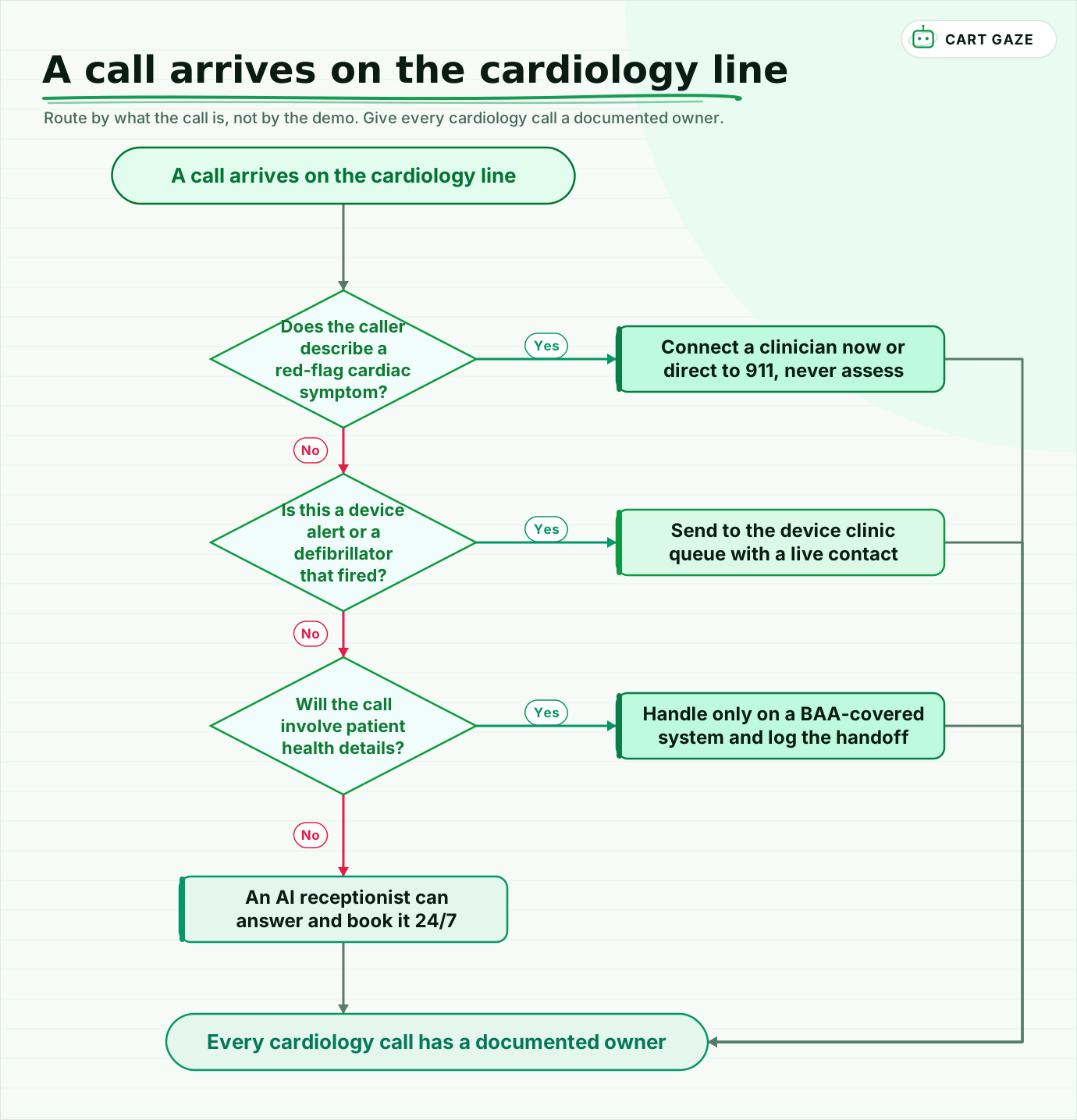
Cardiology carries the longest red-flag symptom list in outpatient medicine. Chest pain or pressure, new shortness of breath, fainting, a defibrillator that fired, bleeding at a catheter site, and a racing or irregular heartbeat all need a human immediately. An AI receptionist must recognize this language and route it, and it must never assess, reassure, or advise.
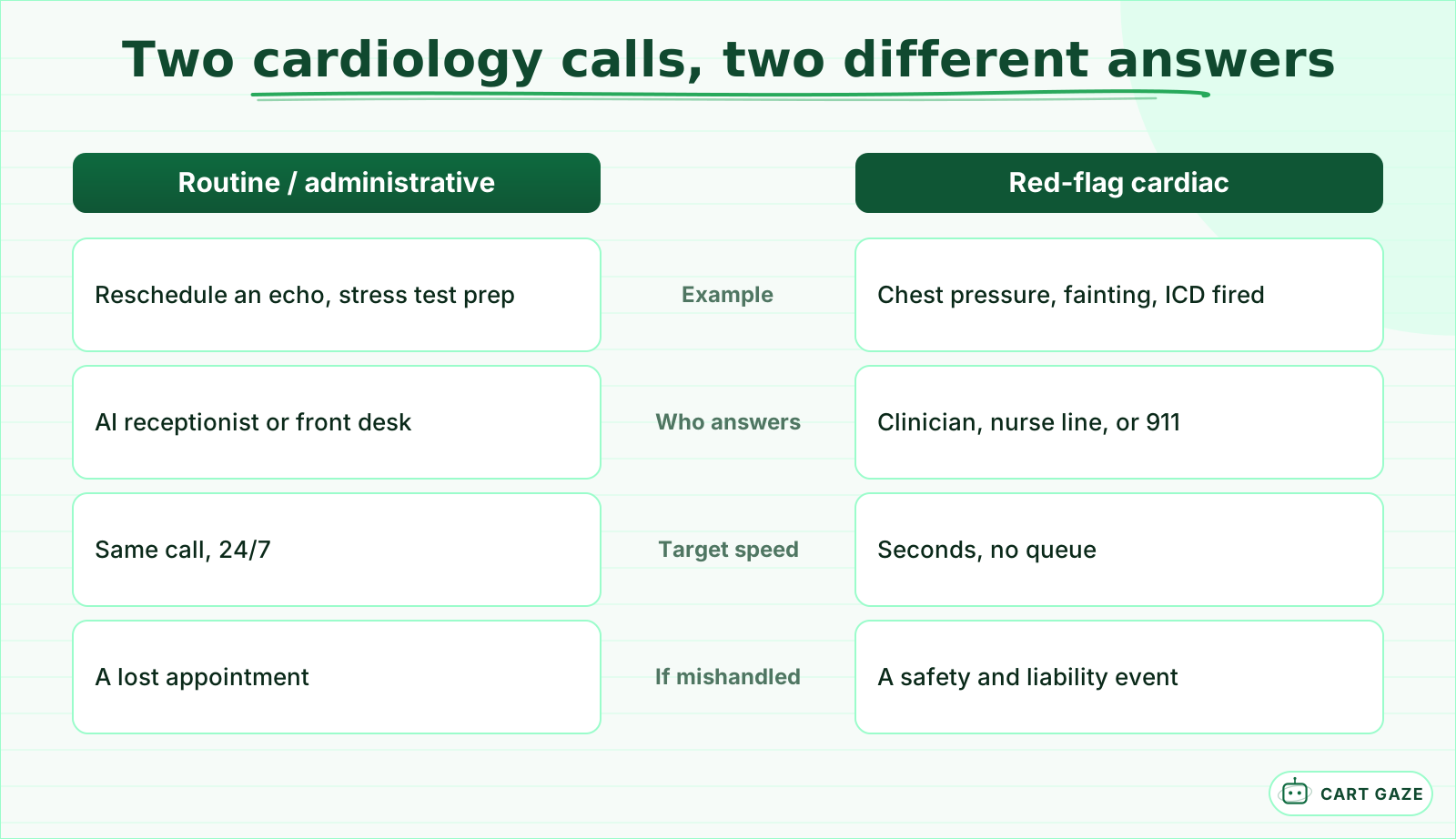 One of these can be automated. The other is a clinical event with a stopwatch running.
The distinction worth holding onto is recognition versus judgment. Recognizing that a caller said "my chest feels tight" and instantly connecting them to a nurse or telling them to call 911 is a routing decision, and software can be configured to do it reliably. Deciding whether that tightness is reflux or an infarction is clinical judgment, and no voice agent should be anywhere near it.
There is a second, quieter failure mode: the caller who never uses an obvious word. Patients describe cardiac symptoms as indigestion, jaw ache, a heavy arm, or being "just very tired lately." A safe configuration escalates on ambiguity rather than guessing, which means the system should hand off whenever it is not confident, and your escalation path has to be staffed for that. We cover the general version of this boundary in what an AI receptionist does and where it stops, and the triage-specific version in routing emergency calls against routine ones.
Where an AI receptionist genuinely earns its place in cardiology
The safe, valuable work is administrative and it is most of the volume. Booking and rescheduling, prep instructions for a stress test, directions and parking, insurance and referral status, and taking a structured message for the clinical team are all repeatable tasks with no diagnosis in them. Handled well, they clear the queue that hides the urgent call.
Prep instructions are a real win here. A nuclear stress test has caffeine restrictions, a fasting window, and medication holds, and the front desk repeats those same three answers dozens of times a week. A voice agent reading from an approved script gives the same answer at 7 a.m. as it does at 7 p.m. which is more consistent than a tired human at 4:45.
Referral intake is the second win. When a referral arrives, the system can call the patient the same day, confirm demographics and insurance, and book the first visit, instead of leaving them in a queue for four days. Speed matters more than polish in that window.
What it should not do is quote a price for a procedure, interpret a result, adjust a medication, or tell a patient whether a symptom can wait until Monday. Keep the scope written down. If you want the money version of this argument, the real cost of missed calls works through the arithmetic.
Device clinic and remote monitoring calls need their own lane
Cardiac device patients generate a separate stream of contact that has nothing to do with your appointment book. A real-world analysis of remote monitoring data found 70,453 remote transmissions reviewed against 6,600 in-office interrogations in a single year, split 52% scheduled, 28% patient-initiated, and 20% alert. Only the alert slice is time critical.
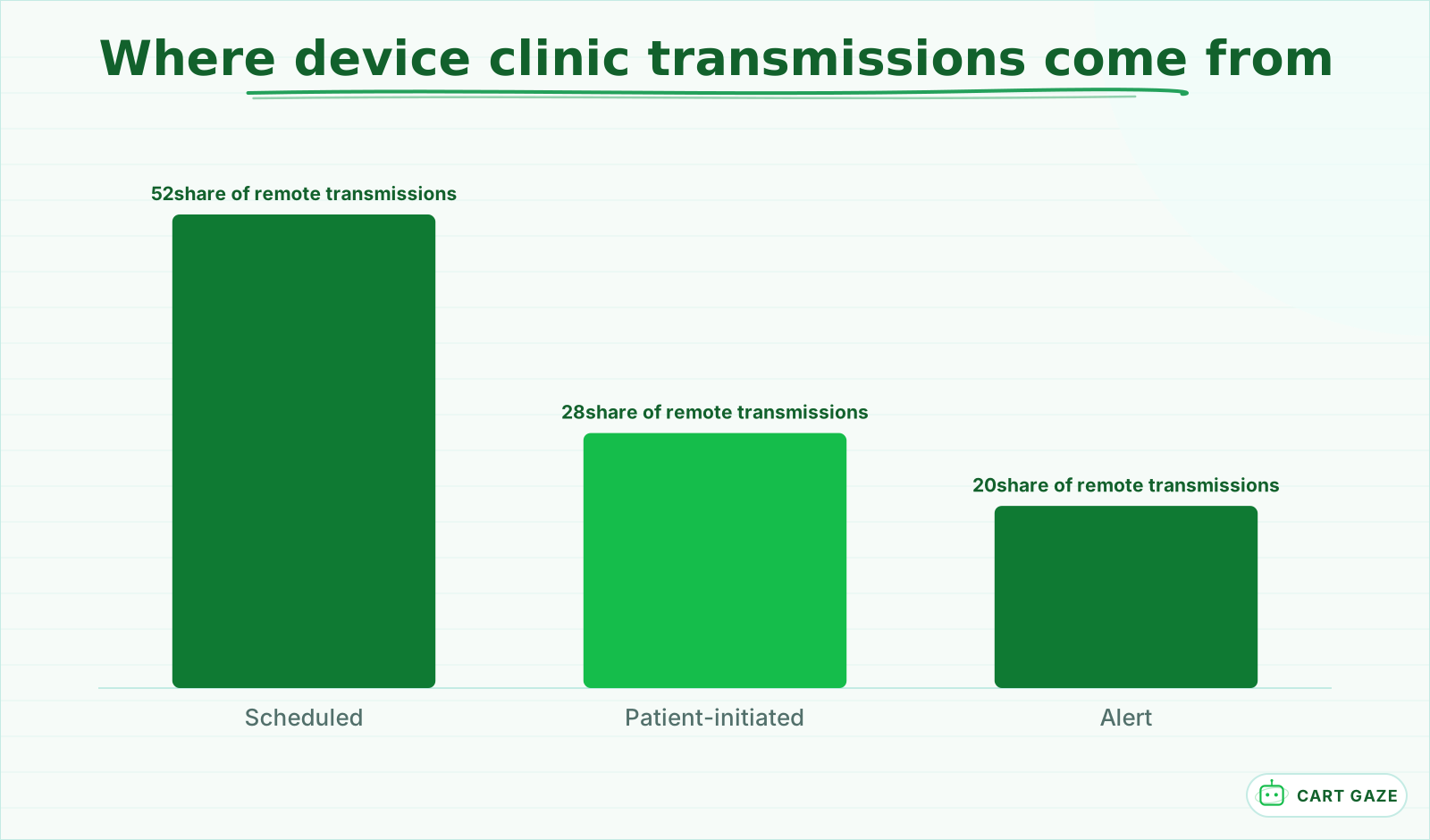 Only the alert slice is time critical. The other 80% is schedulable work.
That split is the design brief. Scheduled transmissions are calendar work and can be automated end to end: remind, confirm, reschedule. Patient-initiated transmissions usually come with a phone call attached, often an anxious one, and the caller needs a fast human answer about what their device recorded. Alert traffic must never sit in a general queue at all.
Staffing guidance from remote monitoring vendors runs around 3 full-time staff per 1,000 active remote monitoring patients, which is the number worth checking your own roster against. If you are under it, the gap usually shows up as delayed transmission review rather than as missed calls, so your phone metrics will look fine while the backlog grows out of sight.
The practical setup is to give the device line its own path: a distinct number or menu option, its own escalation contacts, and an explicit rule that any mention of a shock, a persistent alarm tone, or new symptoms goes straight to a person.
What it costs against the alternatives
Cardiology practices usually compare four things: leaving calls to voicemail, a per-minute medical answering service, hiring another front desk person, and a flat-rate AI receptionist. Pricing models differ more than the sticker prices do, and per-minute billing charges you most on exactly the days you are busiest.
| Option | Handles routine booking | Handles red-flag calls | Typical monthly cost |
|---|---|---|---|
| Voicemail | No | No | $0 |
| Per-minute answering service | Rarely, message only | Message and page only | $0.75 to $3.50 per minute |
| Additional front desk hire | Yes, during shift | Yes, if trained | About $4,100 loaded |
| AI receptionist | Yes, 24/7 | Route and escalate only | Flat, roughly $49 to $300 |
Run the per-minute math against your own log before you decide. A cardiology line taking 400 after-hours and overflow calls a month at 4 minutes each is 1,600 minutes, which models to about $2,400 at $1.50 a minute. The hire column uses the BLS median of $37,230 loaded at 1.3 times, which lands near $49,000 a year for 40 hours of weekly coverage. Both figures are modeled from published rates, not measured, so substitute your own.
A signed Business Associate Agreement is not optional if the system will hear patient details, and vendors often price it as an add-on of roughly 10% to 30% over the base plan. Treat a page that advertises itself as "HIPAA certified" as a warning sign, because that certification does not exist. The configuration and the contract are what make a setup compliant, which the HIPAA breakdown covers in detail.
What to verify before it answers a cardiology line
Before a voice agent takes a single live call, you want four things settled: the escalation trigger list, the human who receives escalations, the BAA, and a recorded test set drawn from your own calls. Skipping the test set is the common mistake, because a vendor demo never includes the ambiguous phrasing your patients actually use.
 Route by what the call is, not by the demo. Give every cardiology call a documented owner.
Build the test set from real calls rather than scripts. Pull 20 to 30 recordings across a normal week, keep the messy ones, and score the configuration on whether it escalated, not on whether it sounded natural. A system that escalates too often is an annoyance you can tune down. A system that misses one red-flag call is a different category of problem.
Where to start this week
Start by measuring rather than shopping. Pull one week of call logs, tag a sample of 30 calls as routine, clinical, or device related, and count how many were missed or abandoned. That single sheet tells you whether your problem is coverage, capacity, or routing, and it changes which vendor conversation is even worth having.
If the routine share is large and your abandonment sits above 10%, automation has real room to work, provided the escalation path is built first. If the clinical and device share dominates, your money is better spent on staffing that lane properly.
When you want a second read on where the leak is, the free Growth Leak Audit walks the same call math with you and points at the specific queue losing appointments.
Fair questions.
Is an AI receptionist safe for a cardiology practice?
It is safe only for administrative calls, and only when the escalation path is built first. Booking, prep instructions, and referral intake carry no clinical risk. Chest pain, fainting, bleeding, and device alerts must reach a licensed human immediately. Test the configuration against 20 of your own recorded calls before it answers a live line.
What cardiology calls should never be automated?
Any call describing chest pain or pressure, new shortness of breath, fainting, a defibrillator that fired, bleeding at a catheter site, or a racing heartbeat. Also route the vague ones. Patients describe cardiac symptoms as indigestion, jaw ache, or unusual tiredness, so a safe setup escalates on ambiguity instead of guessing what the caller meant.
How much does an AI receptionist cost for a cardiology practice?
Flat-rate AI receptionists usually run about $49 to $300 a month, with a Business Associate Agreement adding roughly 10% to 30%. A per-minute answering service runs $0.75 to $3.50 a minute, so 400 calls at 4 minutes each models to about $2,400. Price both against your own call log.
Can an AI receptionist handle cardiac device and remote monitoring calls?
It can handle the scheduled portion, which is the majority. Published remote monitoring data splits transmissions about 52% scheduled, 28% patient-initiated, and 20% alert. Reminders and reschedules for scheduled transmissions automate cleanly. Alert traffic and any mention of a shock or alarm tone belongs in a staffed device clinic queue, not a general phone menu.
Does a cardiology AI receptionist need a HIPAA business associate agreement?
Yes, if it will hear or store patient details. A vendor handling that information is a business associate and must sign a BAA before the first live call. Treat "HIPAA certified" claims as a warning sign, because no such certification exists. Compliance comes from the configuration, the contract, and your retention settings.
Sources.
- [1]Healthcare patient communication statistics 2026
- [2]Average call abandonment rate in healthcare: 2026 benchmarks
- [3]No-show rates in a cardiology clinic: a retrospective analysis from a safety-net hospital
- [4]Cardiology denial trends 2026: benchmark denial rates
- [5]Current clinical practice versus remote monitoring recommendations for cardiovascular implantable electronic devices
- [6]Reducing data burden in cardiology device clinics
Written by

Muhammad Qasim Hammad
Founder, Cart Gaze
Qasim builds AI receptionists and front-office automation for medical and dental practices at Cart Gaze. Posts here start from published sources and real call data, not vendor claims, and every number links back to where it came from.
Keep reading.
 By Practice TypeAI Receptionist for Medical Weight Loss Clinics: GLP-1 Call Surge10 min read
 By Practice TypeAI Receptionist for Physical Therapy: Protect the Plan of Care10 min read
 By Practice TypeAI Receptionist for Direct Primary Care: Protect the Promise10 min read
 By Practice TypeAI Receptionist for Fertility Clinics: What It Must Never Do10 min read
 By Practice TypeAI Receptionist for Oral Surgery: Referrals In, Post-Op Calls Out10 min read
 By Practice TypeAI Receptionist for Behavioral Health: Crisis and Part 210 min read