
AI Receptionist for Behavioral Health: Crisis and Part 2
Behavioral health has the highest no-show rate of any specialty and the least room for error on crisis calls. Here is what an AI receptionist should handle, and what it must never touch.
Table of Contents9 sections
- What behavioral health practices are actually losing
- The one call a therapy practice cannot afford to lose
- Recognize a crisis versus assess one: the line an AI receptionist must never cross
- Beyond HIPAA: what 42 CFR Part 2 adds for substance use treatment
- Where an AI receptionist fits a therapy practice, and where it must not
- Measure your own intake and no-show gap before you buy
- What it costs, and how to decide
- Match the fix to your own numbers
- Fair questions
Someone finally works up the nerve to call a therapist, and the office is closed, or the line is busy, or it rings through to voicemail. Most of those callers do not try again. That single missed call is not a scheduling inconvenience the way a rescheduled cleaning is. It is very often the whole opportunity to help that person, gone in one ring.
Search "AI answering service for mental health practices" and the page-one vendors all promise the same thing: 24/7 answering, HIPAA-aware intake, and several market "screening for crisis or self-harm risk" as a selling point. That phrase should worry a compliance-cautious practice owner. Recognizing crisis language and routing it to a human is safe. Assessing how at-risk someone is belongs to a licensed clinician, full stop, and no vendor page should blur that line to make a sale.
This post separates recognition from assessment honestly, prices the real cost of a lost first-time call against sourced benchmarks, and covers the one compliance layer, 42 CFR Part 2, that most competitor content skips entirely for practices treating substance use disorder.
What behavioral health practices are actually losing
Behavioral health carries the highest no-show rate of any medical specialty: 18% to 22% typically, and 30% to 50% for substance use disorder programs, versus 8% to 15% in a specialty like cardiology. About 38% of inbound healthcare calls go unanswered during business hours, and first-time callers rarely try twice.
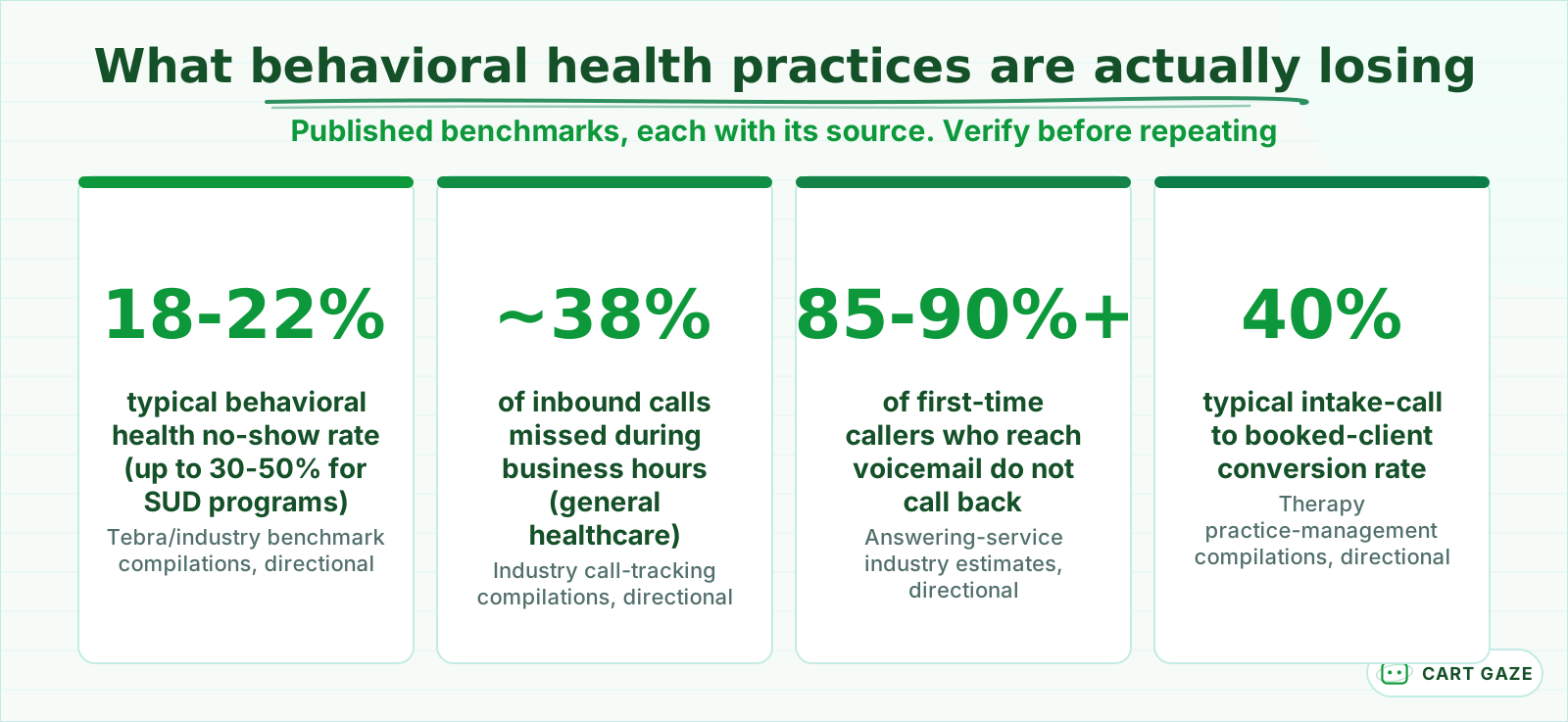 Published ranges, each sourced. Reasons to measure your own practice, not to repeat as fact.
Forgetting is the most cited reason for a no-show, named by 81% of providers in one 2026 survey, which is why reminder timing matters as much as reminder existence. Telehealth appointments show an even bigger drop in no-shows in behavioral health than in most other specialties, likely because the barrier to showing up is lower.
This is not just about forgetting appointments. Behavioral health carries stigma that primary care rarely does, sessions can be emotionally taxing in a way a routine checkup is not, and many patients are managing symptoms, like depression or anxiety, that directly reduce the energy needed to show up. None of that makes a no-show less costly to the practice, but it does mean generic no-show tactics borrowed from a dental office often underperform here.
The one call a therapy practice cannot afford to lose
A first-time caller who found the courage to dial once behaves differently than a returning patient rescheduling. About 40% of intake calls convert to a booked client, and roughly 80% of prospective clients book with whichever therapist responds first, so response speed decides more than persuasion ever does.
| Coverage option | Handles crisis language | First-call answer rate | Rough monthly cost |
|---|---|---|---|
| Voicemail only | No, caller must wait for a callback | Lowest | $0 |
| Generalist human answering service | Inconsistently, not clinically trained | Higher, but message-only | Per-minute, variable |
| Behavioral-health-configured AI receptionist | Recognizes and routes, never assesses | 24/7, answers every call | Flat, roughly similar to other verticals |
Standardized intake paired with automated booking has been linked to a 28% booking lift in practice-management case studies. None of that lift matters if the first call never gets answered in the first place, which is the actual gap most practices are solving for.
The math is straightforward once you have your own numbers. If a practice fields even 20 first-time inquiry calls a month and roughly 33% go to voicemail during business hours, that is about 7 potential clients a month who may never call back, an outcome felt in booked sessions, not just in a phone log. This is also where a slow internal process costs more than a slow vendor evaluation. A practice that spends 3 weeks comparing AI receptionist vendors while its own callback time stays at 2 days is optimizing the wrong variable. Fix callback speed first, even manually, then decide whether automation is worth the spend.
Recognize a crisis versus assess one: the line an AI receptionist must never cross
Recognizing crisis language and routing it immediately to a human or the 988 Suicide and Crisis Lifeline is safe. Judging how serious someone's risk is, or deciding what they should do next, is a clinical judgment. An AI receptionist may notice the words. It must never make that call.
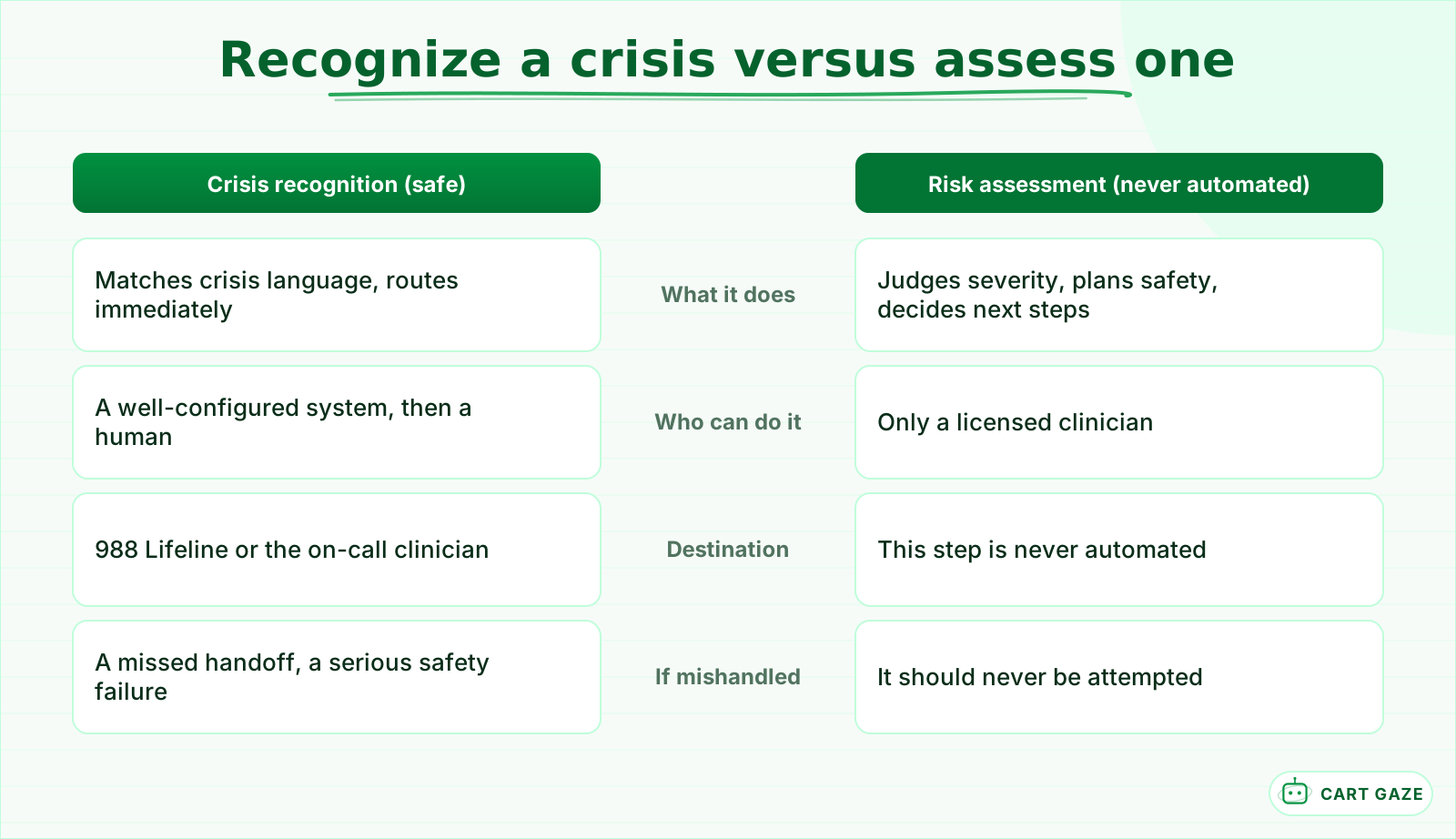 Recognizing a keyword and routing it is safe. Judging how at-risk someone is never belongs to software.
The 988 Suicide and Crisis Lifeline is a real, government-run, 24/7 service that connects a caller to a trained person at one of over 180 local crisis centers. It is a destination to route to, not a feature an AI receptionist replicates. If you are evaluating a vendor and its pitch sounds like the AI itself is the safety net, that is the wrong pitch.
This distinction should shape how you evaluate any vendor demo. Ask exactly what happens when a test call mentions self-harm: does the system stop and hand off within seconds, or does it ask a follow-up question first? A single extra question at that moment is not a minor interface detail, it is the difference between a safe design and an unsafe one.
Beyond HIPAA: what 42 CFR Part 2 adds for substance use treatment
Substance use disorder treatment records carry a stricter federal layer on top of HIPAA, called 42 CFR Part 2, and the stricter rule applies whenever they disagree. A 2024 update aligned Part 2 closer to HIPAA's consent model, with enforcement of that update starting in February 2026.
If your practice's intake line ever discusses substance use treatment, even briefly, that call needs its own consent handling, not a generic "HIPAA-aware" assurance borrowed from a dental-office answering script. The updated rule also created a specific protected category for a clinician's own separately kept counseling notes, similar to how HIPAA already protects psychotherapy notes. A vendor that has never heard of 42 CFR Part 2 has not built for this vertical, whatever its homepage claims.
This matters even for practices that see themselves primarily as a therapy or psychiatry office rather than an addiction treatment program. Co-occurring substance use comes up in general behavioral health intake more often than practices expect, and a single intake call that touches it can trigger Part 2 obligations the front desk, human or automated, was never trained to recognize.
For the HIPAA and BAA baseline every practice needs regardless of specialty, see what a HIPAA-aware setup requires; Part 2 sits on top of that, not instead of it.
Where an AI receptionist fits a therapy practice, and where it must not
An AI receptionist fits the routine side of a therapy practice: answering first-time inquiries fast, structured intake, insurance questions, scheduling across providers, and no-show reminders. It must never assess crisis severity, offer therapeutic advice, or make a clinical judgment. Recognition and redirection, never diagnosis or counseling.
Insurance and demographic intake sit safely in the routine category too, as long as the system is capturing information rather than making any judgment about coverage, diagnosis, or appropriate level of care. A structured summary handed to staff, not a determination made on the call, is the right shape for all of it.
If you have never evaluated one of these systems before, start with what an AI receptionist does and where it stops, since the boundary described there is the same boundary that matters here, just with higher stakes.
Measure your own intake and no-show gap before you buy
Before evaluating any vendor, spend 30 minutes on your own numbers. Pull last month's inquiry calls and count how many reached voicemail, check your intake-to-booked rate against the 40% benchmark, and tag your no-show rate by service line, since therapy, psychiatry, and substance use programs often differ sharply.
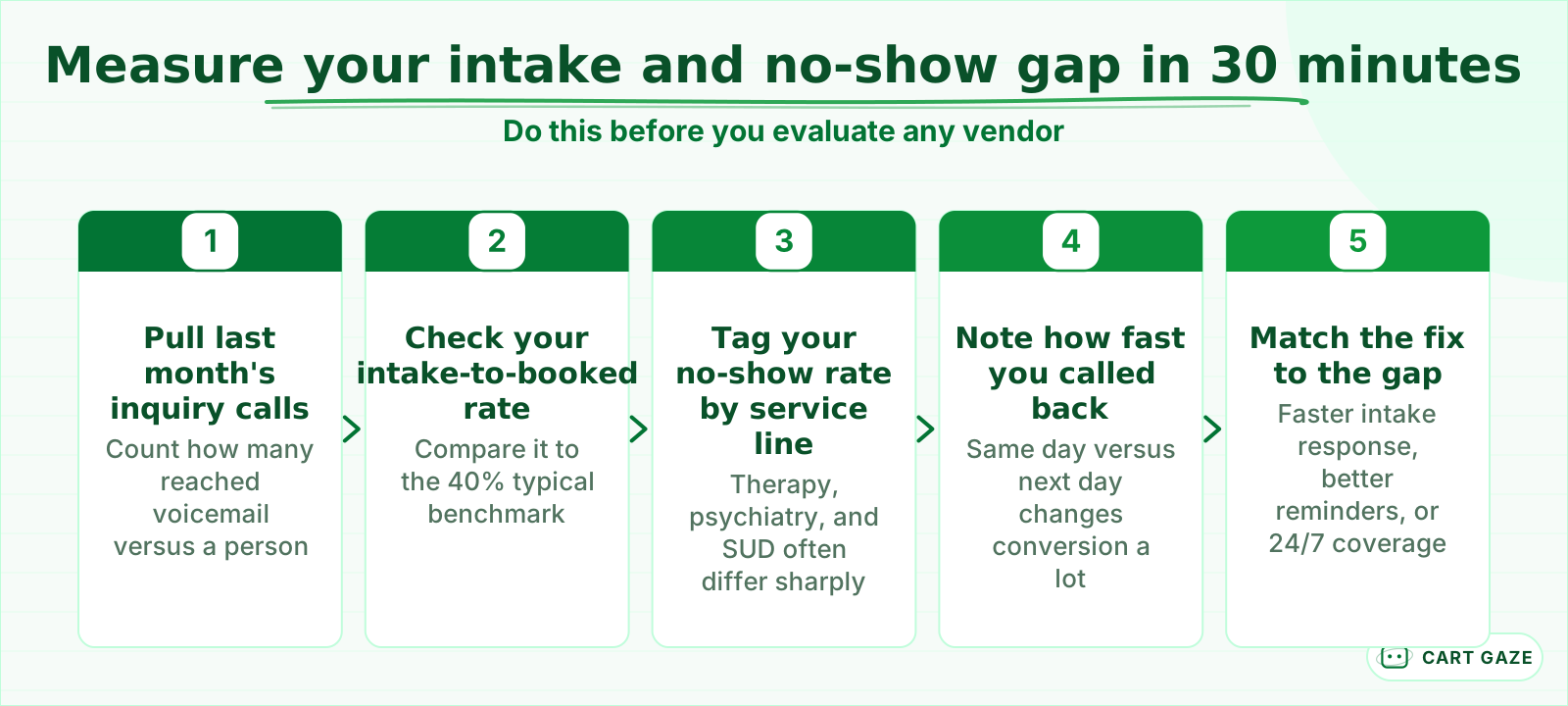 Thirty minutes in your own intake log tells you what a missed first call is actually costing you.
Do not skip this step because you already run a reminder system. A cadence built for a general medical practice rarely fits behavioral health's higher no-show baseline, and what looks like an intake problem is sometimes actually a callback-speed problem wearing an intake problem's disguise.
What it costs, and how to decide
Behavioral-health-configured AI receptionists start in roughly the same price band as other medical verticals, not a premium tier. The return here comes disproportionately from not losing first-time callers, a harder number to track than a no-show but larger in dollar terms per event, since a lost inquiry is a lost client.
For the full pricing breakdown across verticals, see what an AI receptionist costs. Ask any vendor directly whether their system has been configured for behavioral health specifically, including crisis-language routing and Part 2 awareness, or whether "mental health" is simply a label on a generic medical answering product. The difference shows up the first time a real call tests it, which is exactly the wrong moment to find out.
Match the fix to your own numbers
The right fix depends on your own intake-conversion rate and no-show percentage, not a vendor's marketing page. A practice losing first-time callers to voicemail needs 24/7 intake coverage first. A practice with steady intake but high no-shows needs a better reminder cadence, not a new phone system.
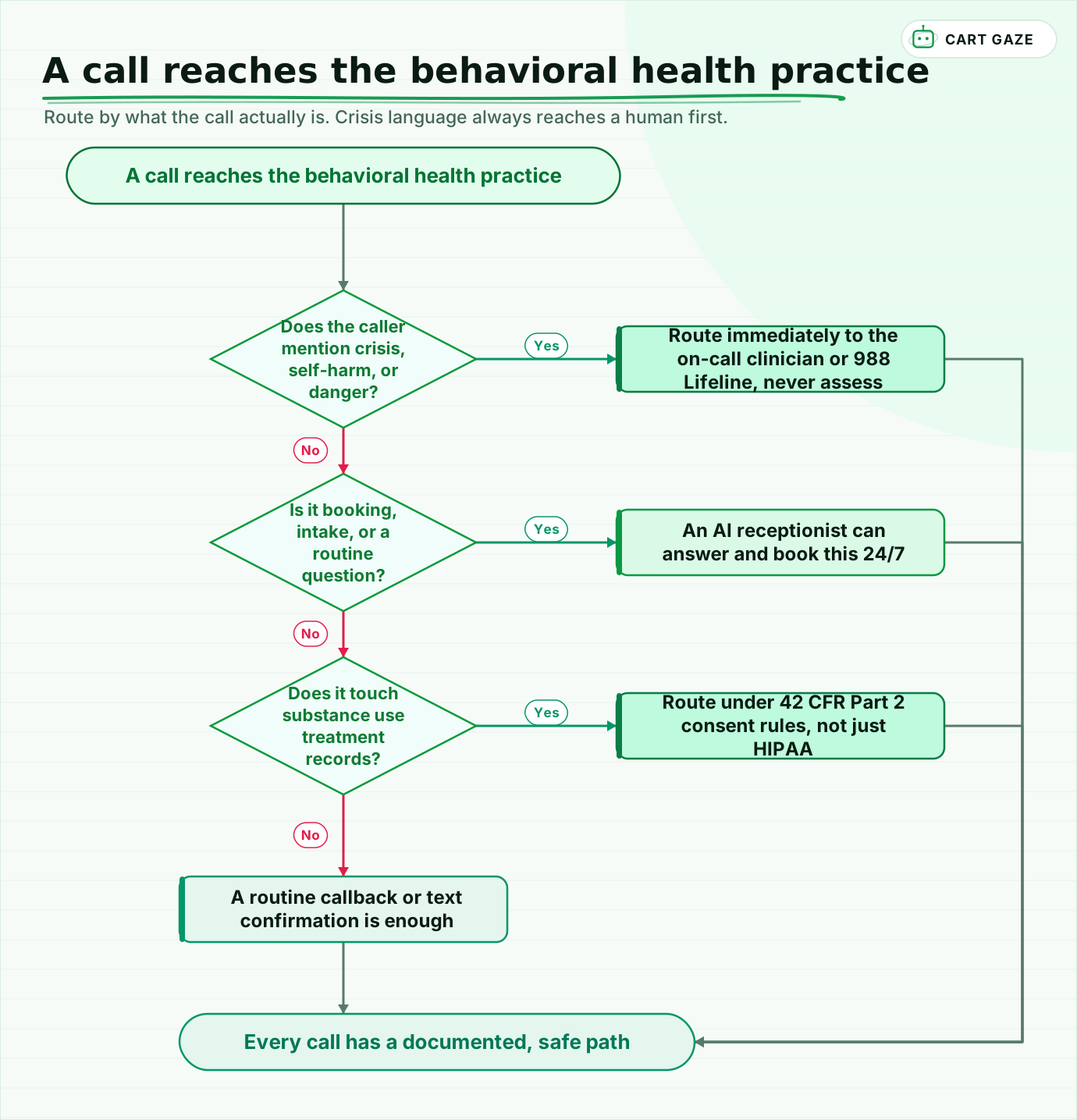 Route by what the call actually is. Crisis language always reaches a human first.
Walk the flow once: any hint of crisis or danger routes to a human or the 988 Lifeline immediately, every time, no exceptions. Booking, intake, and routine questions can go to an AI receptionist configured for this vertical. Anything touching substance use treatment gets the 42 CFR Part 2 consent path, not a shortcut.
Pilot on new-inquiry calls first, read the first month of transcripts end to end, and confirm the crisis-routing path against your own hardest real scenarios before it ever takes a live call. None of this requires a complicated rollout. Most practices start with new-inquiry calls alone, prove the crisis-routing path holds, and expand from there once a full month of transcripts backs it up.
If you would rather have the intake and no-show gap sized for you first, the free Growth Leak Audit works from your own numbers before anyone talks tools.
Fair questions.
Can an AI receptionist safely handle a mental health crisis call?
It can recognize crisis language and route the call immediately to a human or the 988 Suicide and Crisis Lifeline. It should never try to assess how serious the risk is or decide what happens next, since that is a clinical judgment reserved for a licensed person. Any vendor marketing "risk screening" as an automated feature deserves close questioning before you trust it with a real call.
What is 42 CFR Part 2 and does it apply to my therapy practice?
It is a federal rule that adds stricter confidentiality than HIPAA specifically for substance use disorder treatment records, and the stricter rule applies whenever the two disagree. A 2024 update aligned it closer to HIPAA's consent model, with enforcement starting February 2026. It applies any time your practice's intake touches substance use treatment, even in a general therapy or psychiatry setting.
What is a typical no-show rate for a behavioral health practice?
Behavioral health typically runs an 18% to 22% no-show rate, higher than most medical specialties, and substance use disorder programs can see 30% to 50%. Forgetting is the most cited cause, named by 81% of providers in one 2026 survey, and telehealth appointments show an even bigger drop in no-shows here than in most other specialties.
How much does a lost first-time inquiry call actually cost a therapy practice?
It is hard to price directly, but about 40% of intake calls convert to a booked client and roughly 80% of prospective clients book with whichever therapist responds first. A caller who reaches voicemail rarely tries again, so a slow or missed first call does not just delay a booking, it usually loses the client entirely.
What should an AI receptionist never do in a behavioral health practice?
It should never assess crisis severity, offer therapeutic advice, or make any clinical judgment about a caller's condition. Recognition and redirection are safe; diagnosis and counseling are not. If a vendor cannot clearly explain how its system routes a self-harm mention within seconds, that is a reason to keep looking, not a detail to overlook.
Sources.
- [1]Behavioral health no-show rates: benchmarks, causes, and how to reduce them
- [2]No-show rate benchmarks by specialty
- [3]How many phone calls are you missing? Industry comparison
- [4]Convert therapy inquiries into clients
- [5]Therapist answering service, confidential intake
- [6]AI answering service for mental health practices
- [7]AI answering service for mental health (Dialzara)
- [8]42 CFR Part 2 and HIPAA for substance use disorder treatment
- [9]42 CFR Part 2 final rule overview (Psychiatry.org)
- [10]Understanding confidentiality of SUD patient records (HHS)
- [11]988 Suicide and Crisis Lifeline FAQs (SAMHSA)
- [12]988 Suicide and Crisis Lifeline overview (FCC)
Written by

Muhammad Qasim Hammad
Founder, Cart Gaze
Qasim builds AI receptionists and front-office automation for medical and dental practices at Cart Gaze. Posts here start from published sources and real call data, not vendor claims, and every number links back to where it came from.
Keep reading.
 By Practice TypeAI Receptionist for Home Health: The 48-Hour Referral Clock10 min read
 By Practice TypeAI Receptionist for Fertility Clinics: What It Must Never Do10 min read
 By Practice TypeAI Receptionist for Oral Surgery: Referrals In, Post-Op Calls Out10 min read
 By Practice TypeAI Receptionist for Audiology Practices: Why Text Comes First11 min read
 By Practice TypeAI Receptionist for Podiatry: What to Automate, What to Escalate11 min read
 By Practice TypeAI Receptionist for Veterinary Clinics: An Honest 2026 Guide10 min read