
AI Receptionist for Fertility Clinics: What It Must Never Do
A patient asking at 9 p.m. whether to trigger at 10 or 10:30 is not asking a scheduling question. The answer decides whether a retrieval costing more than $20,000 happens on the right day.
Table of Contents8 sections
Most phone lines at a medical practice carry logistics. A fertility clinic's phone line carries protocol. A patient calling at 9 p.m. to ask whether she should take her trigger shot at 10 or at 10:30 is not asking a scheduling question, and the answer she gets determines whether a retrieval that cost more than $20,000 happens on the right day.
That single fact should govern every decision about automating a fertility line, and almost none of the vendor material acknowledges it. Industry benchmarks put a typical clinic at around 40 calls a day with roughly 46% arriving after hours or during windows when nobody can pick up, which works out to about 18 calls a day at risk of being missed. Many of those are logistics. Some of them are not.
This post separates the two, covers what a missed call is actually worth at a clinic where a cycle averages north of $20,000, and draws the boundary that has to hold on a line where a wrong answer is a lost cycle rather than a rescheduled appointment.
A fertility phone line is not a booking line
The between-visit period is where the volume lives. A patient in a stimulation cycle has questions almost daily: whether a dose looked right, what a symptom means, when to come in next, whether the timing changed after this morning's bloodwork. Those calls land on nurses and coordinators who are also running clinic.
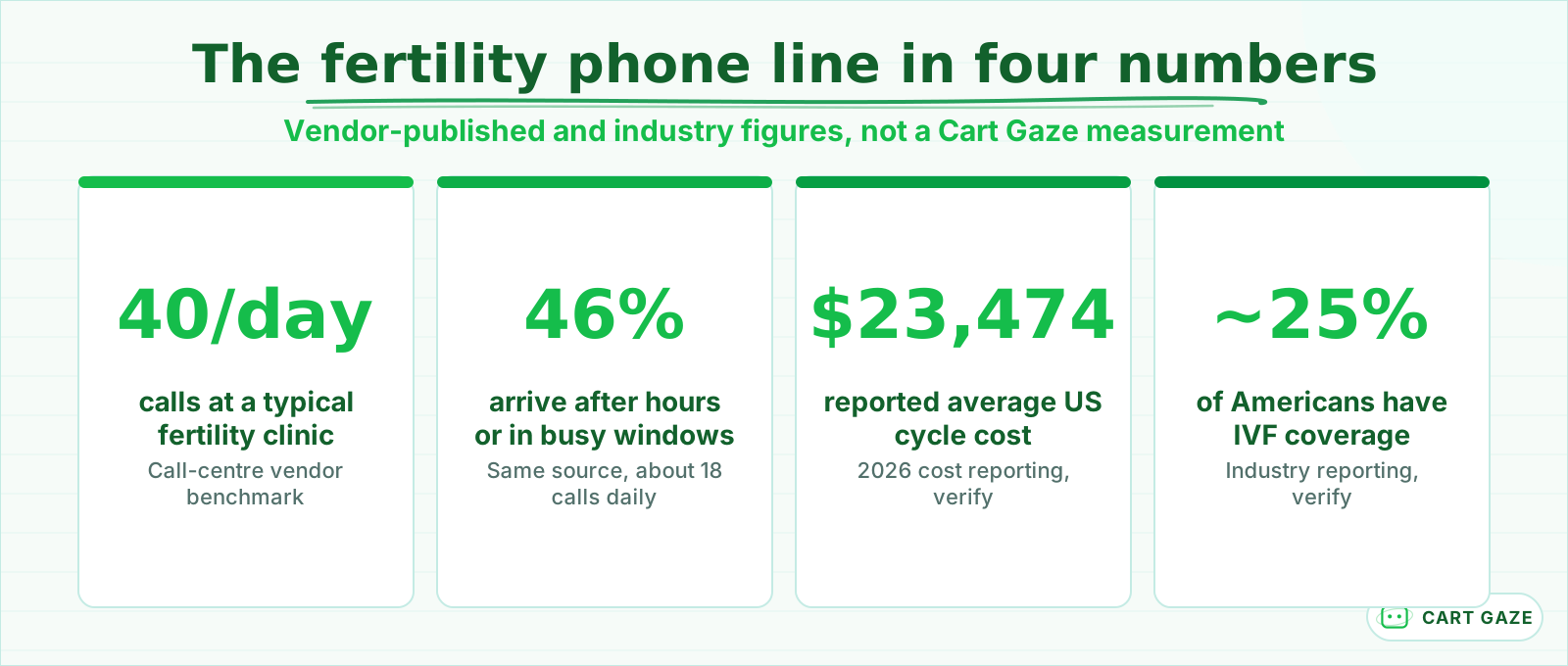 Vendor benchmarks and published cost reporting. Check against your own.
The published figures are vendor benchmarks rather than measurements at your clinic, so treat them as a prompt to check your own. What is consistent across every account of this specialty is the shape: heavy repeat calling from a relatively small active caseload, concentrated in early mornings and evenings, from people who are anxious and paying attention.
Monitoring appointments add their own pressure. They run early, they change based on that morning's results, and patients consistently describe the schedule as one of the hardest parts of treatment to fit around work. Every change to one of those slots generates a call, and it generates it in a narrow window before the clinic opens properly.
The calls that cannot be got wrong
Not every call on this line carries the same tolerance for error. Sorting them by how time-critical they are, rather than by how often they arrive, tells you immediately which ones any automated layer has to simply hand over and which are safe to absorb without a nurse ever hearing about them.
| Call type | Time criticality | Who has to answer |
|---|---|---|
| Trigger shot timing | Absolute, to the hour | Nursing staff, always |
| Injection technique or dose question | High | Nursing staff, always |
| Symptoms after retrieval | High | Clinical, immediately |
| Change to a monitoring appointment | Moderate | Automatable |
| New patient enquiry and cost | Low | Automatable |
| Records, billing, insurance verification | Low | Automatable |
The middle of that table is where judgement is needed. A question about a monitoring appointment is ordinary logistics on most days and can become time-critical on the day a protocol changes, which is why the caller's cycle status matters as much as the question they asked.
The top three rows are the reason this vertical is different. A misheard hour on a trigger instruction is not a service failure, it is a cancelled cycle, and the patient absorbs both the cost and the loss. No amount of confidence in a system justifies putting it in that path.
What a call is actually worth here
The economics make everything on this line expensive. Reported figures for 2026 put the average US cycle around $23,474, with all-in costs commonly between $20,000 and $30,000, and self-pay budgets reaching $25,000 to $35,000 once add-ons are included. Only about 25% of Americans have any IVF coverage, so most of your callers are spending their own money.
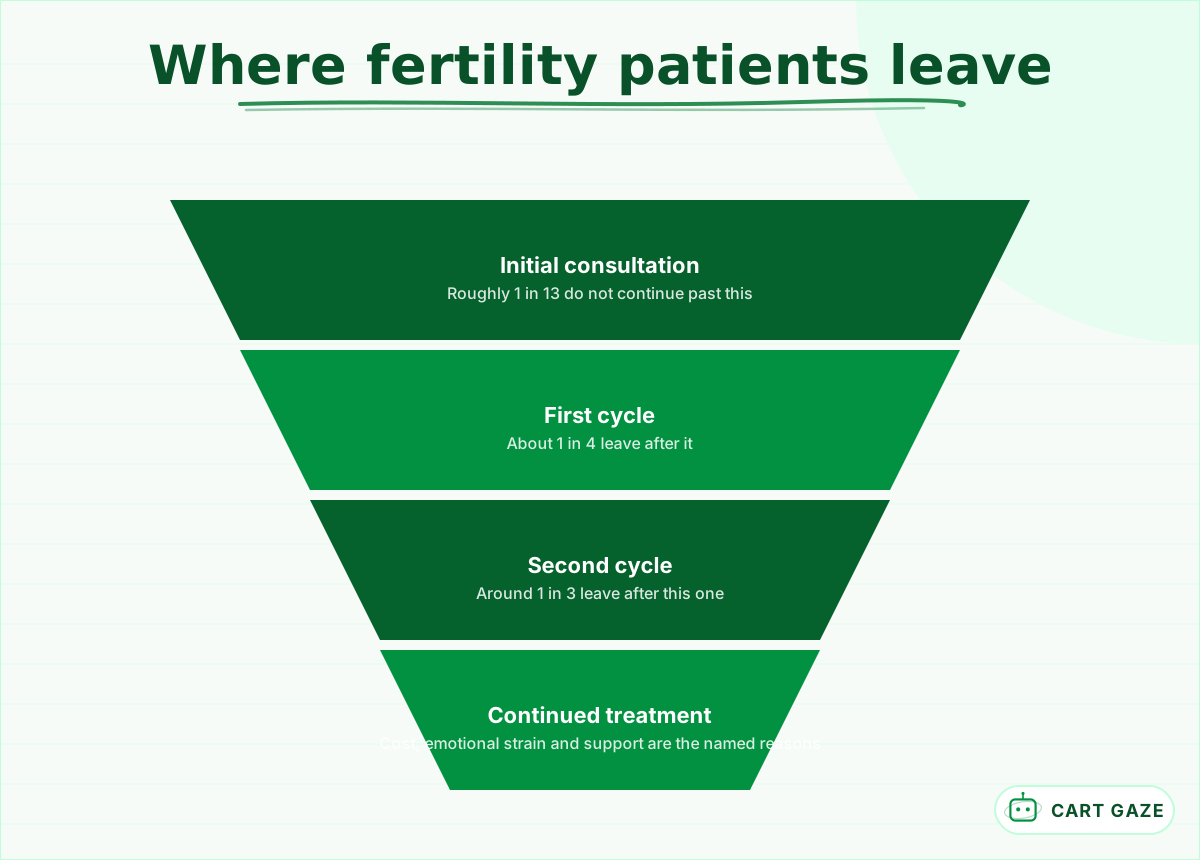 Published cumulative dropout runs 54 to 65 percent across the whole path.
Dropout is where those numbers turn into a business problem. Published industry analysis puts cumulative dropout between 54 and 65%, with roughly one in 13 patients leaving after the initial consultation, one in four after a first cycle, and one in three after a second. A separate study found 26% discontinued after one failed cycle.
Read the dropout ladder as a cost of acquisition problem rather than a clinical one. A patient who leaves after the initial consultation took the same marketing spend, the same coordinator time, and the same clinic slot as one who goes on to three cycles, and produced almost none of the revenue.
The reasons given in the literature are emotional strain, financial burden, and insufficient support. Nobody can honestly attribute a percentage of that last one to unanswered phones, and this post will not try. It is enough to note that support is a named reason patients leave, and that a phone ringing out during a two-week wait is a support failure with a name and a face.
Where an AI receptionist genuinely helps
The useful work sits at the ends of the journey rather than in the middle of a cycle. New patient enquiries are the clearest case: they arrive at all hours, they lead with a cost question, and the caller is usually comparing clinics that evening. Answering, giving an honest range, and booking a consult is valuable.
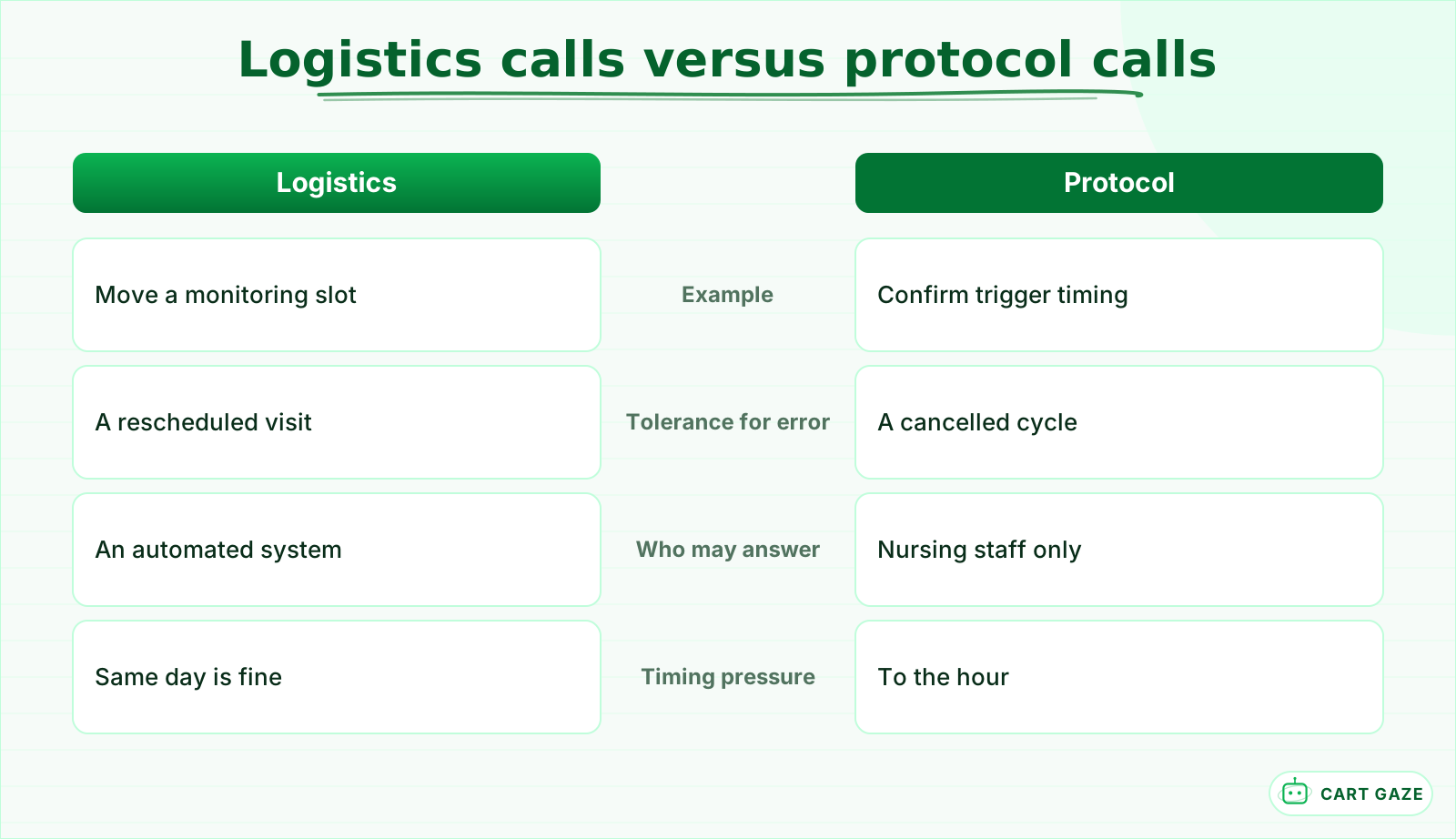 Same phone line, two categories, no overlap in who may answer.
Monitoring logistics are the second. The appointments themselves are early, frequently rescheduled, and heavily dependent on what this morning's results showed. A system that can move a monitoring slot, confirm the time, and text the details removes a stream of short calls without touching anything clinical.
After-hours routing is the fourth, and it is mostly about getting people to the right human faster rather than avoiding humans. At 9 p.m. the useful thing a system can do is establish quickly whether this is a protocol question that needs the on-call nurse now, or a scheduling question that can wait until 7 a.m. and then act accordingly.
Records, billing, and insurance verification make up the third. These are ordinary administrative calls that happen to be unusually consequential here, because a patient who cannot get a straight answer about what is covered is a patient making a $25,000 decision in the dark. The wider version of that problem is in what a good faith estimate has to include.
Where it must stop, and why the bar is higher
The stopping rule here is stricter than the general one. Anything touching medication, dose, or timing goes to nursing staff, with no attempt by the system to confirm a protocol even when it is written down. Symptoms go to a clinician. Results go to whoever the clinic has decided delivers them.
Written protocol is not an exception to this. Clinics sometimes reason that since the trigger instruction is documented in the chart, a system reading it back is merely retrieving information. It is not: the patient is asking whether the documented instruction still applies given what happened today, and only someone who can see today's results can answer that.
There is a fourth category that other specialties do not have. A patient in an active cycle should be treated as a priority caller regardless of what they are calling about, because cycle days are not routine days and a question that sounds administrative on Tuesday may be time-critical on Thursday. Flag active cycles and let the system route them faster.
The emotional load is not a soft issue
Fertility front desks and nursing lines absorb distress as a routine part of the day, and published accounts of this specialty consistently flag staff burnout from it. That is worth taking seriously operationally rather than sentimentally: an exhausted coordinator answers the eleventh call worse than the first.
There is a second-order effect worth naming. Staff who are constantly interrupted by low-stakes calls develop a habit of answering quickly and moving on, which is exactly the wrong reflex for the call that actually matters. Reducing the volume of trivial interruptions improves how the important calls are handled, not just how many get answered.
The realistic benefit is narrow and real. If automation absorbs the appointment moves, the billing questions, and the new patient enquiries, then the nursing line is carrying protocol calls and distressed callers rather than a mixture of those and someone asking whether parking is validated. That is a better use of a nurse and a better experience for the patient who genuinely needs one.
Start with the calls between monitoring visits
Three checks tell you what to do, and all three use data you already hold. Pull a week of calls and tag each as protocol, logistics, or new enquiry. Ask your nursing staff which interruption they most resent. Then find out what happens to a new patient enquiry arriving at 8 p.m.
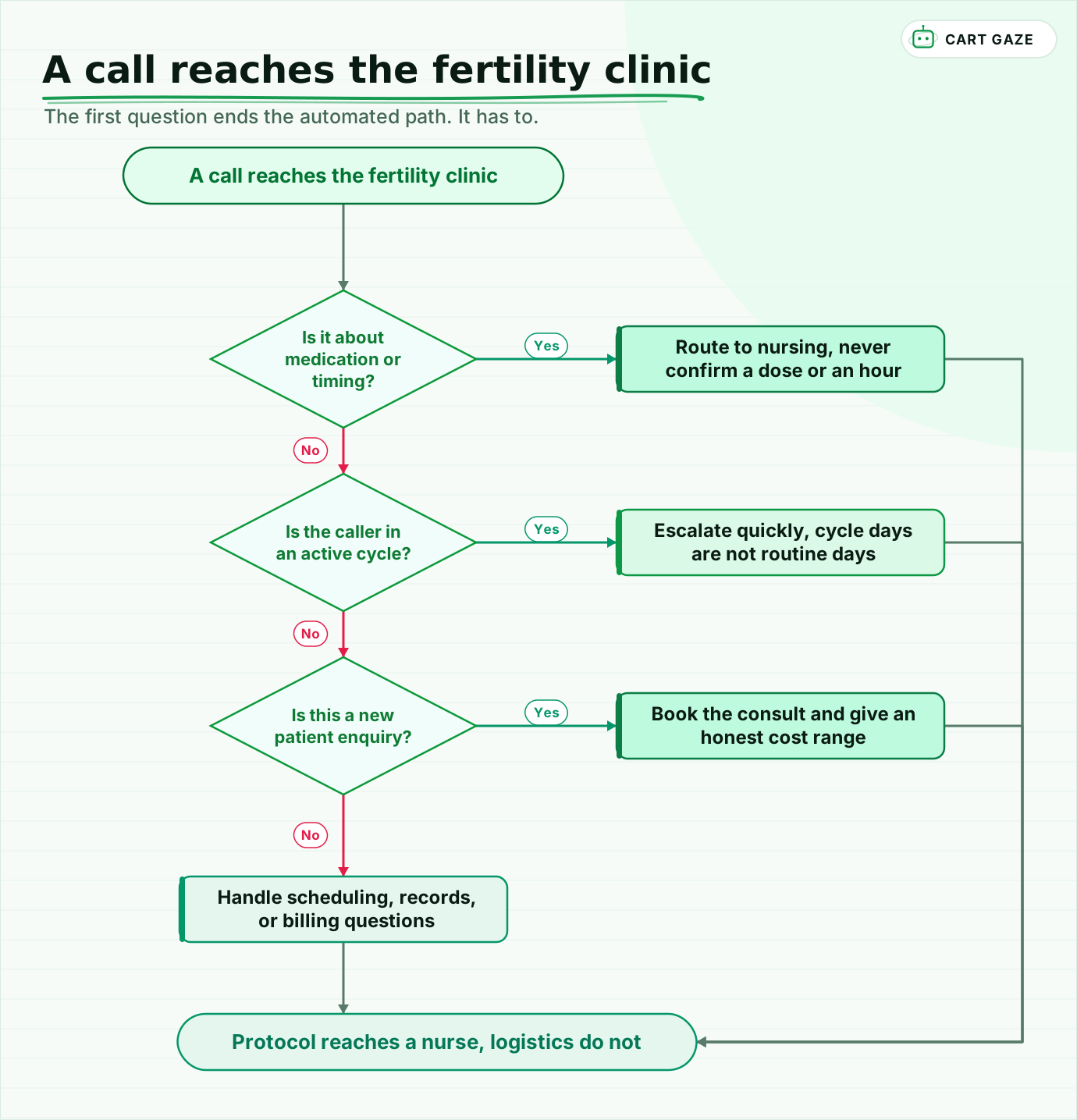 The first question ends the automated path. It has to.
Walk the routing once. Medication or timing goes to the nursing line, and the system never confirms a dose or an hour. A caller in an active cycle is escalated quickly whatever they asked about. A new patient enquiry gets a booked consult and an honest cost range. Everything else is scheduling, records, or billing.
That last one is worth doing personally. New patient enquiries are the part of this line most similar to any other practice, and also the part where a fertility clinic is most obviously competing with the clinic across town for someone comparing three options in an evening.
If most of your at-risk calls turn out to be protocol calls, the answer is not an automated receptionist, it is more nursing coverage in the evening. Being able to tell those two situations apart is the point of counting, and the free Growth Leak Audit will size the enquiry side from your own numbers. The general boundaries of what these systems handle are in what an AI receptionist actually does.
Fair questions.
Can an AI receptionist answer questions about IVF medication timing?
No. Medication, dose, and timing questions go to nursing staff without exception, even when the instruction is documented in the chart. The patient is usually asking whether the documented instruction still applies after today's results, and only someone who can see those results can answer.
What can an AI receptionist safely handle at a fertility clinic?
New patient enquiries and honest cost ranges, monitoring appointment changes and confirmations, records requests, billing and insurance verification, and after-hours routing that gets a caller to the right human faster. That is the administrative shell around a cycle rather than anything inside it.
How many calls does a fertility clinic miss?
Vendor benchmarks put a typical clinic around 40 calls a day with roughly 46% arriving after hours or during windows when nobody can pick up, which is about 18 at-risk calls daily. These are published by call-centre vendors rather than measured independently, so check your own log.
Should patients in an active cycle be routed differently?
Yes, and this is the design detail most easily missed. Cycle days are not routine days, so a caller in an active cycle should be flagged and routed faster whatever they asked about. A question that sounds administrative can be time-critical depending on where they are in a protocol.
Does answering more calls reduce IVF dropout?
Nobody can honestly attach a percentage to that, and this is not a claim worth making. What the published literature does say is that insufficient support sits alongside emotional strain and cost among the reasons patients discontinue, and an unanswered phone during a two-week wait is a support failure.
Sources.
- [1]Why fertility clinics lose patients to missed after-hours calls
- [2]Fertility clinic call centre outsourcing and IVF patient support
- [3]State of IVF patient journey solutions
- [4]Majority of IVF patients drop out before completion
- [5]Survey of reasons for discontinuation from IVF treatment
- [6]IVF cost in the USA by state
- [7]The ultimate guide to fertility treatment costs
- [8]What fertility patients wish employers understood
Written by

Muhammad Qasim Hammad
Founder, Cart Gaze
Qasim builds AI receptionists and front-office automation for medical and dental practices at Cart Gaze. Posts here start from published sources and real call data, not vendor claims, and every number links back to where it came from.
Keep reading.
 By Practice TypeAI Receptionist for Oral Surgery: Referrals In, Post-Op Calls Out10 min read
 By Practice TypeAI Receptionist for Podiatry: What to Automate, What to Escalate11 min read
 By Practice TypeAI Receptionist for Veterinary Clinics: An Honest 2026 Guide10 min read
 By Practice TypeAI Receptionist for Medical Weight Loss Clinics: GLP-1 Call Surge10 min read
 By Practice TypeAI Receptionist for Plastic Surgery: Answer Every Consult Call10 min read
 By Practice TypeAI Receptionist for Optometry: Recall, Reorders, Insurance11 min read