
A2P 10DLC Registration for Medical Practices: A 2026 Guide
Carriers block unregistered business texts outright, and a blocked message never bounces back to your front desk. Here is what registration costs in 2026, how long it takes, and where healthcare campaigns get rejected.
Table of Contents8 sections
- Why your reminder texts stopped arriving
- What A2P 10DLC actually is, and what it is not
- What registration costs and how long it takes
- Where healthcare campaigns get rejected
- Throughput, and why a reminder run crawls
- Registration is not consent, and neither is HIPAA
- Pick your number strategy, then start
- Fair questions
Reminder texts are the quietest thing in a practice. They go out, patients show up, and nobody thinks about the plumbing. Which is why it takes most offices weeks to notice when the texts stop arriving, and the first clue is usually a no-show rate that drifted up for no obvious reason.
There is often no error message. Since 1 February 2025, US carriers block unregistered application-to-person traffic outright, and a blocked message does not bounce back to your front desk. The software says sent. The phone never buzzes. If your recall or reminder texts went quiet, the cause is far more likely to be an unregistered or rejected campaign than a broken phone system.
This post covers what A2P 10DLC registration is, what it costs, how long it takes in 2026, where healthcare campaigns get rejected, and the thing most guides skip: registration is a carrier requirement and has nothing to do with whether your texting is legal or HIPAA-appropriate. Those are three separate problems.
Why your reminder texts stopped arriving
Carrier filtering is silent by design. Your messaging platform reports a message as sent because it handed it off successfully. The block happens further down the chain, at the carrier, and nothing travels back. So a practice can run months of reminders into a wall and see only a slow rise in missed appointments.
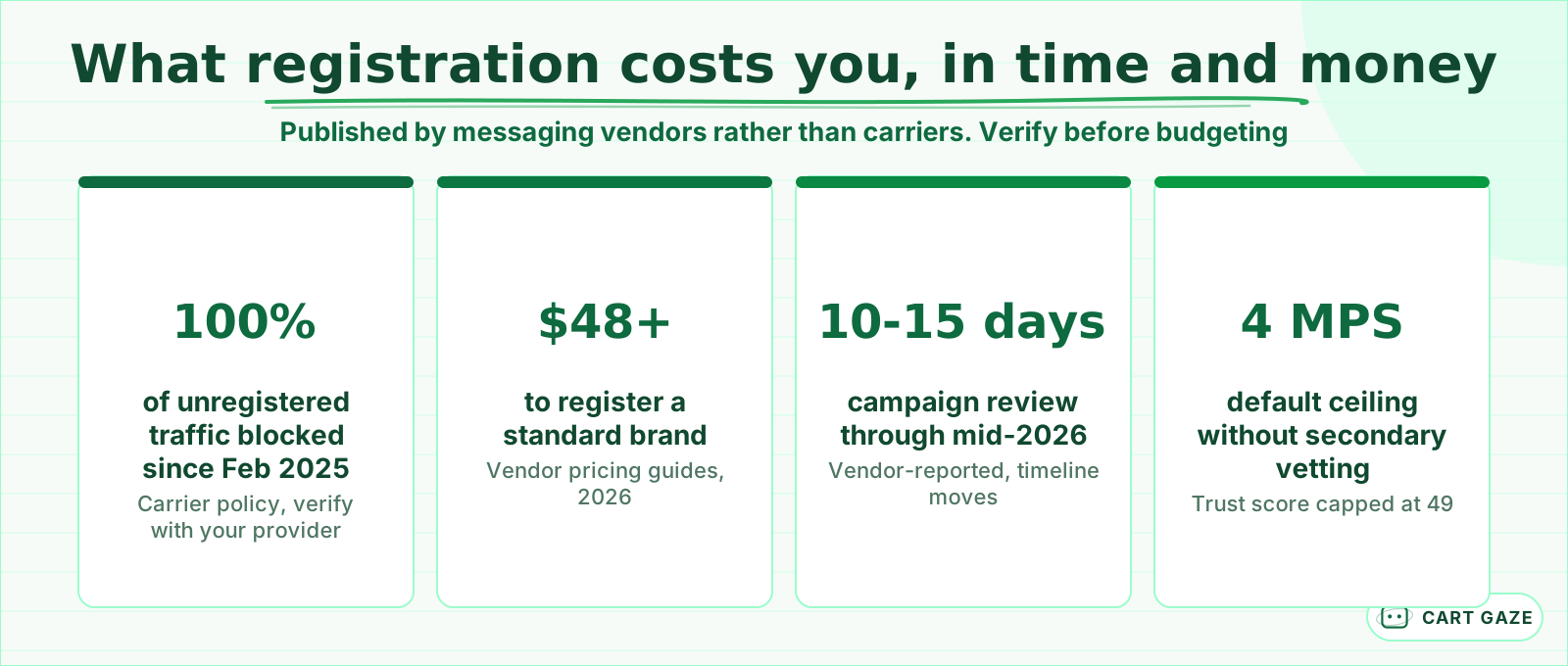 Vendor-published figures. Confirm each with whoever actually sends your messages.
There are two quick ways to check. Text your own practice number from a personal phone on a different carrier and see whether the automated reply arrives. Then ask your messaging vendor for your brand and campaign status in The Campaign Registry, which is the industry database carriers check. If the campaign shows anything other than approved, that is your answer.
A third check is worth running while you are in there. Ask when the campaign was last touched. Campaigns are not permanent: a change of business address, a new legal entity after a merger, or a vendor migration can all knock a registration out of alignment with the record carriers hold, and the symptom is identical to never having registered at all.
What A2P 10DLC actually is, and what it is not
A2P 10DLC is a carrier registration scheme for business texting sent from an ordinary 10 digit local number. You register your practice as a brand, register each type of message you send as a campaign, and carriers use that record to decide whether to deliver. It is a commercial gatekeeping system, not a law.
That distinction matters because practices routinely collapse three separate obligations into one. Registering a campaign does not create permission to text a patient. A signed business associate agreement does not get a message past a carrier. Each of the three has a different enforcer and a different failure mode.
| Obligation | What it governs | Who enforces it | What failing looks like |
|---|---|---|---|
| A2P 10DLC registration | Whether carriers deliver your texts | Mobile carriers, via The Campaign Registry | Messages silently dropped |
| Patient consent | Whether you may text at all | Federal law, private lawsuits | Statutory damages per message |
| PHI handling | What may be inside the message | HHS Office for Civil Rights | Civil penalties, corrective plans |
Getting all three right is ordinary work, but it has to be done deliberately. The consent side is the one with real money attached, and it is covered in what the rules mean for automated patient texting.
What registration costs and how long it takes
Registration is cheap and slow, which is the opposite of what most practices expect. Brand registration runs about $4 for a sole proprietor and $48 or more for a standard brand. Each campaign costs roughly $15 to $17 to register, then $1.50 to $10 a month to keep, plus a carrier surcharge of about $0.003 to $0.005 per message.
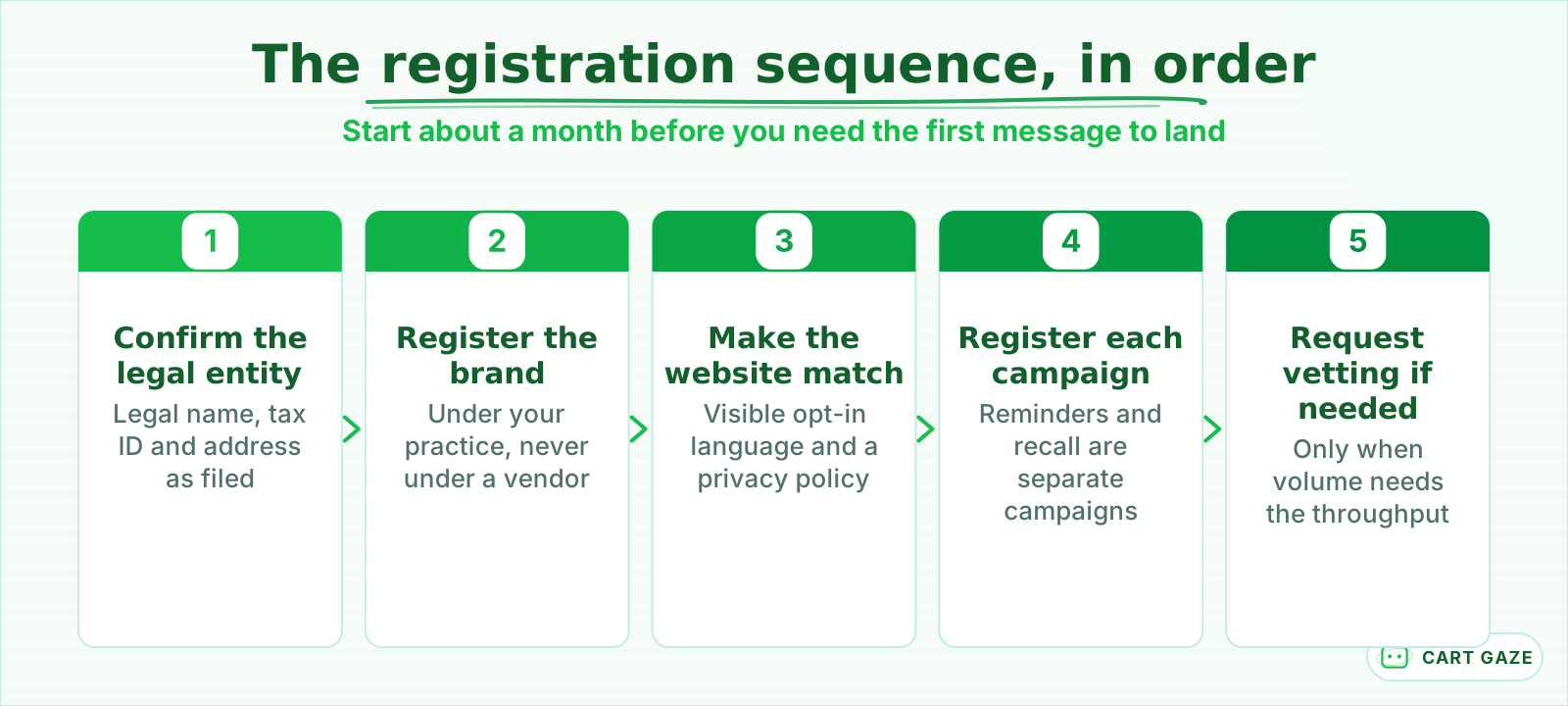 In order. Each step gates the next, which is why late registration misses seasons.
The timeline is the real cost. Brand approval usually lands in 1 to 3 business days. Campaign review has been running around 10 to 15 days through mid-2026 because of submission volume. Practices that plan a recall campaign for the first week of January and start registering in late December miss the window entirely.
All of these figures are published by messaging vendors rather than by the carriers directly, and they move. Confirm the current numbers with whoever will actually be sending your messages before you budget against them.
Where healthcare campaigns get rejected
Rejections rarely come from the content of your reminders. They come from mismatches between what you declared and what a reviewer can independently see. The reviewer compares your campaign use case, your sample messages, your website, and your consent process, and any inconsistency between those four is enough to send it back.
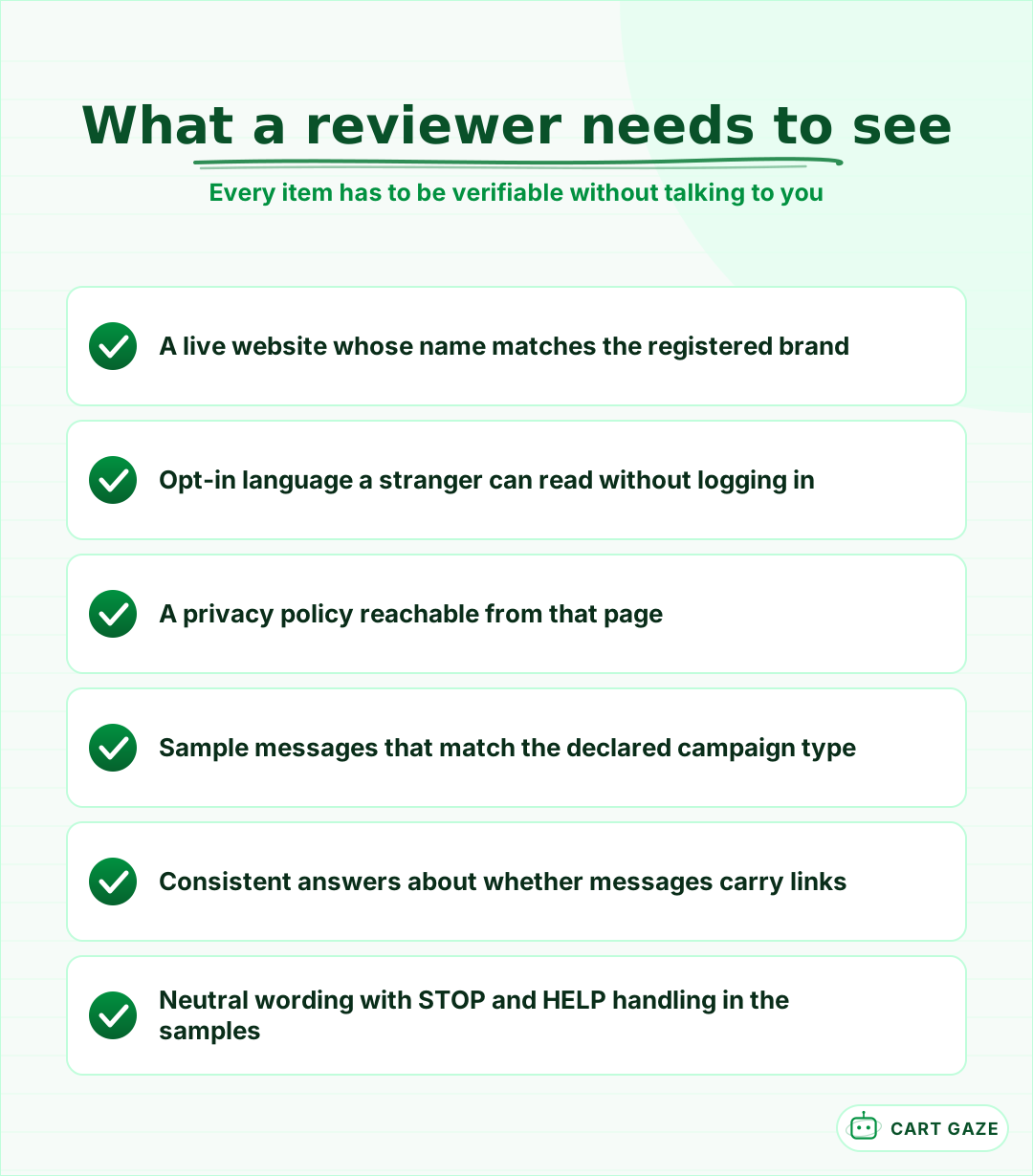 A reviewer checks what they can see, not what you tell them.
The healthcare-specific trap is opt-in evidence. Carrier reviewers want to see opt-in language they can view for themselves, and the standard place is your website. Practices, though, collect consent at the front desk on a paper intake form, which no reviewer can see. Campaigns get rejected not because consent is missing but because it is invisible.
The fix is unglamorous. Add a short section to your website that states plainly what texts patients will receive, how to stop them, and where the privacy policy is, even if most of your real consent still arrives on paper. Make sure the brand name you registered matches your legal entity and the name on the site, because a practice trading under one name and registered under another reads as a mismatch.
Two smaller mismatches account for a surprising share of rejections. If you tell the reviewer your messages contain no links and then include a booking link in a sample, that is a contradiction on its face. If you declare a use case that does not fit what the samples actually say, the same thing happens. Neither is a judgement about your practice; both are a reviewer finding that the form and the evidence disagree.
Keep the sample messages neutral too. Regulated categories draw closer review, so a sample that reads "Reminder: your appointment with Dr Patel is Tuesday at 2 p.m. Reply STOP to opt out" clears more easily than anything that sounds promotional.
Throughput, and why a reminder run crawls
Once you are approved, a second number quietly governs your day: throughput. The Campaign Registry assigns your brand a trust score from 0 to 100, and that score sets how fast you may send. Without optional secondary vetting the score is capped at 49, which for many campaign types works out to roughly 4 message segments per second.
That sounds fine until you run a real batch. A recall list of 2,000 patients, where each message spans 2 segments, is 4,000 segments, and at 4 per second that run takes about 17 minutes. Long messages split into more segments, so verbose reminders quietly cost throughput as well as money.
Secondary vetting costs around $40 and lifts the ceiling. For a single-location practice sending a few hundred reminders a day it is usually unnecessary. For a multi-site group running recall campaigns across thousands of patients, it is the difference between a batch that finishes before lunch and one that trickles all afternoon.
A verified toll-free number sits on a separate registration model with its own default of about 3 segments per second, which is why some practices run reminders on a toll-free line and keep the local number for conversation.
Registration is not consent, and neither is HIPAA
Approval from a carrier is a delivery decision, not a legal one. A carrier reviewer never asks whether your patient agreed to receive texts, and never looks at what is inside the message once it flows. Both of those remain entirely your responsibility, and both carry heavier penalties than anything the carrier can do.
Keep clinical detail out of the message body. A reminder that names the practice, the date, and the time is fine. A reminder that names the procedure, the department, or the reason for the visit turns an ordinary text into a disclosure, especially since phone lock screens show message previews to anyone holding the handset.
The same caution applies to replies. A patient who answers a reminder with a question about symptoms has just put clinical detail into a channel you may not have set up to hold it. Decide in advance where those replies land, who reads them, and how fast, because an unread inbox on a number patients believe reaches the practice is its own kind of risk.
If you are pairing texting with a system that also answers the phone, the boundaries of what it should and should not say are worth reading in what an AI receptionist actually does, and the reminder side of the workflow is covered in automating appointment reminders.
Pick your number strategy, then start
Most practices only need one decision here: which number the texts come from, and who owns the registration. If your messaging vendor registers on your behalf, confirm the brand sits under your practice rather than theirs, because a brand you do not own is a brand you cannot take with you when you change vendors.
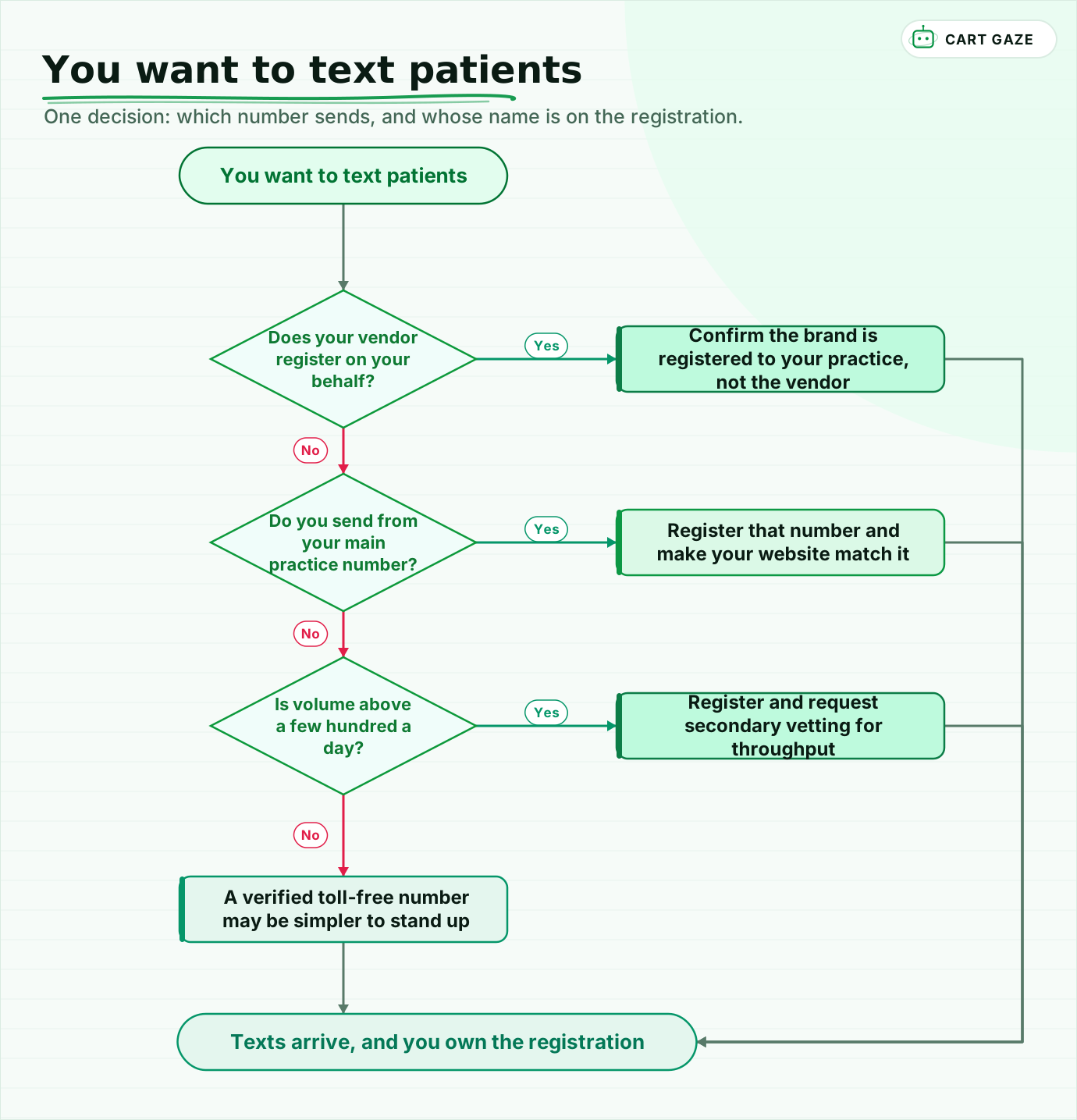 One decision: which number sends, and whose name is on the registration.
Walk it once. A vendor registering for you means checking whose name is on the brand. Texting from your main practice number means registering that number and making the website match it. High volume means requesting secondary vetting for throughput. Low volume with no existing number may be simpler on a verified toll-free line.
Three first moves, none of which needs a purchase. Ask your vendor for your current brand and campaign status in writing. Read your own website the way a carrier reviewer would and see whether the opt-in language is genuinely visible. Then check one recent reminder message body for anything a stranger reading a lock screen should not learn.
If the texts turning off cost you appointments and you want that sized before you start fixing plumbing, the free Growth Leak Audit works from your own numbers, and the recovery side of a missed contact is covered in text-back for missed calls.
Fair questions.
What is A2P 10DLC registration and does my practice need it?
It is a carrier registration scheme for business texting sent from an ordinary 10 digit local number. You register your practice as a brand and each message type as a campaign, and carriers use that record to decide whether to deliver. Any practice sending appointment reminders or recall texts needs it.
Why did my appointment reminder texts stop being delivered?
Most often the campaign is unregistered, rejected, or has fallen out of alignment after a change of address, entity, or vendor. Carriers have blocked unregistered traffic since February 2025, and the block happens after your platform reports the message as sent, so nothing surfaces at the front desk.
How much does A2P 10DLC registration cost in 2026?
Vendor-published figures put brand registration at about $4 for a sole proprietor and $48 or more for a standard brand, with each campaign around $15 to $17 to register plus $1.50 to $10 monthly. Carriers add roughly $0.003 to $0.005 per message. Confirm current pricing with your own provider.
Does A2P 10DLC registration make my patient texting HIPAA compliant?
No. Registration is a delivery decision made by carriers. It does not consider whether your patient agreed to be texted, which is a consent question, and it does not look at what is inside the message, which is a privacy question. Keep clinical detail out of message bodies regardless of registration status.
Should a medical practice use a 10DLC number or a toll-free number for texting?
Local 10DLC numbers suit practices that want texts to come from the number patients already know. Verified toll-free numbers sit on a separate registration model with a default of about 3 segments per second and can be simpler to stand up. Some practices run bulk reminders toll-free and keep the local number for conversation.
Sources.
- [1]10DLC registration and SMS compliance guide
- [2]A2P 10DLC compliance: 2026 registration and approval guide
- [3]A2P 10DLC in 2026: what it costs and who needs it
- [4]A2P 10DLC registration: requirements, cost and timeline
- [5]Message throughput and trust scores for A2P 10DLC in the US
- [6]What is a trust score in A2P 10DLC messaging
- [7]10DLC explained: registration, throughput and business SMS
- [8]10DLC campaign vetting tips
- [9]Why 10DLC campaigns get rejected
- [10]A2P 10DLC guide: US compliance and regulations
Written by

Muhammad Qasim Hammad
Founder, Cart Gaze
Qasim builds AI receptionists and front-office automation for medical and dental practices at Cart Gaze. Posts here start from published sources and real call data, not vendor claims, and every number links back to where it came from.
Keep reading.
 Trust & ComplianceCall Recording Consent Laws for Medical Practices in 202610 min read
 Trust & ComplianceTCPA Compliance for Patient Texting: The Rule HIPAA Misses10 min read
 Trust & ComplianceGood Faith Estimate Rules: What Your Front Desk Owes Patients10 min read
 Trust & ComplianceMedical Records Release Automation: Meet the 30-Day Deadline11 min read
 Trust & ComplianceAI Receptionist Security: What a Signed BAA Doesn't Tell You9 min read
 Trust & ComplianceIs an AI Receptionist HIPAA Compliant? The Honest Answer12 min read