For audiology & hearing care practices
The patient ready to do something about their hearing books the practice that picks up the phone.
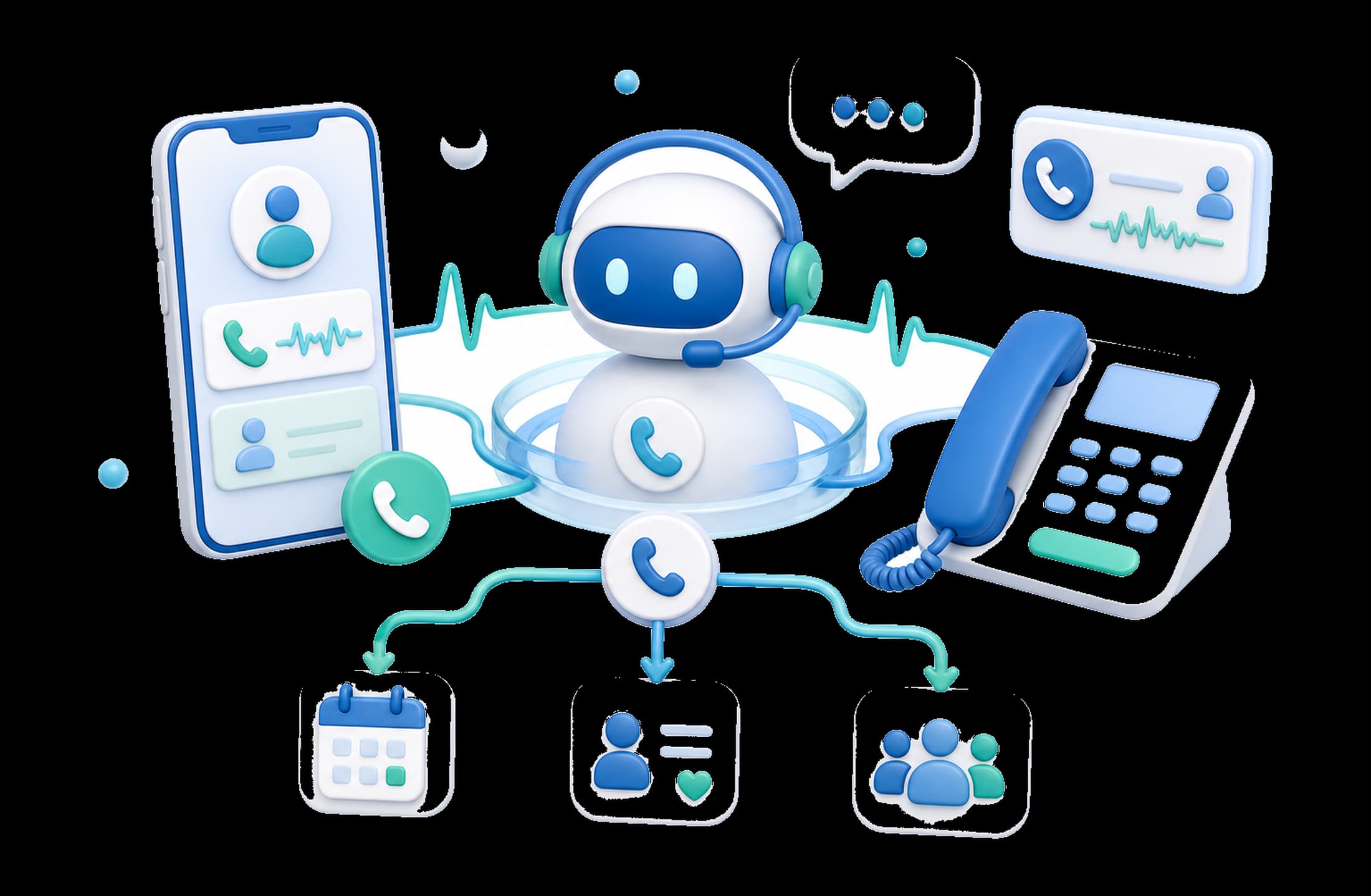
Hearing patients often call once they have finally decided to act, and many are older and prefer the phone to a web form. If your front desk is with a patient in the booth when they call, that high-intent appointment, and a hearing-aid fitting worth thousands, books the practice that answered. We put a system on your line that answers every call, books the evaluation, and handles insurance and scheduling from a script you approve, while clinical questions route to your staff.
- Answers while your team is in the booth
- Books hearing evaluations and fittings
- HIPAA-aware builds on BAA-backed vendors
- Recalls patients for checks and rescreens
Where it leaks
The gaps that quietly cost you bookings.
The new-patient evaluation books whoever answers
A first-time caller ready to address their hearing is a patient and a hearing-aid fitting in one, your highest-value call. When the desk is with a patient in the booth, it rings out and that evaluation books the practice that picked up.
Phone-first patients won't leave a voicemail
Many hearing patients are older and call rather than fill out a form, and they will not navigate a phone tree or leave a message. If a person, or a system that sounds like one, does not answer, they hang up and try the next practice.
'Do you take my insurance, and what does it cost?' stalls the booking
Patients want to know about coverage and cost before they commit to an evaluation or aids. When that answer waits on a callback that never comes, they move on to a practice that answered.
Rescreens and device follow-ups slip
Annual rechecks, rescreens, and device follow-ups keep patients hearing well and bring them back, but the recall depends on a busy team sending it, so it slips and the visit goes unbooked.
What we build
Your growth system, built to fit.
Done-for-you automation tuned to how your practice actually runs. It lives on tools you own, so you always have the keys.
AI front-desk line
Answers every call in your practice's voice while your team is in the booth. It qualifies the caller, answers insurance from a script you approve, and books the evaluation. Clinical questions go to your team.
- missed calls
- front desk
Evaluation & fitting scheduling
Books hearing evaluations and fitting appointments into your scheduler, so the high-intent caller lands on the calendar instead of in a callback queue.
- scheduling
- fittings
Missed-call text-back
When a call still rings out, it fires an instant text with your booking link, so the patient has a way to book without redialing the next practice.
- missed-call text-back
- follow-up
Recall & device follow-up
Pulls the patients due for a recheck, a rescreen, or a device follow-up and sends the reminder by text and email on a cadence you set, then books the ones who reply.
- recall
- reminders
How it runs
One automation, wired into your tools.
We build the automation flow and connect it to the phone, CRM, calendar, and email you already use. Every message it sends is yours to approve, and the whole system lives in your accounts. If we part ways, you keep it.
The diagram is a schematic of the workflow we build for you. It is drawn for your business, not a stock template or a screenshot of someone else’s system.
Inbound call rings out or hits after-hours / lunch
Trigger
Answer & greet
Picks up in your practice's voice, no voicemail
Qualify the caller
New or existing patient, reason for the visit, insurance plan
Answer approved questions only
Insurance and hours; no clinical advice
Check availability
Reads open evaluation slots from your scheduler
Book & confirm
Writes the evaluation and sends an SMS confirmation
Evaluation booked and confirmed, logged for your team
Run your own numbers
If your practice misses __ patient calls a week, and a new patient is worth $__ across the evaluation and devices, here's what's slipping away. Run it with your own numbers.
Patient calls missed per week
example: 8
Value of a new patient (evaluation + devices)
example: $2,500
Share of those calls a booked line could have caught
example: half
These are illustrative placeholders to show the framing, not results we're claiming. Your real miss rate and patient value are yours to plug in. That's the number worth running before you decide.
The build, tuned to Audiology.
Most practices start with these. Each piece runs on tools you own, and the free audit says which to do first.
ClinicFront AI Receptionist
An AI receptionist on your number that answers after-hours and overflow calls, handles the routine questions from a script you approve, and books the patient or hands the call to your team.
AI Booking & Reminders
Two-way text and voice scheduling that books from your live calendar, then sends the reminders that keep patients from forgetting the visit.
Patient Reactivation & Recall
Brings back patients who are overdue for cleanings, annual exams, and follow-ups with recall campaigns that run on their own.
Reviews & Reputation Autopilot
Asks happy patients for a Google review at the right moment, watches for new ones, and drafts the replies, so your local ranking keeps climbing.
What it costs
Priced against what you’re losing, scoped by your audit.
Recovery
$599/mo
after-hours missed-call coverage
Growth
$1,199/mo
24/7 answering + booking workflow
Pro
$1,999+/mo
multi-location & advanced follow-up
one-time setup from $3,500 · test agent in ~3 business days
- Built in accounts you own — no lock-in
- A human approves before anything goes live
- Monthly care, monitoring, and a real-numbers report
- No-PHI by default; BAA-backed when needed
FAQ
Fair questions.
Does it give clinical advice?
No. It handles scheduling and insurance from a script you approve, and routes anything clinical, like symptoms, sudden hearing loss, or device issues, to your staff. It does not diagnose or triage beyond the rules you set.
Will it work for older patients who prefer the phone?
Yes. It answers in a natural voice with no phone tree, handles the call simply, or routes to a person. That is the point, so callers who would hang up on voicemail get a real booking instead.
How do you handle patient privacy?
These are HIPAA-aware builds on BAA-backed vendors, and we work with a minimal data footprint by default, collecting only what the system needs to book or route. We're glad to walk your office through exactly what data is touched before you commit. HIPAA-aware means built on BAA-backed vendors; it is not a substitute for your own compliance review.
What does it cost, and how fast can we test it?
No commitment up front. You start with a free Growth Leak Audit on your own numbers, then hear a test agent on a forwarded number within about three business days, before it ever touches your main line. Setup starts around $3,500 and scales with your call volume and integrations. ClinicFront care plans run $599/mo for after-hours recovery, $1,199/mo for full answering and booking, and $1,999+/mo once recall, follow-up, and reporting are included. It goes live only after QA passes and you approve it.
More verticals
We build the same engine for other practices.
Free · no commitment · personal reply in ~2 days
See where your practice is leaking booked revenue.
See exactly which patient calls your practice is missing, and what they're worth, before you spend a dollar.