
AI Receptionist for Home Health: The 48-Hour Referral Clock
A discharge planner faxes a referral at 6 p.m. on a Friday and nobody sees it until Monday. By then another agency has called the patient, and a federal clock has been running for 62 hours.
Table of Contents8 sections
- The clock starts when the referral arrives, not when you see it
- Referrals do not arrive during business hours
- Why the first agency to respond usually wins
- Intake is 70 minutes of work behind a short phone call
- Where an AI receptionist fits a home health agency
- Where it must stop
- Start with your own referral timestamps
- Fair questions
A discharge planner sends a referral at 6 p.m. on a Friday. Nobody at your agency sees it until Monday morning. By then two things have happened: another agency has probably called the patient, and a regulatory clock that started on Friday evening has been running for 62 hours.
That second part is what makes home health different from almost every other outpatient setting. Under federal rules the initial assessment visit has to happen within 48 hours of the referral, within 48 hours of the patient getting home, or on the physician-ordered start of care date. Surveyors count from when the referral was received, not from when somebody opened it, and an agency is not permitted to ask for a later start date simply to make its own compliance easier.
So an unanswered referral is not only a lost admission. It is a compliance exposure that began before anyone at your agency knew the patient existed. This post covers where referrals actually get lost, why the first agency to respond usually wins, and what an automated layer can and cannot safely do on this line.
The clock starts when the referral arrives, not when you see it
Two readings of the 48-hour rule circulate, and only one is correct. The comfortable reading treats the clock as starting when intake begins work. The accurate one starts it at receipt, regardless of whether a physician has been verified, whether the packet was complete, or whether anyone was in the building.
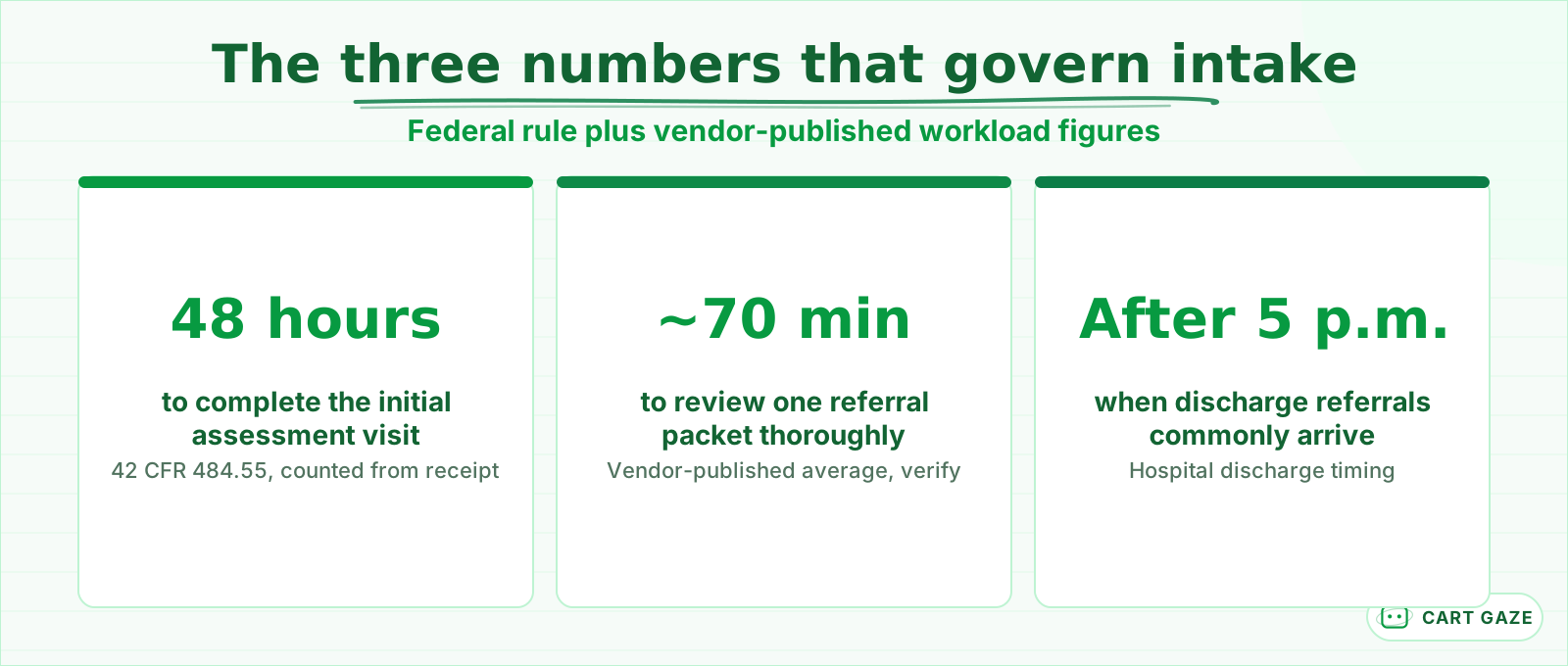 One regulatory number, one workload number, one scheduling reality.
That distinction is the entire operational argument for after-hours coverage in this vertical. An agency that receives referrals at 6 p.m. and opens them at 9 a.m. is routinely spending a third of its window before work starts, and doing it invisibly, because the delay never shows up as a missed call anywhere.
There is a second reading problem worth clearing up. The rule offers three anchors, and the physician-ordered start of care date is a legitimate one. What it is not is an escape hatch: an agency that cannot make the window is not permitted to go back and ask for a later date to fix its own timeline, which removes the workaround most people reach for first.
Referrals do not arrive during business hours
Discharge happens on hospital time, which means evenings, weekends, and the hour before a holiday. Every channel a referral can arrive through has its own failure mode, and most agencies have never mapped which one loses the most cases for them, because each channel is owned by a different person.
| Referral source | How it arrives | Where it gets lost |
|---|---|---|
| Hospital discharge planner | Fax or portal, often after 5 p.m. | Sitting unread until the next business day |
| Physician office | Phone call to the main line | Voicemail nobody checks until morning |
| Skilled nursing facility | Fax, sometimes incomplete | Missing documents, nobody calls back |
| Patient or family, self-referred | Phone call, any hour | Rings out, they call the next agency |
| Payer or case manager | Portal task or email | Buried in a shared inbox |
Fax is worth singling out because it feels solved and is not. A fax that arrives complete still has to be noticed, and a fax that arrives missing a document generates an outbound call to a busy hospital unit, which is where days disappear. The channel looks reliable in a process diagram and is the slowest one in practice.
The self-referred call is the one most often written off as rare. It is also the one where the caller has no list of alternatives in front of them and will simply call the next result in a search. Answering it is worth more than the volume suggests.
Why the first agency to respond usually wins
Discharge planners are not running a procurement process. They have a patient leaving tomorrow, a list of agencies, and limited time. In practice they work down the list until somebody responds, which makes speed of first response the competitive variable in this business far more than clinical reputation.
That reframes the phone as a growth channel rather than an administrative cost. It is an uncomfortable reframe for agencies that have invested years in clinical quality, and it does not mean quality is irrelevant. It means quality gets you onto the list, and answering gets you the case. Two agencies with identical staffing, quality scores, and geography will grow at very different rates if one acknowledges referrals within minutes and the other within a day, and no amount of relationship building offsets the difference.
It also explains a pattern agency owners find frustrating. Referral volume from a given hospital can fall for months without a single complaint, because nothing went wrong in any individual case. The planner simply learned that calling you took longer than calling someone else, and adjusted the order of the list.
Acknowledgement is not the same as acceptance. A response that says the referral was received, names who is reviewing it, and gives a time by which the planner will hear back is enough to hold the referral. What loses it is silence.
Intake is 70 minutes of work behind a short phone call
The phone call is the visible part of intake and the smallest part. Published figures put a thorough referral packet review at around 70 minutes on average, covering eligibility, documentation, and matching clinical need against the capacity you actually have this week.
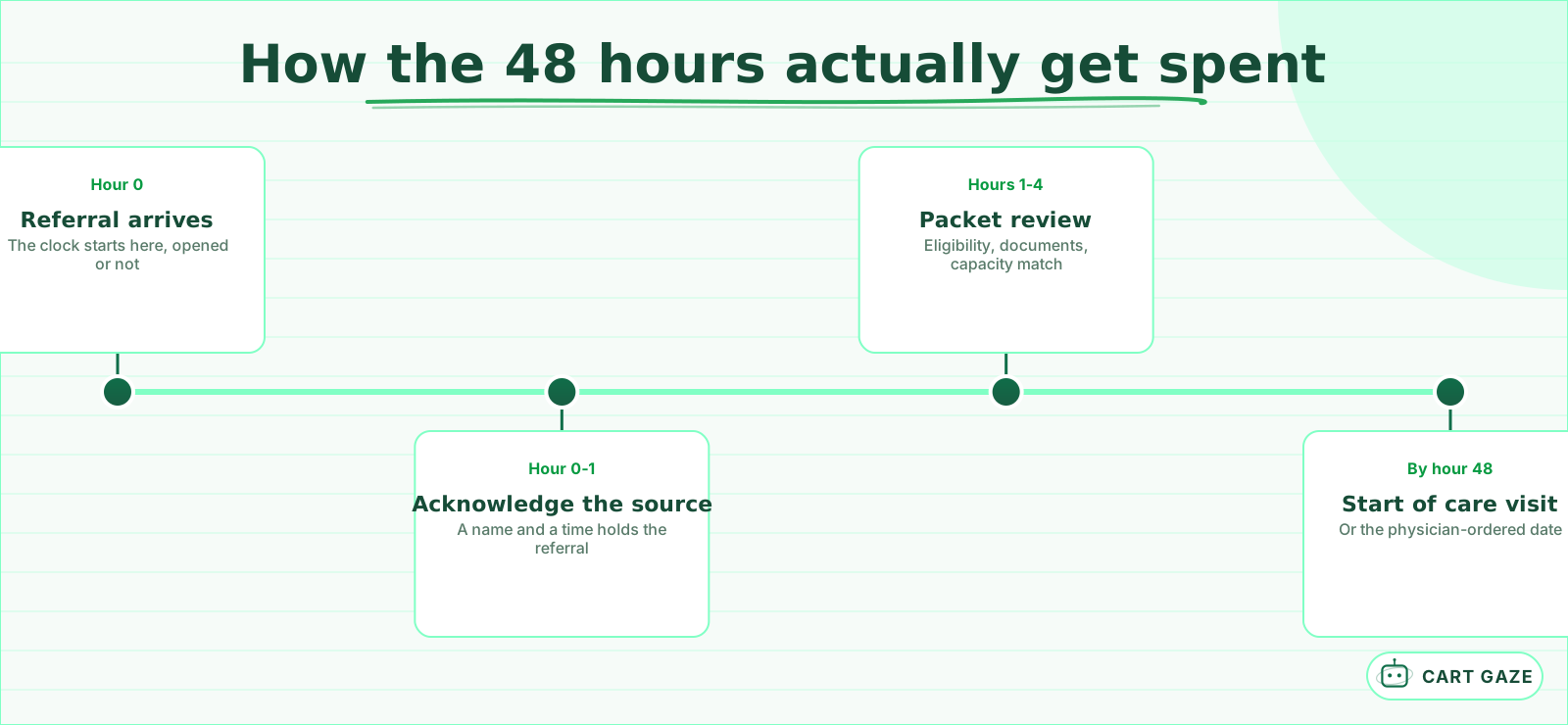 The first block is the one agencies lose without noticing.
That number explains why intake coordinators are such an expensive thing to interrupt. Every incoming call that could have been handled elsewhere costs not just its own duration but the re-entry cost into a 70 minute task that requires holding a lot of detail in mind at once.
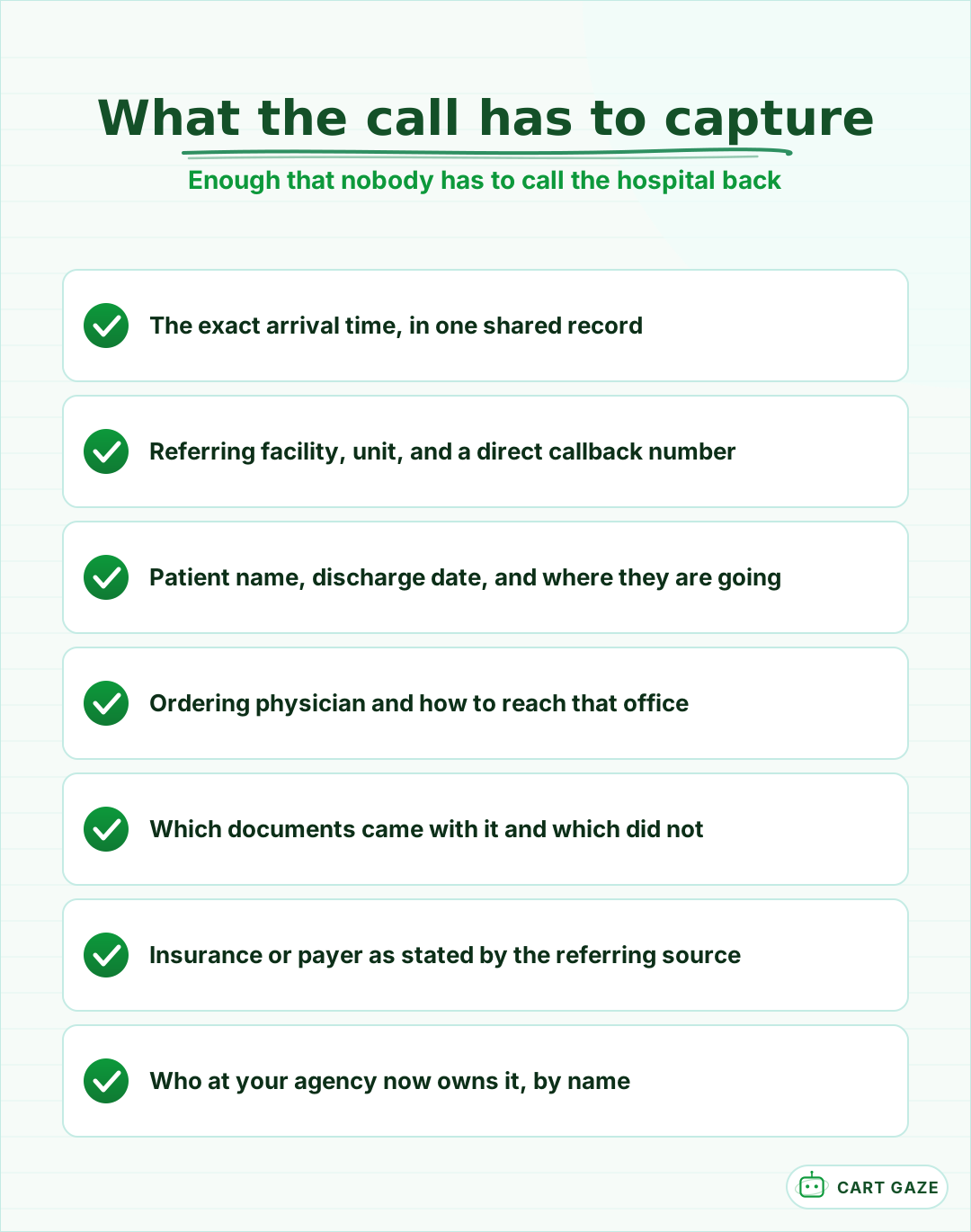 Capture, not judgement. The decisions still belong to intake.
The interruption cost is worse than the arithmetic suggests, because the errors it produces surface much later. A capacity match made while distracted becomes a visit that could not be staffed, which becomes a call to a patient to move a start date, which is exactly the kind of thing the 48-hour rule exists to prevent.
It also explains a common false economy. Agencies hire more intake capacity to solve what is actually a call-handling problem, then find the new coordinator is equally interrupted. The work that needed protecting was the packet review, not the phone.
Where an AI receptionist fits a home health agency
The fit here is unusually clean, because most of what arrives on this phone is capture rather than judgement. Timestamped intake of a new referral. An immediate acknowledgement to the referring source. Status answers for a planner chasing a case. Scheduling calls from field clinicians. After-hours routing to a person.
Notice what is not on that list. Nothing here decides whether a referral is clinically appropriate, whether you have capacity, or whether the documentation is sufficient. Those are judgement calls that belong to intake, and the value of the automated layer is that it protects the time to make them rather than attempting them.
Status chasing deserves particular attention. A discharge planner calling to ask whether you took a case is a professional caller whose next decision is whether to send you the next one. Putting them in a queue is more expensive than declining the referral outright, because declining is honest and a queue is just slow.
Where it must stop
A home health agency's phone carries something a clinic's does not: patients and families calling from home about a person who is unwell right now. Any call reporting a change in condition, a fall, a medication problem, or a worsening symptom goes to a clinician immediately, with no assessment attempted by any system.
The line between routine and clinical is less obvious here than in a clinic, because a family calling about a supply delivery may open with something that turns out to be about a wound. The safe posture is a low threshold and a fast handover rather than a clever attempt to tell the two apart.
Field clinicians are a second population worth designing for. A nurse calling from a driveway about access, a schedule change, or a supply problem is not a patient and should not be routed like one. Agencies that miss this end up with clinicians who avoid the main line entirely and text a coordinator directly, which is how visits fall out of the record. The general shape of that design is covered in how to build the escalation path.
Start with your own referral timestamps
Three checks, and the first one usually settles the argument. Pull last month's referrals and record the arrival time of each against the time your team first responded. Then count how many arrived outside business hours. Then ask a friendly discharge planner how they choose which agency to call second.
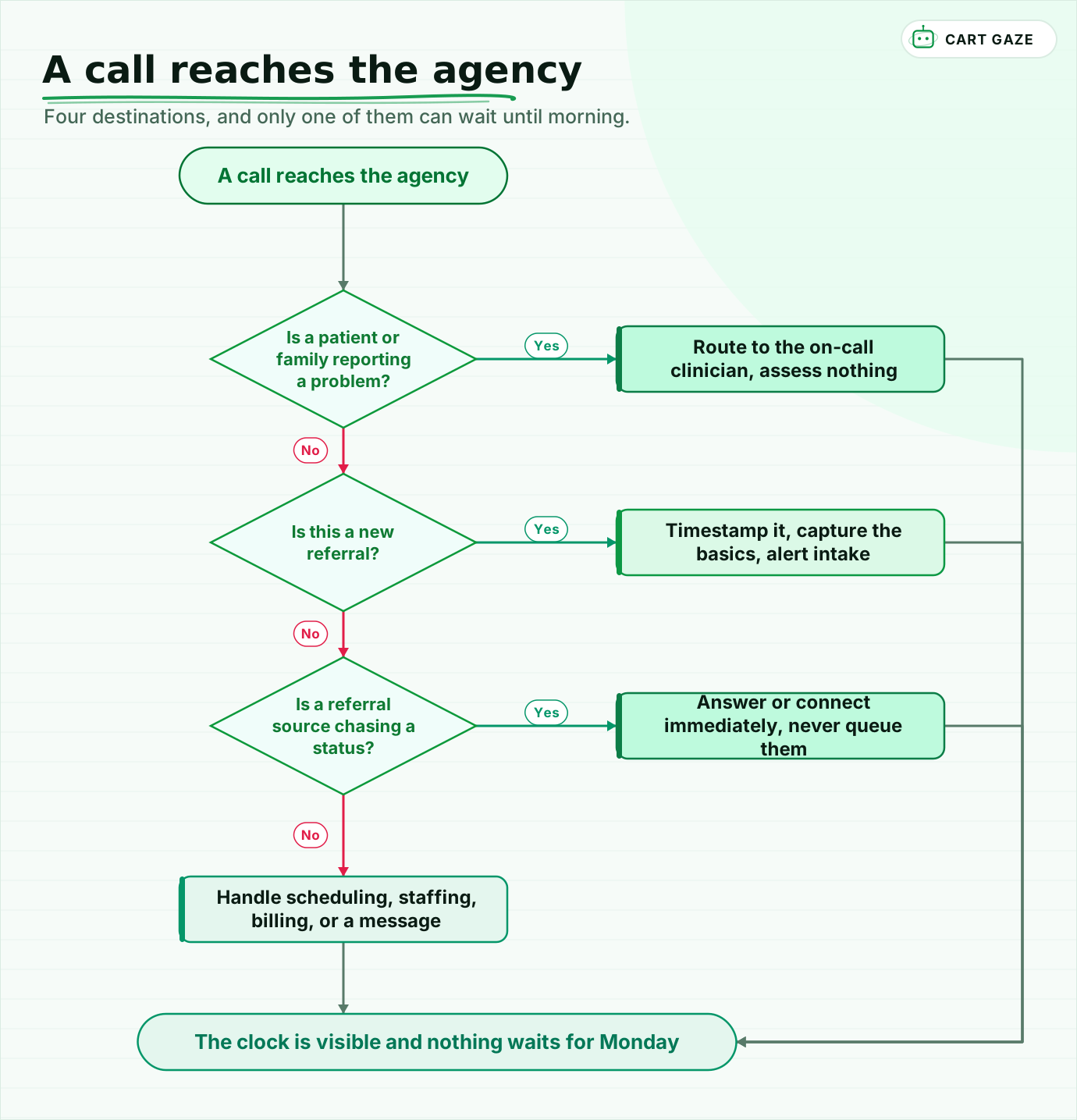 Four destinations, and only one of them can wait until morning.
Walk the routing once. A patient or family reporting a problem goes to a clinician immediately, with nothing assessed by software. A new referral is timestamped, its basics captured, and intake alerted. A referral source chasing status is answered or connected without ever waiting. Everything else is scheduling, staffing, or a structured message.
Do the first check before you talk to anyone about software. A median response measured in minutes means your problem is elsewhere and this is not the purchase to make. A median measured in hours, or in business days, tells you where the growth and the exposure both sit, and it is the same number.
If your median gap between referral arrival and first response is measured in hours, that number is both your compliance risk and your growth ceiling, and it is fixable without hiring anyone. The free Growth Leak Audit sizes the phone side from your own numbers, and the wider question of what these systems should and should not handle is in what an AI receptionist actually does.
Fair questions.
When does the 48-hour home health clock actually start?
At receipt of the referral, not when intake opens it. Surveyors count from arrival whether or not a physician has been verified and whether or not the packet was complete. An agency that receives referrals in the evening and opens them the next morning is routinely spending part of its window before work begins.
Can we ask the physician for a later start of care date if we cannot make 48 hours?
No. Guidance is explicit that an agency unable to complete the initial assessment in time may not request a different start of care date to secure compliance or to accommodate its own convenience. That closes the workaround most agencies reach for first.
How do discharge planners choose which home health agency gets a referral?
Largely by who responds. They have a patient leaving tomorrow and a list, and in practice they work down it until somebody answers. That makes speed of first response more decisive than clinical reputation, which gets you onto the list rather than winning the case.
What can an AI receptionist do for a home health agency?
Timestamp a new referral on arrival and capture the basics, acknowledge the referring source immediately with a name and a time, answer status questions from planners without queueing them, handle scheduling and staffing calls from field clinicians, and route anything urgent to a person after hours.
What must an AI receptionist never handle at a home health agency?
Any call where a patient or family is reporting a change in condition, a fall, a medication problem, or a worsening symptom. Those reach a clinician immediately. The line is harder here than in a clinic because a call that opens about a supply delivery can turn out to be about a wound.
Sources.
- [1]Home health services, 42 CFR Part 484
- [2]Home health admission: timeline to stay compliant
- [3]State operations manual appendix B, guidance to surveyors
- [4]Home health referral intake and the first phone call
- [5]Home health intake agencies and referral management
- [6]Why communication breakdowns slow home health admissions
- [7]Intake to OASIS: how skilled home health agencies start care
- [8]Home health agency staffing trends
Written by

Muhammad Qasim Hammad
Founder, Cart Gaze
Qasim builds AI receptionists and front-office automation for medical and dental practices at Cart Gaze. Posts here start from published sources and real call data, not vendor claims, and every number links back to where it came from.
Keep reading.
 By Practice TypeAI Receptionist for Oral Surgery: Referrals In, Post-Op Calls Out10 min read
 By Practice TypeAI Receptionist for Fertility Clinics: What It Must Never Do10 min read
 By Practice TypeAI Receptionist for Audiology Practices: Why Text Comes First11 min read
 By Practice TypeAI Receptionist for Podiatry: What to Automate, What to Escalate11 min read
 By Practice TypeAI Receptionist for Veterinary Clinics: An Honest 2026 Guide10 min read
 By Practice TypeAI Receptionist for Behavioral Health: Crisis and Part 210 min read