
Patient Referral Programs: Ask More People, Reward Carefully
Roughly 65% of patients say they would refer their provider if asked, and about 12% are actually asked. That gap costs nothing to close, and the reward everybody reaches for first is the risky part.
Table of Contents8 sections
Search for referral program ideas and the advice arrives quickly: offer a $25 gift card, give account credit, run a competition. For a healthcare practice, most of that is somewhere between risky and unlawful, and none of the pages recommending it mention why.
The frustrating part is that the reward was never the opportunity. Reported figures put the share of patients who would refer their provider if asked at around 65%, against roughly 12% who are actually asked. That gap costs nothing to close. It does not need a budget, a platform, or a legal opinion. It needs somebody to ask, at a moment when asking makes sense, and a way to remember whether it worked.
This post covers what a referred patient is actually worth, the legal line around rewarding one, the moments where asking works, and what part of this is genuinely worth automating.
65% would refer, and 12% get asked
The reason practices do not ask is rarely strategy. It is discomfort. Asking a patient to recommend you feels like selling to somebody who came for care, and most clinicians and front desk staff would rather skip it than get the tone wrong.
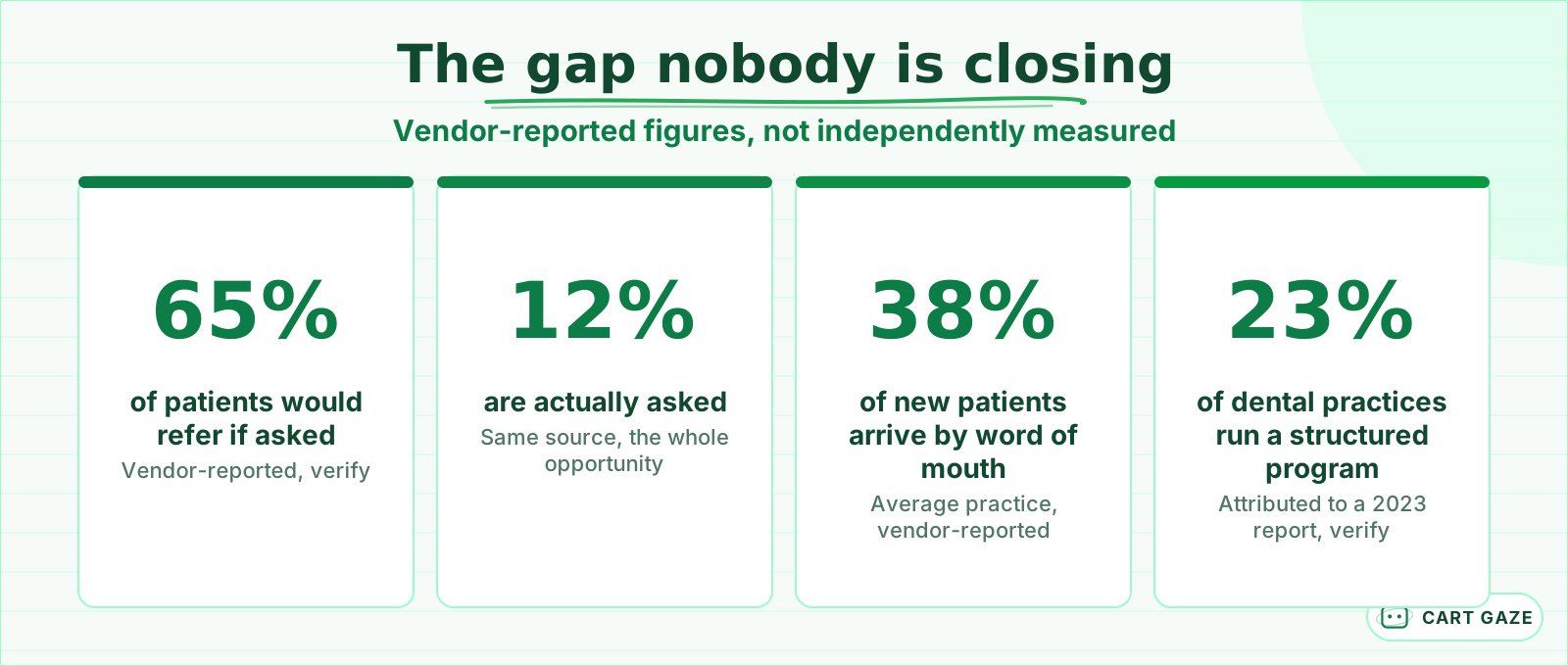 Vendor-published figures. A reason to test at your practice, not a forecast.
The way through that is timing rather than technique. Asked at the wrong moment, at check-in, in a newsletter, on a poster, the request is noise. Asked immediately after somebody says they are pleased, it is barely a request at all, because you are only inviting them to repeat out loud what they just said to you.
There is a second reason practices skip it, and it is structural rather than emotional. Nobody owns the ask. It is not on a job description, it does not appear on any checklist, and it happens or does not happen depending on whether the person in the room that afternoon happens to think of it.
What a referred patient is actually worth
Referrals are already most practices' largest acquisition channel, whether or not anyone manages it. Published figures attribute 40 to 65% of new patient acquisition to referrals, with an average practice seeing around 38% of new patients arrive through word of mouth.
The quality claims are more interesting than the volume ones. Compared against patients arriving through other channels, referred patients are reported to retain about 25% better, to be roughly 20% more likely to complete a treatment plan, and to carry around 30% higher lifetime value.
Those are vendor-reported comparisons rather than measurements at your practice, so read them as a directional argument for paying attention to the channel rather than as numbers to put in a business case. The direction is consistent and unsurprising: somebody who arrives on a friend's recommendation starts the relationship with trust that advertising has to buy.
It is worth being sceptical about the wider claim these figures usually support, which is that a referral programme lifts new patient acquisition by some specific percentage within six months. That number is marketing, the methodology is never shown, and it is not repeated here. What is defensible is narrower and still useful: this channel is large, and at most practices nobody manages it.
Adoption is low enough to be an advantage. Reportedly only about 23% of dental practices run anything structured here, which means the channel producing most of your new patients is, at three practices in four, entirely unmanaged.
The reward question is a legal question
Here is what the marketing pages leave out. Federal law prohibits offering or paying remuneration to induce or reward a referral for any item or service payable by a federal health care program. A separate provision prohibits giving something to a Medicare or Medicaid patient when you know it is likely to influence where they get care.
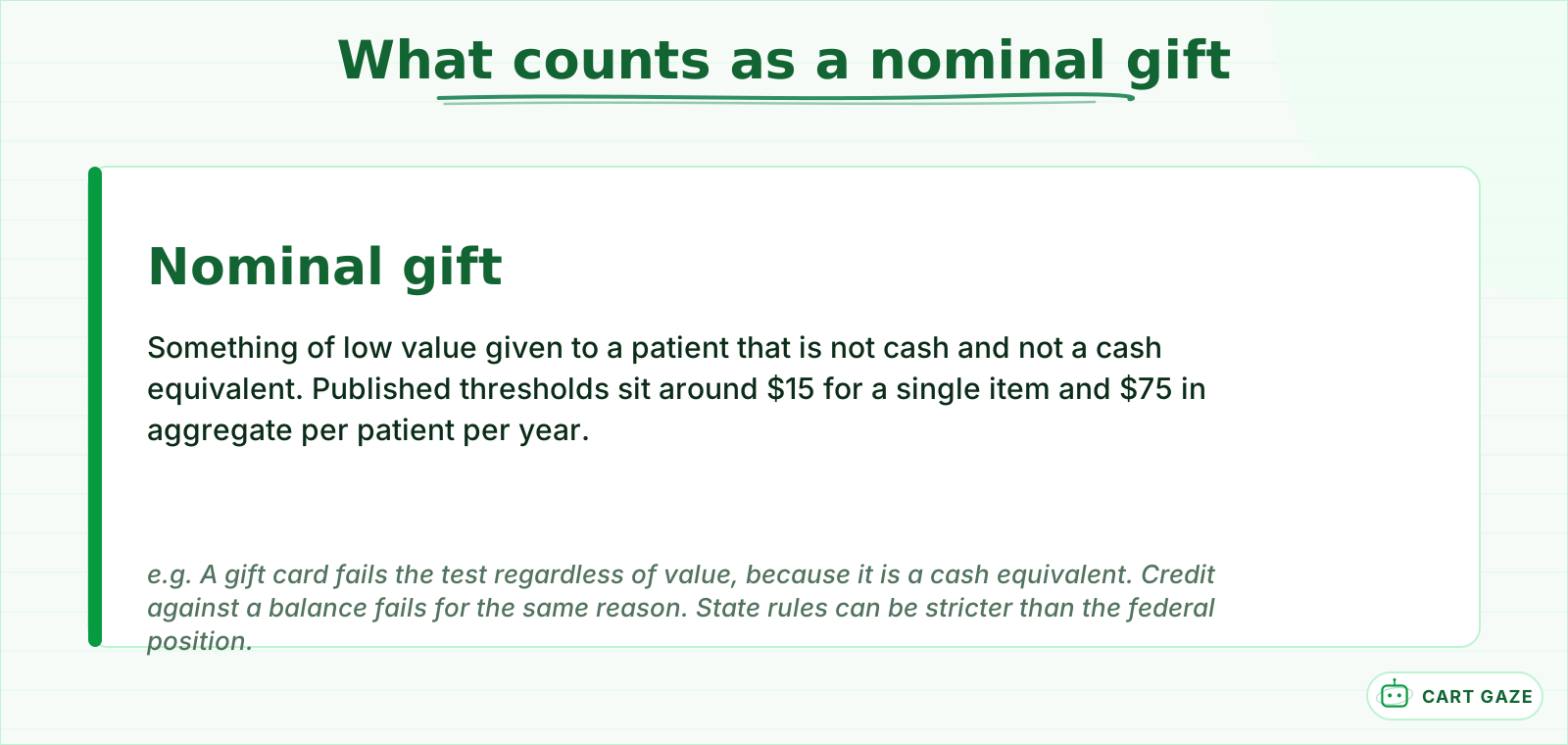 The value is one test. Whether it is a cash equivalent is the other.
The practical consequences are specific. Cash is out. Gift cards are cash equivalents and are therefore out. Account credit against a future balance is a discount tied to a referral, which is exactly the pattern the rules are aimed at. Regulators have recognised nominal gifts that are not cash or cash equivalents, with published thresholds around $15 individually and $75 in aggregate per patient per year.
One more distinction that catches people out. There is a difference between rewarding a patient for sending you business and running an ordinary courtesy that everybody receives regardless of whether they referred anyone. Coffee in the waiting room is not an inducement. A gift that arrives specifically because somebody sent you a friend is a different thing, and the difference is the condition attached rather than the value.
The workaround most practices land on is not a workaround at all. Thank the person rather than paying them: a handwritten note, a mention by name at their next visit, or a donation your practice makes without conditions. Those are not incentives, which is precisely why they are simpler and, anecdotally, better received.
Ask at the right moment, not in a newsletter
Referral asks fail on timing far more often than on wording. A general appeal to everyone reaches people who have no current reason to think about you. A specific ask, moments after a good outcome, reaches somebody already feeling it.
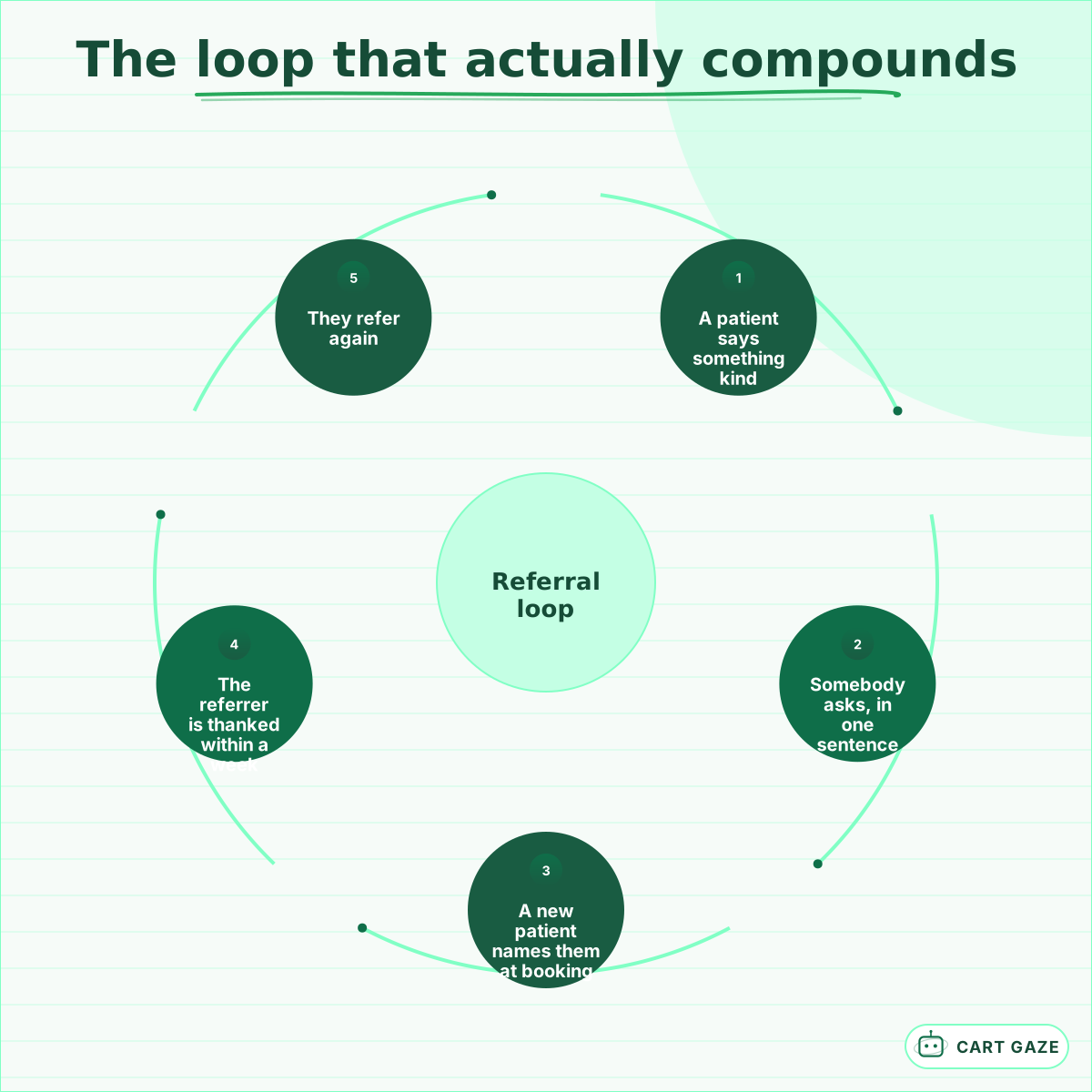 Break any link and it stops being a loop and becomes an accident.
There are four moments worth building around, and each has a natural person to make the ask.
| The moment | What to say | Who says it |
|---|---|---|
| Right after a patient says thank you | "That means a lot. If you know somebody looking, send them our way." | Whoever heard it |
| At the end of a completed treatment plan | "You did the whole thing. Happy for you to tell people." | The clinician |
| After a patient leaves a positive review | A short thank you, and one line inviting a referral | Automated, then a person |
| When a patient refers somebody | Thank them promptly, by name, without an incentive | The practice owner |
The fourth row is the one that compounds. A patient who refers somebody and hears nothing back concludes it was not noticed. A patient who gets a genuine thank you within a week refers again, which is where the actual growth is.
What to automate, and what to keep human
The ask itself should stay human, because the whole value of it is that a person who cares said it. What can and should be automated is everything around the ask: the timing signal, the follow-up, the tracking, and the thank you.
The split matters because automating the wrong half is worse than doing nothing. A mass text asking everybody to refer a friend converts poorly and slightly cheapens the relationship. A clinician saying one sentence at the right moment converts well, and no software can say it for them.
That means a system that flags when a treatment plan completes so the clinician can ask. A message that follows a positive review with a light invitation. A record of who referred whom that does not depend on somebody remembering. And a prompt to thank the referrer promptly rather than a fortnight later.
None of that touches clinical judgement or patient details in any complicated way, which makes it one of the more straightforward things a practice can automate. It sits naturally alongside the review side of the same conversation, covered in automating the ask for reviews, and the wider question of what a system should handle at all is in what an AI receptionist actually does.
Track it, or you are guessing
Almost every practice has a field asking how a patient heard about them, and almost none of those fields are usable. The answer gets captured inconsistently, entered by whoever happens to be free, and reconciled against nothing, which leaves you with a channel you cannot see and therefore cannot manage.
The failure is usually mechanical rather than lazy. A form asks the question at check-in when the patient is filling in six other things, and "Google" is the fastest box to tick even when a neighbour is the real answer. The data is not wrong because people lied, it is wrong because the question was asked at the worst possible moment.
Two changes fix most of it. Ask the question on the phone during booking rather than on a form at check-in, because a caller will name a person and a form will get "Google". And when somebody names a person, write the name down, because that is the only version of this data that lets you thank anybody.
The measurement that matters is not how many referrals you received. It is what share of new patients named a person, and whether that share moves after you start asking. Everything else is a vanity number, and the underlying arithmetic of what a new patient is worth is in the real cost of missed calls.
Start with one moment and one script
Do not build a programme. Pick the single moment where your team most often hears a patient say something kind, write one sentence for them to say next, and run it for 30 days. That is the entire pilot, and it costs nothing but the decision.
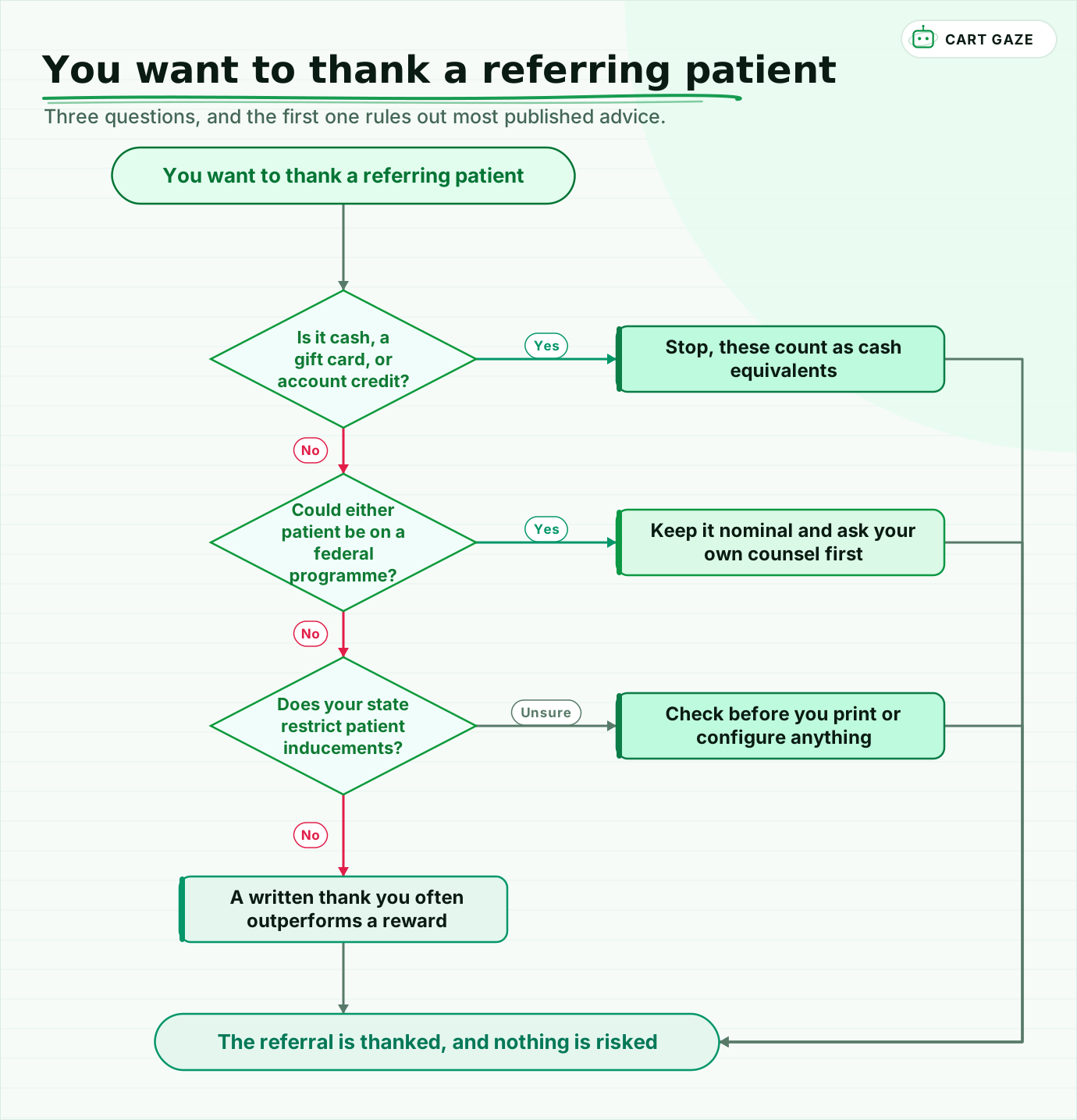 Three questions, and the first one rules out most published advice.
Walk the reward question once, because it is the part that carries risk. Cash, gift cards, and account credit are out. If either patient could be on a federal programme, keep anything you give nominal and talk to your own counsel first. If you are unsure about your state's rules, check before you print anything. And in most cases a thank you outperforms a reward anyway, which makes the whole question easier than the marketing pages suggest.
Run it long enough to see something. Thirty days at a small practice might produce a handful of referrals, which is not enough to prove anything statistically and is more than enough to tell you whether your team can actually bring themselves to say the sentence. That second question is the one that decides whether any of this works.
Then close the loop. Somebody has to notice a referral arriving and thank the person who sent them, quickly and by name, because that single habit is what turns one referral into a pattern. If you want the size of what your phone line is losing before you add another growth project, the free Growth Leak Audit works from your own numbers.
Fair questions.
Can a medical or dental practice pay patients for referrals?
Not with cash, gift cards, or credit against a balance, which are treated as cash equivalents. Federal rules prohibit remuneration to induce or reward referrals for services payable by a federal health care program, and a separate provision covers gifts likely to influence where a Medicare or Medicaid patient gets care.
What can a practice give a patient who refers someone?
Regulators have recognised nominal gifts that are not cash or cash equivalents, with published thresholds around $15 individually and $75 in aggregate per patient per year. In practice a prompt handwritten thank you, or a mention by name at the next visit, is simpler and often better received than any gift.
When is the best moment to ask a patient for a referral?
Immediately after they say something positive, at the end of a completed treatment plan, or shortly after they leave a good review. A general appeal in a newsletter or on a poster reaches people with no current reason to think about you, which is why those campaigns convert so poorly.
How much of a practice's new patient volume comes from referrals?
Published figures attribute 40 to 65% of new patient acquisition to referrals, with an average practice seeing around 38% arriving through word of mouth. These are vendor-published attributions rather than independent measurements, so the useful move is to check the share at your own practice.
What should a practice track to know whether referrals are working?
The share of new patients who name a specific person, and whether that share moves after you start asking. Capture it during the booking call rather than on a check-in form, because a caller will name a neighbour while a form will collect the fastest box to tick.
Sources.
- [1]Health referral statistics
- [2]Dental referral program ideas and adoption
- [3]Patient inducements: law and limits
- [4]Gifts to patients and referring providers
- [5]Federal and state anti-kickback and inducement laws
- [6]Fact sheet: revisions to safe harbors and beneficiary inducements
- [7]Giving gifts in dentistry: compliance limits
- [8]Patient referral program ideas to grow a patient base
Written by

Muhammad Qasim Hammad
Founder, Cart Gaze
Qasim builds AI receptionists and front-office automation for medical and dental practices at Cart Gaze. Posts here start from published sources and real call data, not vendor claims, and every number links back to where it came from.
Keep reading.
 Patient Acquisition & GrowthGoogle Business Profile Automation Without a HIPAA Slip10 min read
 Patient Acquisition & GrowthMissed Call Text Back for Medical Practices: How It Works10 min read
 Patient Acquisition & GrowthLead Scoring for Paid Ads: Stop Wasting Spend on Cold Leads10 min read
 Patient Acquisition & GrowthAI Search Visibility for Medical Practices: A Practical Checklist10 min read
 Patient Acquisition & GrowthTurn Website Chat Into Booked Appointments the Compliant Way11 min read
 Patient Acquisition & GrowthSpeed to Lead: Why New Patients Book With Whoever Answers First11 min read