
AI Receptionist for Direct Primary Care: Protect the Promise
Members pay roughly $98.64 a month for the privilege of reaching their physician directly. Put a machine in front of that and you have sold something and then taken it away.
Table of Contents8 sections
Most advice about automating a medical phone line starts from the assumption that fewer calls reaching the doctor is a win. In a membership practice that assumption is exactly backwards. Members are paying, on average around $98.64 a month, for the specific privilege of reaching their physician directly. Interpose a machine and you have sold something and then taken it away.
That does not make automation useless here. It makes the target different. A direct primary care or concierge practice phone is carrying at least four different jobs, and only one of them belongs to the members. The rest, prospective members, employers, pharmacies, labs, records requests, and sales calls, are eating the physician's day without contributing to the thing members are paying for.
This post covers what a filter should intercept and what it must never touch, why prospective member calls need handling as sales rather than as intake, and what the employer channel and the 2026 tax change are doing to enquiry volume.
In this model, access is the product
The economics are unusual and they drive everything else. Mature direct primary care panels cluster around 400 to 700 patients, with 600 to 800 commonly cited, and concierge panels often sit below 300. Small panels mean each member is individually valuable and individually known, which is precisely why an anonymous phone experience is so damaging.
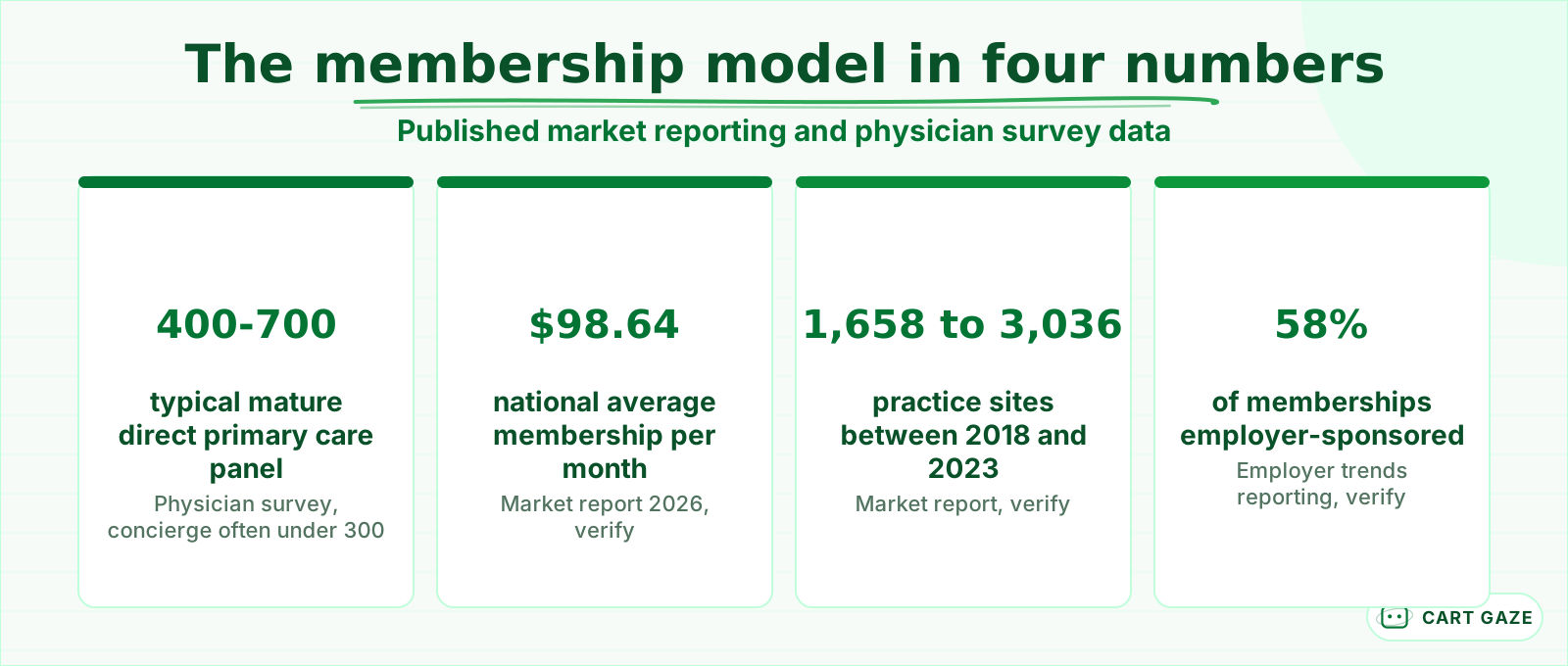 Market-report and survey figures for 2026. Verify before repeating.
Vendors sell into healthcare on containment, meaning the share of calls handled without a person. That metric is useful in a busy multi-provider clinic. In a membership practice, a high containment rate on member calls is a report showing how efficiently you are breaching your promise.
Pricing reinforces the point. Reported averages run about $105.93 per member per month in practices under 200 patients and $77.74 in those above 500, which tells you that the smaller the panel, the more each member is paying for individual attention. The practices with the most to lose from an impersonal phone are the ones charging most for the opposite.
The practice phone is doing four jobs
Separating the jobs is the whole exercise, and most practices have never written them down, because all of them arrive on one number that is usually the physician's mobile. Once they are on paper the answer is obvious: one category needs the doctor and the rest are competing with it for the same few seconds.
| What the call is | Who should handle it | Can automation carry it |
|---|---|---|
| Member with a clinical question | The physician, directly | No |
| Member with an admin question | Staff, or the physician if solo | Only with a member's explicit preference |
| Prospective member enquiry | Whoever sells, promptly | Yes, and it should book an enrolment call |
| Employer or benefits contact | Whoever handles group deals | Yes, capture and route |
| Pharmacy, lab, imaging | Staff or a queue | Yes |
| Records, referrals, sales calls | Anywhere but the physician | Yes |
The second row is the one physicians argue about. A member asking to move an appointment is not clinically urgent, and handling it without the physician is genuinely reasonable. The trap is deciding that on the member's behalf without ever telling them, which is how a promise quietly erodes into a phone tree.
Look at how much of that table is not a member. In a solo practice all of it lands on the same phone, which means a physician between patients is fielding a pharmacy verification and a marketing call in the same 10 minutes that a member is trying to reach them.
Member calls should never meet a machine
The rule is short enough to state in a line: if the caller is a member, the call goes through. Not through a greeting, not through a menu, not through a system politely establishing what it is regarding. Straight through, exactly as it would have before you bought anything, because that pass-through is the product.
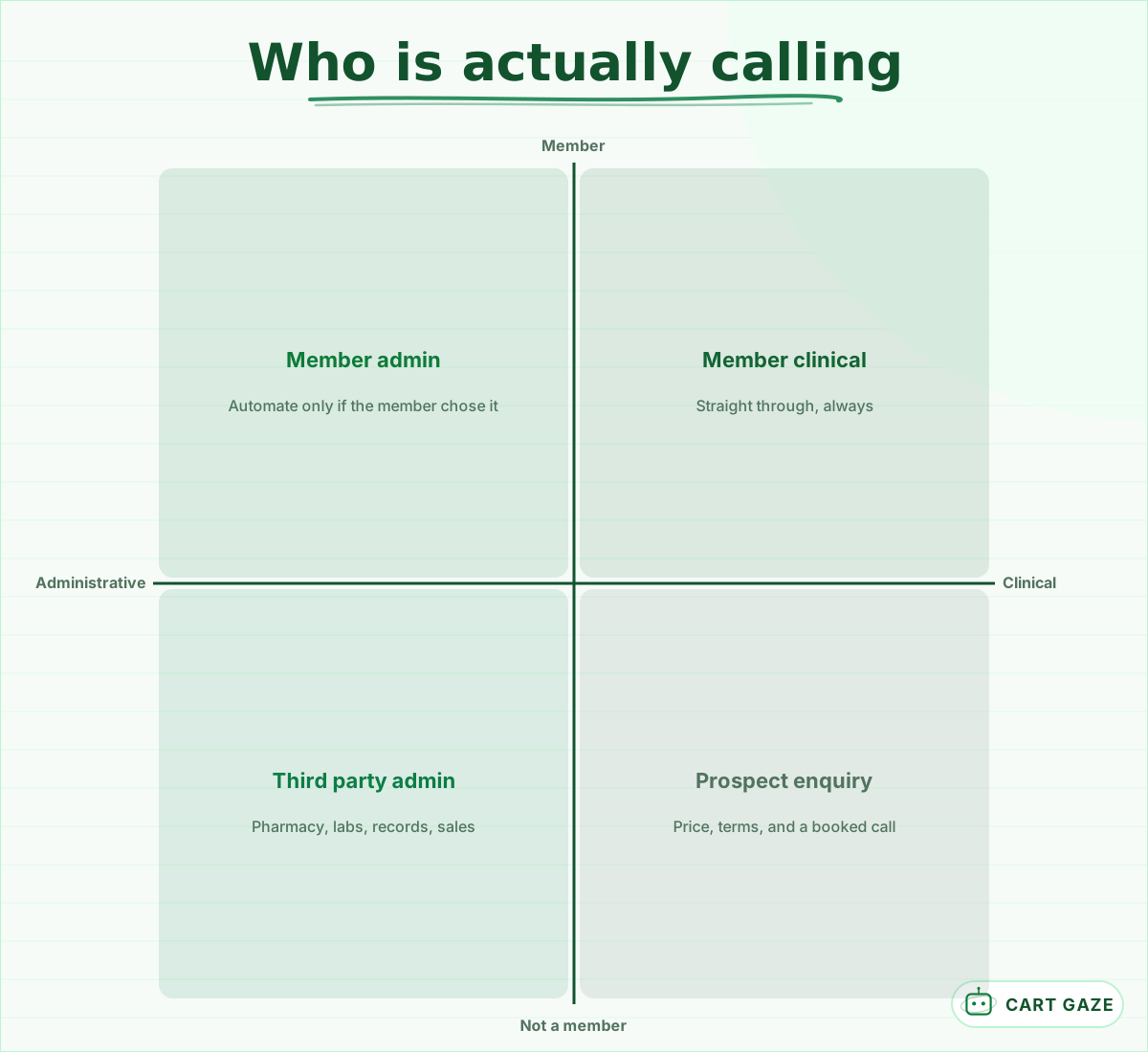 Only the top right must never meet a machine. The rest is fair game.
Implementing that is mostly a data problem rather than a voice problem. The system needs to know your member list and recognise the number calling, so the decision happens before anyone hears anything. Practices that skip this end up with a system that asks members to identify themselves, which is the experience they were paying to avoid.
Growth is making this harder rather than easier. Practice sites in this model reportedly grew from 1,658 to 3,036 between 2018 and 2023, and membership volume has climbed far faster than that. A physician who could hold every member's number in their head at 150 members cannot at 600, which is when the recognition has to move into the system.
There is one legitimate exception, and it belongs to the member rather than to you. Some members genuinely prefer to book routine appointments or request records without interrupting their physician, and offering that as a choice is different from imposing it as a default. The rule stays: the member decides, and the default is a person.
What automation should actually intercept
Everything else is fair game, and there is more of it than most physicians realise until they count. Pharmacy verifications, lab and imaging follow-up, records requests, referral coordination, insurance enquiries from people who do not understand the model, and the steady background of vendors selling things.
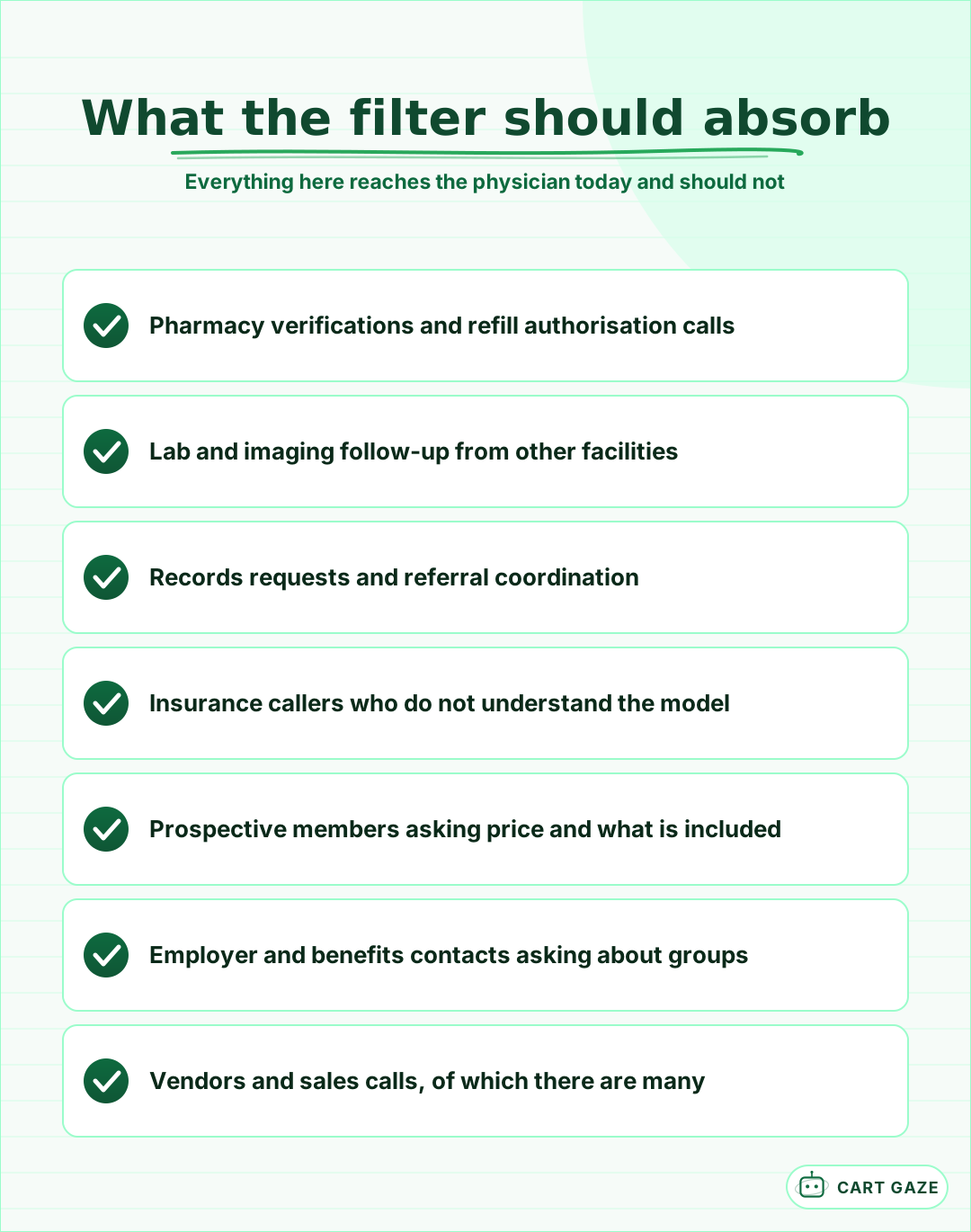 Seven interceptions, none of which touches a member call.
The volume surprises people. A solo practice with 500 members might take a handful of member calls on a normal day and several times that number of calls from everyone else, because pharmacies, labs, and vendors do not scale with panel size the way member contact does.
The wins here are unglamorous and add up quickly. A system that answers "do you take my insurance" correctly, which in most DPC practices means explaining a membership model rather than saying no, saves a conversation the physician has had a hundred times. The same is true of "what does membership include" and "how do I get records sent to a specialist".
Prospective members are a sales call, not a patient call
An enquiry about joining is a commercial conversation and should be handled like one. This model competes on transparency, so the caller usually expects a straight answer about price, what is included, and what is not, and a practice that says someone will call back has already lost ground to one that answered.
The right handling is an honest price, a clear statement of what membership does and does not cover, and a booked enrolment conversation with the physician or whoever enrols. That last step matters: a booked call converts far better than a promise of a callback, and it moves the conversation to a time when the physician is not between patients.
Speed matters more here than in almost any other setting, because a prospective member is by definition someone unhappy with the access they currently have. Reaching a real answer quickly is not just good service, it is a live demonstration of the thing you are selling.
Volume on this line is likely to rise. From 1 January 2026, patients on high-deductible health plans may use health savings account funds toward direct primary care fees, up to $150 a month for an individual and $300 for a family. Anything that makes membership cheaper in practice tends to increase enquiries, and the tax detail is a question for an adviser rather than for your phone script.
The employer channel changes the phone
The largest structural shift in this model is that memberships increasingly arrive in groups. Reported figures put 58% of direct primary care memberships as employer-sponsored, which introduces a caller almost no solo practice designed for: a human resources manager asking about pricing for 40 people.
It also changes what a good answer sounds like. An HR manager asking what membership costs is not asking your individual price, they are asking whether you can serve 40 employees, what happens when someone leaves the company, and how invoicing works. A practice that answers the individual question has answered the wrong one.
That caller behaves nothing like a patient. They want pricing structure, contract terms, eligibility rules, and a proposal, and they will call three practices in an afternoon. Capturing the group size and a decision timeline on that first call is worth more than any individual member enquiry, and it is exactly the sort of structured capture automation does well.
Start by separating the two lines
Three checks, and none of them requires buying anything or talking to a vendor first. For one week, tally every call the physician personally took and mark whether it was a member. Then write down the five non-clinical questions you answer most. Then call your own number as a prospective member at 7 p.m. and see what happens.
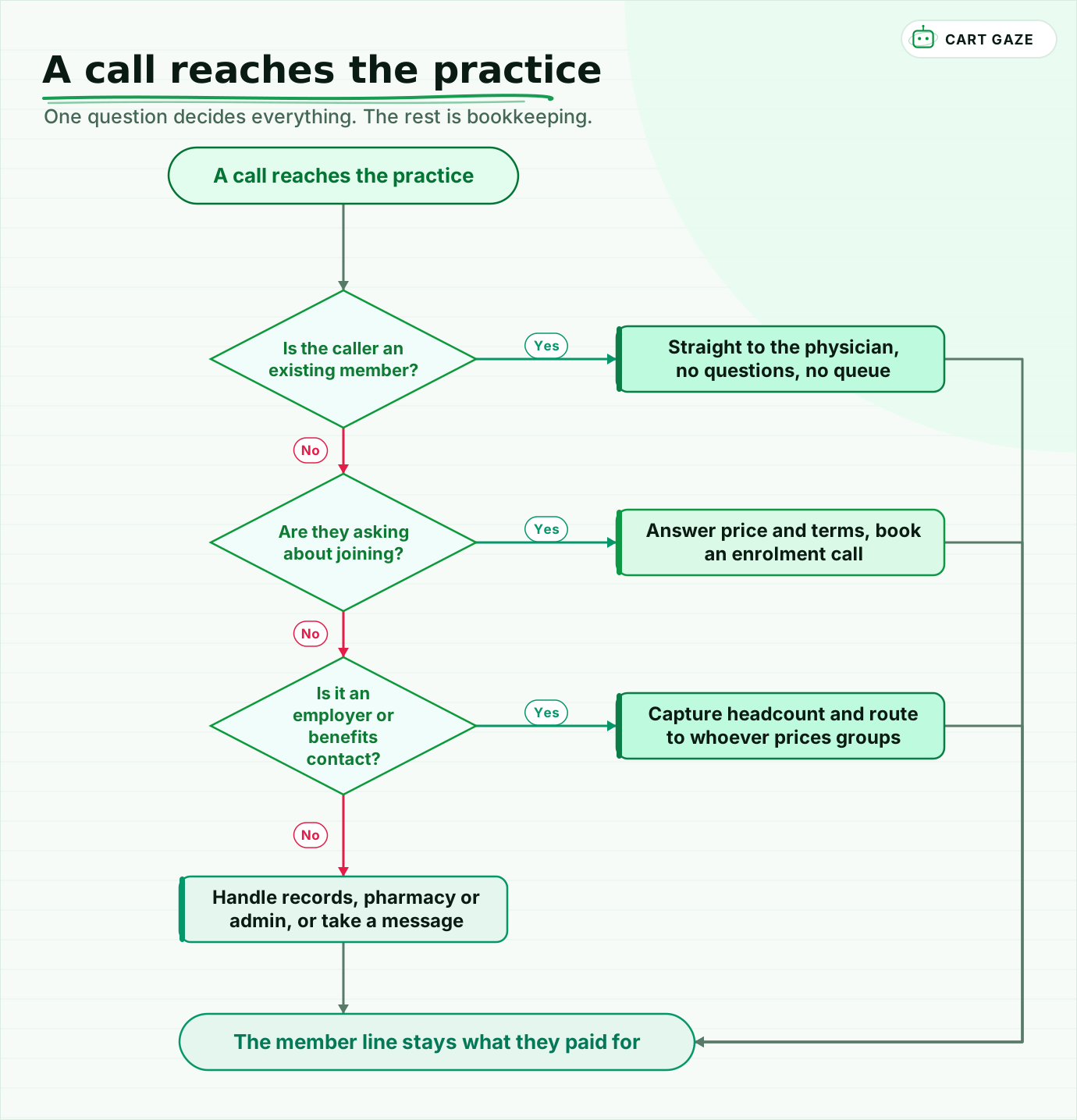 One question decides everything. The rest is bookkeeping.
Walk the routing once. A recognised member goes straight through, with no questions and no queue. Someone asking about joining gets an honest price and a booked enrolment call. An employer contact is captured with headcount and routed to whoever prices groups. Everything else is admin, and none of it should reach the physician between patients.
The 7 p.m. call is the one that usually surprises people. Enquiries about membership arrive in the evening, from someone who spent the day frustrated with their current practice, and what they hear at that hour decides whether they call you back in the morning.
If the week of tallying shows that most of the physician's calls were members, this purchase is not urgent and you should spend the money elsewhere. If it shows the reverse, you have found hours a week hiding in plain sight. The general boundaries of what these systems handle are in what an AI receptionist actually does, the escalation design that keeps a member path clean is in designing the handoff, and the free Growth Leak Audit sizes the enquiry side from your own numbers.
Fair questions.
Should a direct primary care practice use an AI receptionist at all?
Yes, but pointed at the opposite target from a normal clinic. It should intercept everything that is not a member: prospective member enquiries, employer contacts, pharmacies, labs, records requests, and sales calls. Member calls should reach a person, because direct access is what the membership fee buys.
How does the system know a caller is a member?
By recognising the number against your member list, so the decision happens before the caller hears anything at all. Practices that skip this end up with a system that asks members to identify themselves, which reproduces exactly the phone experience they left their previous practice to escape.
How should a prospective member enquiry be handled?
As a sales call. Give an honest price, say clearly what membership does and does not include, and book an enrolment conversation rather than promising a callback. This model competes on transparency, and a caller who reaches a real answer has just been shown the product working.
What is different about employer calls to a membership practice?
An HR manager is asking whether you can serve a group, not what one person pays. They want pricing structure, what happens when an employee leaves, and how invoicing works, and they are calling several practices that afternoon. Capturing headcount and a decision timeline on that first call matters more than any individual enquiry.
Is it ever acceptable for a member to reach an automated system?
When the member chose it. Some prefer to book routine appointments or request records without interrupting their physician, and offering that as an option is entirely different from imposing it as a default. The member decides, and the default stays a person.
Sources.
- [1]State of direct primary care: physician survey takeaways
- [2]US concierge medicine market report
- [3]Concierge medicine versus direct primary care compared
- [4]Direct primary care versus concierge medicine explained
- [5]Direct primary care model guide
- [6]Key differences between direct primary care and concierge medicine
- [7]What shrinking panels do to access and wait times
Written by
Muhammad Qasim Hammad
Founder, Cart Gaze
Qasim builds AI receptionists and front-office automation for medical and dental practices at Cart Gaze. Posts here start from published sources and real call data, not vendor claims, and every number links back to where it came from.
Keep reading.
 By Practice TypeAI Receptionist for Fertility Clinics: What It Must Never Do10 min read
 By Practice TypeAI Receptionist for Oral Surgery: Referrals In, Post-Op Calls Out10 min read
 By Practice TypeAI Receptionist for Podiatry: What to Automate, What to Escalate11 min read
 By Practice TypeAI Receptionist for Veterinary Clinics: An Honest 2026 Guide10 min read
 By Practice TypeAI Receptionist for Medical Weight Loss Clinics: GLP-1 Call Surge10 min read
 By Practice TypeAI Receptionist for Behavioral Health: Crisis and Part 210 min read