
AI Receptionist for Physical Therapy: Protect the Plan of Care
Physical therapy runs on recurring visits, so cancellations and no-shows break both the plan of care and the revenue. Here is what an AI receptionist can book and fill, and where it must route to a clinician.
Table of Contents8 sections
- Why physical therapy and chiropractic schedules break differently
- What patients are actually calling your PT front desk about
- Where an AI receptionist fits, and where it must route to your therapist
- How an AI receptionist protects the plan of care
- What no-shows and empty slots actually cost
- Book the automation against your real schedule before you buy
- Choose the setup that matches your caseload
- Fair questions
A physical therapy or chiropractic schedule is not built on single visits. A plan of care usually runs 2 to 3 sessions a week for several weeks, so one new patient can hold 10 to 12 slots that all have to be booked and often rescheduled. When one of those slots empties late, it takes about 5 phone calls to fill it, and the front desk is already buried.
That is why cancellations and no-shows hurt a rehab clinic twice. Outpatient PT clinics report combined no-show and cancellation rates near 20%, and each empty slot costs roughly $160 to $200. A missed visit is lost revenue, and it is also a gap in a treatment plan that only works if the patient keeps coming back.
This post covers what an AI receptionist for physical therapy and chiropractic actually does with that recurring schedule: booking the whole series, sending reminders, rescheduling, and filling a late cancellation from a waitlist. It also draws the line the automation must never cross, because a pain flare-up or a question about stopping treatment belongs to your clinician, not a script.
Why physical therapy and chiropractic schedules break differently
Rehab runs on repeat visits, not one-off appointments. A single plan of care can fill 10 to 12 slots at 2 to 3 visits a week, so a schedule is a web of linked bookings. Cancel one slot and you lose a booking and a treatment session the plan depended on, not just a single square on the calendar.
Compare that to a single-visit practice. A dental cleaning or a med-spa facial is one booking that stands on its own. In rehab, the therapist prescribes a course, and the front desk has to turn that course into a string of appointments that survive work schedules, weather, and flare-ups over a 6 to 8 week arc before the frequency tapers off.
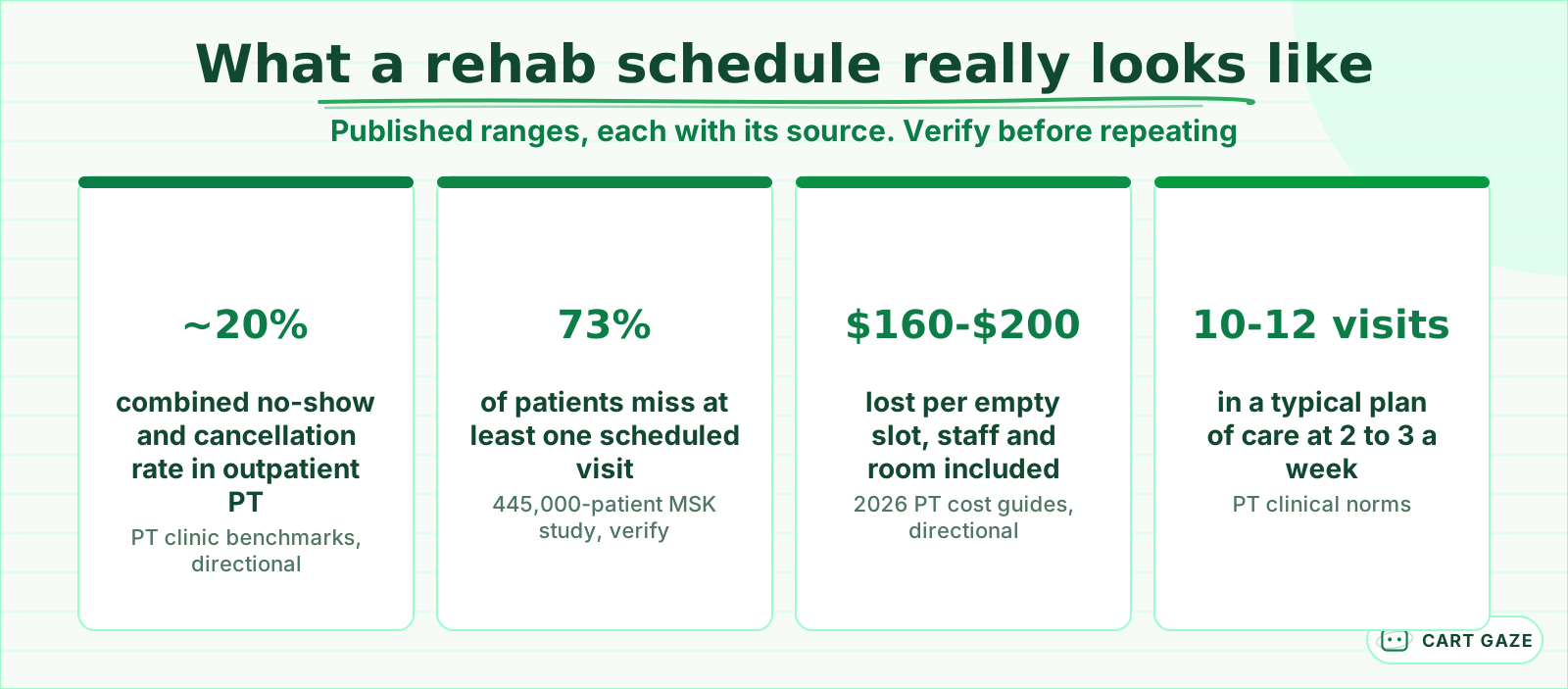 Published ranges, each sourced. Reasons to measure your own schedule, not your result.
The numbers say most of those courses do not survive intact. In one of the largest U.S. studies, covering nearly 445,000 patients, 73% missed at least one scheduled visit for musculoskeletal care. Fewer than 1 in 4 patients finishes the full plan a therapist prescribes. Chiropractic looks the same from the front desk: clinics that skip reminders report roughly 16% to 18% of appointments missed, and those gaps break the same kind of recurring adjustment schedule. Every missed link makes the next one likelier, which is how a booking problem quietly becomes a clinical outcome problem.
What patients are actually calling your PT front desk about
Most calls to a rehab front desk are scheduling, not clinical. Patients book the next session, move an appointment, ask about insurance, or cancel. A busy clinic can log 80 or more scheduling calls in a single day. A smaller share are clinical, a new pain or a question about continuing, and those need a person.
The scheduling calls are relentless because the schedule itself keeps moving. One cancelled slot means about 5 calls to fill it. One shifted appointment means a round of voicemails and phone tag. The misses cluster at lunch, late afternoon, and right after the referral visit, which are the exact windows your front desk is slammed or already gone home.
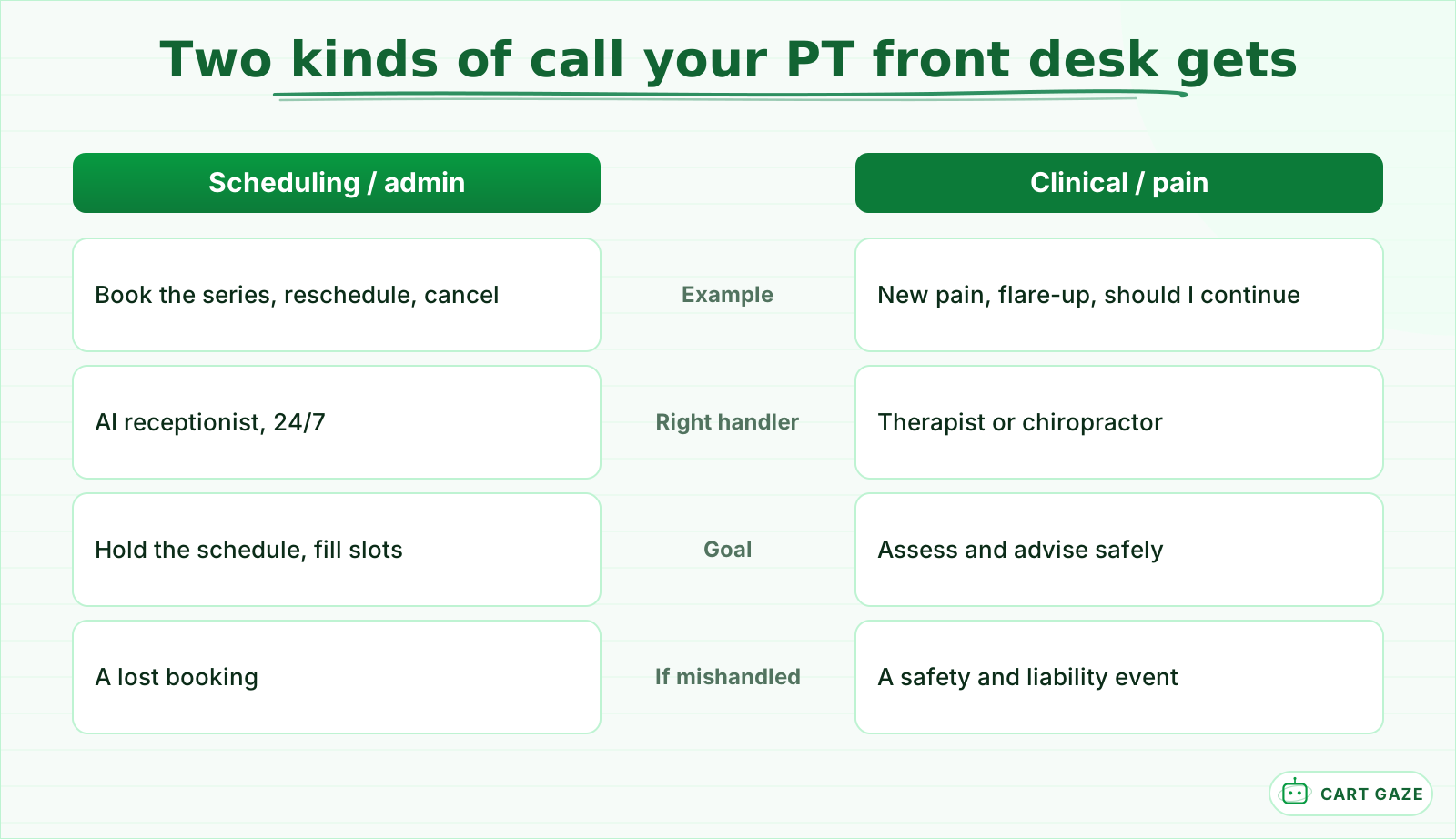 The AI owns the scheduling column. The clinical column always reaches a human.
A missed call here is not a small thing. A new-patient evaluation call that lands in voicemail can be $600 to $1,500 in plan-of-care revenue walking to the clinic down the street, because that one call represents an entire course of visits rather than a single appointment. We break the wider math down in the real cost of missed calls.
Where an AI receptionist fits, and where it must route to your therapist
An AI receptionist handles the scheduling load and stops at the clinical line. It can answer 24/7, book the visit series, reschedule, confirm, and take messages. It must not judge a pain flare-up, adjust a treatment, or tell a patient whether to keep coming. The safe rule is short: it recognizes and redirects, it never advises.
The split is easy to see once you sort calls by what they actually need.
| Patient request | AI receptionist handles it | Routes to the PT or chiropractor |
|---|---|---|
| Book the initial evaluation | Yes, 24/7, into an open slot | Only if insurance or a referral is unclear |
| Book the full series at 2 to 3 a week | Yes, all the recurring slots at once | No |
| Reschedule or confirm a session | Yes, finds the next open time | No |
| A late cancellation | Yes, offers the slot to the waitlist | No |
| "My back is worse, should I come in?" | No, takes a structured message | Yes, every time |
| "Should I stop treatment early?" | No, books a check-in | Yes, a clinical call |
That bottom boundary is the one that carries real risk.
If you have never mapped where that line sits, start with what an AI receptionist does and where it stops, then apply the same boundary to your own intake and follow-up calls. The scheduling work is fair game for automation. The clinical judgment is not.
How an AI receptionist protects the plan of care
The real value in rehab is holding the series together. An AI receptionist books all the sessions up front, sends reminders before each one, and reschedules a conflict instead of losing it. When a patient cancels late, it offers that slot to a waitlist, so the empty time gets refilled instead of billed to nobody.
Reminders alone move the needle. A randomized trial in outpatient PT clinics cut nonattendance from 16% to 11% just by sending an SMS reminder before the visit. Broader reminder studies land in a similar 30% relative-reduction range, though the exact number depends on your patients and how the message is worded.
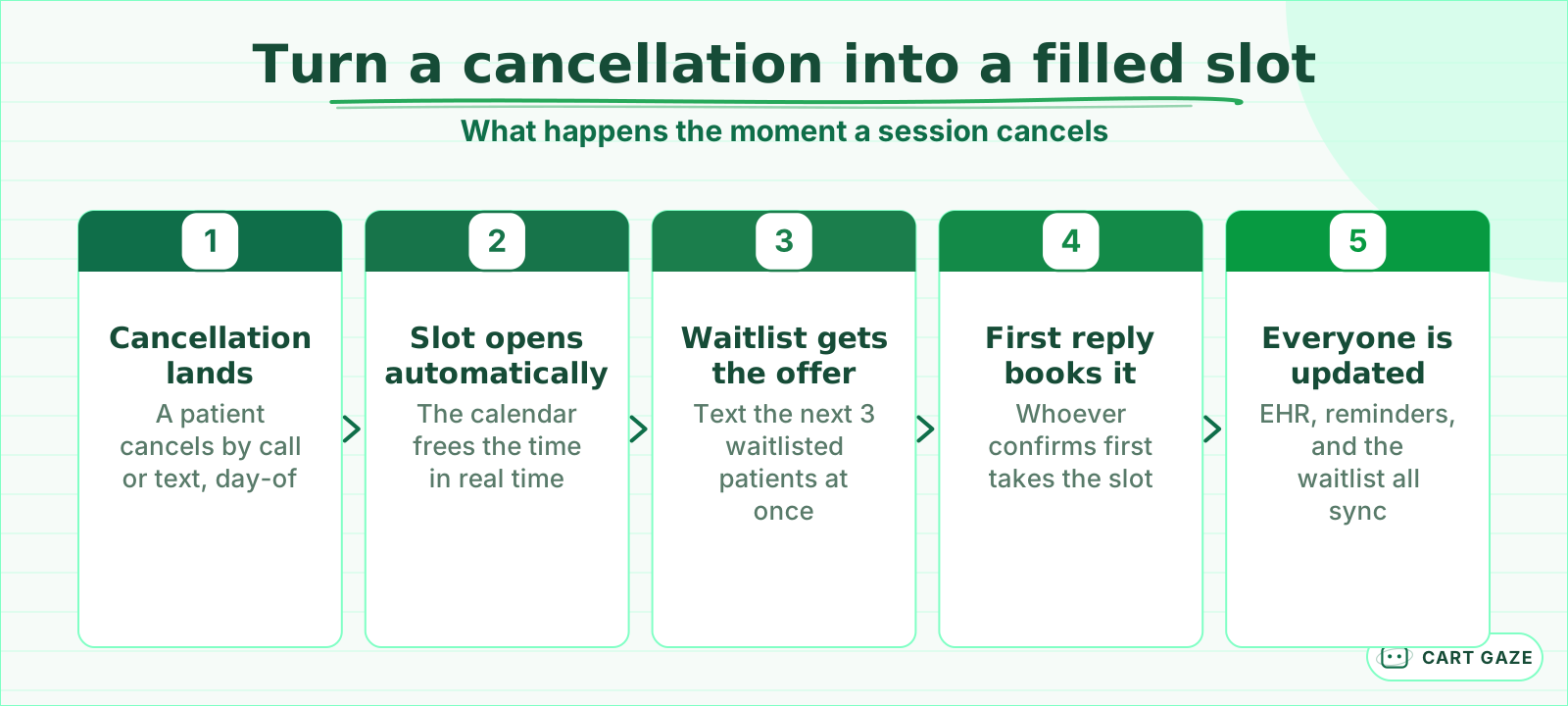 The part a busy front desk rarely finishes in time. Automation does it in seconds.
The waitlist fill is the part a person rarely finishes in time. By the time the front desk hears about a Tuesday cancellation, the odds of calling down a list and landing a replacement before the slot passes are low. Automation can text the next 3 waitlisted patients the moment the cancellation lands and book whoever answers first.
Every refilled slot and kept series also chips at your no-show rate, which is worth attacking on its own terms. The tactics in reducing patient no-shows stack cleanly on top of automated booking rather than replacing it.
What no-shows and empty slots actually cost
Empty slots cost more than the missed visit. A rehab session reimburses roughly $85 on average, and each no-show or late cancellation is commonly put at $160 to $200 once you count idle staff and an empty room. Over a year, that leak runs into the tens of thousands for a single clinic.
Put your own numbers on it before you trust anyone else's. Say a clinic runs 100 visits a week with a 20% combined no-show and cancellation rate. That is 20 lost visits a week, and at $85 each it models to about $1,700 a week, or roughly $88,000 a year. That figure is modeled, so swap in your own visit count and rate before quoting it.
Vendor guides put the average PT clinic's unrealized revenue from no-shows and cancellations near $250,000 a year. Treat that as a ceiling worth verifying, not a promise. The honest version of the number is the one your own schedule produces.
Book the automation against your real schedule before you buy
The right setup depends on your caseload and your tools, so measure before you shop. Pull last month's calls and cancellations, tag how many were scheduling versus clinical, and check whether a vendor writes back to your EHR or scheduler. A demo on someone else's clinic tells you almost nothing about yours.
The write-back matters more than the demo. If the AI books into a spreadsheet the front desk still has to copy into your EHR by hand, you have added work, not removed it. Bookings, reschedules, and cancellations need to land in the system your clinicians already open, so the calendar the whole clinic trusts stays true.
One last trap sits on the compliance side. Any vendor that touches patient details is a business associate and needs a signed BAA, and you should know what the system records, reads back, and deletes. Be skeptical of a page that calls itself "HIPAA certified," because no such certification exists. HIPAA is a configuration and a contract, not a badge you can buy.
Choose the setup that matches your caseload
The decision comes down to two questions your schedule already answers: how much of your call volume is scheduling you could automate, and how large is the recurring booking you keep losing to cancellations. Match the routine, high-volume scheduling to an AI receptionist, and keep every clinical call on a human path.
Walk the flow once. A clinical or pain question goes to your therapist or chiropractor, every time. A booking, reschedule, or cancellation goes to the AI, which can hold the series and fill the gap. Anything that touches health details needs a BAA-covered vendor and a logged handoff, and the rest can be a simple text-back.
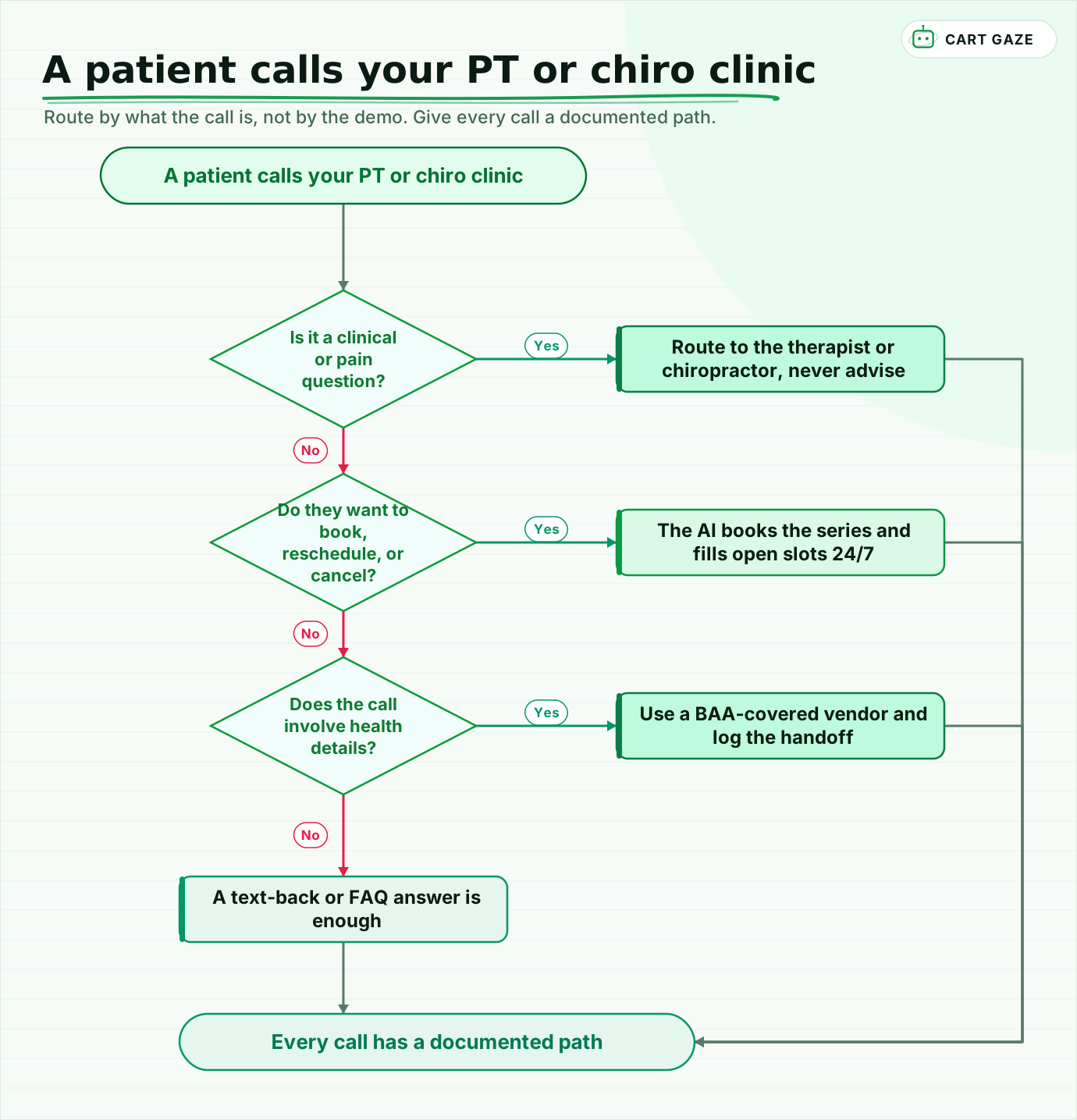 Route by what the call is, not by the demo. Give every call a documented path.
Start narrow. Pilot on one call type, new-patient scheduling or cancellation fills, run it for 30 to 60 days, and read the transcripts before you expand. Then re-measure recaptured visits in your own calendar, not a vendor slide, because someone else's before-and-after is not your clinic. If you would rather have the leak sized for you first, the free Growth Leak Audit counts the scheduling calls and cancellations you are losing before anyone talks tools.
Fair questions.
Can an AI receptionist book a whole physical therapy plan of care?
Yes. Because a plan of care is usually 2 to 3 visits a week across 10 to 12 sessions, an AI receptionist can book the entire recurring series at the initial evaluation, not just the next visit. It also confirms, reschedules conflicts, and reminds patients before each appointment, which is exactly where a busy front desk tends to fall behind.
Will an AI receptionist answer questions about pain or whether to continue treatment?
No, and it should not. A pain flare-up, a new symptom, numbness, or a question about stopping care is clinical, and it has to reach your therapist or chiropractor. A safe setup recognizes those calls, takes a structured message or books a check-in, and routes them to a human the same day rather than answering them itself.
How much do no-shows cost a physical therapy or chiropractic clinic?
Each empty slot is commonly put at $160 to $200 once you count idle staff and the room. As a model, a clinic running 100 visits a week at a 20% miss rate loses about 20 visits weekly, near $1,700 at $85 a session, or roughly $88,000 a year. That is modeled, so run it on your own numbers.
Can an AI receptionist fill a last-minute cancellation?
Yes, and this is where it beats a busy front desk. The moment a session cancels, the tool can text the next 3 waitlisted patients at once and book whoever confirms first, then sync the calendar and reminders. A person often cannot call down a list fast enough to refill a same-day slot before the time passes.
Is an AI receptionist for physical therapy HIPAA compliant?
HIPAA compliance is a configuration and contract question, not a product badge, and "HIPAA certified" does not exist. Any vendor that handles patient details is a business associate and must sign a Business Associate Agreement. Before a patient line goes live, confirm the BAA is in place and ask what the system records, reads back, and deletes.
Sources.
- [1]No-show appointment: how PT clinics can stay on track (rates, per-slot cost)
- [2]Prevalence and predictors of no-shows to physical therapy for musculoskeletal conditions
- [3]How often should you go to physical therapy (visit frequency and plan of care)
- [4]The true cost of patient no-shows: how much revenue a PT clinic loses
- [5]How therapy practices stop missing patient calls (missed eval-call revenue)
- [6]Stop the 80 calls a day: reducing call volume at a PT front desk
- [7]SMS reminders reduce nonattendance in physical therapy outpatient clinics (RCT)
- [8]6 signs your PT patient is about to drop out (early-visit adherence)
- [9]Reasons for patient no-shows and drop-offs after initial evaluation in PT
- [10]5 ways to reduce missed chiropractic appointments (reminder rates)
- [11]7 best AI receptionists for physical therapy 2026 (vendor landscape)
Written by

Muhammad Qasim Hammad
Founder, Cart Gaze
Qasim builds AI receptionists and front-office automation for medical and dental practices at Cart Gaze. Posts here start from published sources and real call data, not vendor claims, and every number links back to where it came from.
Keep reading.
 By Practice TypeAI Receptionist for Fertility Clinics: What It Must Never Do10 min read
 By Practice TypeAI Receptionist for Oral Surgery: Referrals In, Post-Op Calls Out10 min read
 By Practice TypeAI Receptionist for Audiology Practices: Why Text Comes First11 min read
 By Practice TypeAI Receptionist for Podiatry: What to Automate, What to Escalate11 min read
 By Practice TypeAI Receptionist for Veterinary Clinics: An Honest 2026 Guide10 min read
 By Practice TypeAI Receptionist for Medical Weight Loss Clinics: GLP-1 Call Surge10 min read