
AI Receptionist for an ENT Practice: The 14-Day Clock
Sudden hearing loss sits inside a 14-day treatment window, so an ENT booking decision can be clinical. Here is what an AI receptionist safely handles on an otolaryngology line and what it must route to a person.
Table of Contents8 sections
- What an ENT front desk is actually sorting
- Sudden hearing loss runs on a 14-day clock
- The ENT calls that must reach a clinician
- Late cancellations are the bigger number nobody tracks
- What an AI receptionist genuinely does on an ENT line
- How to configure and test it before go-live
- Where to start
- Fair questions
Someone calls your ENT office on a Tuesday and says the hearing in their right ear disappeared over the weekend. Your front desk offers the next available slot, four weeks out. That booking just consumed the entire treatment window, because sudden sensorineural hearing loss runs on a 14-day clock.
This is what makes automating an ENT phone line different from automating a dental one. Most calls really are routine. A handful are not, and the ones that are not do not sound urgent to a scheduler working from an availability screen. A published adherence analysis found only 35.8% of sudden hearing loss patients received an audiogram within the guideline window, and 48.7% got systemic steroids in time.
This post covers what an ENT front desk is actually sorting, the calls that must reach a clinician, the late-cancellation number most practices never measure, and how to configure a voice agent so it books the routine work without touching the clinical decisions.
What an ENT front desk is actually sorting
An ENT line carries an unusually wide mix: routine sinus and allergy follow-ups, hearing and balance testing, pediatric ear tube visits, sleep apnea workups, post-surgical questions, and a small stream of genuine emergencies. Volume looks ordinary. The variance in urgency behind each call is not.
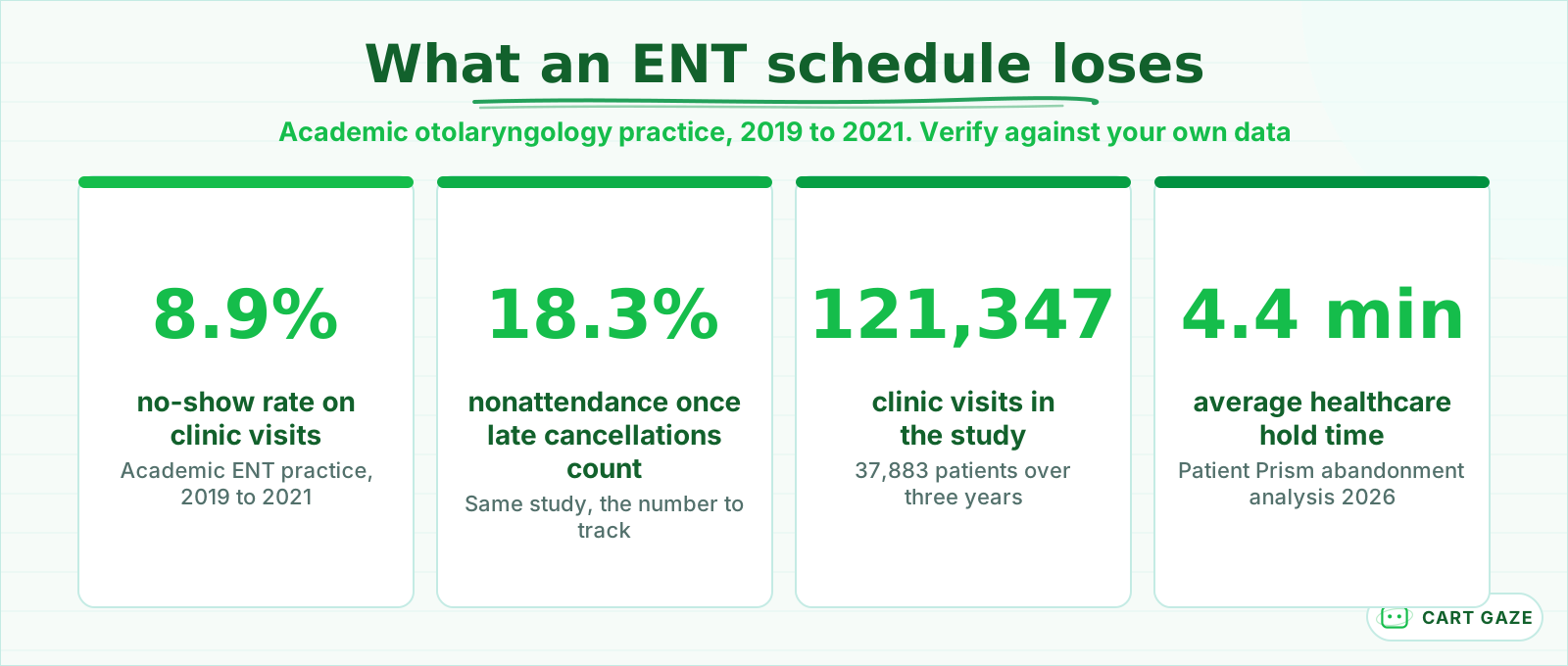 One academic practice across three years. Benchmarks to measure against, not results to expect.
Scale gives you a sense of the routine load. A three-year study of one academic otolaryngology practice covered 121,347 clinic visits from 37,883 patients, and the overwhelming majority of those were scheduled, attended, ordinary appointments. Automation earns its place across that bulk.
The urgency variance is the design problem. A caller describing ear fullness might have wax, might have fluid, or might be describing the first day of a hearing loss that needs treatment this week. A scheduler cannot tell from the phrasing, and neither can software, which is why the safe design routes uncertainty upward instead of booking it.
Pediatrics adds a second complication. A large share of ENT volume is children, which means the caller is a parent describing symptoms secondhand, often at 9 p.m. often worried. Parents use different vocabulary than adult patients do about their own bodies, and a configuration trained on adult phrasing will miss things a parent says plainly.
Prior authorization is the other weight on the line. When MGMA polled 294 practice leaders in March 2026 about the most time-consuming phone tasks, eligibility and prior authorization came first at 45%, ahead of scheduling at 31%. ENT sits squarely in that first bucket through imaging, sleep studies, and surgical approvals.
Sudden hearing loss runs on a 14-day clock
Sudden sensorineural hearing loss is the clearest example of a booking decision that is clinical. Guideline recommendations put audiometry and initial corticosteroid therapy inside 2 weeks of symptom onset, with intratympanic steroids offered when recovery is incomplete between 2 and 6 weeks. The scheduling slot is part of the treatment.
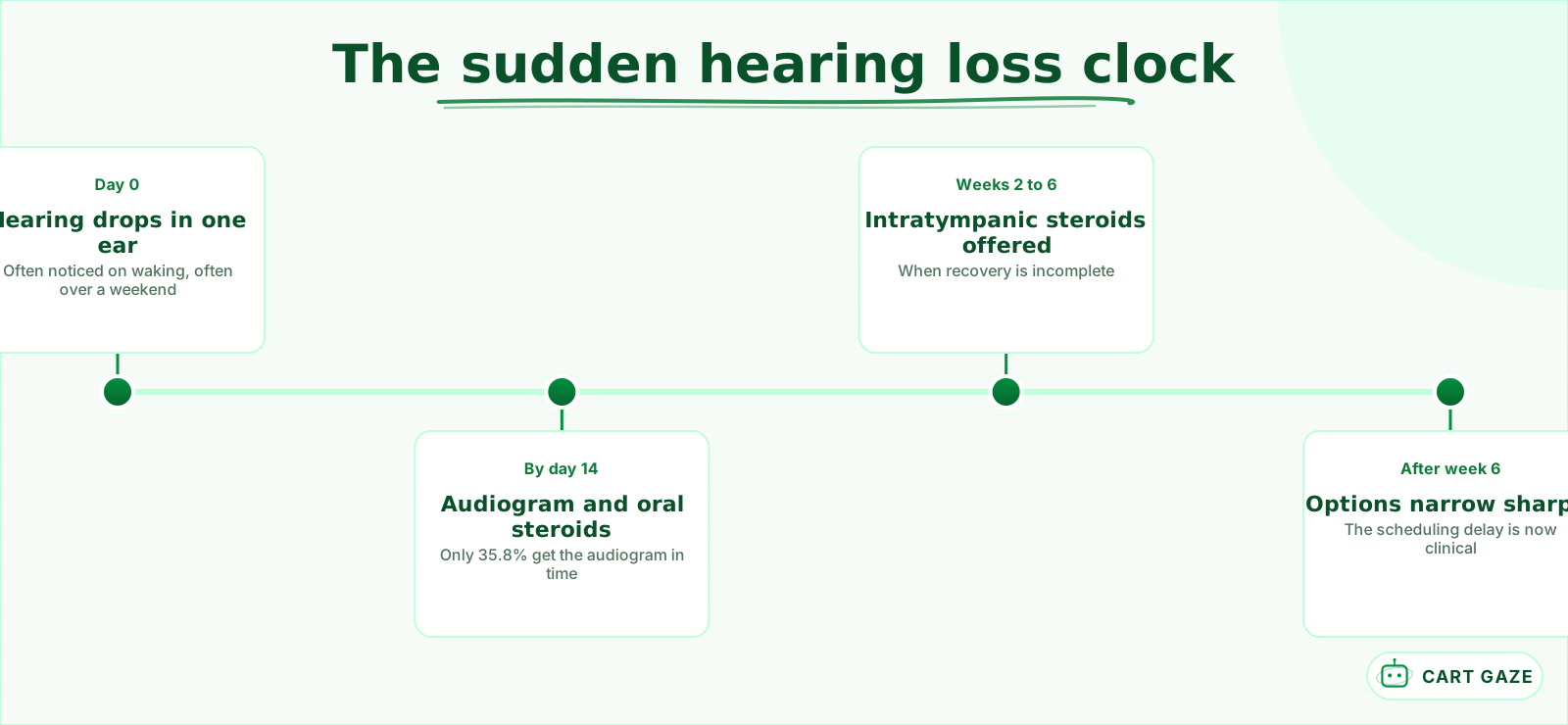 The booking decision sits inside a treatment window. Most patients miss it.
Real-world adherence shows how often this fails. In the published analysis, 35.8% of patients completed an audiogram within 2 weeks, 48.7% received systemic steroids in that window, 18.5% received intratympanic steroids within a month, and 25.5% obtained the recommended imaging within a month. Those numbers are not primarily a phone problem, but the phone is where the delay starts for a walk-in caller.
The practical implication is narrow and specific. Your phone system, human or automated, needs one rule: a caller reporting sudden hearing change in one ear does not get offered the routine calendar. They get connected to clinical staff, or slotted into an urgent-access block held for exactly this.
Holding those blocks is the part practices resist, because an unfilled urgent slot looks like waste on a utilization report. The arithmetic is friendlier than it looks. Two held slots a week is about 2% of a single provider's 100-slot template, and the slot is releasable to the waitlist at noon if it goes unused. Without a reserved block, an urgent caller is competing with routine bookings made three weeks earlier, and the routine bookings win every time.
The ENT calls that must reach a clinician
ENT emergencies cluster around three things: the airway, bleeding, and sudden sensory loss. Difficulty breathing or noisy breathing, bleeding after a tonsillectomy, a nosebleed that will not stop, sudden hearing loss, severe throat pain with trouble swallowing, and facial weakness of new onset all need a person immediately.
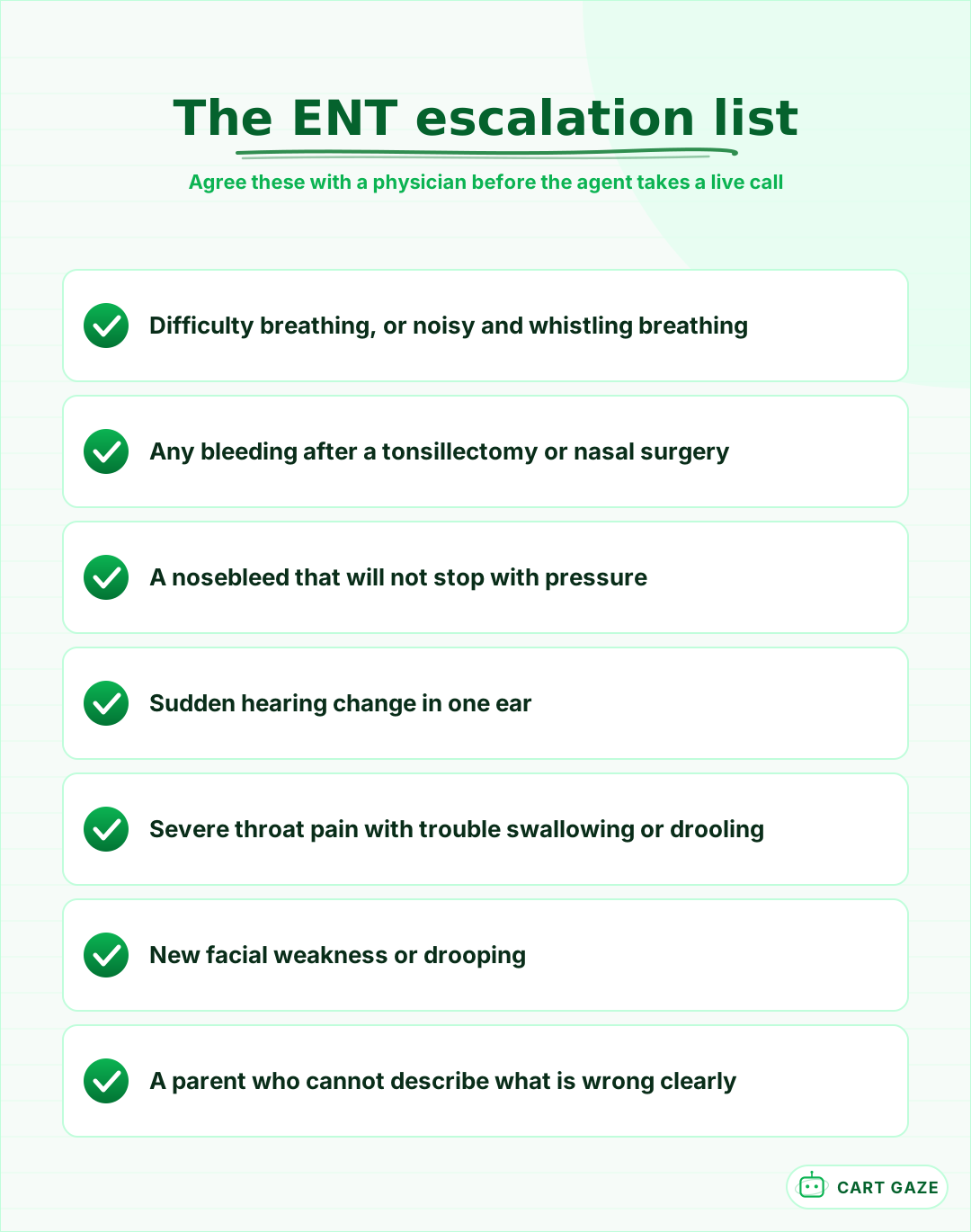 Airway, bleeding and sudden sensory loss. Agreed in writing before go-live, not after.
Post-tonsillectomy bleeding deserves its own line in the configuration because it is time critical, it disproportionately involves children, and the caller is often a frightened parent who will not use clinical vocabulary. The agent's job is to recognize the situation and connect, never to ask how much blood or offer reassurance.
The same recognition-not-judgment rule applies everywhere else on the list. Software can be configured to hear "he's making a whistling sound when he breathes" and route it to a clinician in seconds. It must not decide whether that whistle is croup, a foreign body, or anxiety. We work through the general version of this boundary in what an AI receptionist does and where it stops, and the triage framework in routing emergency calls against routine ones.
If most of your urgent volume is hearing related rather than surgical, the audiology-specific version of this setup is covered in running an AI receptionist on an audiology line.
Late cancellations are the bigger number nobody tracks
Most practices measure no-shows and stop there. The same academic otolaryngology study reported an 8.9% no-show rate but an 18.3% nonattendance rate once late cancellations were counted, and nonattendance rose from 16.8% to 19.8% during the pandemic period. The gap between those two numbers is the half nobody manages.
That gap matters operationally because the two failures behave differently. A no-show leaves an empty room with no warning. A late cancellation leaves a slot with some warning, which means it can be refilled if someone acts on it within the hour.
Refilling is repetitive outbound calling, which is exactly what automation does well and what a busy front desk does last. A voice agent working a waitlist can attempt 20 callbacks in the time a receptionist manages 3, and no clinical judgment is involved in asking whether someone wants an earlier appointment.
Put a number on it before you shop. A practice running 200 appointments a week at an 18.3% nonattendance rate loses about 37 slots, and if half of those arrive as late cancellations, roughly 18 slots a week are theoretically refillable. Recovering even a third of them is 6 visits a week that already had a provider, a room, and staff paid for.
What an AI receptionist genuinely does on an ENT line
The safe scope is administrative and it covers most of the volume: booking and rescheduling routine visits, waitlist backfill, pre-operative and post-operative instructions read from approved text, hearing test preparation, insurance capture at booking, and structured message taking. Everything clinical routes to a person.
| ENT phone work | Automate it? | Why |
|---|---|---|
| Routine booking and rescheduling | Yes | No clinical judgment involved |
| Late-cancellation backfill | Yes | Repetitive outbound calling |
| Approved pre-op and post-op instructions | Yes | Reading fixed, approved text |
| Symptom calls of any kind | No | Requires clinical judgment |
| Sudden hearing loss inquiries | No | Sits inside a treatment window |
| Prior authorization for imaging or surgery | Partly | It can intake and route, not close |
Read that table as a scope document rather than a feature list. The rows marked yes are worth paying for. The rows marked no are the ones that make a vendor demo look impressive and a real deployment dangerous.
Pricing follows the usual shape. Flat AI receptionist plans run roughly $49 to $300 a month, per-minute answering services run $0.75 to $1.50 and up to $3.50 for live agents, and a Business Associate Agreement typically adds 10% to 30%. Any vendor that will hear patient details needs that agreement signed first, and "HIPAA certified" is not a real credential, which the HIPAA breakdown explains in more detail.
How to configure and test it before go-live
Configuration for otolaryngology needs three things settled before a patient hears the system: the escalation trigger list agreed with a physician, an urgent-access path that does not depend on routine availability, and a replay set built from your own recorded calls rather than from vendor scripts.
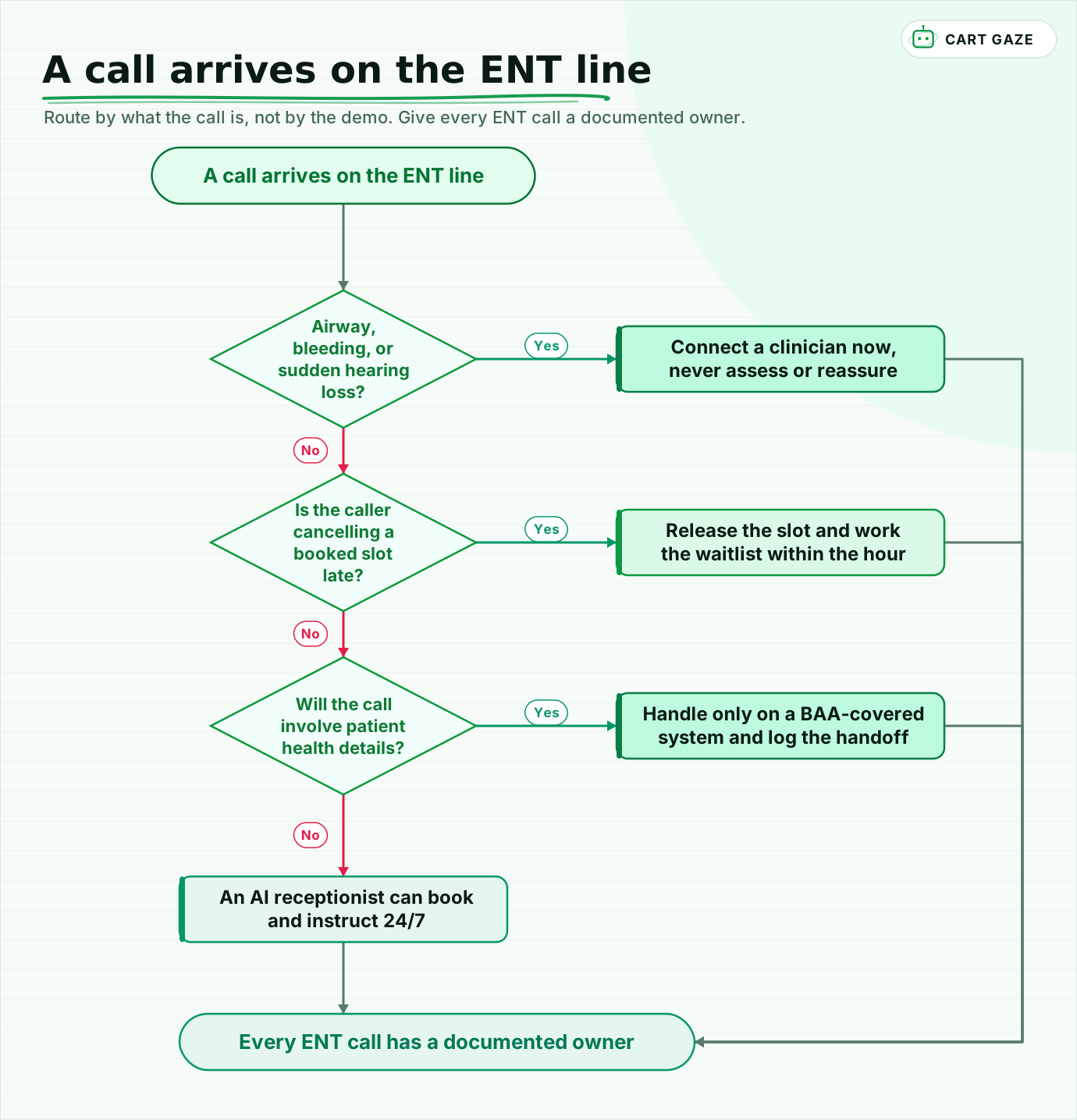 Route by what the call is, not by the demo. Give every ENT call a documented owner.
Score the replay on escalation accuracy alone. A configuration that escalates too often is a tuning exercise you can complete in an afternoon. A configuration that books a sudden hearing loss caller into next month is the one failure that matters, and it will not show up in a call quality report.
Decide the outage plan too. If the vendor's service drops, an ENT line needs a documented failover to a live number rather than a voicemail box, and that path is worth testing deliberately once rather than discovering during a bleed call.
Where to start
Start with two numbers from your own system: your nonattendance rate including late cancellations, and your call abandonment rate. Healthcare callers quit fast, with more than 60% hanging up inside a minute against an average hold of 4.4 minutes, so abandonment tells you whether capacity is the actual constraint.
If late cancellations dominate, pilot backfill first. If abandonment dominates, pilot after-hours and overflow answering. In both cases build the escalation list before the pilot rather than alongside it, because the clinical calls do not wait for your rollout schedule.
When you want a second read on which queue is losing appointments, the free Growth Leak Audit walks the call math with you.
Fair questions.
Can an AI receptionist safely book appointments for an ENT practice?
For routine visits, yes. Booking, rescheduling, waitlist backfill, and reading approved pre-operative instructions carry no clinical judgment. Symptom calls are different. A caller reporting sudden hearing change, bleeding after a tonsillectomy, or noisy breathing must reach a clinician, and the agent should never select an appointment type for them.
Why is sudden hearing loss treated as urgent in ENT scheduling?
Guideline recommendations put audiometry and initial corticosteroid therapy inside 2 weeks of symptom onset, with intratympanic steroids offered between 2 and 6 weeks when recovery is incomplete. A booking four weeks out therefore consumes the window. The scheduling slot is part of the treatment rather than an administrative convenience.
What is the difference between a no-show rate and a nonattendance rate?
A no-show rate counts patients who simply do not arrive. A nonattendance rate adds late cancellations. One academic otolaryngology practice recorded 8.9% no-shows and 18.3% nonattendance across 121,347 visits. The gap is the half most practices never measure, and it is the half automation can actually refill.
Which ENT calls should always reach a clinician?
Difficulty breathing or noisy breathing, bleeding after a tonsillectomy, a nosebleed that will not stop, sudden hearing loss, severe throat pain with trouble swallowing, and new facial weakness. Route ambiguous calls too, especially from parents describing a child, since they rarely use clinical vocabulary for an urgent situation.
How much does an AI receptionist cost for an ENT practice?
Flat plans usually run about $49 to $300 a month, and a Business Associate Agreement adds roughly 10% to 30%. Per-minute answering services run $0.75 to $1.50, up to $3.50 for live agents, so busy months cost more. Price both against your own call volume before deciding.
Sources.
- [1]No-show rates in an academic otolaryngology practice before and during the COVID-19 pandemic
- [2]Analysis of adherence to AAO-HNSF clinical practice guidelines for sudden hearing loss
- [3]AAO-HNS clinical practice guideline: sudden hearing loss (update)
- [4]MGMA Stat: phones are still a bottleneck costing practices time (March 2026)
- [5]Average call abandonment rate in healthcare: 2026 benchmarks
Written by

Muhammad Qasim Hammad
Founder, Cart Gaze
Qasim builds AI receptionists and front-office automation for medical and dental practices at Cart Gaze. Posts here start from published sources and real call data, not vendor claims, and every number links back to where it came from.
Keep reading.
 By Practice TypeAI Receptionist for a Cardiology Practice: Safe Call Routing10 min read
 By Practice TypeAI Receptionist for Orthopedics: What It Fixes, What It Cannot10 min read
 By Practice TypeAI Receptionist for Physical Therapy: Protect the Plan of Care10 min read
 By Practice TypeAI Receptionist for Direct Primary Care: Protect the Promise10 min read
 By Practice TypeAI Receptionist for Fertility Clinics: What It Must Never Do10 min read
 By Practice TypeAI Receptionist for Audiology Practices: Why Text Comes First11 min read