
AI Receptionist for Orthopedics: What It Fixes, What It Cannot
Prior authorization takes 45% of practice phone time, well ahead of scheduling at 31%, and a voice agent closes almost none of it. Here is what an AI receptionist genuinely fixes on an orthopedic line.
Table of Contents8 sections
- Where orthopedic phone time actually goes
- Why booking speed is worth more in orthopedics than it looks
- What an AI receptionist genuinely handles on an orthopedic line
- The orthopedic calls that must reach a clinician
- Prior authorization is the part automation does not solve
- How to pilot it without risking a post-op call
- Where to start
- Fair questions
Your orthopedic front desk is not drowning in appointment requests. It is drowning in authorizations. When MGMA asked 294 practice leaders in March 2026 which phone tasks consume the most staff time, eligibility and prior authorization came first at 45%, well ahead of scheduling at 31%.
That matters because the vendor pitch for an AI receptionist is built around the second number and quiet about the first. A voice agent books appointments beautifully. It does not get an MRI approved, and no amount of natural-sounding speech changes that. If you buy one expecting the authorization queue to shrink, you will be disappointed on day 30.
This post covers what an AI receptionist genuinely fixes on an orthopedic line, the post-surgical calls it must never take, why booking speed is worth more in orthopedics than it looks, and where the automation stops being useful.
Where orthopedic phone time actually goes
The March 2026 MGMA phone poll gives a clear ranking of what eats staff time: eligibility and prior authorization at 45%, scheduling at 31%, intake at 9%, prescription refills at 6%, and everything else at 9%. Orthopedics sits at the harder end of that first bucket because imaging and surgery both carry authorization requirements.
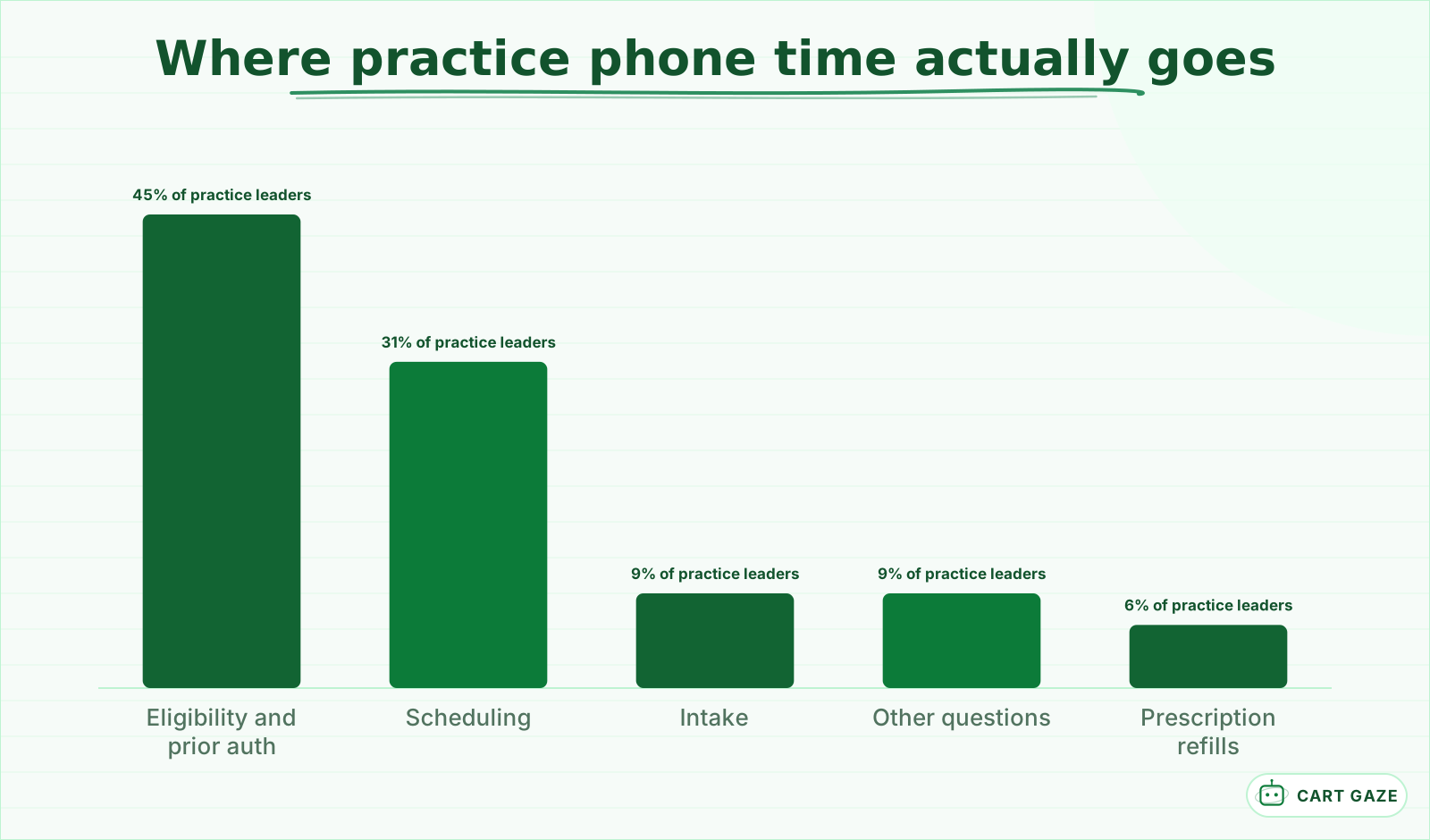 Scheduling is not the biggest phone cost. Authorization work is, and a voice agent barely touches it.
Read that split before you shop. Two thirds of the vendor demos you will sit through optimize the 31%, which is real work worth automating, but it is not where your staff hours are going. The same MGMA reporting notes that nearly half of physicians work with an incompletely staffed team more than a quarter of the time, so those hours are being taken from a desk that is already short.
Orthopedic call volume also arrives in an unusual shape. A new injury call is time sensitive and often anxious. A post-operative call may be routine or may be an emergency, and the caller frequently cannot tell you which. Imaging coordination, physical therapy scheduling, and durable equipment questions all land on the same line.
Before you evaluate a single vendor, pull one week of your own call log and sort it into authorization, scheduling, clinical, and admin. Practices differ more than the poll averages suggest. A sports medicine group taking walk-in injuries has a very different mix from a joint replacement practice where most volume is pre-operative and post-operative follow-up. Buy against your own split rather than the national ranking, and you will end up with a smaller, cheaper purchase that actually removes work.
Why booking speed is worth more in orthopedics than it looks
Faster booking is usually sold as convenience. In orthopedics there is a measured attendance effect behind it. A study of 10,078 pediatric orthopaedic encounters found that for every additional day between when an appointment was scheduled and when it happened, the odds of a no-show rose by about 1%.
That single finding reframes the phone. A call answered live and booked into next Tuesday creates a shorter lag than a voicemail returned on Thursday for an appointment the following month. The lag itself is the risk factor, and every hour of delay in your callback loop is added to it.
The same study recorded a 6.61% overall no-show rate across 5,913 patients at a level one academic hospital. Treat that as one clinic in one city rather than an orthopedic benchmark, because published rates swing hard by setting and payer mix. What travels is the direction: shorter lag, better attendance.
The money case is not subtle either. MGMA's December 2025 access poll put no-shows at the top of practice access priorities for 2026, cited by 27% of 236 respondents, and referenced industry estimates that no-shows and cancellations consume roughly 14% of medical group revenue and near $150,000 per physician a year. In orthopedics the empty slot is often a surgical consult or an imaging block, which is expensive to leave idle. The general version of this math sits in the real cost of missed calls.
What an AI receptionist genuinely handles on an orthopedic line
The safe, high-volume work is administrative: booking and rescheduling, cast care and pre-operative instructions read from an approved script, directions and parking, physical therapy appointment coordination, and structured message taking for the clinical team. None of it involves judgment about a patient's condition.
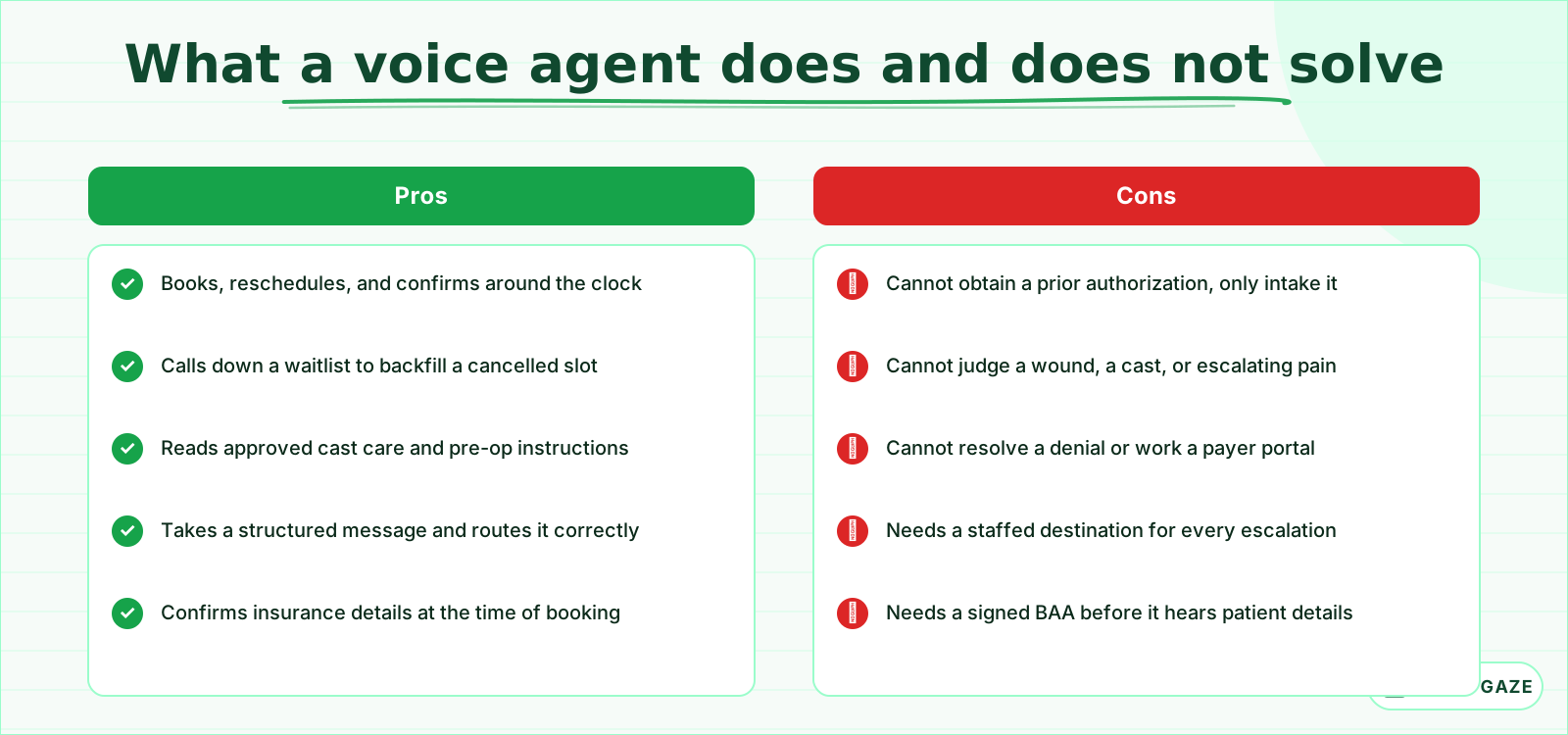 Buy it for the left column. Staff the right one, or the first month will disappoint you.
Instruction reading is underrated here. Orthopedics repeats the same handful of answers constantly: when to stop eating before surgery, whether to shower with a cast, which entrance to use, what to bring to a post-operative visit. An agent reading approved text gives the same answer at 6 a.m. as at 6 p.m.
Cancellation backfill is the second real win. When a surgical consult cancels at 8 a.m. the slot is worth filling that morning, and calling down a waitlist is exactly the kind of repetitive outbound task that does not need a person. MGMA's February 2026 poll of 177 practice leaders found scheduling was the top front-office target for AI at 31%, with calls second at 27%, and waitlist management was named specifically.
After-hours coverage is the third. An injury that happens on a Saturday generates a call on a Saturday, and a patient who reaches voicemail often books with whichever orthopedic group answers first. The same MGMA access poll found 71% of medical groups have fewer than 1 in 4 patients using digital scheduling tools, so the phone is still the main door for most of your patients rather than a legacy channel you can ignore.
If you have not evaluated one of these systems before, what an AI receptionist does and where it stops is the plainest starting point.
The orthopedic calls that must reach a clinician
Orthopedic red flags are mostly post-surgical, and they are specific enough to write down. Fever or drainage from a surgical site, pain that is escalating rather than settling, numbness or cold toes inside a cast, calf swelling after a joint replacement, a fall onto a fresh repair, and any open wound all need a person immediately.
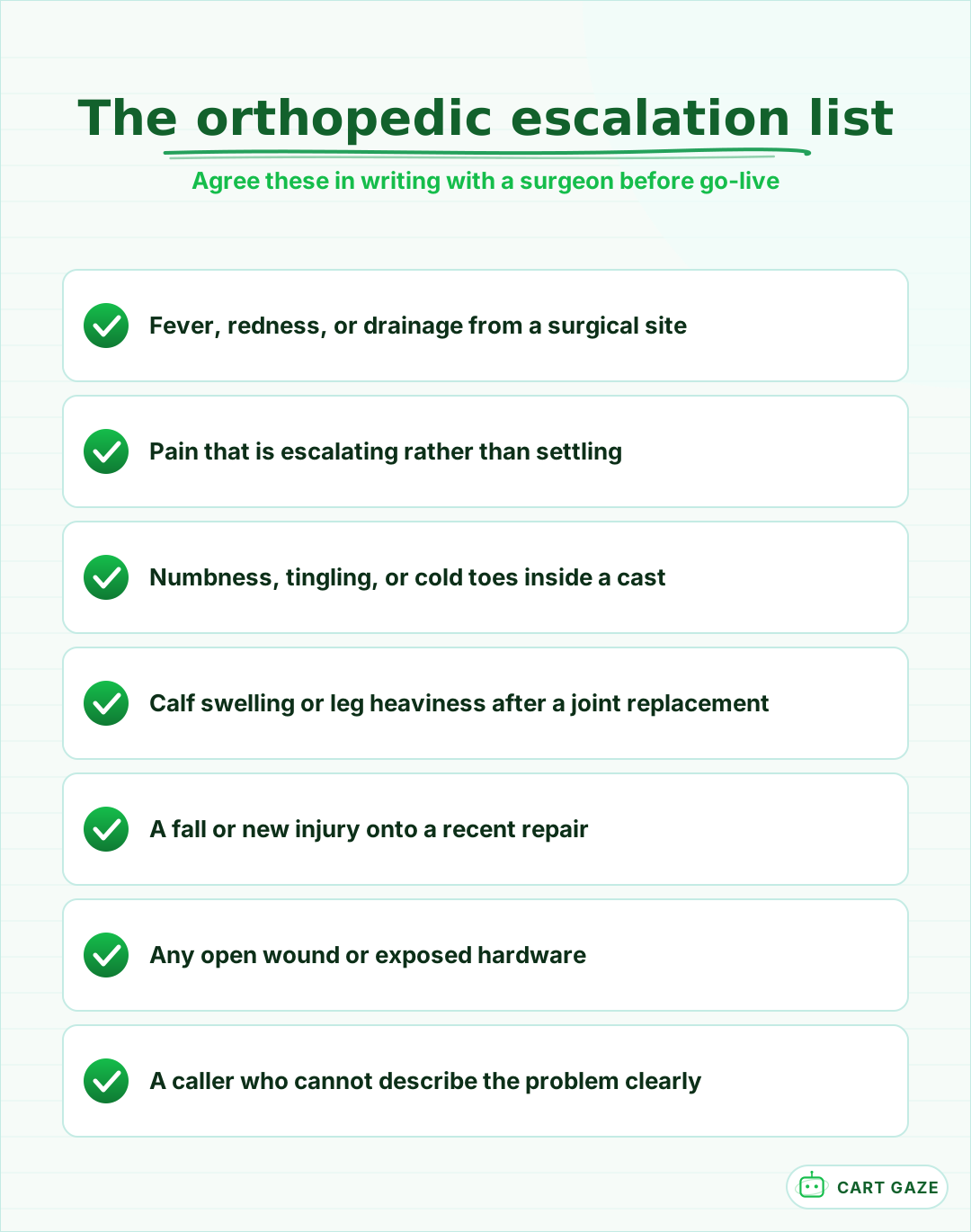 Specialty specific by design. A generic healthcare template will not contain these.
The rule is the same as anywhere else in medicine: recognize and route, never assess. An agent can be configured to hear "my toes feel numb and the cast is tight" and connect the caller to a nurse in seconds. It must not tell that caller whether the cast is too tight, because compartment syndrome is a surgical emergency and the difference is a clinical judgment.
Ambiguity is the harder case. Patients describe a wound infection as "it looks a bit angry" or a DVT as "my leg feels heavy." A safe configuration escalates when confidence is low rather than guessing, which means your escalation path needs a staffed destination during clinic hours and a defined one after. The general framework for that split is in routing emergency calls against routine ones.
Prior authorization is the part automation does not solve
This is where the honest answer disappoints. Prior authorization is 45% of phone time, and a voice agent handles almost none of it, because the work is payer portal navigation, clinical documentation, and appeal follow-up rather than conversation. The most it can do is capture the request and route it cleanly.
| Phone task | Share of staff time | Can a voice agent close it? |
|---|---|---|
| Eligibility and prior authorization | 45% | No, it can only intake and route |
| Scheduling and rescheduling | 31% | Yes, end to end |
| Intake | 9% | Partly, it can collect and confirm |
| Prescription refills | 6% | Partly, structured message only |
| Other questions | 9% | Mostly yes |
That table is the buying decision in one view. If your bottleneck is the top row, an AI receptionist is the wrong first purchase and dedicated authorization staffing or software is the right one. If your bottleneck is rows two through five, the economics are strong.
MGMA's own February 2026 poll reflects the same reality: prior authorization drew only 16% of front-office AI interest, against 31% for scheduling. Practice leaders already know which part is tractable.
There is a smaller, real contribution the phone layer can make here, and it is worth naming precisely. A voice agent can confirm the patient's insurance details at booking, flag that a study needs authorization before the visit is scheduled, and stop a patient arriving for an MRI that was never approved. That does not reduce the 45%, but it does move some of the work earlier, where it is cheaper to fix than at the front desk on the day.
How to pilot it without risking a post-op call
A safe pilot separates the risky calls from the automated ones before a single patient hears the system. Run it on a narrow slice first, keep your main clinical line untouched, and score the configuration on escalation accuracy rather than on how natural the voice sounds.
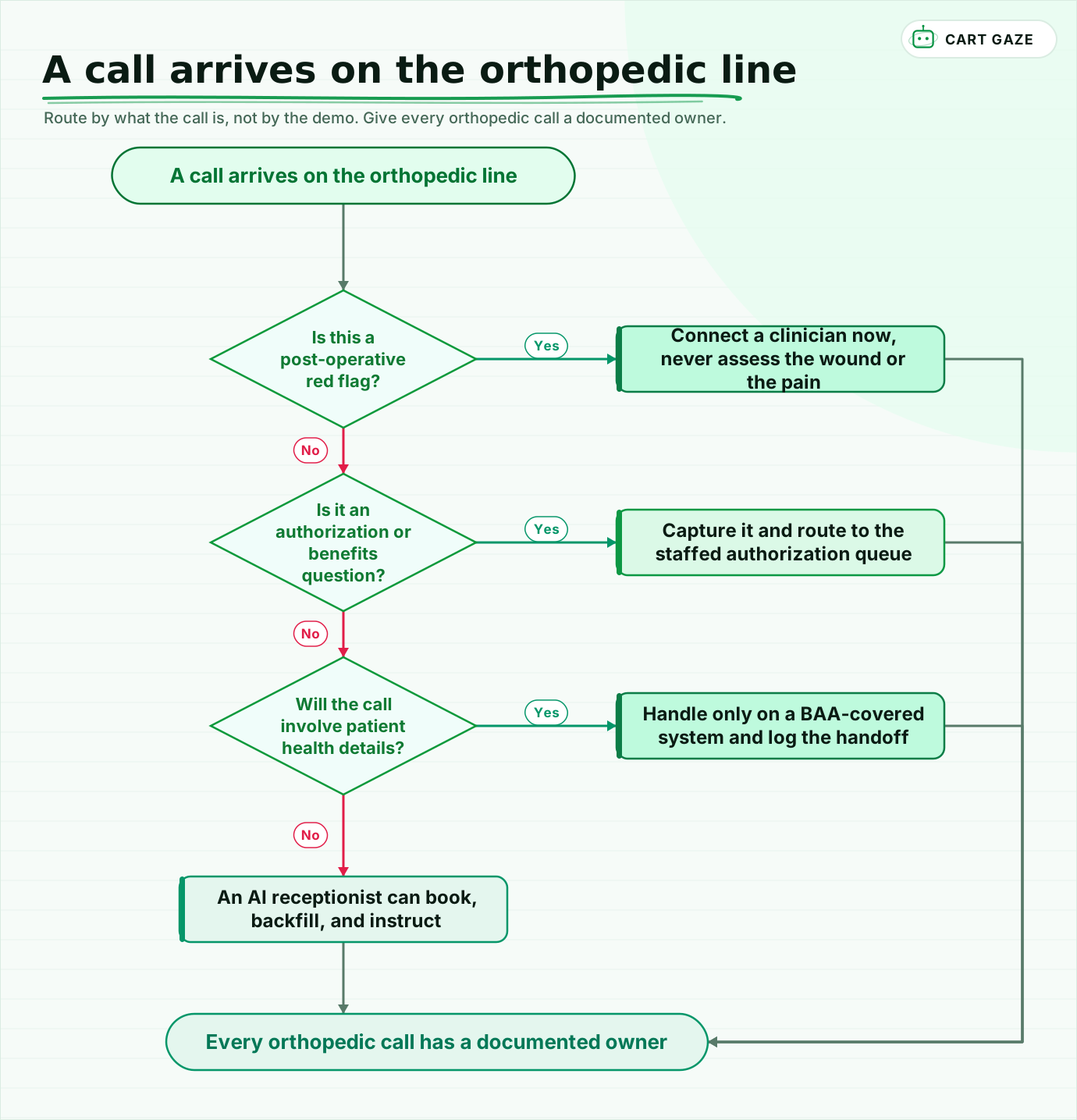 Route by what the call is, not by the demo. Give every orthopedic call a documented owner.
Build the replay set from real recordings, including the vague ones. A configuration that escalates too eagerly is a tuning problem. A configuration that misses one post-operative infection call is a different category of failure, and it is the only outcome worth designing against.
Compliance is a contract question rather than a badge. Any vendor that will hear patient details is a business associate and needs a signed agreement first, and "HIPAA certified" is not a real credential. The HIPAA breakdown covers what to ask for and what to read in the retention settings.
Where to start
Start with your own numbers rather than a demo. Sort one week of calls into authorization, scheduling, clinical, and admin, then count how many were abandoned. Healthcare callers quit fast, with more than 60% hanging up inside a minute against an average hold of 4.4 minutes, so abandonment tells you whether you have a capacity problem at all.
If authorization dominates, spend there first and treat the phone agent as a later, smaller win. If scheduling and admin dominate and your abandonment sits in double digits, a narrow pilot on backfill and after-hours booking will pay for itself quickly.
When you want a second read on which queue is leaking appointments, the free Growth Leak Audit walks your call math with you.
Fair questions.
Can an AI receptionist handle prior authorizations for an orthopedic practice?
No, not end to end. Prior authorization is payer portal work, clinical documentation, and appeal follow-up rather than conversation. A voice agent can capture the request, confirm insurance at booking, and flag that a study needs approval before the visit. Closing the authorization still needs staff or dedicated software.
What orthopedic calls should never be automated?
Post-operative red flags: fever or drainage from a surgical site, pain that is escalating rather than settling, numbness or cold toes inside a cast, calf swelling after a joint replacement, a fall onto a fresh repair, and any open wound. Route the vague ones too, since patients describe infections and clots imprecisely.
Does answering the phone faster actually reduce orthopedic no-shows?
The lag between booking and the visit is what carries measured risk. In a study of 10,078 pediatric orthopaedic encounters, each additional lag day raised no-show odds by about 1%. A call answered live and booked immediately produces a shorter lag than a voicemail returned days later, which is the real mechanism.
What should an orthopedic practice pilot first?
Cancellation backfill. It is measurable inside two weeks, it involves no clinical judgment, and a single recovered surgical consult usually covers the monthly cost. Keep your main clinical line untouched during the pilot and score the configuration on escalation accuracy rather than on how natural the voice sounds.
Is an orthopedic AI receptionist HIPAA compliant?
Compliance comes from the configuration and the contract, not from a badge. Any vendor that will hear patient details is a business associate and must sign a Business Associate Agreement before the first live call. Treat "HIPAA certified" claims as a warning sign, because that certification does not exist.
Sources.
- [1]MGMA Stat: phones are still a bottleneck costing practices time (March 2026)
- [2]MGMA Stat: AI moves for medical practices to boost the front office (February 2026)
- [3]MGMA Stat: patient access priorities for 2026
- [4]Identifying risk factors for appointment no-shows in a pediatric orthopaedic surgery clinic
- [5]Average call abandonment rate in healthcare: 2026 benchmarks
Written by
Muhammad Qasim Hammad
Founder, Cart Gaze
Qasim builds AI receptionists and front-office automation for medical and dental practices at Cart Gaze. Posts here start from published sources and real call data, not vendor claims, and every number links back to where it came from.
Keep reading.
 By Practice TypeAI Receptionist for a Cardiology Practice: Safe Call Routing10 min read
 By Practice TypeAI Receptionist for an ENT Practice: The 14-Day Clock10 min read
 By Practice TypeAI Receptionist for Medical Weight Loss Clinics: GLP-1 Call Surge10 min read
 By Practice TypeAI Receptionist for Physical Therapy: Protect the Plan of Care10 min read
 By Practice TypeAI Receptionist for Direct Primary Care: Protect the Promise10 min read
 By Practice TypeAI Receptionist for Behavioral Health: Crisis and Part 210 min read