
AI Receptionist for a Gastroenterology Practice: Prep Calls
Inadequate bowel preparation runs from 17.4% to over 40% depending on the series, and each one costs a full procedure slot. Here is what an AI receptionist safely does on a GI line, and where a script must stop.
Table of Contents8 sections
- What a gastroenterology phone line is mostly doing
- Bowel prep is where the money and the calls concentrate
- The patients most likely to fail prep are the least likely to read a portal
- The prep call sequence, and where a script has to stop
- The GI calls that must reach a clinician
- How to deploy it without giving medical advice
- Where to start
- Fair questions
A patient arrives for a colonoscopy having misread the prep instructions, and you lose the procedure slot, the anesthesia slot, and the room in one go. This is not a rare event. In a screening series of 8,125 colonoscopies, 17.4% of preparations were inadequate, and the wider literature reports rates from 20% to 44%.
Gastroenterology is the specialty where the phone and the clinical outcome are most directly connected. Your front desk is not just booking procedures. It is delivering the instructions that decide whether the procedure works, to a patient population that skews older and often calls rather than logs in.
This post covers what a GI phone line is really doing, why the prep call sequence is the highest-value automation in the specialty, the calls that must reach a clinician, and how to run outbound prep outreach without a script ever giving medical advice.
What a gastroenterology phone line is mostly doing
GI call volume splits into procedure scheduling, prep questions, results and pathology follow-up, medication and infusion coordination, and a small stream of urgent symptom calls. The prep block is the loudest, and it clusters in the 72 hours before a procedure when nobody has spare capacity to answer it.
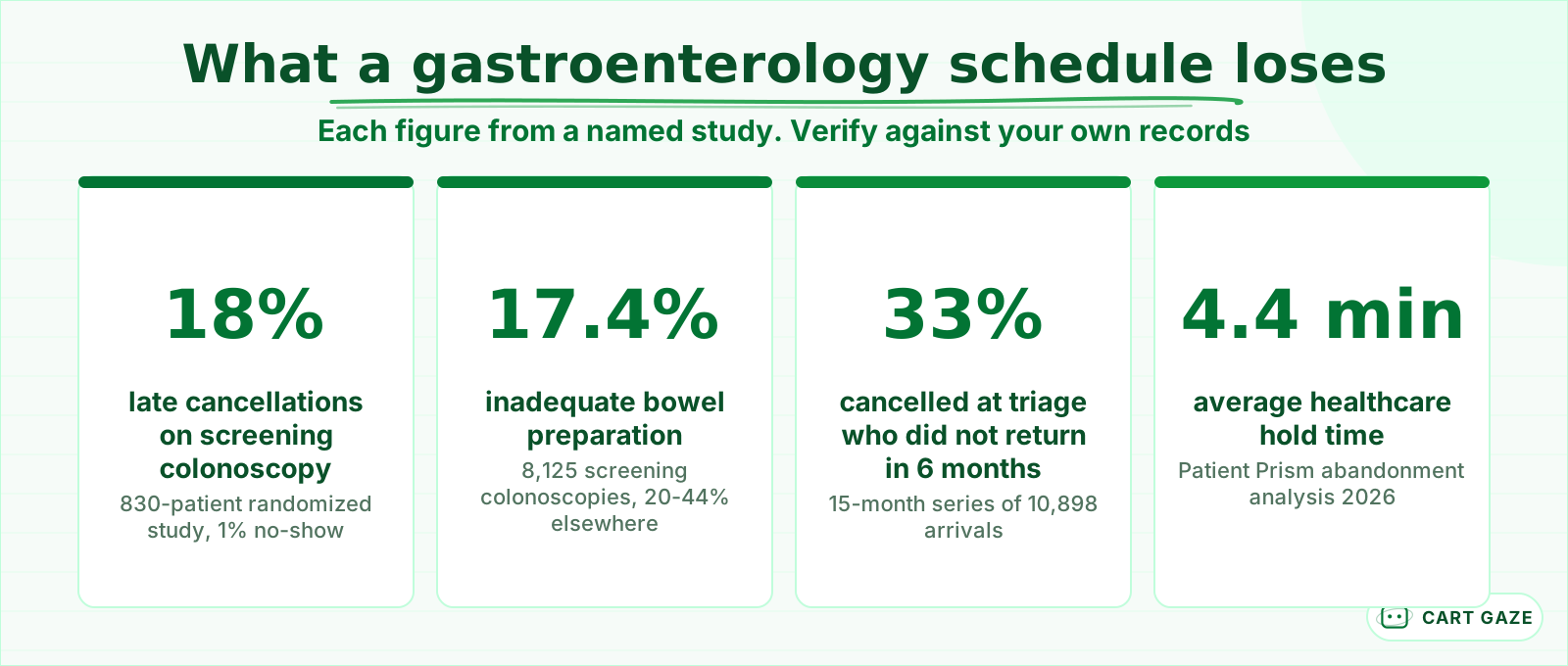 Published figures from separate studies. Benchmarks to measure against, not results to expect.
Attendance data shows where the schedule actually leaks. In a randomized study of 830 patients at an academic gastroenterology clinic, 80% attended their scheduled colonoscopy, 18% cancelled late, and only 1% were true no-shows. The failure mode in GI is the late cancellation, not the empty chair with no warning.
That distinction changes what you buy. Reminder-only tools are built to reduce no-shows, and in this data no-shows were already 1%. The 18% who cancel late are a different problem: some are anxious, some are confused about prep, and some have a genuine conflict. Only the first two are recoverable by a conversation.
The same study found 90% of patients underwent a colonoscopy within 3 months of the original appointment, which is worth reading carefully. Most late cancellations eventually come back. What they cost you in the meantime is a slot you could not refill on short notice, and a delay in a screening test that had already been scheduled.
Authorization work sits underneath all of it. When MGMA polled 294 practice leaders in March 2026, eligibility and prior authorization was named the most time-consuming phone task at 45%, ahead of scheduling at 31%. GI carries that load through infusion approvals and procedure authorizations.
Bowel prep is where the money and the calls concentrate
A failed prep is the most expensive routine event in a GI practice because it consumes a full procedure slot and produces no diagnostic result. Published inadequate-preparation rates run 17.4% in one large screening series, with prior studies reporting 20% to 44%. Every point of that is slot capacity you paid for and did not use.
The instinctive fix, cancelling patients at triage when the prep looks poor, carries a cost that is easy to miss. In a 15-month series of 10,898 arrivals, 345 patients, about 3%, were cancelled in triage for presumed inadequate preparation. Of those, 114, roughly a third, did not complete a colonoscopy or a FIT within 6 months.
The same series found 542 patients, about 5% of all arrivals, proceeded through triage and were found to have inadequate preparation anyway. Triage judgment is imperfect in both directions, which argues for spending the effort earlier, on the days when the prep is actually being done.
That is the case for the phone. Prep quality is decided at home over 24 to 48 hours, and the only lever you have during that window is contact. The math is straightforward: recovering even 3 failed preps a month at a typical procedure slot value is real money, and it comes from calls nobody currently has time to make.
Scale it against your own volume rather than a vendor's. A practice performing 400 colonoscopies a month at a 20% inadequate rate is losing about 80 examinations to preparation, and shaving a quarter off that is 20 usable procedures a month that were already staffed, roomed, and authorized. That is the number to test a pilot against.
The patients most likely to fail prep are the least likely to read a portal
Risk factors for inadequate preparation are known and they point at a specific group. In the same screening analysis, patients aged 70 or older had 1.50 times the prevalence of inadequate preparation, current smokers 1.29 times, and patients reporting abdominal symptoms beforehand 1.14 times. Age leads the list.
| Risk factor | Reported prevalence multiple | What a call can do about it |
|---|---|---|
| Age 70 or older | 1.50 times | Confirm the instructions were received and understood |
| Current smoking | 1.29 times | Trigger an earlier reminder in the sequence |
| Abdominal symptoms before the procedure | 1.14 times | Route to clinical staff instead of reassuring |
Now put that next to how information usually gets delivered. A randomized study of colonoscopy education sent through the patient portal found no significant improvement in adherence over standard messaging. Pushing more content into a channel the highest-risk patients do not open does not move the number.
This is also why a voice agent beats a text-only reminder here. A call can be answered, repeated, and confirmed. If you want the general version of the argument about which channel recovers which patient, what an AI receptionist does and where it stops sets the boundaries.
The prep call sequence, and where a script has to stop
An effective prep sequence is five touches: confirmation at booking, a reminder 7 days out, an instruction call 3 days out, a check the day before, and a short call on the morning of. Each one reads approved text and confirms the patient can restate the key steps back.
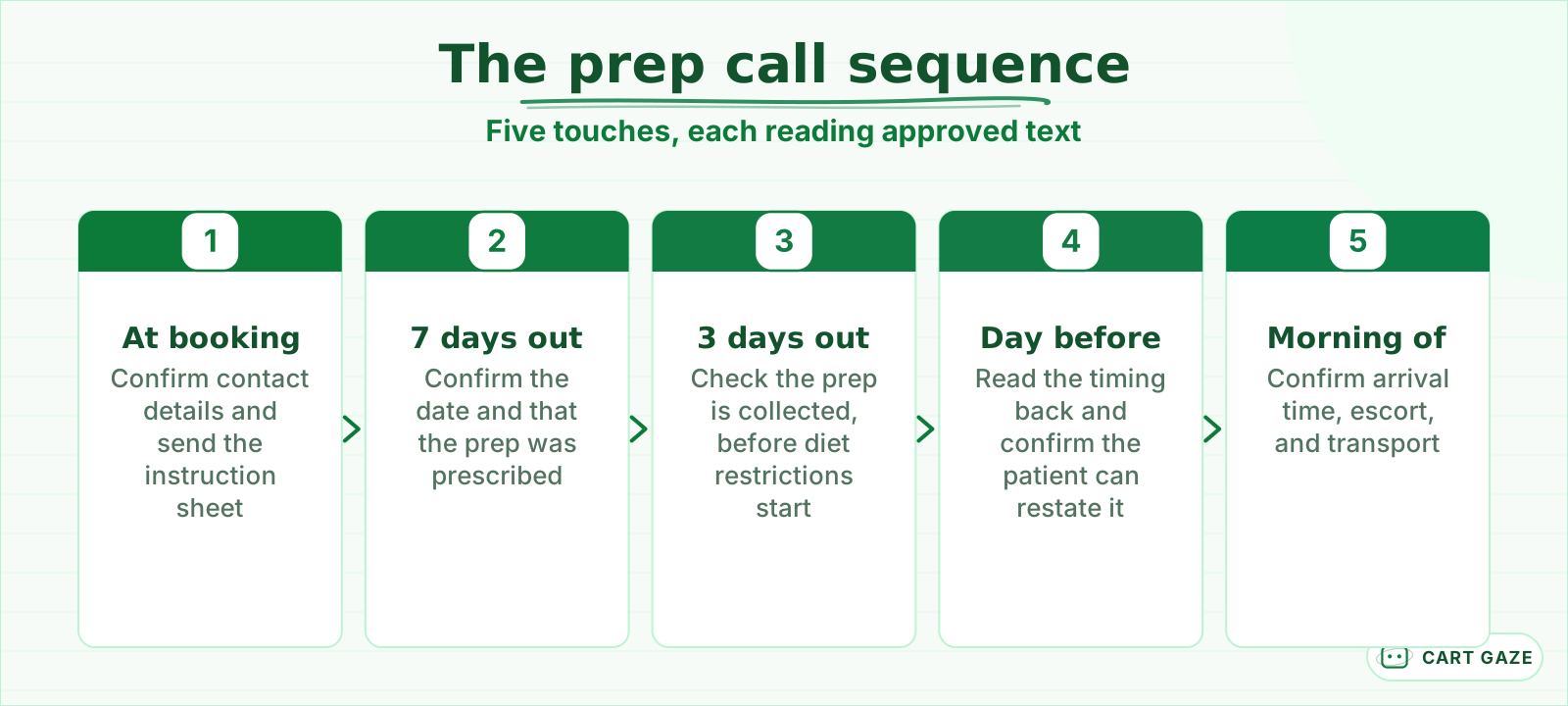 Reading approved instructions at the right moment. No advice, no dosing, no judgement.
The 3-day call is the one that matters most, because it lands before the patient buys the preparation and before dietary restrictions start. A patient who has not collected their prep on day 3 is the patient who improvises on day 1, and that is the call worth making twice if the first attempt fails. Track connect rate on that touch specifically, since a sequence that dials 5 times and reaches nobody is measuring activity rather than contact.
The stop line has to be written into the configuration. An agent can read the instruction sheet. It cannot tell a patient whether to hold their blood thinner, whether their diabetes medication needs adjusting, whether a half-finished prep is good enough, or what to do about vomiting during the prep. Every one of those is a clinical decision and every one of them gets asked.
The GI calls that must reach a clinician
Gastroenterology red flags are specific and mostly involve bleeding, obstruction, or post-procedure complications. Vomiting blood, black or tarry stools, severe abdominal pain, inability to swallow saliva, and new pain or fever after an endoscopy or polypectomy all need a person immediately.
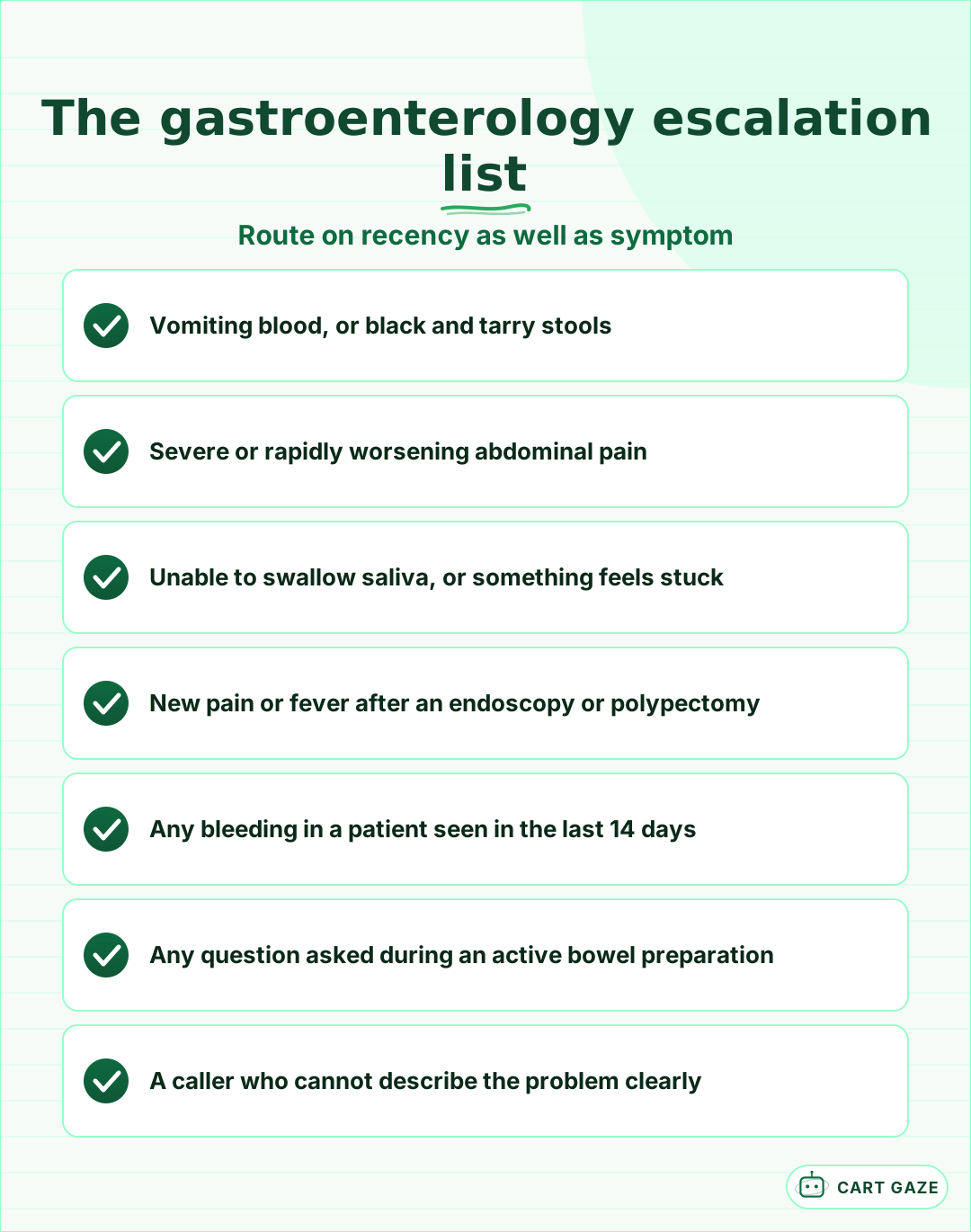 Bleeding, obstruction and post-procedure pain. Agreed with a physician before go-live.
Food impaction deserves its own trigger. A caller who cannot swallow their own saliva is describing a complete obstruction, which is time sensitive, and they will often phrase it as something stuck rather than as an emergency. The agent's job is to recognize the phrasing and connect, not to ask how long it has been there.
Post-polypectomy bleeding is the second one to write down explicitly, because it can present days after a procedure the patient considered finished. A configuration that treats a call from a patient who was seen last Tuesday as routine follow-up is the failure mode. Route on recency plus symptom, not on symptom alone.
Practically, that means the agent needs to know who had a procedure in the last 14 days. If your phone system cannot see that, the escalation rule collapses into guessing from what the caller volunteers, and patients rarely lead with the date of their endoscopy when they are worried about blood.
The framework for splitting urgent from routine across any specialty is in routing emergency calls against routine ones.
How to deploy it without giving medical advice
A safe GI deployment separates three things before go-live: the approved instruction text, the escalation trigger list, and the staffed destination that receives escalations during and outside clinic hours. Outbound prep calling can start narrow, on a single procedure type, and expand once the escalation path holds.
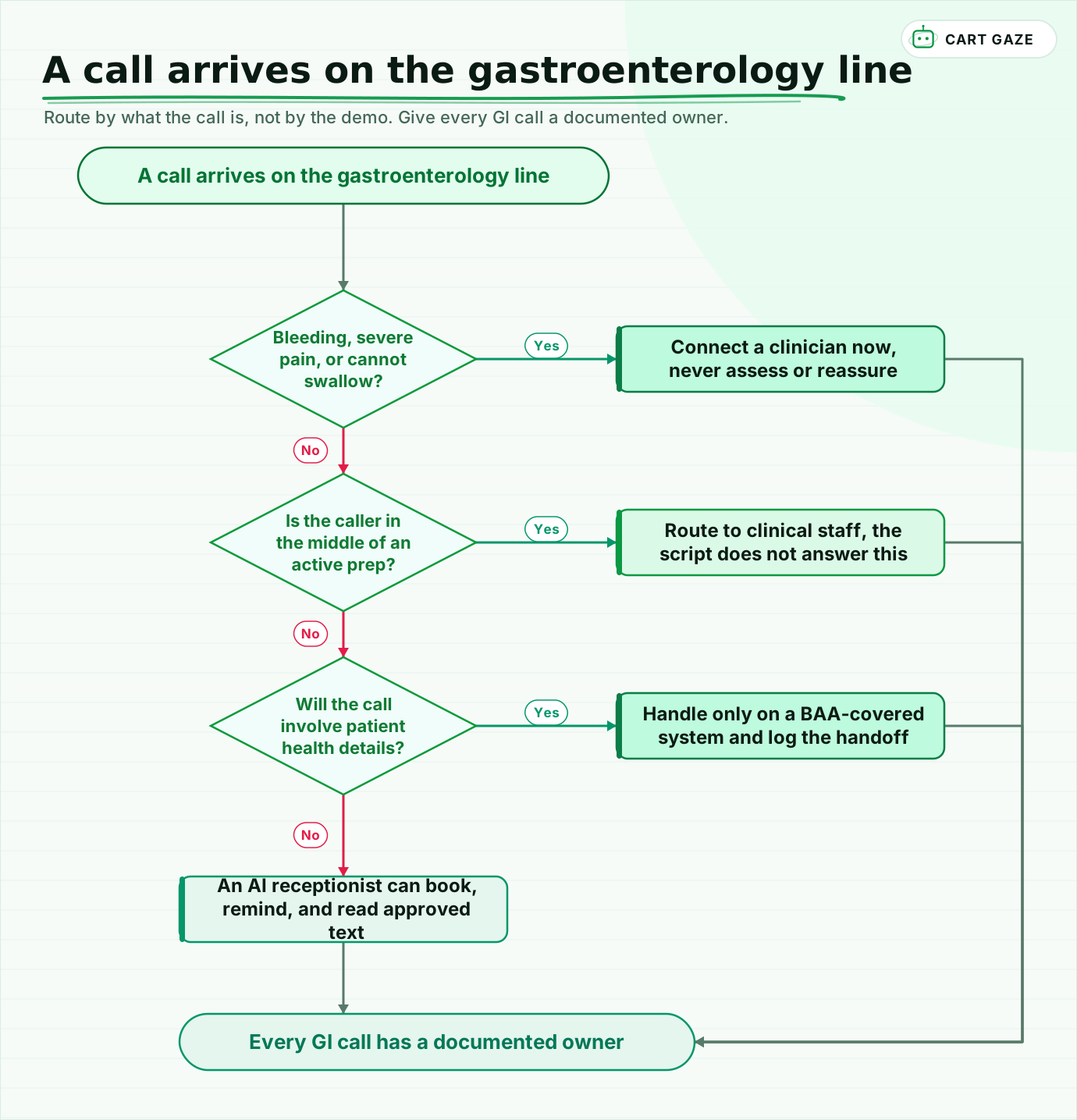 Route by what the call is, not by the demo. Give every GI call a documented owner.
Measure the pilot on prep adequacy and completed procedures rather than on call volume handled. Call metrics will look good immediately because the agent answers everything. The number that justifies the spend is how many procedures produced a usable examination.
Compliance is a contract question. Any vendor that will hear patient details is a business associate and needs a signed agreement before the first call, and "HIPAA certified" is not a real credential. The HIPAA breakdown covers what to ask for, including retention and recording settings.
Where to start
Start with two counts from your own records: your late-cancellation rate on procedures, and your inadequate-preparation rate with the age distribution behind it. Those two numbers tell you whether your problem is booking behavior or prep support, and they point at different purchases.
If late cancellations dominate, a confirmation and backfill sequence pays first. If inadequate preps dominate and skew older, build the outbound prep sequence and leave inbound answering for phase two. Healthcare callers abandon fast, with more than 60% hanging up inside a minute against an average hold of 4.4 minutes, so check abandonment before assuming inbound is fine.
When you want a second read on which queue is costing you procedures, the free Growth Leak Audit walks the math with you.
Fair questions.
Can an AI receptionist reduce failed bowel preps?
It can increase the number of prep touchpoints that actually reach the patient, which is the only lever available in the 48 hours before a procedure. It reads approved instructions and confirms understanding. It cannot judge whether a half-finished prep is adequate, and any question asked during an active prep should route to clinical staff.
What is the most common scheduling failure in gastroenterology?
Late cancellation rather than no-show. A randomized study of 830 screening colonoscopy patients found 80% attended, 18% cancelled late, and 1% were true no-shows. Reminder-only tools target the 1%. Recovering the 18% needs a conversation, because a share of those cancellations are prep confusion and anxiety.
Which gastroenterology calls must reach a clinician?
Vomiting blood, black or tarry stools, severe abdominal pain, inability to swallow saliva, and new pain or fever after an endoscopy or polypectomy. Route on recency as well as symptom, since post-polypectomy bleeding can present days after a procedure the patient already considered finished.
Should we just cancel patients whose prep looks inadequate at triage?
Weigh it against return rates. In a 15-month series of 10,898 arrivals, 345 patients were cancelled in triage for presumed inadequate preparation, and about a third did not complete a colonoscopy or FIT within 6 months. For a screening test, that is a detection consequence rather than a scheduling one.
Does a gastroenterology AI receptionist need a business associate agreement?
Yes, if it will hear or store patient details, which any prep or scheduling call does. The vendor is a business associate and must sign the agreement before the first live call. Treat "HIPAA certified" claims as a warning sign, because that certification does not exist.
Sources.
- [1]Colonoscopy education delivered via the patient portal does not improve adherence to scheduled first-time screening colonoscopy
- [2]Risk factors of inadequate bowel preparation for screening colonoscopy
- [3]Evaluating the practice of canceling colonoscopies for presumed inadequate bowel preparation
- [4]MGMA Stat: phones are still a bottleneck costing practices time (March 2026)
- [5]Average call abandonment rate in healthcare: 2026 benchmarks
Written by

Muhammad Qasim Hammad
Founder, Cart Gaze
Qasim builds AI receptionists and front-office automation for medical and dental practices at Cart Gaze. Posts here start from published sources and real call data, not vendor claims, and every number links back to where it came from.
Keep reading.
 By Practice TypeAI Receptionist for an ENT Practice: The 14-Day Clock10 min read
 By Practice TypeAI Receptionist for Orthopedics: What It Fixes, What It Cannot10 min read
 By Practice TypeAI Receptionist for a Cardiology Practice: Safe Call Routing10 min read
 By Practice TypeAI Receptionist for Physical Therapy: Protect the Plan of Care10 min read
 By Practice TypeAI Receptionist for Direct Primary Care: Protect the Promise10 min read
 By Practice TypeAI Receptionist for Audiology Practices: Why Text Comes First11 min read