
Replacing a Medical Office Phone Tree: What Actually Fixes It
A phone menu that routes perfectly into a dead end is still a dead end. Here is why medical office phone trees fail, the number that actually predicts it, and how to cut over without losing calls.
Table of Contents8 sections
Patients tell you the phone menu is the worst part of dealing with your office, so the obvious move is to rip it out and put a voice agent in its place. That swap usually disappoints, because the menu was never the actual failure.
A cross-case analysis of six Veterans Administration medical centers found the real constraint. At half the sites, patients had no direct access to their care team, and only call center staff were permitted to transfer a call. None of the regional nurse triage centers could schedule an appointment. Calls were routed accurately and still ended without the thing the patient called for.
That is the difference this post is about. Routing moves a call. Resolution finishes a task. If you replace a menu with something that routes more pleasantly into the same dead end, your abandonment rate will not move, and neither will the complaints.
Why phone trees fail, and it is not the menu
A phone tree fails when the path it selects cannot complete the caller's request. Menu length and voice quality are surface problems. The structural problem is that the destination often lacks the authority, the data, or the staffing to finish the job, so the caller is promised a callback instead.
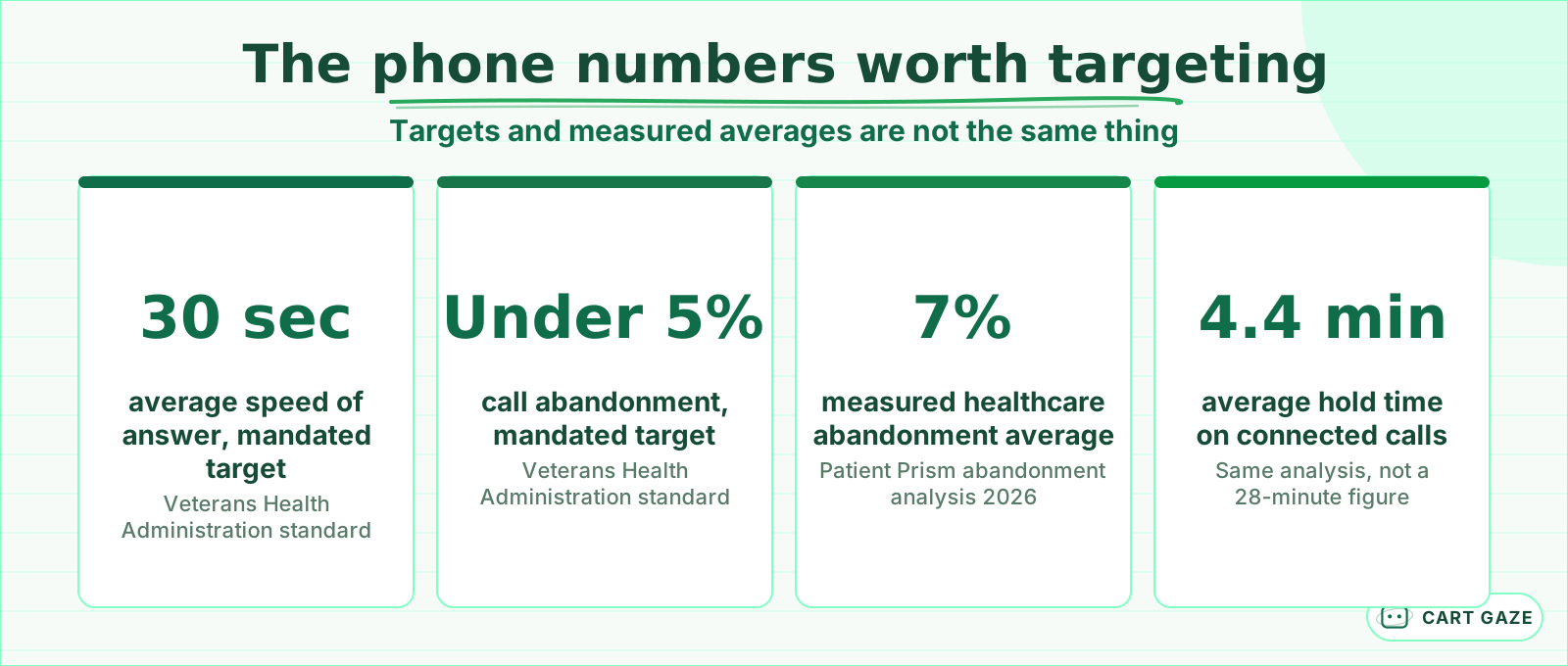 Two are published targets and two are measured averages. Know which is which before quoting them.
The VA analysis is blunt about the staffing side. All six sites identified chronic understaffing of their call centers as a major barrier to effective telephone management, and 5 of the 6 reported high turnover, with staff leaving for better-paid community jobs. A menu cannot compensate for a queue that has nobody in it.
Scale gives the point some weight. Across those six sites, call center staffing ranged from 6 to 17 medical support assistants, with between 0 and 10 nurses attached, and every site was running short. When a queue is understaffed, the menu is doing something worse than annoying people: it is politely distributing callers into waits nobody can service.
There are published targets worth holding yourself to. The VA mandates an average speed of answer of 30 seconds or less and a call abandonment rate under 5%. Measured reality across healthcare sits worse: roughly 7% abandonment on average, and 10% to 20% or higher at physician practices during peak windows.
Callers do not wait around while you sort this out. More than 60% abandon after one minute on hold and over 90% by five minutes, against an average healthcare hold time of 4.4 minutes. The window to resolve a call is shorter than most phone trees take to read their options.
First-call resolution is the number nobody tracks
First-call resolution is the share of calls where the caller's request is completed on that call, with no callback, no transfer to a queue, and no promise to look into it. Most practices do not measure it, which is why phone projects get evaluated on answer speed and still fail.
The VA study points directly at this. Its authors noted that the mandated metrics did not account for integration with primary care workflows or the effect on patient satisfaction. A site can hit a 30-second answer target and a sub-5% abandonment rate while sending most callers away without an appointment.
An authority problem is the harder one and it is not a technology purchase. If your scheduling rules require a nurse to approve a slot, or your front desk cannot see a provider's template, no phone system will produce first-call resolution. The system can only complete tasks it is permitted and equipped to complete.
Measuring it is less work than it sounds. Take 50 consecutive calls from one ordinary weekday, and for each one write down what the caller wanted and whether they got it before hanging up. A promised callback counts as unresolved, because from the patient's side it is. Most practices doing this for the first time find a resolution rate well under half, and find that a single category, usually scheduling or authorization status, accounts for most of the misses.
Be careful with the phone tree statistics you will be quoted
Vendor pages in this category quote dramatic numbers with no study behind them. We checked one widely shared page and found six separate figures, including a 28-minute average hold time and a claim that 34% of abandoned callers never come back, none of which carried a citation of any kind.
That matters because those numbers get repeated into board decks and budget requests. A 28-minute average hold is roughly six times the measured healthcare average of 4.4 minutes, and if you build a business case on it, the payback you promised will not arrive.
Use your own call log instead. It is the only dataset that matches your patient mix, your hours, and your staffing, and pulling one week of it costs an afternoon.
Routing is not resolving
A routing system asks the caller to classify themselves, then hands them to a destination. A resolving system takes the request and completes it. Menus, voice agents, and human operators can each do either, which is why the technology label tells you very little about the outcome.
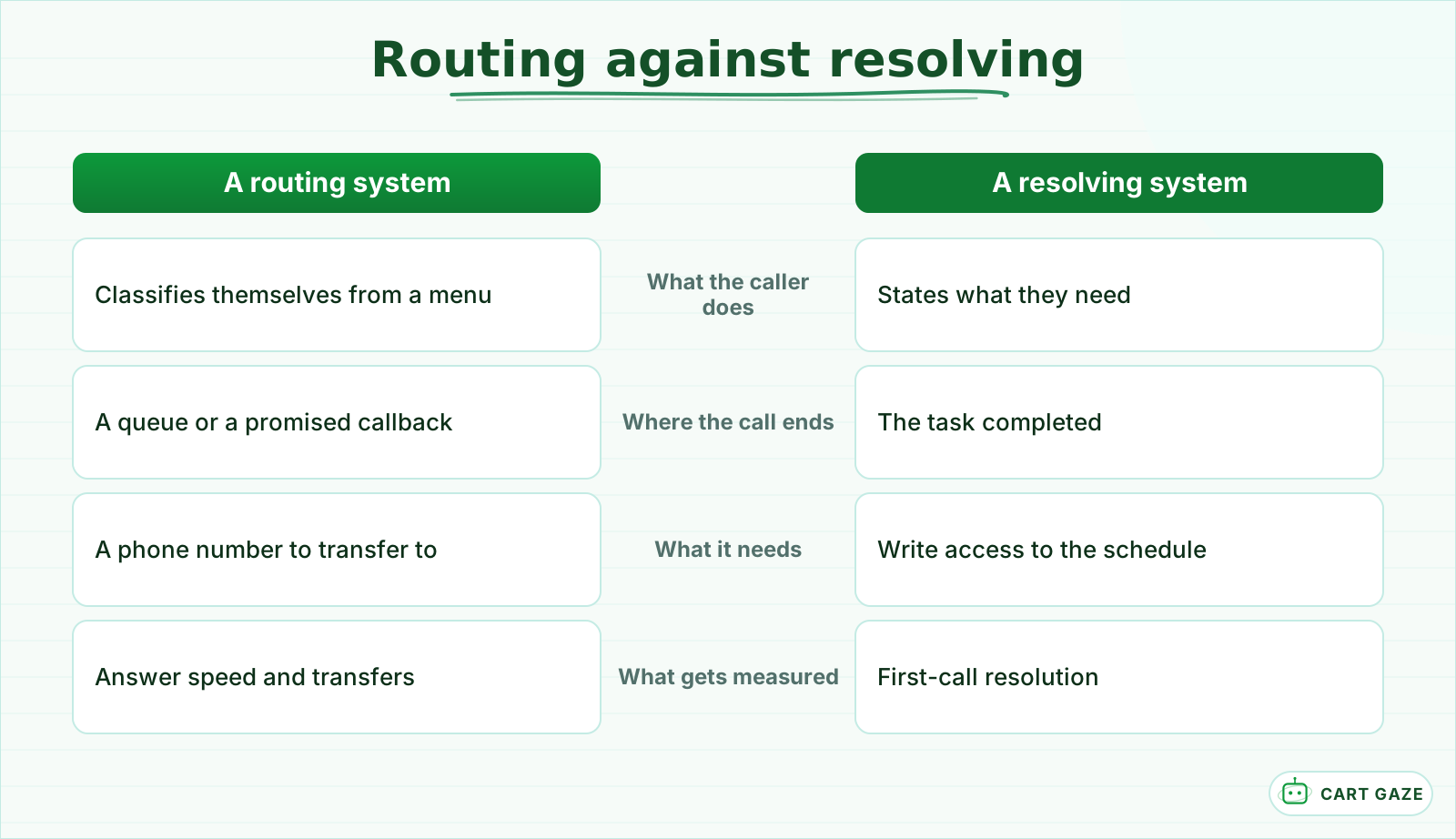 Routing moves a call. Resolution finishes a task. Only one of them ends the callback.
This is the honest limit on AI voice agents too. When MGMA polled 177 practice leaders in February 2026, calls were the second-ranked front-office target for automation at 27%, behind scheduling at 31%, and voice bots for call routing were named specifically. Routing is what most deployments actually buy.
A voice agent resolves a call only when it can read and write your schedule, see who the patient is, and act inside rules somebody agreed in advance. Without calendar write access it is a friendlier menu. With it, it books, and the callback disappears.
The general boundaries of what these systems do, and where they must stop, are covered in what an AI receptionist does and where it stops.
Which calls still deserve a menu
A menu is not always wrong. It is efficient when the caller already knows exactly where they are going and the destination is a genuinely different team. It is wrong when it is being used to sort work that one competent responder could have finished.
| Call type | Menu or direct? | Why |
|---|---|---|
| Emergency or urgent symptoms | Direct to a human | A menu costs seconds you do not have |
| Booking, rescheduling, cancelling | Direct resolution | One responder can finish it |
| Billing and payment questions | Menu is reasonable | Genuinely a different team and system |
| Prescription refills | Direct capture, clinical review | Structured intake, then a clinician decides |
| Records requests | Menu is reasonable | Separate workflow with its own turnaround |
| Prior authorization status | Direct to the staffed queue | 45% of phone time, needs a person |
Keep the menu short where you keep it. Practices that hold onto deep trees usually do so because departments asked for their own option, not because patients navigate better with more choices. Every option you add is a decision you have moved onto a patient who does not know your org chart.
The row worth arguing about is prior authorization. It is the single largest consumer of practice phone time, named most time-consuming by 45% of 294 practice leaders in MGMA's March 2026 poll, and it is not automatable at the phone layer. Sending those callers into a menu option that reaches an unstaffed queue is how a practice generates repeat calls, because the same patient will try again tomorrow.
How to cut over without losing calls
The safe cutover runs in parallel rather than as a switch. You keep the existing path live, move one number or one call type at a time, and compare first-call resolution before and after on the same measure. Nothing gets retired until the replacement beats it on your own data.
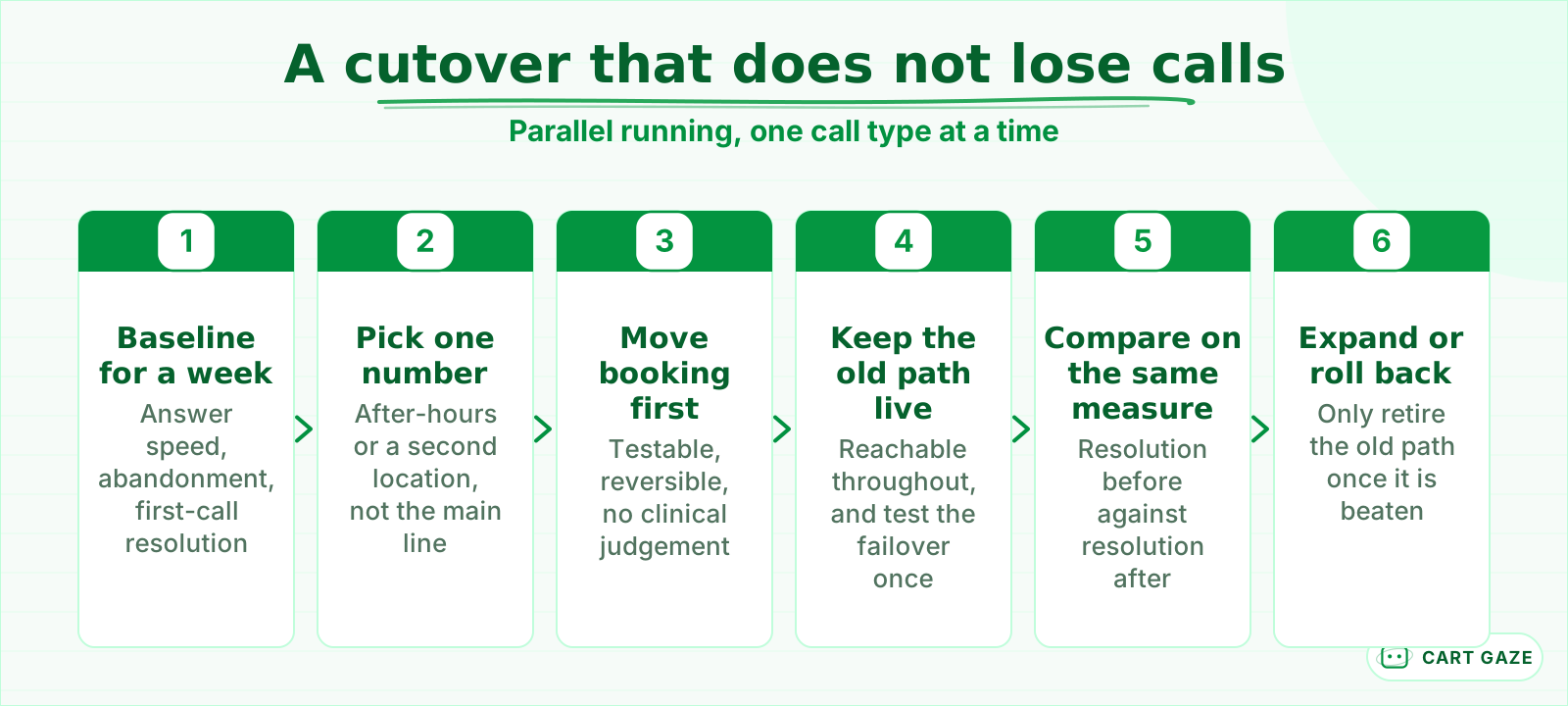 Measure, scope, pilot on one number, then cut over. Keep the old path live throughout.
Sequence the call types by risk rather than by volume. Move booking and rescheduling first, because they are testable and reversible. Move anything clinical last, or never. A cutover that starts with the highest-volume queue looks efficient on a project plan and puts your worst failure mode in week one.
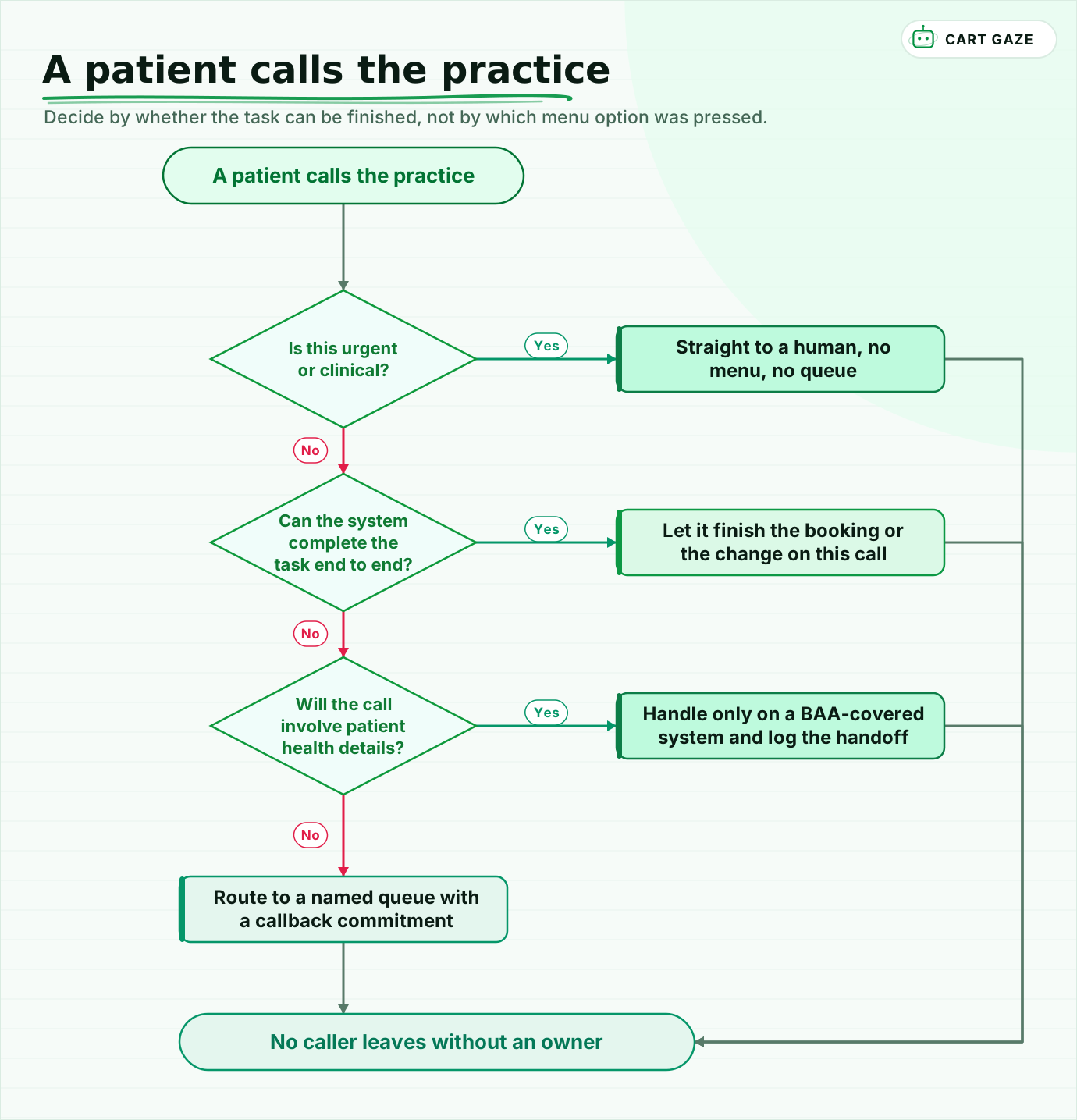 Decide by whether the task can be finished, not by which menu option was pressed.
Run the pilot on a single number first, such as your after-hours line or a second location, so a bad week affects a slice rather than the whole practice. Two weeks of data on one number tells you more than any demo, and it gives your staff a chance to hear how the system actually talks to your patients before it speaks for the whole practice.
Tell the team what is changing and why before the first call lands. Front desk staff who discover a voice agent by overhearing it tend to work around it, and a workaround at the desk quietly restores every dead end you just removed.
Compliance is a contract question rather than a badge. Any vendor whose system will hear patient details is a business associate and needs a signed agreement first, and "HIPAA certified" is not a real credential, which the HIPAA breakdown covers properly.
Where to start
Start by measuring three numbers for one week: average speed of answer, abandonment rate, and first-call resolution on a sample of 50 calls. Compare the first two against the published targets of 30 seconds and under 5%, and treat the third as your baseline.
If your answer speed and abandonment are fine but resolution is low, your problem is authority and workflow, and buying a voice agent will not fix it. If abandonment is high and resolution is decent when someone does answer, you have a capacity problem and automation has real room to work. The revenue side of that gap is worked through in the real cost of missed calls.
When you want a second read on which of those two you have, the free Growth Leak Audit walks the numbers with you.
Fair questions.
Should a medical practice replace its phone tree with an AI voice agent?
Only if the replacement can complete tasks rather than route them. A voice agent without write access to your schedule is a friendlier menu, and your abandonment rate will not move. Measure first-call resolution on 50 calls first, since a low number often points at workflow authority rather than at the phone system.
What is first-call resolution for a medical practice phone line?
It is the share of calls where the caller got what they wanted on that call, with no transfer to a queue and no promised callback. A promised callback counts as unresolved, because from the patient side it is. Most practices measuring it for the first time find a rate well under half.
What is a good call abandonment rate for a medical practice?
The Veterans Health Administration mandates under 5% abandonment with an average speed of answer of 30 seconds or less. Measured healthcare reality is nearer 7% on average, rising to 10% or 20% at physician practices during peak windows. Compare your own log against the target, not the average.
Which calls should still go through a phone menu?
Calls headed for a genuinely separate team and system, such as billing or records requests, where the caller already knows the destination. Everything one competent responder could finish, including booking and rescheduling, should be resolved directly. Urgent and clinical calls should bypass the menu entirely.
How do you switch phone systems without losing calls?
Run in parallel. Keep the existing routing path live, move one number or one call type at a time, and compare first-call resolution before and after on the same measure. Start with booking and rescheduling because they are testable and reversible, and test the failover path deliberately before you rely on it.
Sources.
- [1]Telephone access management in primary care: cross-case analysis of high-performing access sites
- [2]Average call abandonment rate in healthcare: 2026 benchmarks
- [3]MGMA Stat: AI moves for medical practices to boost the front office (February 2026)
- [4]MGMA Stat: phones are still a bottleneck costing practices time (March 2026)
Written by

Muhammad Qasim Hammad
Founder, Cart Gaze
Qasim builds AI receptionists and front-office automation for medical and dental practices at Cart Gaze. Posts here start from published sources and real call data, not vendor claims, and every number links back to where it came from.
Keep reading.
 Missed Calls & Front DeskCall Quality Scoring for a Medical Front Desk, Done Legally10 min read
 Missed Calls & Front DeskFront Desk Call Metrics Every Practice Should Track in 202610 min read
 Missed Calls & Front DeskMedical Office Phone Scripts That Book Patients: 6 Templates11 min read
 Missed Calls & Front DeskPrescription Refill Automation That Keeps Providers in Control10 min read
 Missed Calls & Front DeskAfter-Hours Call Handling: Cover the 41% Nobody Answers11 min read
 Missed Calls & Front DeskInsurance Card Capture: Why Scanning Is Not Verifying10 min read