
After-Hours Call Handling: Cover the 41% Nobody Answers
About 41% of patient calls arrive after hours, when the front desk is empty and voicemail loses the ones that mattered. Here is the coverage ladder, from a text-back to a 24/7 AI receptionist, priced honestly.
Table of Contents8 sections
- Why after-hours calls are a different problem than daytime misses
- What patients are actually calling about after 5 p.m.
- The after-hours coverage ladder: voicemail to an AI receptionist
- Where an AI receptionist fits after hours, and where it must not
- What after-hours coverage costs
- Map your own after-hours gap before you buy
- Choose coverage that matches your calls
- Fair questions
The phone rings at 7 p.m. or on a Saturday, and there is no one at the front desk to answer it. According to the Relatient Communications Study, about 41% of patient calls arrive outside business hours, so this is not an edge case. It is a third to a half of your phone volume landing in an empty building.
What most practices do with those calls, send them to voicemail, quietly loses the ones that mattered. The fix is not obvious, because after-hours calls are not one kind of call. Some want to book a cleaning. Some are a worried parent at 11 p.m. Those two calls need completely different handling, and any coverage that treats them the same is either losing bookings or taking a risk it should not.
This post separates the two, walks the real coverage options from voicemail to a 24/7 AI receptionist, prices them honestly, and gives you a 30-minute way to measure your own after-hours gap before you buy anything.
Why after-hours calls are a different problem than daytime misses
A daytime missed call is a staffing problem: someone was simply busy. An after-hours call is a coverage problem: nobody is there at all. About 41% of patient calls arrive outside business hours, and no amount of front-desk hiring touches them, because the office is closed when they ring.
After-hours volume also concentrates rather than trickling in evenly. A peer-reviewed study of an academic primary-care practice found most after-hours calls fall on weekends and holidays, about 63%, with an evening bump between 5 and 7 p.m. about 14%. The load is spiky: quiet on a Tuesday night, then a Saturday surge.
Patients now expect to act after hours, too. Aggregated scheduling data suggests a large share of appointment bookings happen outside business hours, with a Sunday-evening peak. A caller who wanted to book and hit your voicemail rarely tries again the next morning. They book with whoever answered.
The daytime version of this leak is a different fix. If your misses cluster at lunch or during check-in rushes, that is routing and staffing, and we work through the math in the real cost of missed calls. After hours, staffing is not on the table, so the only question left is which kind of coverage.
What patients are actually calling about after 5 p.m.
After-hours calls split into two groups, and the split matters more than the total volume. The larger group is routine and administrative: booking, rescheduling, hours, directions, a refill message. The smaller, higher-stakes group is clinical: new or worsening symptoms. Each group needs a completely different responder, so your real answer depends on how your calls divide.
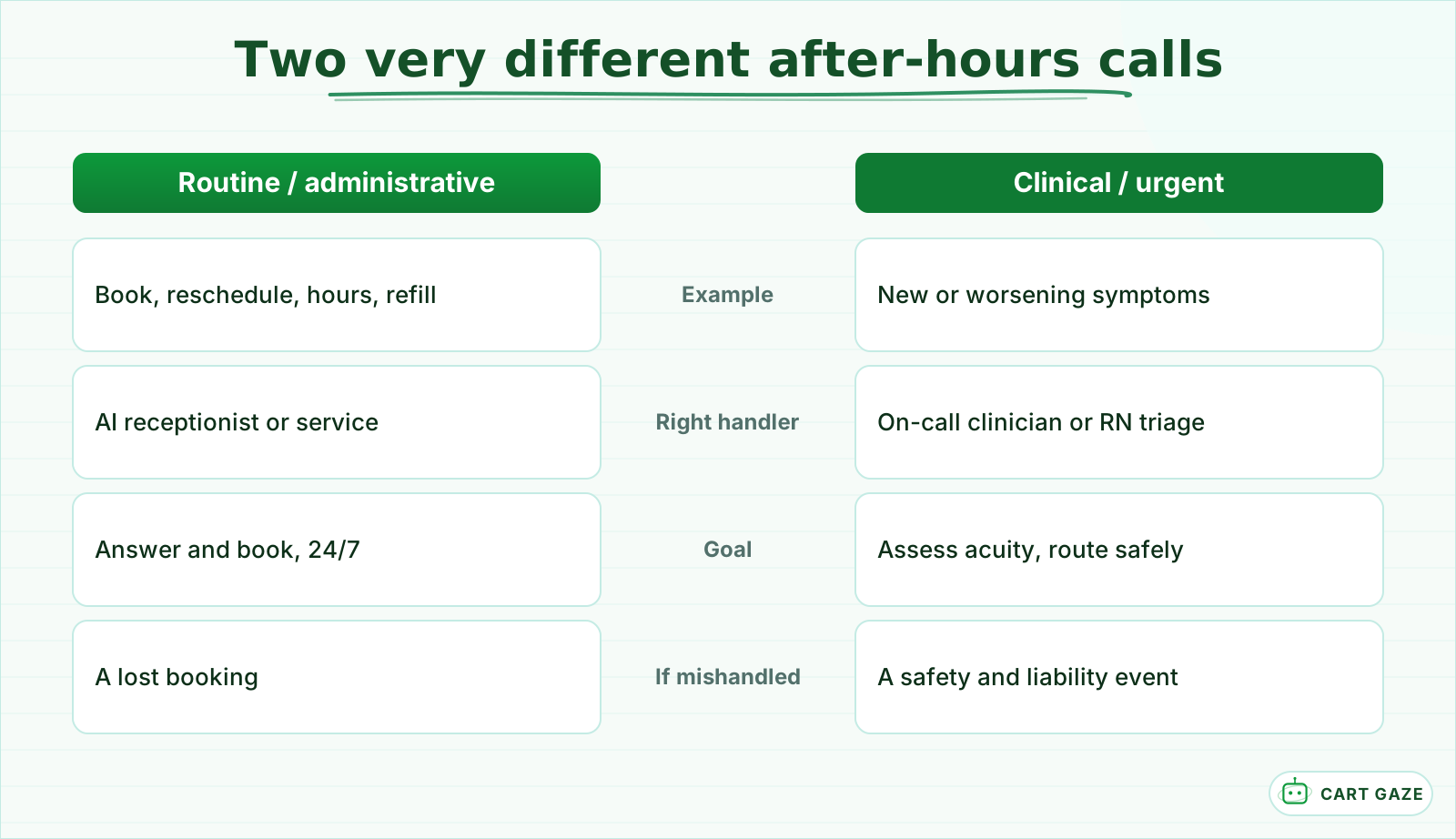 The mix, not the volume, decides your coverage. One can be automated, the other must reach a human.
Routine calls want a fast, correct answer and, ideally, a booking on the spot. A message taken tonight and returned tomorrow afternoon has already lost to the practice down the road that booked the patient at 8 p.m. Speed is the product.
Clinical calls are the opposite. A patient describing chest pain, a parent describing an infant's fever, or someone in real distress needs a person who can judge how urgent it is and point them to the ER, urgent care, a next-day visit, or home care. After-hours nurse triage lines do exactly this, using structured clinical protocols, and most concerns turn out not to be emergencies.
This is why the two common sales pitches both fall short. A message-only answering service is safe for the clinical call but loses the routine booking. Automation that claims to "handle every call" is fine for the routine call and unacceptable for the clinical one. The honest move is to measure your split, not guess it.
The after-hours coverage ladder: voicemail to an AI receptionist
There are five common ways to cover after-hours calls, and they climb in cost and capability: plain voicemail, a missed-call text-back, a human answering service, an RN triage line, and a 24/7 AI receptionist. None is best in the abstract. The right rung depends on your call mix and your budget, which is why measuring comes before shopping.
| Option | What it does after hours | Books? | Clinical calls | Rough monthly cost |
|---|---|---|---|---|
| Voicemail | Records a message, if the caller leaves one | No | No | $0 |
| Missed-call text-back | Auto-texts a reply or booking link | Sometimes | No | Low, flat |
| Human answering service | Live agent takes a message, can page on-call | Rarely | Message only | $0.75 to $3.50 per minute |
| RN triage line | Nurse assesses acuity and routes urgent cases | No | Yes, licensed | Premium per call |
| AI receptionist | Answers and books routine calls, escalates the rest | Yes, 24/7 | Route only | Flat, about $49 to $300 |
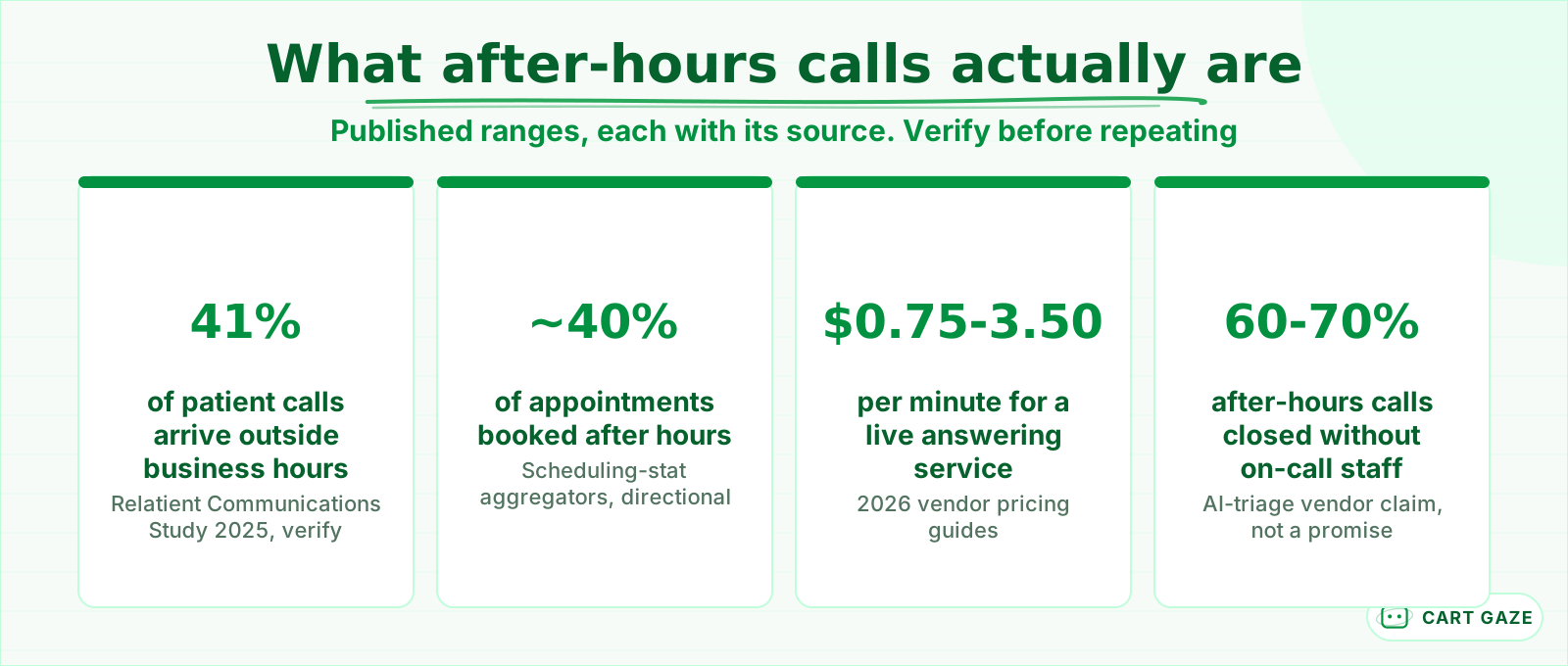 Published ranges, each sourced. Reasons to measure your own mix, not your result.
Voicemail is the default and the worst, because most callers never leave one and the booking is gone with them. A text-back is the cheapest real improvement. An answering service adds a human voice but usually just takes a message. RN triage adds licensed clinical judgment for the urgent slice. An AI receptionist is the only rung that books a routine appointment at 9 p.m. without a person, and it must hand the clinical call to one of the other rungs.
Where an AI receptionist fits after hours, and where it must not
An AI receptionist earns its place on the routine calls. It answers instantly, books into your calendar around the clock, handles hours and prep questions, and takes a structured message. It must never assess symptoms or give medical advice. The safe rule is a short one: recognition and redirection, not diagnosis.
That boundary is not a nice-to-have.
Escalation is the feature that makes it safe. For an urgent but non-emergency call, a good configuration pages your on-call provider with a structured handoff: name, date of birth, callback number, and the reason. Vendors report that 60 to 70% of after-hours calls close without waking on-call staff, which is plausible given how routine most calls are, but treat it as a claim to test on your own line, not a guarantee.
What the system stores and repeats matters just as much. If a call touches patient health details, you need a signed Business Associate Agreement, and you should know what it records, reads back, and deletes. We go deeper in what a HIPAA-aware setup requires. Be skeptical of any page that calls itself "HIPAA certified," because no such certification exists. If you have never evaluated one of these systems, start with what an AI receptionist does and where it stops so you can tell a real boundary from a sales line.
What after-hours coverage costs
After-hours coverage is priced two ways, and the difference is the whole story. Live answering services bill by the minute, so the cost rises with every call and every long conversation. AI receptionists are usually flat-rate, so a busy weekend costs the same as a quiet one. Which is cheaper depends entirely on your volume.
Live answering services typically run $0.75 to $1.50 a minute, up to $3.50 for live agents. Model it out: 300 after-hours calls a month at 4 minutes each is 1,200 minutes, about $1,800 a month at $1.50. That figure is modeled, so swap in your own volume and rate before you quote it to anyone.
AI receptionists are usually flat, roughly $49 to $300 a month, and they book directly instead of only taking a message. A BAA often adds 10 to 30% to a base price, and bilingual handling can carry a per-minute surcharge, so read the line items rather than the headline.
Cheaper is only better if the box does your job. A $99 AI receptionist that cannot safely route a clinical call is not cheaper than a triage line, it is the wrong tool. We compare the two categories head to head in AI receptionist vs answering service and break down pricing in what an AI receptionist costs.
Map your own after-hours gap before you buy
Before you shop, spend 30 minutes measuring. Export the after-hours slice of last month's call log, tag a sample of those calls as routine or clinical, count how many wanted to book, and note where they go today. That single exercise tells you which rung of the ladder you actually need, and it costs nothing.
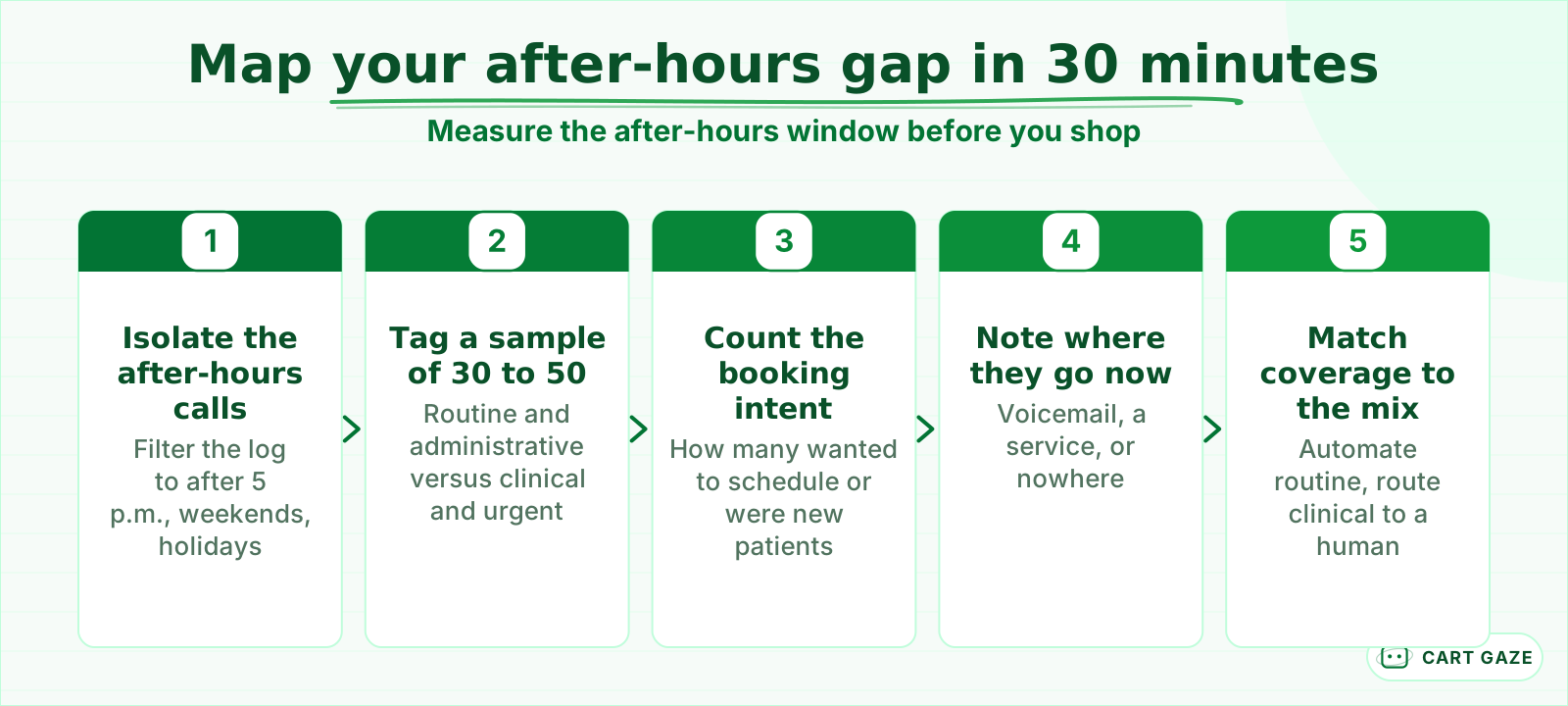 Thirty minutes in your call log tells you which coverage you need. Skip it and you buy the wrong box.
Isolate the window first: filter the log to after 5 p.m. weekends, and holidays. Most cloud phone systems export this in a few clicks. If yours cannot, that is a finding in itself, because a gap you cannot see is a gap you cannot manage.
Then tag 30 to 50 of those calls into two buckets, routine and clinical, and count the booking intent inside the routine bucket. The same six-input worksheet that prices daytime misses works here. Run it on the after-hours window only, using the model in the real cost of missed calls.
Decide with the number, not the demo. A small after-hours slice points to a text-back. A large, booking-heavy slice pays back a 24/7 AI receptionist. A clinical-heavy slice means you need triage, not automation. After-hours booking has a second payoff worth counting: an appointment booked the moment a patient calls is an appointment that tends to show up, which ties directly into reducing patient no-shows.
Choose coverage that matches your calls
The choice comes down to two questions your call log already answers: what is your after-hours mix, and how large is the booking slice you are losing. Match routine, booking-heavy volume to a 24/7 AI receptionist, keep a human path for anything clinical, and start on one call type rather than the whole phone line.
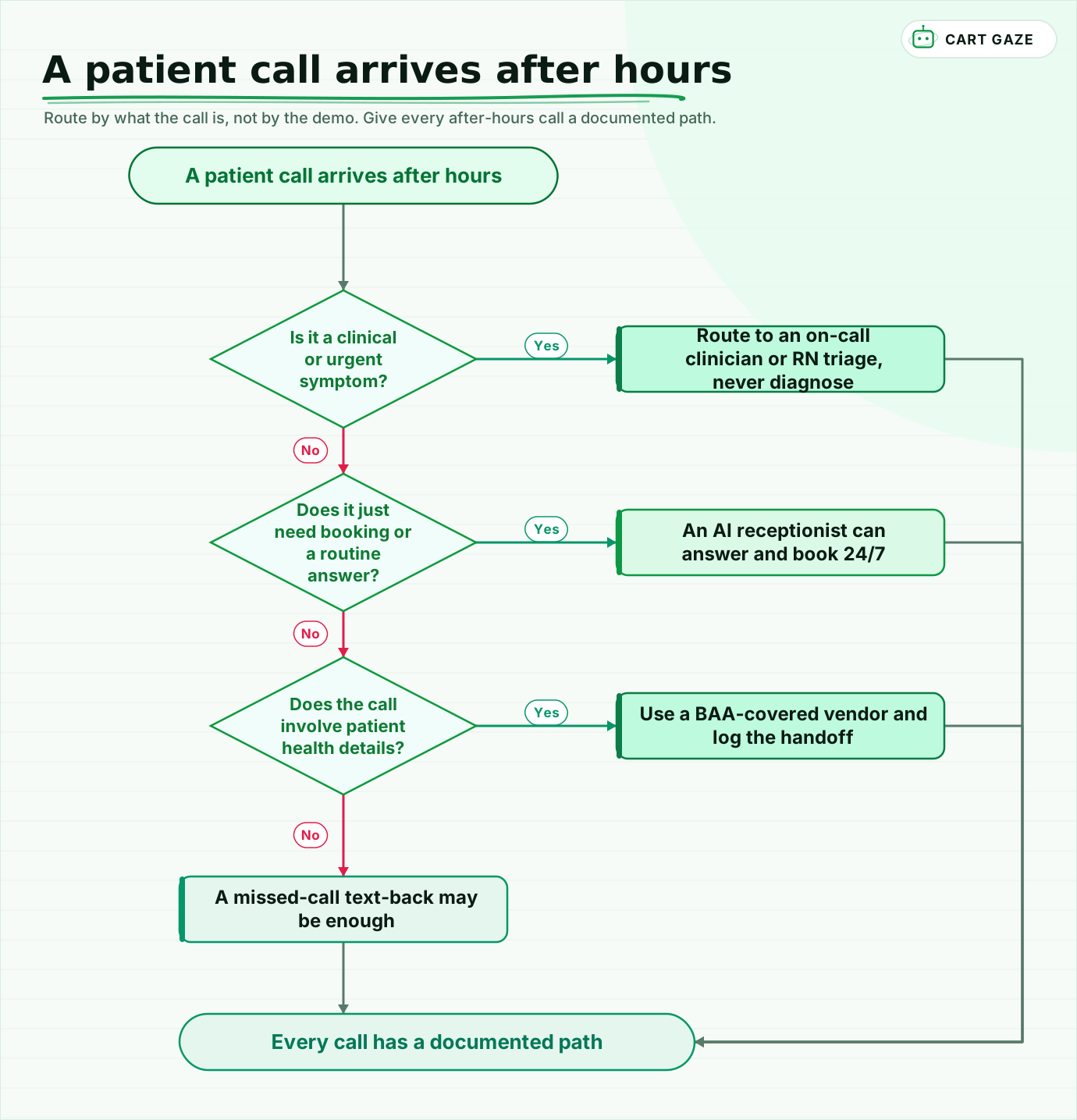 Route by what the call is, not by the demo. Give every after-hours call a documented path.
Walk the flow once. A clinical or urgent call goes to a human, every time. A routine call can go to an AI receptionist that books it on the spot. A call that touches health details needs a BAA-covered vendor and a logged handoff. Everything else may only need a missed-call text-back.
Whatever you pick, pilot it on one call type and one after-hours window, read the first week of transcripts, and re-measure recaptured bookings in your own log after 30 to 60 days. Someone else's before-and-after slide is not your practice. If you would rather have the after-hours slice measured for you first, the free Growth Leak Audit sizes it from your own numbers before anyone talks tools.
Fair questions.
What percentage of patient calls come in after hours?
About 41% of patient calls to medical practices arrive outside business hours, according to the Relatient Communications Study, and they cluster on weekends and evenings rather than spreading evenly. That is a third to a half of your phone volume landing when the front desk is empty, which is why voicemail alone quietly loses bookings you never see.
Can an AI receptionist handle after-hours medical calls safely?
For routine calls, yes: an AI receptionist can answer, book, and take messages 24/7. For clinical or urgent calls it should recognize and redirect, never diagnose. A safe setup pages your on-call provider with a structured handoff and escalates symptoms, distress, or anything ambiguous to a human immediately. Automation that assesses symptoms is a liability, not a feature.
How much does after-hours call coverage cost?
Live answering services bill by the minute, roughly $0.75 to $1.50 and up to $3.50 for live agents, so 300 calls at 4 minutes each can model to about $1,800 a month. AI receptionists are usually flat, around $49 to $300 a month, with a BAA adding 10 to 30%. Match the pricing model to your actual volume.
Do I still need a nurse triage line if I have an AI receptionist?
It depends on your call mix. If a meaningful share of after-hours calls are clinical, you need licensed triage or a clear on-call path, and the AI receptionist should route those calls, not handle them. If your after-hours calls are mostly booking and admin, the AI rung plus an escalation path may be enough. Measure the split first.
Is an after-hours AI receptionist HIPAA compliant?
HIPAA compliance is a configuration and contract question, not a product badge, and "HIPAA certified" does not exist. Any vendor handling patient details is a business associate and must sign a Business Associate Agreement. Ask what the system records, reads back, and deletes, and confirm the BAA is in place before a single patient detail reaches it.
Sources.
- [1]Medical practice phone statistics (Relatient after-hours share, MGMA volume)
- [2]Utilization patterns of an after-hours physician triage and advice telephone service
- [3]Appointment scheduling statistics: online and after-hours booking demand
- [4]How much does a medical answering service cost in 2026
- [5]Medical answering service cost and per-minute pricing (Aira)
- [6]After-hours medical answering service with RN triage (Schmitt-Thompson)
- [7]After-hours AI receptionist: escalation and on-call handoff
- [8]AI medical receptionist: features, limits, and safe boundaries
- [9]Common mistakes clinics make deploying AI receptionists
Written by

Muhammad Qasim Hammad
Founder, Cart Gaze
Qasim builds AI receptionists and front-office automation for medical and dental practices at Cart Gaze. Posts here start from published sources and real call data, not vendor claims, and every number links back to where it came from.
Keep reading.
 Missed Calls & Front DeskFront Desk Call Metrics Every Practice Should Track in 202610 min read
 Missed Calls & Front DeskPrescription Refill Automation That Keeps Providers in Control10 min read
 Missed Calls & Front DeskCall Quality Scoring for a Medical Front Desk, Done Legally10 min read
 Missed Calls & Front DeskPatient Complaint Triage: Catch It Before It Costs You a Review10 min read
 Missed Calls & Front DeskFamily Scheduling Automation: Book Every Kid in One Call10 min read
 Missed Calls & Front DeskCancellation Waitlist Automation: Fill the Empty Slot Fast10 min read