
AI Receptionist for Dental Practices: A 2026 Owner's Guide
About 38% of dental calls go unanswered, and most callers never try again. Here is what an AI receptionist for dental practices can book, where it must route emergencies to a human, and what it costs.
Table of Contents8 sections
- Why your dental front desk loses calls it never sees
- What patients are really calling your dental office about
- The front-desk jobs a dental AI receptionist can take over
- Recall and reactivation: the revenue hiding in your overdue list
- Where a dental AI receptionist must stop: real emergencies
- What it costs, and whether it is really HIPAA compliant
- Choose an AI receptionist that fits your practice
- Fair questions
Your dental front desk is on the phone all day and still missing calls. Across 4,280 inbound calls at 26 practices, Peerlogic found that 38% went unanswered in 2026, which means roughly a third of the people trying to reach you never got through to a human.
Those are not spam calls. They are new patients who found you on Google, existing patients trying to book a cleaning, and callers asking whether you take their insurance. When they hit voicemail, most do not wait: somewhere around 67% to 70% call the next dentist on the list. A single new patient is worth about $850 on the first visit and thousands more over the years, so a missed phone is a leaking bank account.
An AI receptionist answers every one of those calls 24/7, books the routine ones, and hands the emergencies to a human. This post maps which dental front-desk jobs it can safely take, where it must stop cold, what it costs, and how to tell a real HIPAA answer from a sales line.
Why your dental front desk loses calls it never sees
A dental front desk does not miss calls because the team is careless. It misses them because two people cannot answer four lines during a check-in rush. Front-desk staff spend 2.5 to 4 hours a day on the phone, so calls pile up at lunch and after close, and voicemail swallows the overflow.
The scale is easy to underestimate. A typical practice misses around 300 calls a month, and the miss rate is not spread evenly. It spikes during the morning rush, the lunch hour, and the early evening, exactly when patients finally have a minute to call.
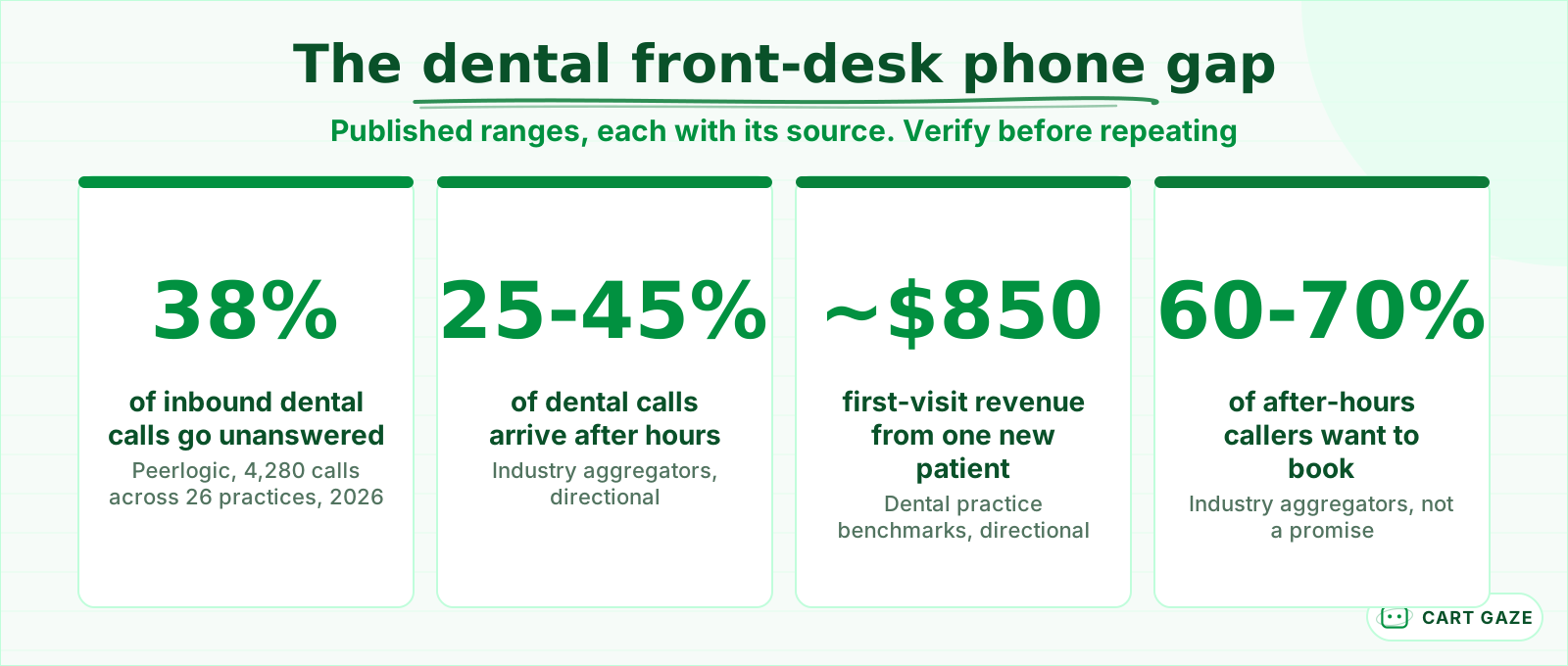 Published ranges, each sourced. Reasons to measure your own phone log, not your result.
The cost lands twice. First, the caller leaves: roughly 67% to 70% of people who reach voicemail hang up and dial the next dentist on Google, so the miss is usually permanent. Second, the calls you lose are disproportionately new patients, each worth about $850 on the first visit and $5,000 to $10,000 over the life of the relationship.
This is why hiring your way out rarely works on its own. Another front-desk hire helps the daytime rush, but it does nothing for the 25% to 45% of calls that arrive after you close, and roughly 60% to 70% of those after-hours callers are trying to book, not report an emergency. We work through the full missed-call math in the real cost of missed calls.
What patients are really calling your dental office about
Most calls to a dental office are routine and bookable: a cleaning, a reschedule, your hours, or the question you hear all day, do you take my insurance. A smaller slice is a true emergency. The split matters more than the total, because each group needs a completely different responder to be handled well.
Routine calls reward speed. A patient who wants a Saturday cleaning and gets a callback on Monday afternoon has usually booked somewhere else by then. Answering and booking on the spot is the entire product for this group, and it is most of your volume.
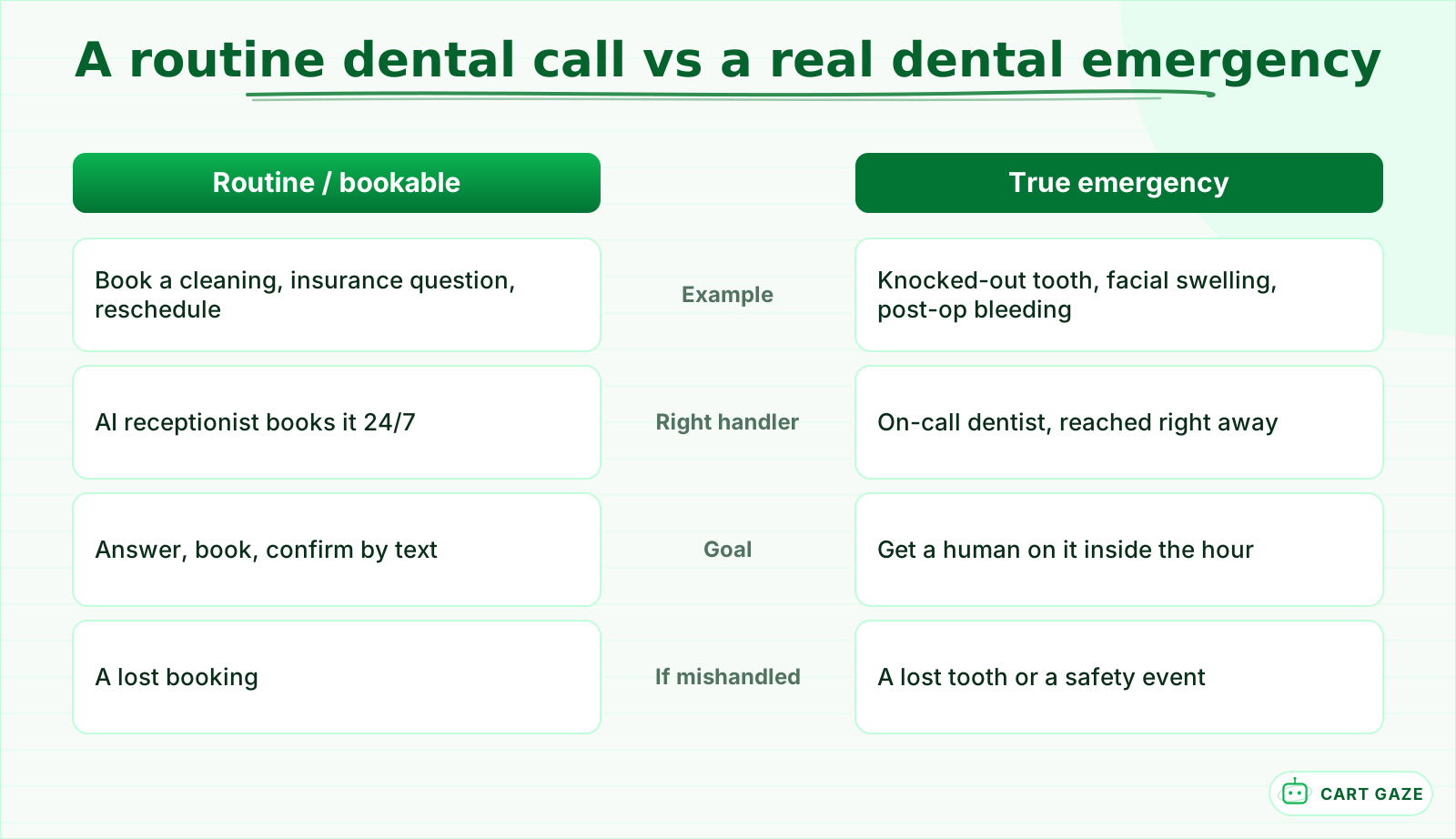 The AI books the routine call and routes the emergency. It never decides how urgent a symptom is.
The emergency slice is the opposite. Someone with a knocked-out tooth, a swelling jaw, or bleeding that will not stop needs a person who can judge how urgent it is and get them seen, not a scripted booking flow. That call must reach your on-call dentist, and the exact line for where automation stops is coming up.
This is why the two common pitches both fall short. A plain answering service is safe for the emergency but takes a message instead of booking the cleaning. Automation that claims to handle every call is fine for the booking and reckless on the emergency. The honest move is to measure your own split, then match the tool to it.
The front-desk jobs a dental AI receptionist can take over
An AI receptionist can own the repetitive, high-volume front-desk work: answering 24/7, booking and rescheduling cleanings straight into your calendar, confirming which insurance plans you accept, and running new-patient intake. It checks real availability in your practice software and texts a confirmation, so the routine call closes without a person.
| Front-desk job | What an AI receptionist does | The honest boundary |
|---|---|---|
| Book a cleaning | Offers real open slots and books 24/7 | None, this is its core job |
| Hygiene recall | Calls or texts overdue patients and books them | Works your list, does not decide clinical need |
| "Do you take my insurance?" | Confirms in-network plans from your accepted list | Verifies benefits, never promises a dollar figure |
| New-patient intake | Collects name, reason, contact, sends forms | Flags anything urgent for a human |
| A true emergency | Recognizes the words and routes to on-call | Never assesses how serious the symptom is |
The time savings are real where the work is repetitive. Manual insurance verification runs 10 to 20 minutes per patient and eats 8 to 15 staff hours a week, so moving the first-pass questions off the desk frees your team for the patients standing right in front of them. It also connects to the practice systems most offices already run, including Dentrix, Open Dental, Eaglesoft, and Curve.
Recall and reactivation: the revenue hiding in your overdue list
Every dental practice carries a list of patients who are overdue for a cleaning, and it is usually large: 25% to 40% of the active base at any moment. Recall rates sit around 60% to 70%, so 30% to 40% of patients slip off schedule. Working that list is some of the most recoverable revenue you have.
The catch is timing. Reactivation odds fall fast the longer someone lapses, so an overdue list is a melting asset, not a permanent one.
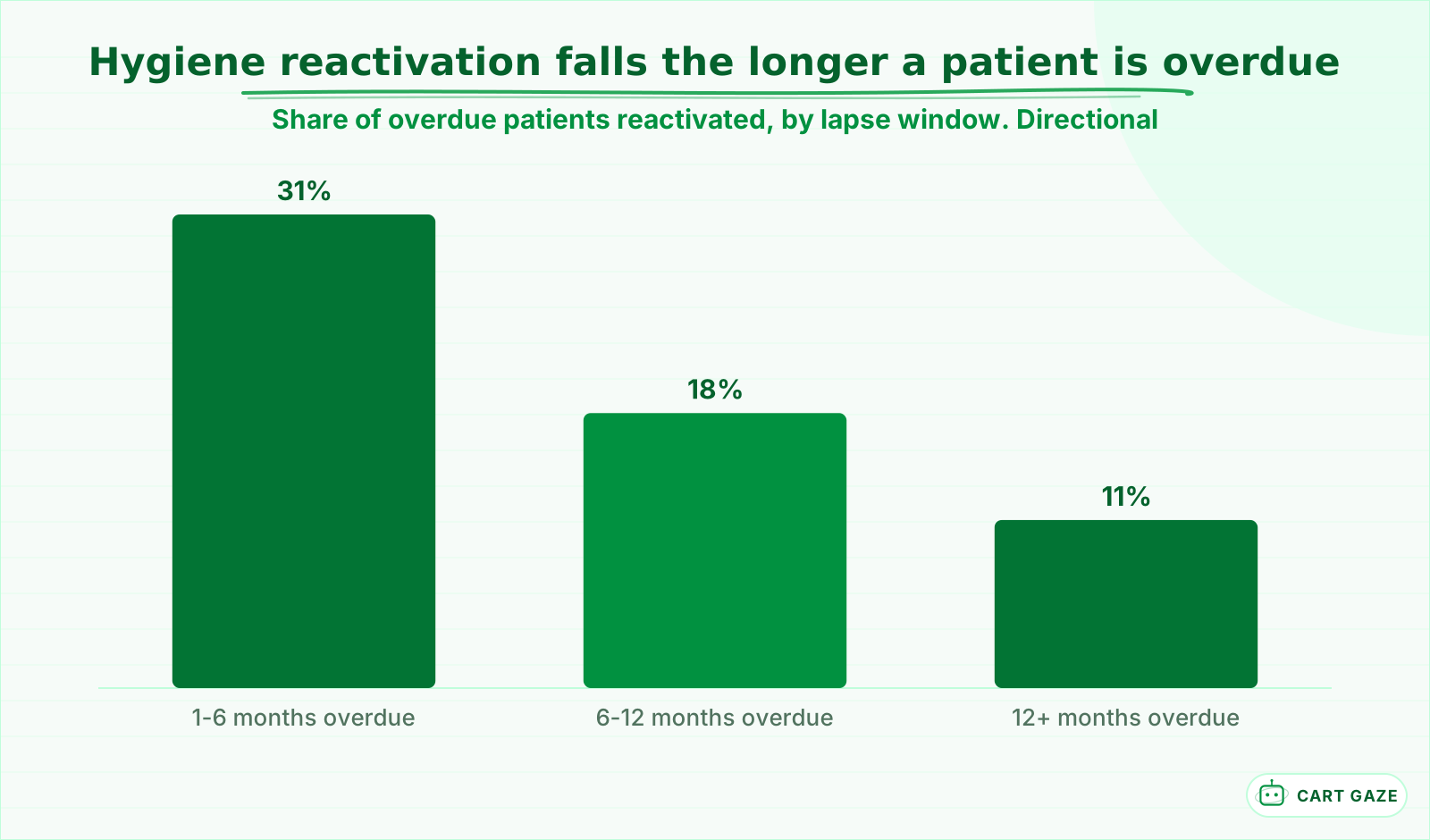 Reactivation odds drop the longer you wait. Directional vendor benchmark, verify on your own list.
Roughly 31% of patients who are 1 to 6 months overdue come back when you reach out, but that drops to about 18% at 6 to 12 months and near 11% once they pass a year. Those are directional vendor benchmarks worth testing on your own list, and the lesson holds either way: work the list early and often, which is exactly the patient outreach a buried front desk never gets to.
This is where an AI receptionist quietly pays for itself. It can work the recall list on both outbound reminders and inbound calls, offer a real open slot, and book the cleaning in the same conversation. A visit booked the moment a patient engages also tends to show up, which ties directly into reducing patient no-shows.
Where a dental AI receptionist must stop: real emergencies
An AI receptionist must never judge how serious a dental symptom is. Its job on an urgent call is recognition and redirection, not diagnosis: it hears the words that signal trouble and routes the caller to your on-call dentist immediately, with a short structured handoff. It never tells a patient that a symptom can wait until morning.
The dental emergencies are specific, and some are genuinely time-critical.
Escalation is the feature that makes the whole thing safe. For an urgent call, a good setup pages your on-call dentist with a clean handoff: the patient's name, a callback number, and what happened. The AI's only decision is a binary one, urgent or not, and when in doubt it escalates rather than reassures.
If you have never evaluated one of these systems, start with what an AI receptionist does and where it stops so you can tell a real safety boundary from a sales line. Be skeptical of any vendor that says its AI "triages" emergencies, because triage is a clinical act, and software should route a call, not rank a symptom.
What it costs, and whether it is really HIPAA compliant
Dental AI receptionists are priced two ways: usage-based voice agents at roughly $0.05 to $0.12 a minute, and flat monthly plans commonly around $49 to $300. A signed BAA and deeper integration with your practice software can add to the base. Which model is cheaper depends entirely on your call volume.
On HIPAA, be precise, because most vendor pages are not. HIPAA compliance is a configuration and a contract, not a product badge. Any tool that handles patient details is a business associate and has to sign a Business Associate Agreement with your practice. The phrase "HIPAA certified" describes nothing real, since no such certification exists, so treat it as a signal to ask harder questions rather than a stamp of trust.
Before a single patient detail reaches the system, ask what it records, what it reads back during a call, and what it deletes, then get the BAA in hand. For a full breakdown of plans and hidden fees, see what an AI receptionist costs.
Choose an AI receptionist that fits your practice
The right choice comes from your own phone log, not a demo. Match your routine, booking-heavy volume to a 24/7 AI receptionist, keep a hard human path for every emergency, and confirm the compliance basics first. Then prove it on a small slice before you turn it loose on the whole line.
 Route by what the call is. Give every dental call a documented path.
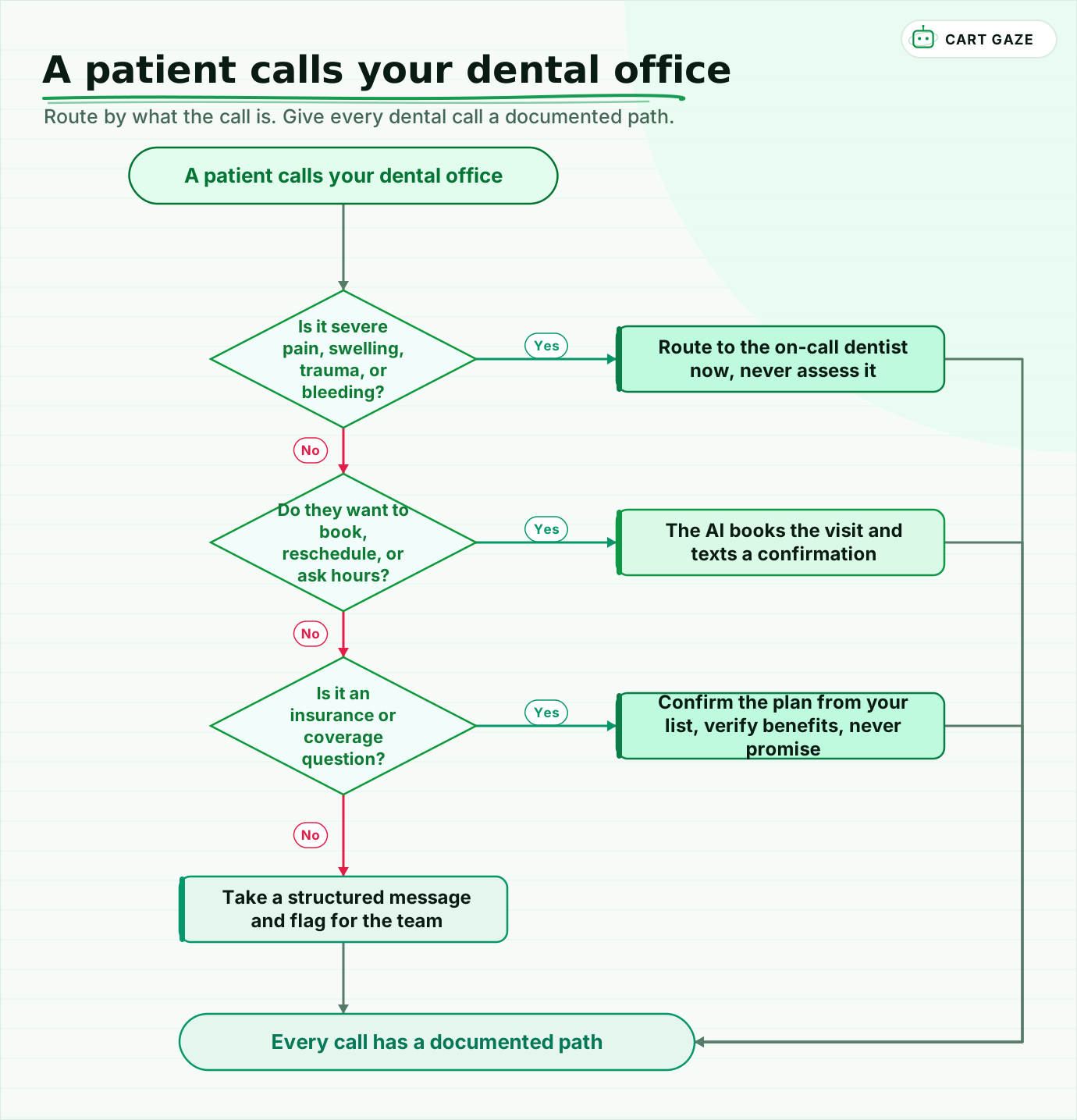
Walk the flow once. A call with severe pain, swelling, trauma, or bleeding goes straight to a human. A routine booking or reschedule goes to the AI, which books it and confirms by text. An insurance question gets the plan confirmed from your list, with benefits verified rather than promised. Everything else becomes a structured message for the team.
Whatever you choose, pilot it on one call type and one window, read the transcripts, and re-measure booked cleanings and reactivated patients in your own software after 30 to 60 days. If you would rather see the size of the leak first, the free Growth Leak Audit sizes your missed-call and recall gap from your own numbers before anyone talks tools.
Fair questions.
Can an AI receptionist handle dental emergencies?
No, and any vendor that says its AI "triages" emergencies is overselling. An AI receptionist should recognize an urgent call, severe pain, swelling, trauma, or bleeding, and route it to your on-call dentist immediately with a structured handoff. It must never judge how serious a symptom is or tell a patient it can wait, because that is a clinical decision a human has to make.
What can an AI receptionist actually do for a dental practice?
It answers calls 24/7, books and reschedules cleanings into your calendar, runs new-patient intake, works your hygiene recall list, and confirms which insurance plans you accept. It integrates with systems like Dentrix, Open Dental, Eaglesoft, and Curve to check real availability and text a confirmation, so routine calls close without pulling a staff member off the front desk.
Is a dental AI receptionist HIPAA compliant?
HIPAA compliance is a configuration and a contract, not a product you buy, and "HIPAA certified" does not exist. Any vendor handling patient details is a business associate and must sign a Business Associate Agreement with your practice. Ask what the system records, reads back, and deletes, and get the signed BAA in hand before a single patient detail reaches it.
How much does an AI receptionist for a dental office cost?
Two models are common. Usage-based voice agents run roughly $0.05 to $0.12 a minute, so the bill scales with call volume. Flat monthly plans commonly land around $49 to $300. A signed BAA and deeper practice-management integration can add to the base, so read the line items for setup and per-integration fees before you compare headline prices.
Will an AI receptionist help with hygiene recall and no-shows?
Yes, this is one of its strongest uses. It can work your overdue list on outbound and inbound calls, offer real open slots, and book the cleaning in the same conversation, which a busy desk rarely has time for. Reactivation odds fall the longer a patient lapses, so booking them the moment they engage also tends to reduce no-shows.
Sources.
- [1]Turning missed dental phone calls into profit (Peerlogic, 38% unanswered across 26 practices)
- [2]32% of dental calls go unanswered and how to fix it (Reach)
- [3]Dental practice phone call statistics: 30+ data points 2026
- [4]Missed dental patient calls and their cost (new-patient value)
- [5]Dental insurance verification time and front-desk hours
- [6]Dental recall and reactivation statistics: industry benchmarks 2026
- [7]Dental recall system: reactivation rates by overdue window (Viva)
- [8]Avulsed (knocked-out) tooth: reimplant window (Cleveland Clinic)
- [9]Best AI receptionist for dental offices: pricing and BAA (Leadlock)
- [10]Best AI voice agent for dental clinics: PMS integration and pricing (LuMay)
Written by

Muhammad Qasim Hammad
Founder, Cart Gaze
Qasim builds AI receptionists and front-office automation for medical and dental practices at Cart Gaze. Posts here start from published sources and real call data, not vendor claims, and every number links back to where it came from.
Keep reading.
 By Practice TypeAI Receptionist for Home Health: The 48-Hour Referral Clock10 min read
 By Practice TypeAI Receptionist for Fertility Clinics: What It Must Never Do10 min read
 By Practice TypeAI Receptionist for Oral Surgery: Referrals In, Post-Op Calls Out10 min read
 By Practice TypeAI Receptionist for Audiology Practices: Why Text Comes First11 min read
 By Practice TypeAI Receptionist for Podiatry: What to Automate, What to Escalate11 min read
 By Practice TypeAI Receptionist for Veterinary Clinics: An Honest 2026 Guide10 min read