
Will Patients Accept an AI Receptionist? What Surveys Show
Will patients accept an AI receptionist? 2026 surveys say it depends on the task: high comfort for booking and reminders, low for clinical calls, plus what patients need before they trust it.
Table of Contents8 sections
- Will patients accept an AI receptionist, honestly?
- Where patients accept AI, and where they do not
- How patient acceptance splits by generation
- Patients want to know when they are talking to AI
- The honest baseline is hold music, not a person
- How to earn patient acceptance, not assume it
- Decide whether your patients are ready
- Fair questions
You are weighing an AI receptionist, and the real worry is not the software. It is the patient who hears a machine answer the phone, feels brushed off, and books with the practice down the street instead. That fear is fair, and it is also measurable.
The honest answer from 2026 survey data is that acceptance is not one number. Patients are broadly comfortable with AI for administrative calls like booking and reminders, and clearly uncomfortable with it for anything clinical. In a KLAS Research and Luma Health survey of more than 1,000 US adults in July 2025, comfort was highest exactly where AI saves time, and it dropped as soon as the task moved toward diagnosis or advice.
This post gives you the split by task, the generational read, what patients say they need before they will trust it, and the baseline that matters most: what your phone already does to them. Then it shows how to introduce an AI receptionist so patients accept it instead of resenting it.
Will patients accept an AI receptionist, honestly?
Mostly yes for routine calls, and mostly no for clinical ones. Patients accept an AI receptionist when it books an appointment, sends a reminder, or answers a question about hours fast, and they reject it the moment it seems to be judging symptoms. Acceptance tracks the task, not the technology.
The survey signal is consistent across sources. Patients are most comfortable when AI improves speed, access, and cost, and least comfortable when it touches a medical decision. That is the single most useful fact for a practice owner, because it tells you which calls to automate and which to keep on a human line.
It also lines up with how patients already behave. AI use for health questions is rising fast: 32% of US adults said they used an AI chatbot for health information in late 2025, double the 16% a year earlier, per Rock Health's survey of 8,000 adults. Comfort with AI in a medical context is no longer a fringe position.
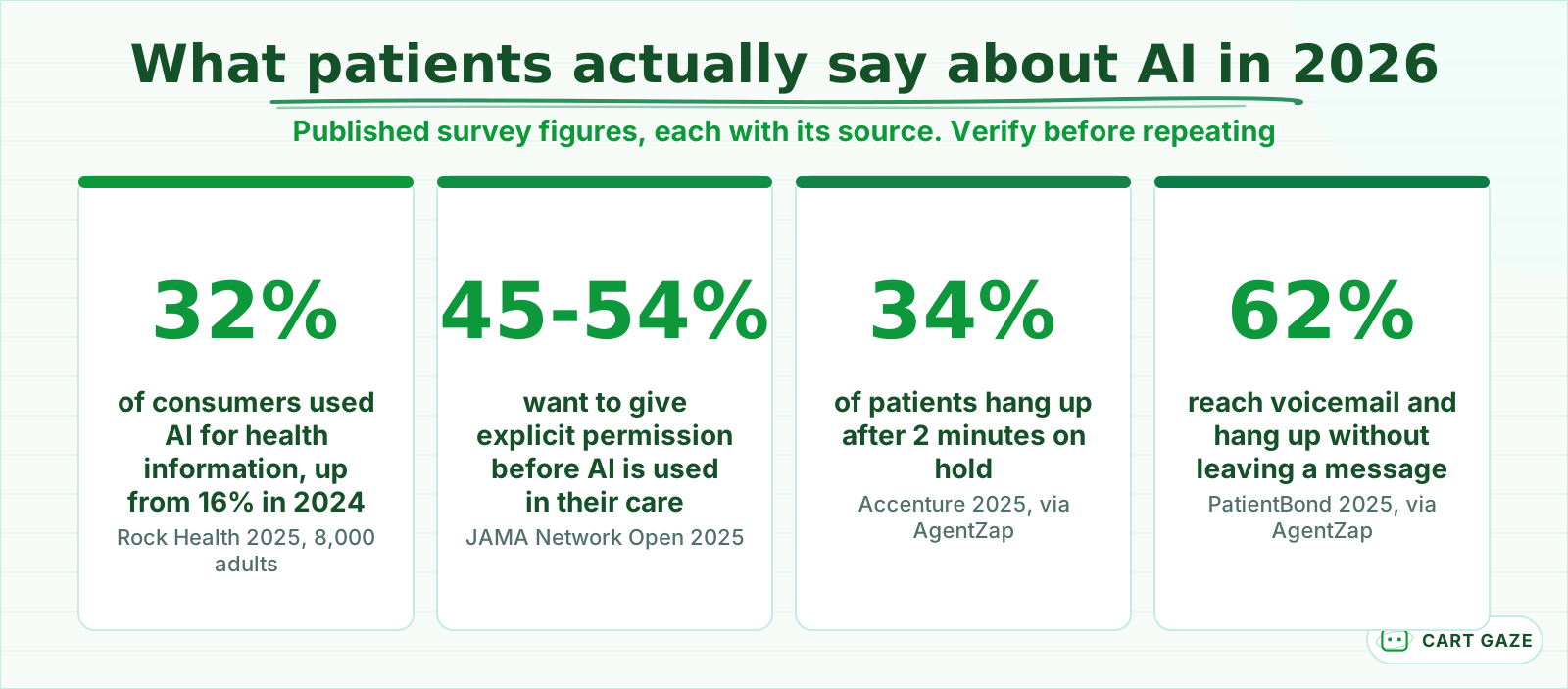 Published survey figures, each sourced. Read them as patient signals, not your practice result.
None of that means patients will accept a bad AI receptionist. It means the ceiling is high if you handle the routine calls well and keep the clinical ones human. If you have never mapped where that line sits, start with what an AI receptionist does and where it stops.
Where patients accept AI, and where they do not
Patients accept AI for administrative calls and resist it for clinical ones. Booking, rescheduling, reminders, refill requests, and hours questions are fair game, because a fast correct answer is the whole point. Symptoms, triage, test results, and medical advice are not, because those calls need a licensed human who can judge risk and decide what happens next.
The dividing line is whether the call requires clinical judgment. A refill request is administrative until the patient starts describing a reaction, at which point it becomes clinical and needs a person. A good setup recognizes that shift and hands off, rather than trying to answer through it.
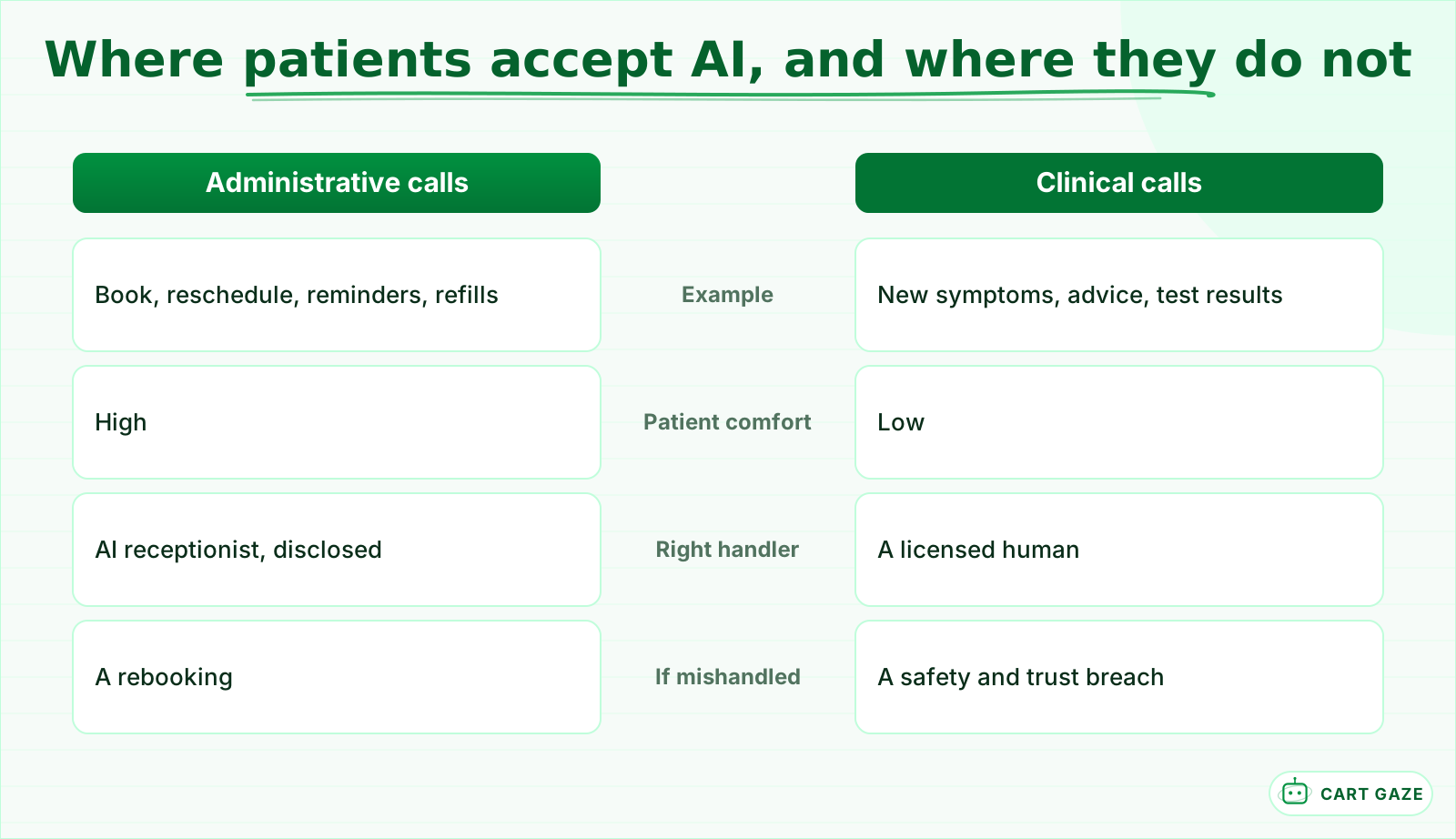 Acceptance is high for admin calls, low for clinical ones. Match the handler to the call.
Here is the same split at the level of the actual calls your front desk fields every day:
| Call type | Patient comfort with AI | Who should handle it |
|---|---|---|
| Book or reschedule a visit | High | AI receptionist |
| Reminders and confirmations | High | AI receptionist |
| Prescription refill request | Moderate | AI, human for anything clinical |
| Hours, directions, insurance | High | AI receptionist |
| New or worsening symptoms | Low | A licensed human, always |
| Test results or medical advice | Low | The clinician |
How patient acceptance splits by generation
Younger patients are far more comfortable with health AI than older ones, but the gap is smaller than the stereotype and closing. Comfort rises the younger the patient, yet a meaningful share of every age group now uses AI for health, and older patients accept it readily when a human stays in the loop.
Rock Health's 2025 survey shows the pattern clearly. Health AI use runs 48% among Millennials and 45% among Gen Z, then steps down to 25% for Gen X, 12% for Baby Boomers, and 7% for the Silent Generation. That is a real spread, and it matters if your patient panel skews older.
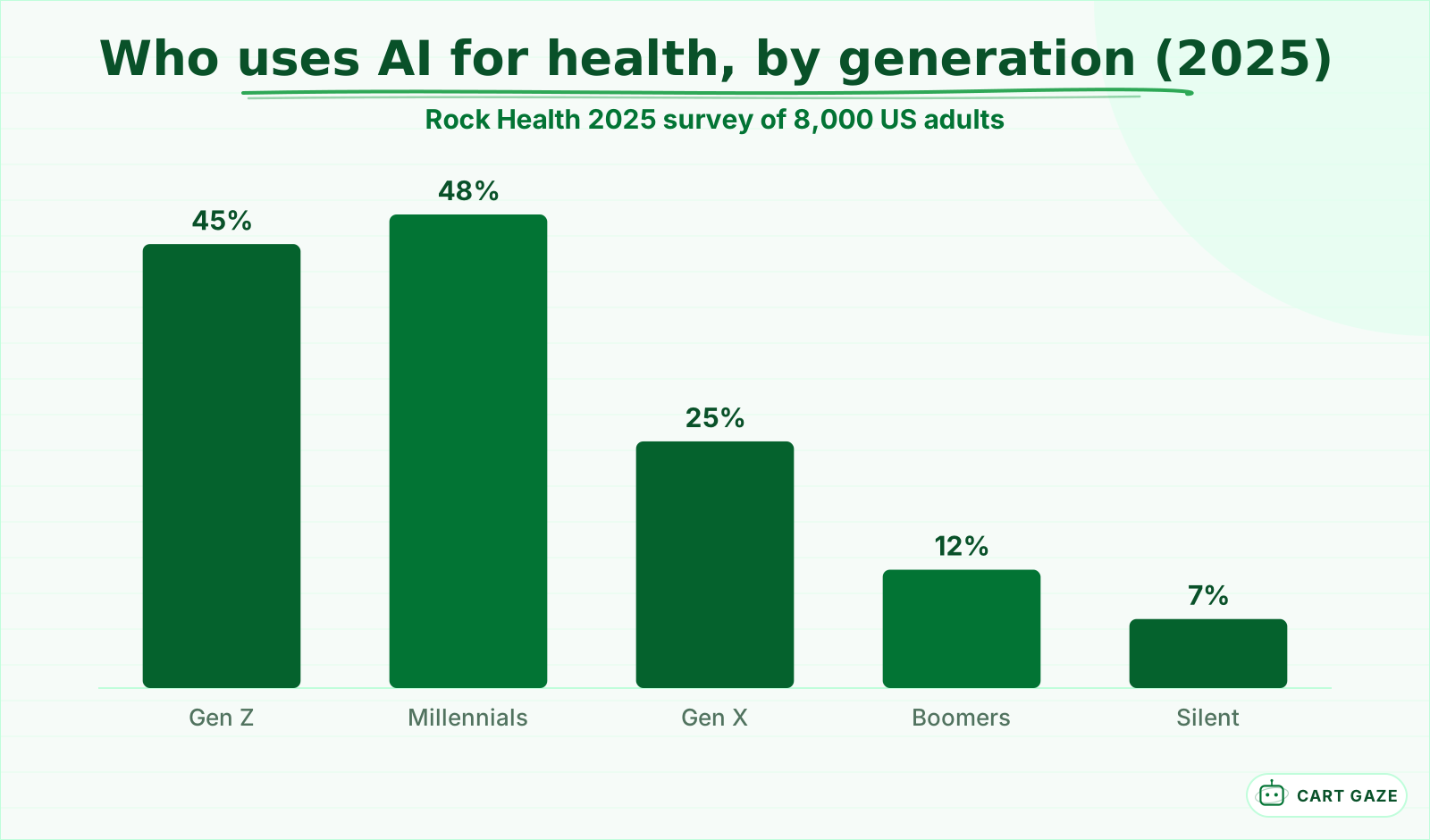 Share who used an AI health chatbot, by generation. A comfort proxy, not receptionist acceptance.
Two honest caveats keep this from being oversold. First, those numbers measure using an AI chatbot for health information, not accepting an AI receptionist on the phone, so read them as a comfort proxy rather than a promise. Second, the University of Michigan found older adults are the most skeptical of AI in care overall, yet the same research shows patients of every age accept AI far more readily when a clinician stays responsible for the outcome. Age shifts the starting point, not the underlying rule.
Patients want to know when they are talking to AI
Disclosure is not optional. A clear majority want to be told, or asked, before AI is used in their care. Telling a caller they are speaking with an automated assistant, and offering a person on request, is the cheapest trust you can buy, and hiding it is the fastest way to lose a patient who later feels tricked.
The numbers are striking. In a JAMA Network Open study using a nationally representative US survey, 45% to 54% of adults said they want to give explicit permission before AI is used in their care, and another 32% to 39% want at least to be notified. Only 14% to 16% said they need neither. Across clinical, documentation, and administrative uses, a quiet opt-out approach falls short of what patients expect.
This is also where the compliance line matters. If a call involves patient health details, the vendor is handling protected information and needs a signed Business Associate Agreement. Ask what the system records, reads back, and deletes, and read what a HIPAA-aware setup actually requires. Be skeptical of any vendor that calls itself HIPAA certified, because no such certification exists.
The honest baseline is hold music, not a person
The fair comparison is not AI versus a friendly receptionist. It is AI versus the phone experience patients already get: long holds, voicemail, and no answer at all. Measured against that baseline, an assistant that answers on the first ring and books the visit is an upgrade most patients welcome, whatever they say about AI in the abstract.
The current baseline is worse than most owners think. The average hold time at a medical practice is 1 minute 47 seconds, and patients are not patient about it: 34% hang up after 2 minutes on hold and 67% are gone by 5 minutes, per Accenture's 2025 consumer data. Roughly 23% of calls to practices go unanswered, and when callers do reach voicemail, 62% hang up without leaving a message.
So the patient who says they prefer a human is usually not choosing a human over AI. They are choosing an instant answer over a long wait, and they hang up and try the next practice when they do not get one. General customer-service research points the same way: most people say they prefer a human, and an even larger share say the real requirement is that a human option always exists. Give a fast answer and a clean path to a person, and the AI-versus-human argument mostly dissolves.
This is also the honest case for AI over a message-only answering service, which we compare directly in AI receptionist versus answering service. Both keep a human in reach, but only one books the routine visit at 8 p.m. without waking anyone.
How to earn patient acceptance, not assume it
Acceptance is earned by execution: disclose the AI, answer fast, keep an easy path to a person, and never let it touch clinical judgment. Patients forgive a machine that is quick, accurate, and honest about what it is. They do not forgive one that traps them in a loop, mishears a name, or pretends to be a nurse.
In practice, acceptance comes down to a handful of design choices. Answer within 3 rings, 24/7, so the assistant beats the hold time that drives patients away. Confirm the details back and text a summary, so a mishear is caught in seconds. Offer a human transfer or a callback in every call, so no one feels stuck. And route anything clinical to a person, every time.
Booking on the spot has a second payoff. An appointment a patient locks in the moment they call is one they are more likely to keep, which ties directly to reducing patient no-shows. Acceptance and revenue tend to move together when the routine call is handled well.
Decide whether your patients are ready
The decision is not whether patients accept AI in general, but whether yours will accept it for the calls you plan to automate. Map your call mix, keep clinical calls human, disclose the assistant up front, and pilot on one call type before you commit. Let your own transcripts, not a vendor demo, tell you whether it works.
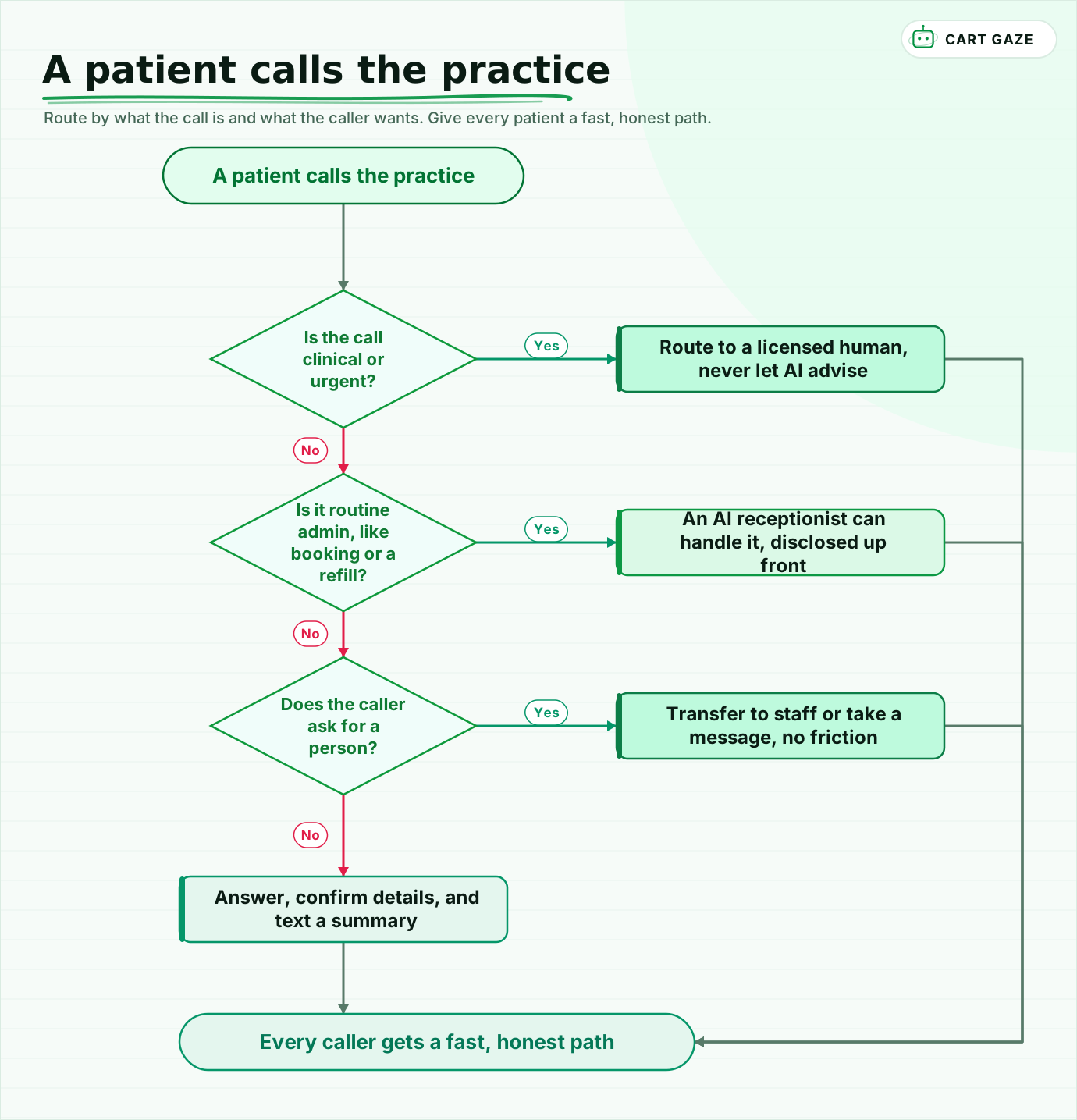 Route by what the call is and what the caller wants. Give every patient a fast, honest path.
Walk the flow once. A clinical or urgent call goes to a human, always. A routine administrative call can go to the assistant, disclosed up front. If the caller asks for a person, they get one without friction. Everything else gets answered, confirmed, and summarized by text. Every caller ends on a fast, honest path, which is exactly what acceptance requires.
Then pilot narrowly. Turn the assistant on for one call type and one time window, read the first week of transcripts end to end, and measure recaptured bookings in your own log after 30 to 60 days. If you would rather see the size of the opportunity first, the free Growth Leak Audit estimates what your missed and after-hours calls are costing before you change a thing.
Fair questions.
Will patients accept an AI receptionist?
Mostly yes for administrative calls and mostly no for clinical ones. Survey data from 2025 and 2026 shows patients are comfortable with AI for booking, reminders, and refills, where a fast answer is the point, but uncomfortable when it moves toward symptoms or advice. Acceptance depends on the task and on keeping clinical calls with a human.
Do patients trust AI more for scheduling than for medical advice?
Yes, and the gap is large. In a KLAS Research and Luma Health survey of more than 1,000 US adults in 2025, comfort with AI was highest for administrative tasks like scheduling and check-in, and dropped sharply for diagnosis and treatment. Most patients also said they want AI supervised by a human. Automating admin is accepted; automating judgment is not.
Do patients want to know when they are talking to AI?
Yes. A JAMA Network Open study using a nationally representative US survey found 45% to 54% of adults want to give explicit permission before AI is used in their care, and another 32% to 39% want to be notified. Disclosing that the caller has reached an automated assistant, and offering a person, meets that expectation and protects trust.
Are older patients too resistant to AI for this to work?
Not usually. Older patients are more skeptical of AI than younger ones, and health AI use runs about 12% for Boomers versus 48% for Millennials, per Rock Health. But acceptance rises across every age group when a human stays responsible and the assistant is disclosed. If your panel skews older, lean harder on human transfer and clear disclosure.
Is an AI receptionist HIPAA compliant?
HIPAA compliance is a configuration and contract question, not a product badge, and HIPAA certified does not exist. Any vendor that handles patient details is a business associate and must sign a Business Associate Agreement. Ask what the system records, reads back, and deletes, and confirm the BAA is signed before a single patient detail flows through it.
Sources.
- [1]Patient attitudes on AI in healthcare (KLAS Research and Luma Health, 2025)
- [2]AI in healthcare: notification and consent preferences from a US national survey
- [3]Patients willing to accept AI as long as a doctor is nearby (University of Michigan IHPI)
- [4]Health AI insights from Rock Health 2025 Consumer Adoption Survey
- [5]Medical practice phone statistics: hold times, abandonment, and voicemail
- [6]Healthcare call center statistics: hold time and abandonment benchmarks
Written by

Muhammad Qasim Hammad
Founder, Cart Gaze
Qasim builds AI receptionists and front-office automation for medical and dental practices at Cart Gaze. Posts here start from published sources and real call data, not vendor claims, and every number links back to where it came from.
Keep reading.
 AI ReceptionistsAI Receptionist Accessibility: Older Callers and Relay Calls10 min read
 AI ReceptionistsMulti-Provider Call Routing: Get the Right Doctor on Every Call10 min read
 AI ReceptionistsAI Receptionist Voice Quality: What to Listen For Before You Buy10 min read
 AI ReceptionistsAI Receptionist Escalation: Designing the Handoff to a Human10 min read
 AI ReceptionistsAI Receptionist Knowledge Base: What Your Practice Must Load10 min read
 AI ReceptionistsHow to Choose an AI Receptionist for Your Medical Practice10 min read