
AI Appointment Booking: The 3-Step Architecture That Works
An AI that books an appointment and an AI that takes a message sound identical on the phone. The difference is 3 live steps against one source of truth: check availability, hold the slot, then confirm.
Table of Contents9 sections
- Booking an appointment is not the same as taking a message
- The honest architecture is three steps, not one
- Why one combined book call disagrees with your schedule
- What the agent must collect before it can confirm
- What happens when the held slot is gone
- Give the agent its own key, not your practice login
- What integrates with your practice management system really means
- Choose a booking agent that writes where you look
- Fair questions
An AI that says "I have you down for Tuesday at 10" and an AI that says "someone will call you back" sound almost the same on the phone. Only one of them changed your schedule. The gap between those two sentences is the whole product, and it is invisible in a demo.
It is also where most of the market still sits. In an MGMA Stat poll of 318 practice leaders taken on 5 Nov 2024, 73% said 25% or less of their patients use digital tools to schedule, and only 11% said a majority do. The same piece cites an Experian Health survey in which 89% of patients called the ability to schedule anytime important. Demand is not the bottleneck. The write is.
Real AI appointment booking is a sequence, not a feature: check what is free, hold the slot while the patient is still talking, then confirm. This post walks those 3 steps, what the agent has to collect before it can confirm anything, what to do when the held slot disappears mid-call, the credential question most practices get backwards, and the systems that will not accept a write at all.
Booking an appointment is not the same as taking a message
A booking agent changes your schedule. A message-taking agent changes nothing and moves the work to tomorrow morning. Both sound confident on the call, so the only reliable test is whether a booking identifier comes back from your practice management system while the caller is still on the line.
Message taking is not worthless. It beats voicemail, and for a clinical or urgent call it is the correct behavior, because an AI receptionist should route those to a person and never assess symptoms. But it is not booking, and a product page that says "books appointments" rarely separates the two.
The difference shows up in your morning. A booked appointment is already in the schedule when the office opens. A captured request is a task: someone reads it, calls back, plays phone tag, and the patient has often booked elsewhere. If you have not evaluated one of these systems before, start with what an AI receptionist does and where it stops, then come back to the booking question.
The honest architecture is three steps, not one
Real booking runs as 3 live calls to the system that owns your schedule. First ask what is open. Second hold the chosen slot so nobody else takes it while the patient keeps talking. Third confirm the booking and read the identifier back. Each step is a separate round trip.
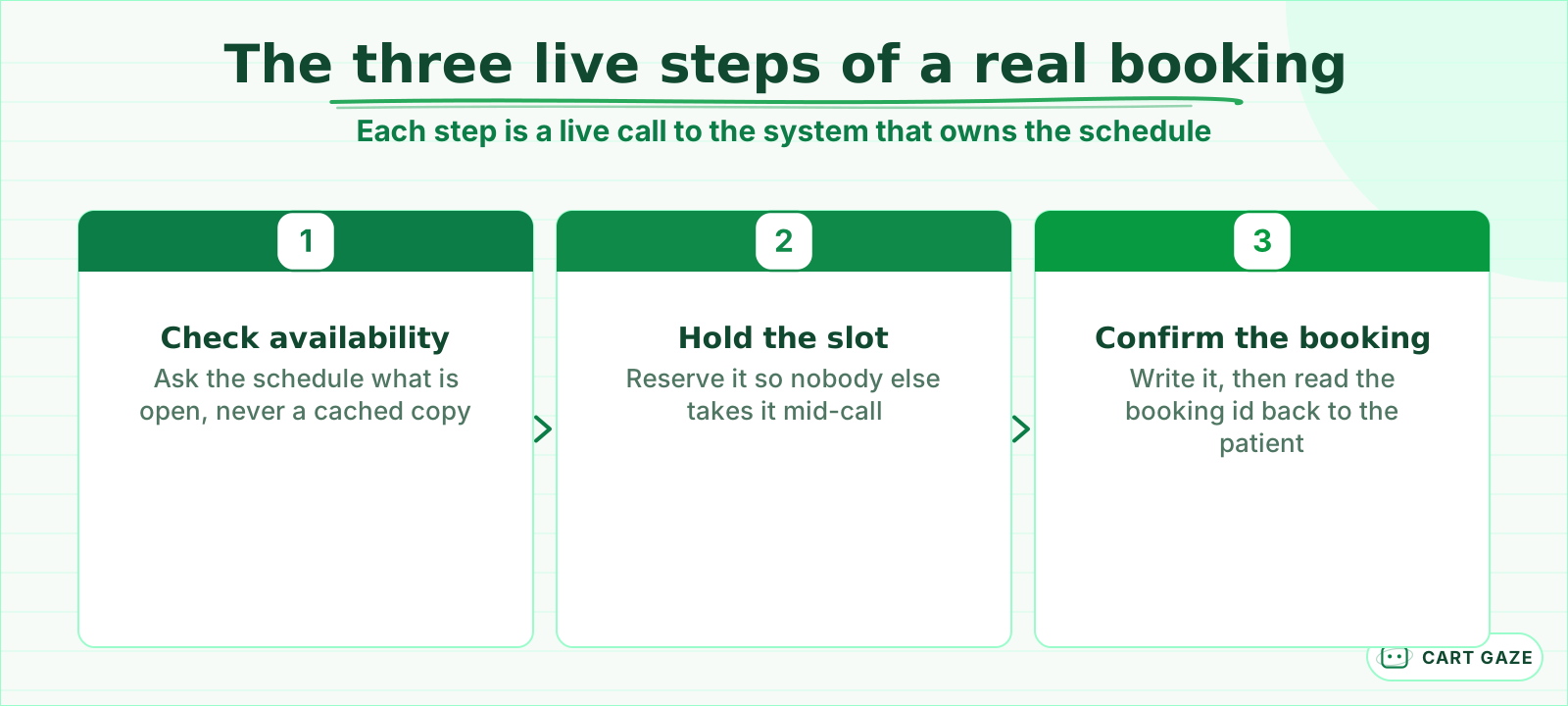 Three live round trips to one source of truth, in the order the scheduling standard defines them.
This shape is not a house preference. The Argonaut Scheduling Implementation Guide, version 1.0.0, built on FHIR R3, defines exactly 3 operations in that order: find for availability, hold for the reservation, book for the commit. Epic exposes find and book operations of the same shape.
The hold is the step vendors drop, and it is the one doing the real work. The guide says a hold exists to prevent the appointment from being booked by another client while the user finishes entering data. It is not idempotent and has to be a POST. The server answers with an expiry, and the hold lapses on the schedule owner's rules, not yours.
The status trail is worth knowing, because it is what your logs will show. An accepted hold moves the appointment to pending. A rejected hold moves it to cancelled. A successful book moves it to booked. FHIR R4 defines 10 status values in total, so "it failed" is never a complete answer from a well-built integration.
Why one combined book call disagrees with your schedule
A single combined book call is faster, 1 round trip instead of 3. It is also a private shortcut, because the agent decides what is free from its own copy of your schedule rather than asking. Once the phone, the website and the front desk each hold a copy, they disagree.
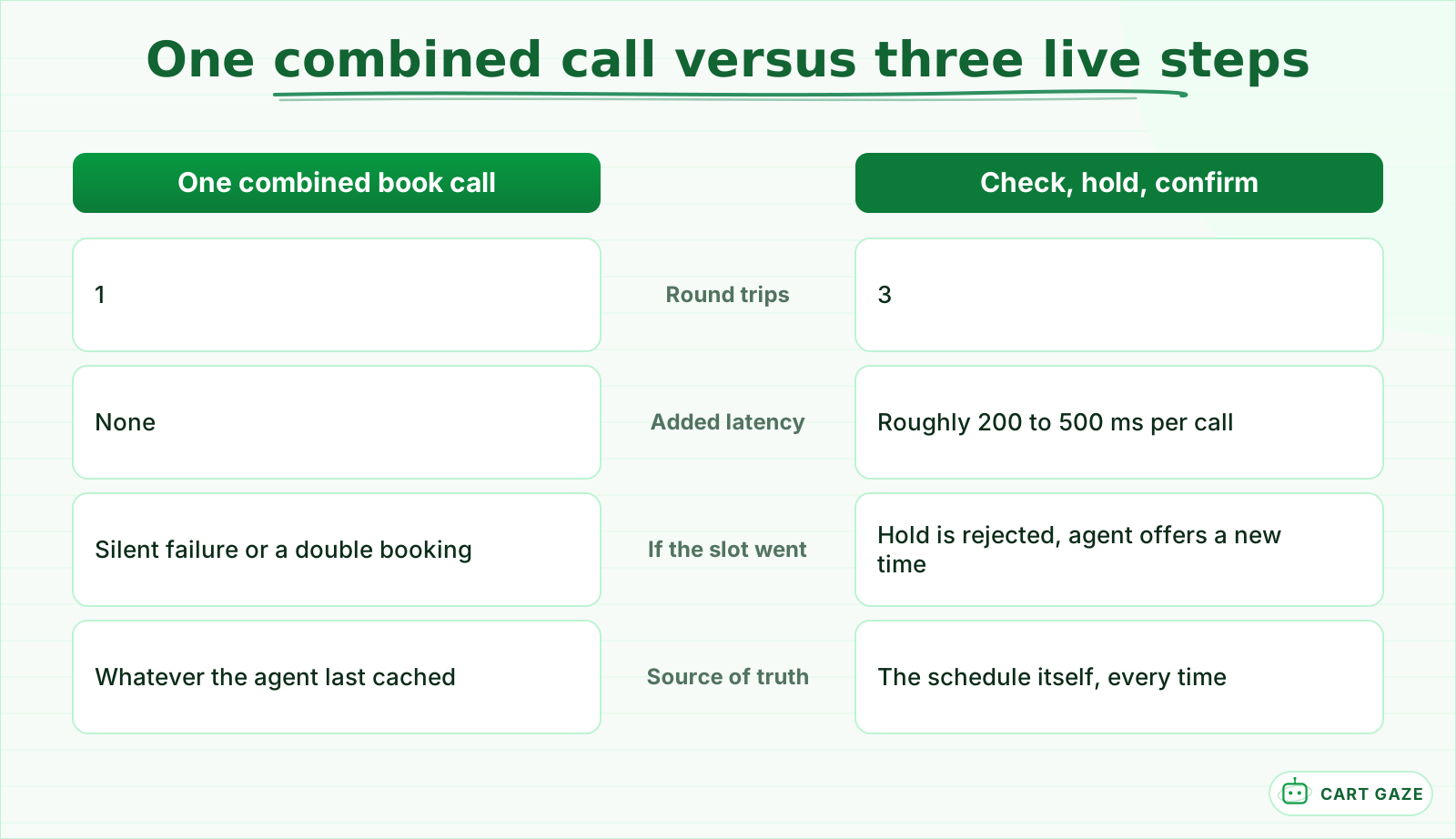 The shortcut is one round trip faster and hides the one failure that costs you a slot.
Take the speed argument seriously. Voice engineering guidance treats a turn under 800 ms as comfortable and anything past 1,200 ms as perceptibly broken, with individual tool calls best under 200 ms and 200 to 500 ms still acceptable. Three round trips instead of one can cost a few hundred milliseconds. Those are one vendor's directional figures, but the tradeoff is honest: you buy accuracy with latency.
Here is the rule that makes the accuracy claim true by construction. The service catalog can be cached: visit types, durations, provider names, locations. Availability and every write cannot. They have to be a live round trip to one source of truth, so there is exactly one implementation of "what is free" in your practice.
The specification is blunt about this. FHIR notes that a time shown as available does not guarantee an appointment can be made, because the booking system still applies its own rules. A copy that syncs in seconds is still seconds behind, and seconds is enough for two people to want the same Thursday at 9.
What the agent must collect before it can confirm
An agent cannot confirm what it cannot match. Before any write, it needs the patient's full name, date of birth, a callback number, the visit type, the provider and location, and whether this is a new or existing patient. Six fields, captured on the call, spelled back where they matter.
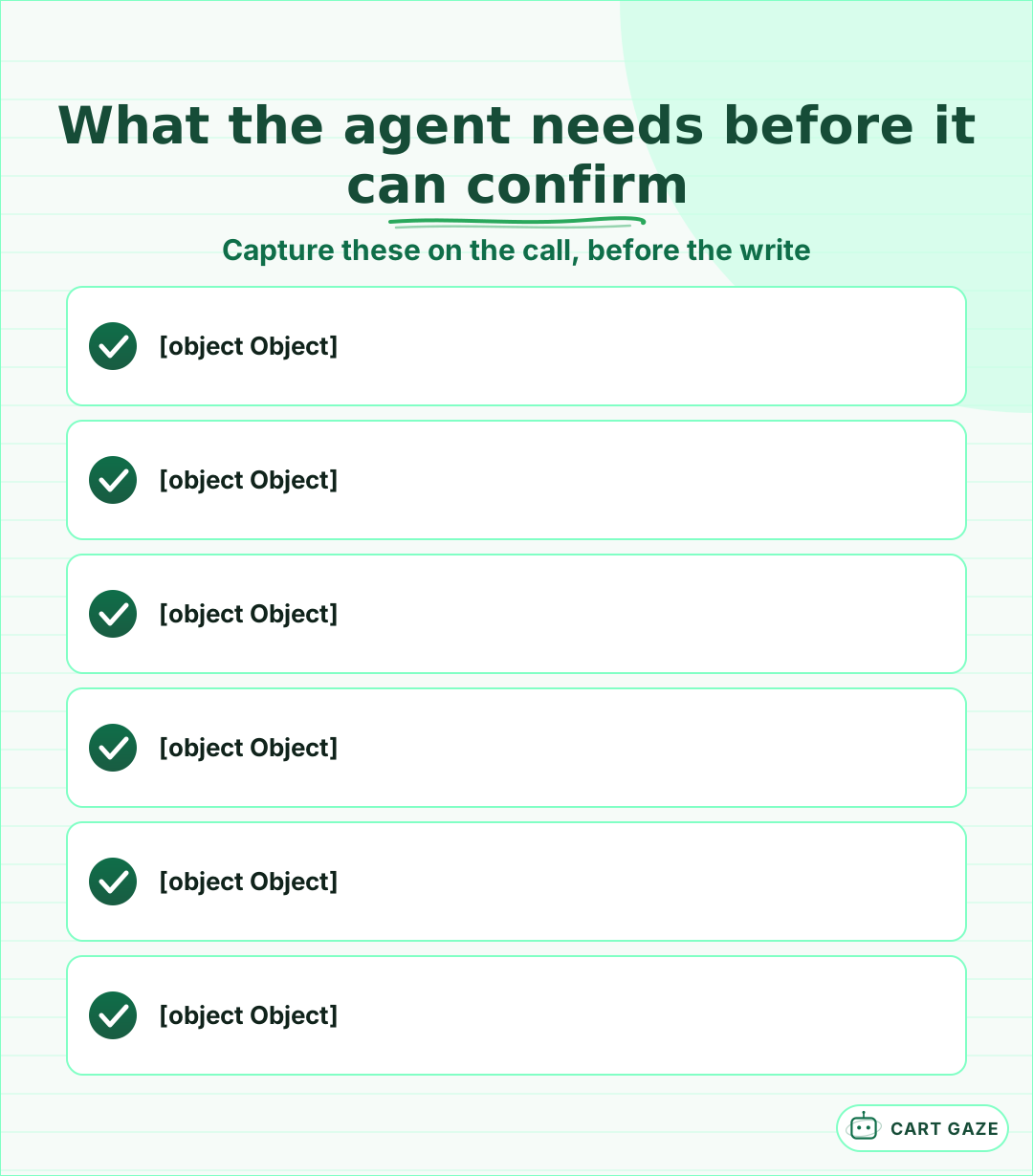 Miss one of these and a confirmed booking becomes a record your staff has to repair.
Name and date of birth are not bureaucracy, they are how the record gets found. ONC describes the minimum demographic set for linking a patient as name, birth date, phone number, and address. An agent that skips them either creates a duplicate chart or books the wrong person into a real slot, and both cost staff time to unpick.
Visit type sets the length of the appointment, so an agent that never asks will happily put a procedure needing an hour into a 20-minute slot. New versus existing changes the whole path: registration, insurance capture, and in several systems whether the write is permitted at all.
The callback number earns its place twice. It is a match field most practice systems lean on after date of birth, and it is the channel your appointment confirmations and reminders travel down once the call ends.
What happens when the held slot is gone
Sometimes it will be. Holds are rejected, writes fail, and someone at the front desk books that slot moments before your agent does. The correct behavior is to re-check availability, offer the next real openings, and rebook before the caller hangs up. The wrong behavior is confirming anyway.
The standard already accounts for this. In the Argonaut guide a rejected hold flips the appointment to cancelled, and a rejected book does the same. Your agent should treat both as a normal branch of the call, not as an error state that ends in "let me have someone call you back".
Then there is the sentence the patient actually hears. The confirmation message and the schedule entry have to come from the same write. If the agent speaks the confirmation first and writes second, you have told the patient one thing and your schedule another, and nobody finds out until the appointment does not exist.
Retries are where double bookings are born. A timeout does not tell you whether the write landed, so a naive retry books twice. The standard fix is an idempotency key. Stripe's implementation stores the status and body of the first request under a given key so repeats return the same result, letting a client retry safely without performing the same operation twice.
Give the agent its own key, not your practice login
The booking agent should authenticate as itself, with its own credential scoped to scheduling, not by signing into your portal as your office manager. That way you can revoke the key in an afternoon without locking your own staff out, and your audit trail names the actor that made each booking.
This is close to the letter of the rule, not just good hygiene. Under 45 CFR 164.312(a)(2)(i), unique user identification is a required implementation specification: assign a unique name or number for identifying and tracking user identity. Section 164.312(b) then requires audit controls that record and examine system activity. A shared login defeats both.
Real systems already model this properly. Open Dental issues a developer key for the integrator plus a separate customer key for the practice, with per-method permissions and throttling that runs from 1 request per 5 seconds on the most restricted permission to 1 per second on others. Keys can be disabled without touching anyone's login.
Any vendor handling patient details is a business associate and needs a signed BAA before a single booking runs through it. No product is "HIPAA certified", because that certification does not exist.
What integrates with your practice management system really means
That phrase covers at least 4 very different things, and only one of them lets an agent promise a time. A live write API with holds sits at the top of the range. Below it come write APIs without holds, request queues staff still confirm, and one-way feeds that only watch.
| Integration shape | Can the agent promise a time? | What the patient hears | What staff still do |
|---|---|---|---|
| Live write API with hold | Yes | A confirmed time and a booking reference | Nothing |
| Live write API, no hold | Usually | A confirmed time, after a re-check at write | Sort out the rare collision |
| Request queue | No | A requested time, pending confirmation | Confirm every request |
| One-way notification feed | No | A callback promise | Book it by hand |
| Nightly file export | No | A callback promise | Book it by hand, a day behind |
Nothing federal forces a vendor to accept a booking. The standardized API certification criterion at 45 CFR 170.315(g)(10) covers read access to a defined data set and explicitly excludes write capabilities, so a system can be fully certified and still refuse every appointment you send it.
HL7 version 2 makes the difference visible in the message names. An SRM is the request asking the schedule owner to change something, and an SRR grants or denies it. An SIU is the schedule owner telling other systems what already happened. An integration built only on SIU can watch your schedule perfectly and book nothing.
Aggregation layers sit in between. One vendor advertises 70+ supported systems and data that syncs in seconds, which is a real product, but a translation layer is still a copy with a lag. Ask where availability is read from at the moment of the call. We go deeper on the vendor picture in connecting an AI receptionist to your practice management software.
Choose a booking agent that writes where you look
Pick on mechanism, not on the demo script. If the agent can read live availability and write to the same schedule your front desk looks at, it can book. If it cannot, it is a very good message taker, and you should price it and staff it as one.
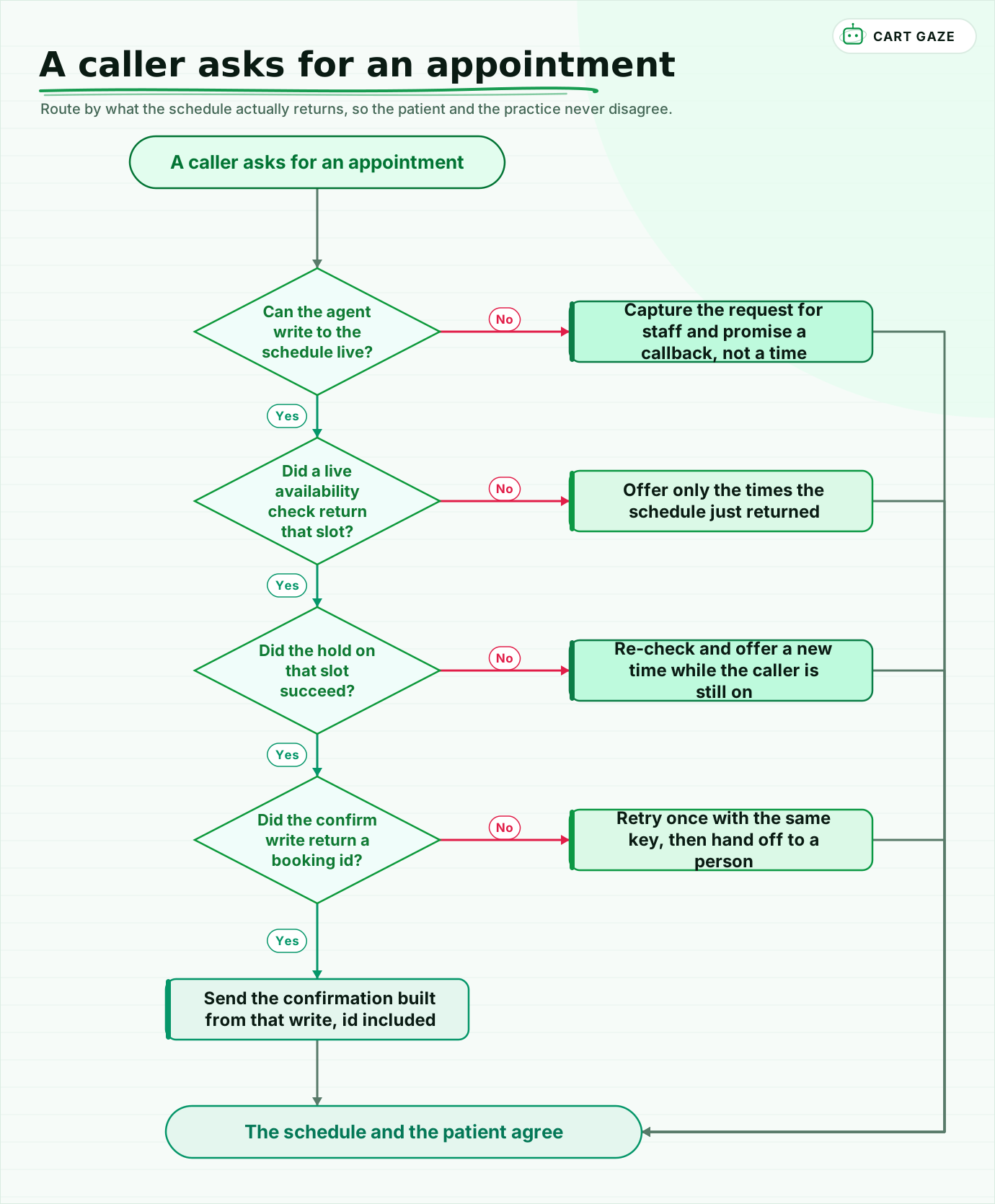 Route by what the schedule actually returns, so the patient and the practice never disagree.
Walk that flow with a vendor in the room. Ask them to show the availability call and where it reads from. Ask what happens when the slot is taken between the check and the confirm, and watch whether the answer involves a hold or a shrug. Ask which credential the booking runs under.
Then pilot narrow: 1 visit type, 1 provider, 2 weeks. Reconcile every booking against the schedule by hand, and count repairs rather than demos. A system that books 40 appointments and creates 6 duplicate charts has not saved anyone anything.
If you would rather size the problem before you talk to anyone, the free Growth Leak Audit works from your own numbers.
Fair questions.
What does end-to-end AI appointment booking actually mean?
It means the agent changes your schedule during the call instead of leaving a message for the morning. In practice that is 3 live steps against the system that owns your schedule: check what is open, hold the chosen slot, then confirm the write and read the booking identifier back to the patient. No identifier means nothing was booked.
Why not let the agent book in a single API call?
A combined call is 1 round trip instead of 3, so it is faster on a live conversation. It is also a private shortcut, because the agent decides what is free from its own copy rather than asking your schedule. That is how a phone booking and a website booking end up claiming the same slot.
What happens if the slot is taken before the patient confirms?
The hold gets rejected. In the Argonaut scheduling guide a rejected hold moves the appointment to cancelled, and a rejected booking does the same. A well-built agent treats that as a normal branch of the call: it re-checks availability, offers the next real openings, and rebooks before the caller hangs up rather than confirming a time nothing accepted.
Should an AI booking agent use our practice management login?
No. It should hold its own credential, scoped to scheduling. Unique user identification at 45 CFR 164.312(a)(2)(i) asks you to assign a unique name or number for identifying and tracking user identity, and audit controls depend on it. A separate key can be revoked without changing your own password or signing staff out.
Can every practice management system accept an AI booking?
No. Some expose a live write API, some offer only a request queue that staff still confirm, and some provide a one-way notification feed or a nightly file. The standardized API certification criterion at 45 CFR 170.315(g)(10) covers read access and excludes write, so certification alone tells you nothing about whether booking is possible.
Sources.
- [1]Argonaut Scheduling Implementation Guide: patient-based scheduling use cases
- [2]Argonaut Scheduling: the $hold operation definition
- [3]Argonaut Scheduling: the $book operation definition
- [4]HL7 FHIR R4: Appointment resource and status values
- [5]HL7 v2.4 Chapter 10: scheduling messages SRM, SRR and SIU
- [6]MGMA Stat: putting the power of scheduling into patients hands
- [7]ONC certification: standardized API for patient and population services
- [8]ONC: patient identity and patient record matching
- [9]45 CFR 164.312: HIPAA Security Rule technical safeguards
- [10]Open Dental API: appointments, slots and appointment creation
- [11]Open Dental API implementation: developer key, customer key and permissions
- [12]NexHealth API: getting started with booking an appointment
- [13]Voice AI latency: what causes delays and how to fix them
- [14]Stripe API reference: idempotent requests
Written by

Muhammad Qasim Hammad
Founder, Cart Gaze
Qasim builds AI receptionists and front-office automation for medical and dental practices at Cart Gaze. Posts here start from published sources and real call data, not vendor claims, and every number links back to where it came from.
Keep reading.
 AI ReceptionistsAI Receptionist EHR Integration: What the Word Hides10 min read
 AI ReceptionistsAI Receptionist vs an Offshore Virtual Assistant for Practices10 min read
 AI ReceptionistsMulti-Provider Call Routing: Get the Right Doctor on Every Call10 min read
 AI ReceptionistsAI Receptionist Escalation: Designing the Handoff to a Human10 min read
 AI ReceptionistsAI Receptionist Knowledge Base: What Your Practice Must Load10 min read
 AI ReceptionistsThe AI Receptionist Policy Your Practice Hasn't Written Yet9 min read