
AI Receptionist vs an Offshore Virtual Assistant for Practices
An offshore assistant absorbs complexity and an AI receptionist absorbs volume, so choosing between them as alternatives is how practices end up disappointed. Here is the honest split and what each really costs.
Table of Contents8 sections
You are looking at two quotes. One is an offshore virtual assistant at around $10 an hour who will work your mornings. The other is an AI receptionist at a flat monthly fee that answers every call instantly, forever. They look like alternatives, and choosing between them as alternatives is how practices end up disappointed with whichever one they picked.
They are different layers. A virtual assistant absorbs complexity: payer phone calls, prior authorization follow-up, the messy problem that needs somebody to improvise. An AI receptionist absorbs volume: the instant answer, the 7 p.m. booking, the Monday morning spike that nobody can staff for.
We sell the AI layer, so this post is explicit about what it cannot do. Both sides of this comparison have real limits, and the useful question is not which one wins. It is which queue belongs to which.
What each one actually is
An offshore virtual assistant is a trained person working your systems remotely, usually through a managed firm, on a set schedule. An AI receptionist is software that answers your phone line, follows rules you configure, and completes tasks it has been given access to complete. One thinks, one scales.
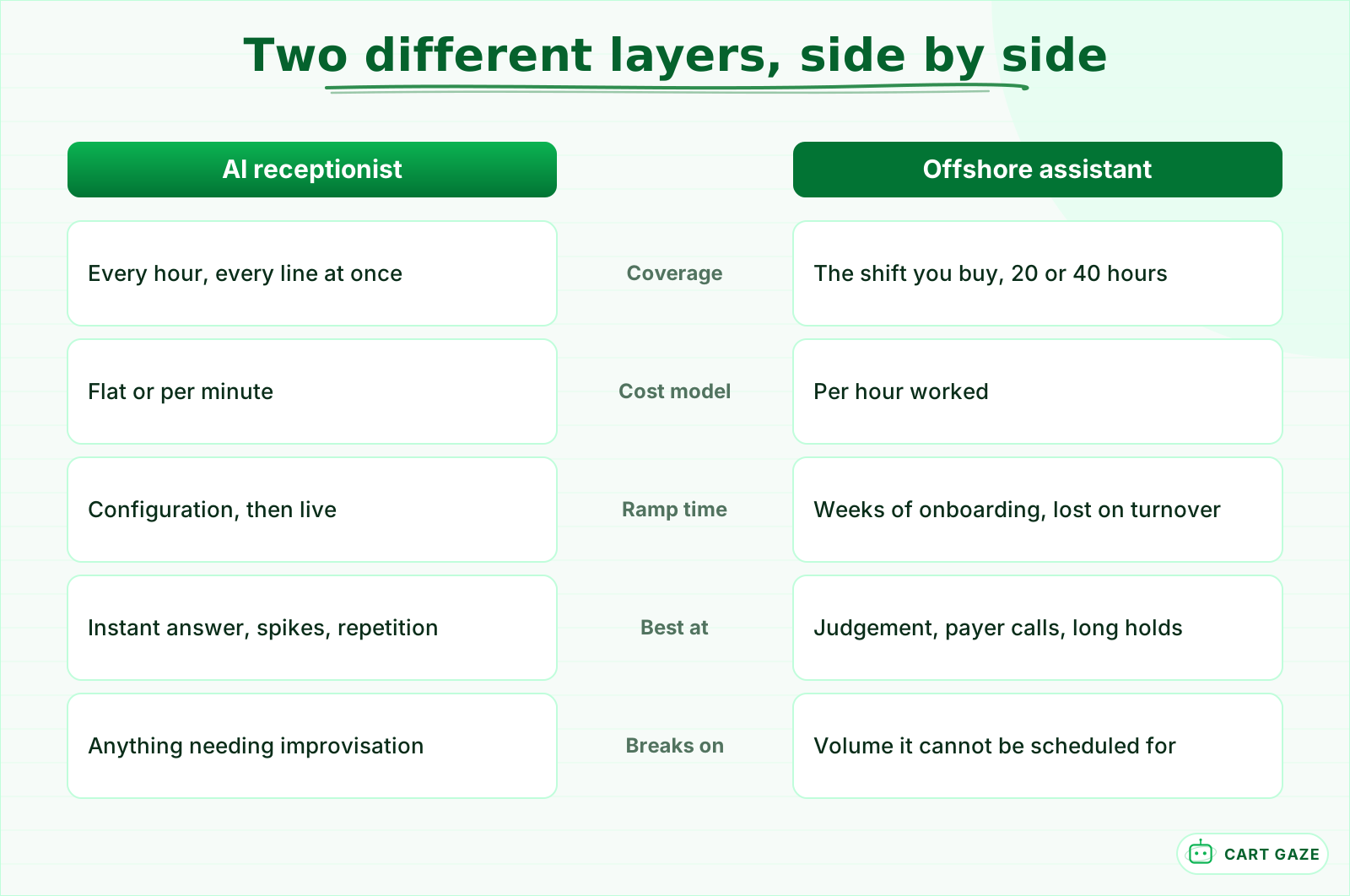 Not a like-for-like swap. One absorbs volume, the other absorbs complexity.
The difference that matters most operationally is coverage shape. A virtual assistant covers a shift, typically 20 or 40 hours a week, and that block is genuinely covered. An AI receptionist covers every hour and every simultaneous call, but only for the tasks inside its scope.
The second difference is ramp. A virtual assistant needs onboarding, shadowing, and a few weeks to learn your providers, payers, and quirks, and that investment walks out the door if they leave. A configuration does not forget, but it also never notices that a particular referring office always calls at 4 p.m. and needs a workaround.
What they really cost
The two are priced on different axes, so a headline comparison is meaningless until you convert both to a monthly number against your own volume. An assistant is priced per hour and scales with hours worked. An AI receptionist is usually flat or per minute and scales with call volume.
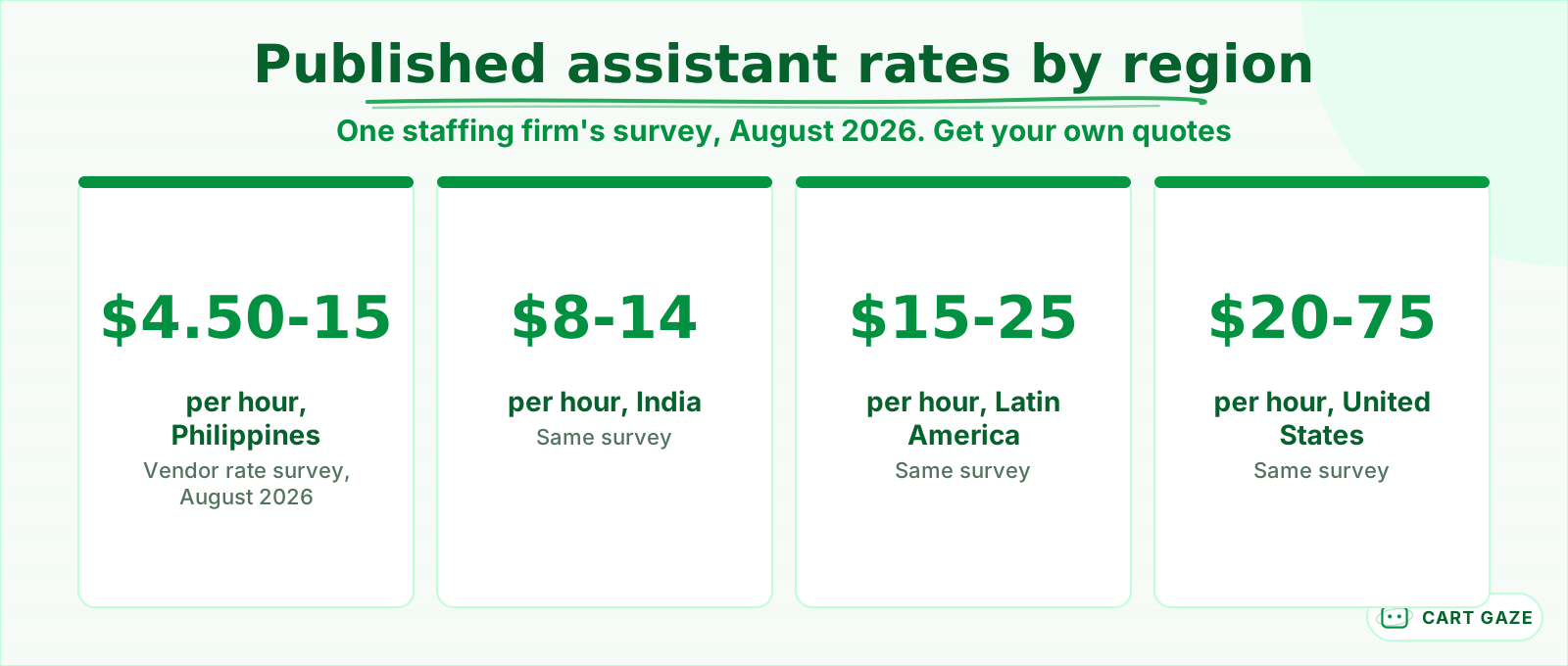 An August 2026 vendor rate survey. Hourly rates, not total cost of ownership.
An August 2026 rate survey published by one staffing firm lists Philippines-based assistants at $4.50 to $15 an hour, India at $8 to $14, Latin America at $15 to $25, and United States-based at $20 to $75. Named published rates in that survey ran from $9 an hour to $14, with specialty work at $14 to $17. Treat it as a competitor's survey rather than an independent index, and get your own quotes.
| Option | Typical cost | Coverage | Scales with |
|---|---|---|---|
| Offshore managed assistant | $1,200 to $3,000 a month | The shift you buy | Hours |
| US-based virtual assistant | $3,200 to $12,000 a month | The shift you buy | Hours |
| In-house front desk hire | About $4,100 a month loaded | About 40 hours a week | Hours |
| AI receptionist | Roughly $49 to $300 a month | Every hour, all lines | Call volume |
The in-house row is the honest anchor for both columns. A medical receptionist earns a median of $37,230 a year, and loading that at 1.25 to 1.4 times lands near $49,000, about $4,100 a month for one shift. Any option cheaper than that is buying you either fewer hours or a narrower scope, and you should know which.
Watch the add-ons on both sides. A Business Associate Agreement typically adds 10% to 30% to an AI plan, and assistant firms often price minimum weekly hours, specialty premiums, and replacement guarantees separately. The full contract checklist is in what to settle before signing.
The work an offshore assistant does better
Anything requiring judgement, persistence, or a conversation with another human institution belongs to a person. Payer phone calls, prior authorization follow-up, appeals, chasing a referring office for records, and untangling a billing dispute all need somebody who can improvise when the script runs out.
This is not a small residual category. It is the largest one. When MGMA polled 294 practice leaders in March 2026 on the most time-consuming phone tasks, eligibility and prior authorization came first at 45%, ahead of scheduling at 31%, intake at 9%, and prescription refills at 6%.
Practice leaders know it. The same organization's February 2026 poll found prior authorization drew only 16% of front-office automation interest against 31% for scheduling, because everyone already understands which part software can take.
A person also handles the unusual well. The patient who is confused, the family member with a complicated question, the caller who needs someone to stay on the line: these are ordinary human work and they are genuinely hard to script.
The hold time is the underrated part of the value. A payer call that takes 40 minutes on hold costs an offshore assistant at $10 an hour about $7 of labour, and costs your $4,100-a-month front desk person the entire time they were not answering patients. Moving that work offshore is often less about the hourly rate than about who is not being interrupted.
The work an AI receptionist does better
Instant answer at any hour and any concurrency is the whole category. Software picks up on the first ring at 7 p.m. on a Saturday, and on ten simultaneous calls, and it does that at a cost that does not change when volume doubles. No staffing model does that.
That matters because callers do not wait. More than 60% of healthcare callers abandon after one minute on hold, against an average hold time of 4.4 minutes. A queue is where bookings go to die, and the cheapest way to have no queue is to have something that answers everything immediately.
Consistency is the second advantage. An agent reads the same approved pre-visit instructions at 6 a.m. as at 6 p.m. does not have a bad day, and does not leave in eight months taking your onboarding with it. For repeated, scripted, high-volume answers that is worth real money.
Outbound work at volume is the third. Confirmations, recall lists, and waitlist backfill are repetitive dialling that a front desk always does last and often never. Software will attempt 20 callbacks in the time a person manages 3, and none of it requires judgement. Watch your number reputation while you do it, because that volume pattern is exactly what gets a practice line labelled.
The limit is firm and worth stating. An AI receptionist should recognize and route clinical calls, never assess them, and it can only complete a task it has been given permission and system access to complete. Without write access to your schedule it is a friendlier voicemail. The full boundary is in what an AI receptionist does and where it stops.
Offshore raises a question a BAA does not answer
Every assistant firm says HIPAA compliant, and a signed Business Associate Agreement is genuinely necessary. It is not the whole question when the work is done outside the country, because Medicare rules treat offshore arrangements as a separate reporting category with their own paperwork.
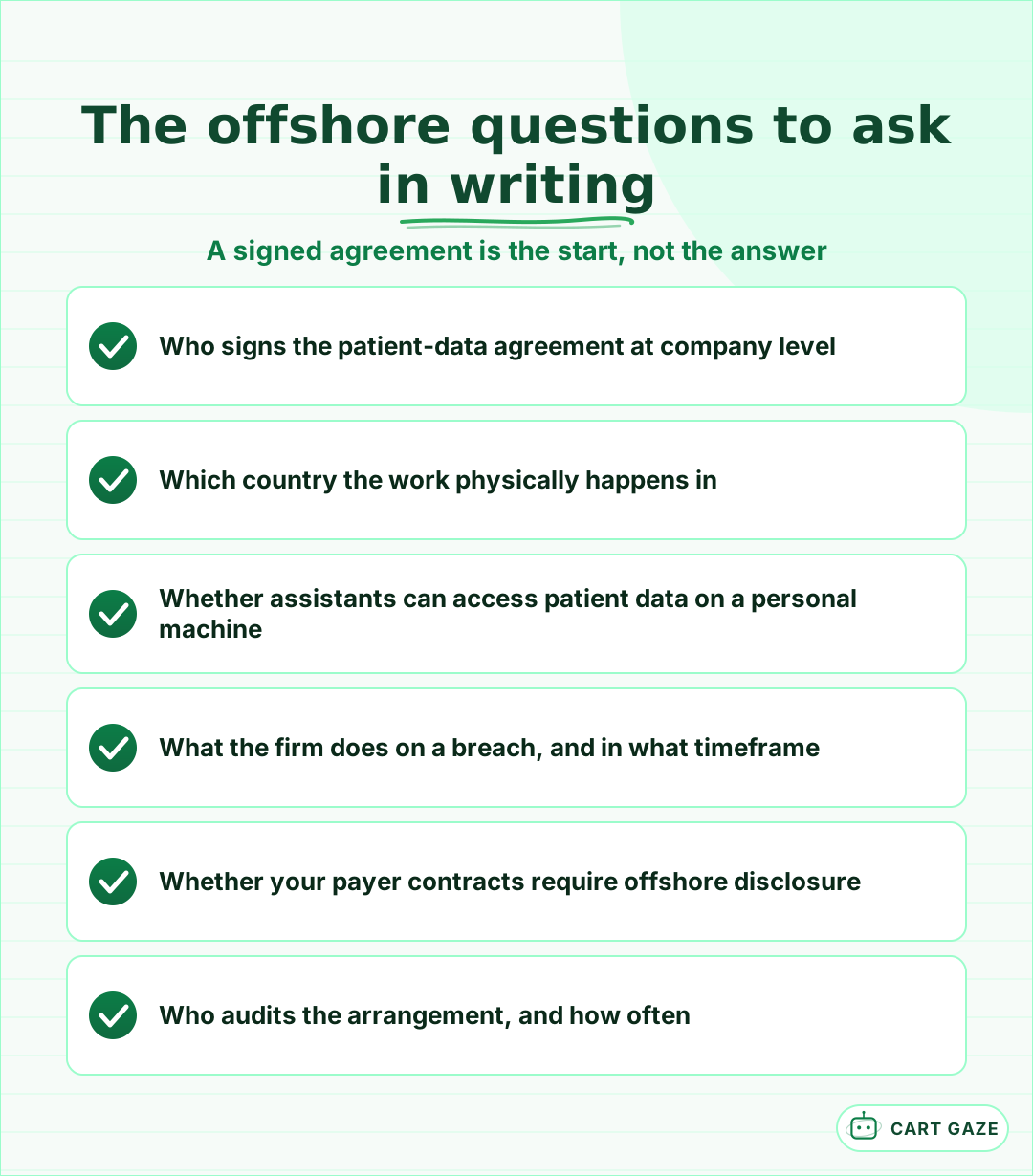 Every one of these is answerable in a sentence by a firm that has been asked before.
CMS defines offshore as anywhere outside the fifty states and the US territories. Medicare Advantage organizations, Part D sponsors, and their first-tier, downstream and related entities must file an offshore subcontractor attestation, update the HPMS Offshore Subcontractor Data module within 30 calendar days of signing, name the subcontractor and its physical address including country, describe the functions and the types of patient information involved, justify the arrangement, certify the safeguards, and run an annual audit.
Ask the firm three things in writing: who signs the agreement at company level, where the work physically happens, and whether assistants can access patient information from a personal machine. One vendor survey in this space notes that individual freelancers cannot execute a valid agreement at company level at all, which rules out the cheapest tier for anything touching patient data.
How to split the queues
Assign each queue to the layer that can finish it, then leave it there. Booking, reminders, backfill, and after-hours answering go to software. Authorization, appeals, payer calls, and anything needing improvisation go to a person. Clinical calls go to a clinician, always.
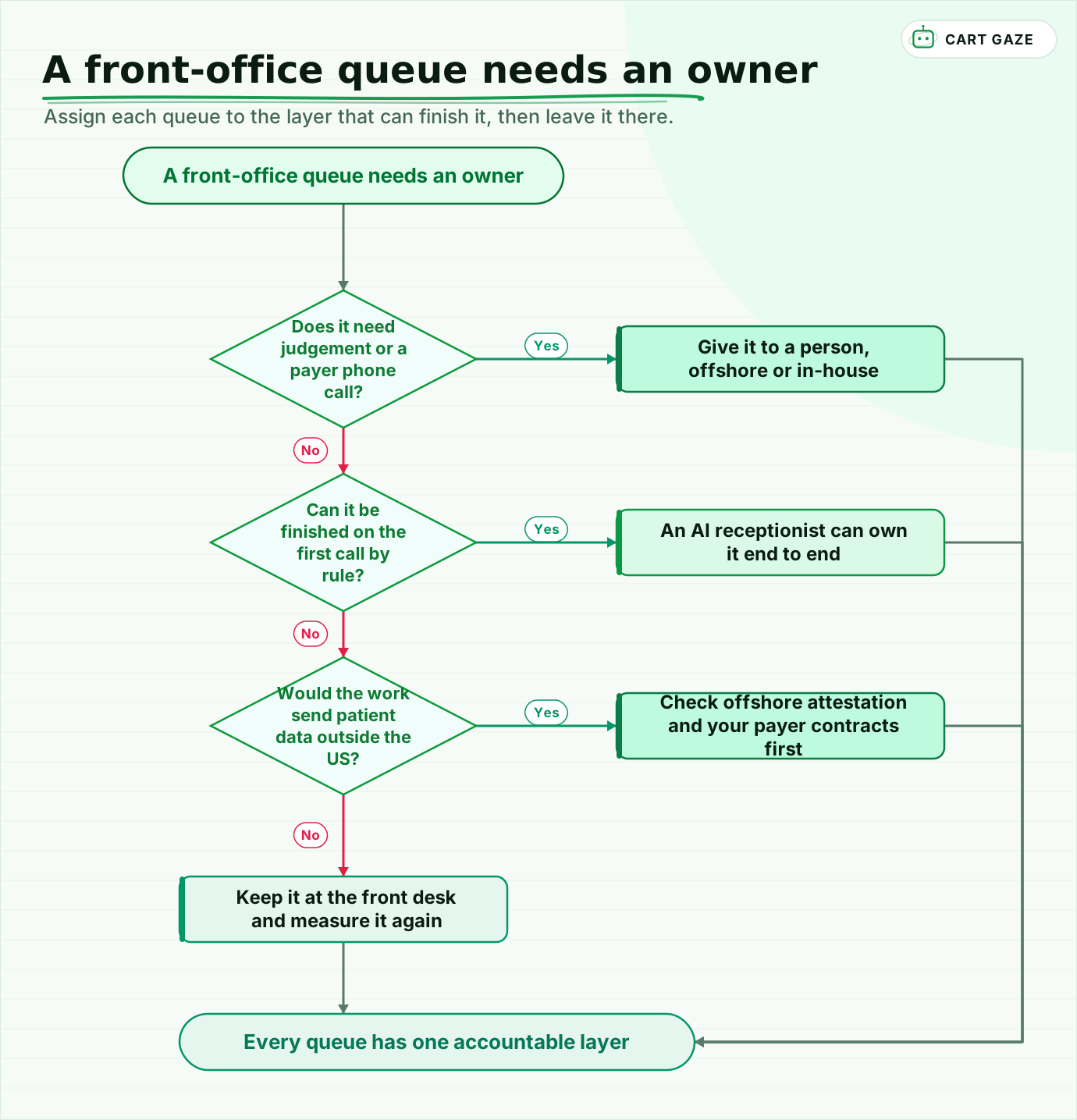 Assign each queue to the layer that can finish it, then leave it there.
Most practices that get this right end up with both, and a smaller order of each than they first quoted. Software takes the phone so the queue disappears, and the assistant hours go entirely to authorization work rather than being diluted across whoever is calling.
The sequencing matters too. Putting the assistant in first, then adding software, tends to work better than the reverse, because a person will tell you within two weeks which calls keep repeating and which rules the automation actually needs. Buying the software first means writing those rules from guesswork.
Start with whichever queue is costing the most. If you do not know, count it for a week before you sign anything, because both of these are annual commitments dressed up as monthly ones.
Where to start
Measure two things for one week: how many calls you miss or abandon, and how many items sit in your authorization queue at close of business each day. Those two numbers point at different purchases and they are the only inputs that matter.
If missed calls dominate, the AI layer pays first and pays fastest, because a recovered booking is immediate revenue. If the authorization queue dominates, buy hours, and revisit the phone once the backlog is under control. The revenue side of the first case is worked through in the real cost of missed calls.
When you want a second read on which queue is leaking, the free Growth Leak Audit walks the numbers with you.
Fair questions.
Is an AI receptionist or a virtual assistant better for a medical practice?
Neither replaces the other. An AI receptionist answers every call instantly at any hour for a flat fee, which fixes queues and spikes. A virtual assistant handles judgement work like prior authorization, appeals, and payer calls. Most practices that get this right run both, with smaller orders of each than they first quoted.
How much does an offshore virtual medical assistant cost in 2026?
A published August 2026 rate survey lists Philippines-based assistants at $4.50 to $15 an hour, India at $8 to $14, Latin America at $15 to $25, and US-based at $20 to $75. Full-time managed offshore support ran roughly $1,200 to $3,000 a month. Treat that as one firm's survey and get your own quotes.
Can a virtual assistant handle prior authorizations?
Yes, and this is where a person clearly beats software. Authorization work is payer portal navigation, documentation, and long holds, none of which a voice agent completes. MGMA found eligibility and prior authorization is the most time-consuming phone task at 45%, and only 16% of front-office automation interest points at it.
Is it HIPAA compliant to use an offshore virtual assistant?
A signed Business Associate Agreement at company level is necessary but not the whole question. CMS treats offshore as outside the 50 states and US territories and requires plans and their contracted entities to attest and audit these arrangements. Check your payer contracts, and confirm assistants cannot hold patient data on personal machines.
Which should a practice buy first?
Measure two numbers for a week: calls missed or abandoned, and items left in the authorization queue each evening. If missed calls dominate, the AI layer pays fastest because a recovered booking is immediate revenue. If the authorization backlog dominates, buy hours and revisit the phone afterwards.
Sources.
- [1]Virtual medical assistant pricing comparison (August 2026 rate survey)
- [2]CMS offshore attestation requirements
- [3]MGMA Stat: phones are still a bottleneck costing practices time (March 2026)
- [4]MGMA Stat: AI moves for medical practices to boost the front office (February 2026)
- [5]Average call abandonment rate in healthcare: 2026 benchmarks
Written by

Muhammad Qasim Hammad
Founder, Cart Gaze
Qasim builds AI receptionists and front-office automation for medical and dental practices at Cart Gaze. Posts here start from published sources and real call data, not vendor claims, and every number links back to where it came from.
Keep reading.
 AI ReceptionistsHow to Choose an AI Receptionist for Your Medical Practice10 min read
 AI ReceptionistsAI Receptionist vs Answering Service: Which Fits Your Practice?11 min read
 AI ReceptionistsMulti-Provider Call Routing: Get the Right Doctor on Every Call10 min read
 AI ReceptionistsAI Receptionist Escalation: Designing the Handoff to a Human10 min read
 AI ReceptionistsAI Receptionist Knowledge Base: What Your Practice Must Load10 min read
 AI ReceptionistsThe AI Receptionist Policy Your Practice Hasn't Written Yet9 min read