
How to Choose an AI Receptionist for Your Medical Practice
Choosing an AI receptionist for a medical practice comes down to a few checks: a signed BAA, a real escalation limit, EHR booking, and honest pricing. Here is the neutral framework, plus the red flags to walk away from.
Table of Contents8 sections
- What to look for when choosing an AI receptionist
- Start with the BAA and real HIPAA posture, not a badge
- Check where the AI stops: escalation, not triage
- Make sure it books in real time, not just takes messages
- Compare the pricing model, not just the sticker
- Spot the red flags before you sign
- Pilot on one call type, then choose
- Fair questions
You have decided your front desk needs help, and now four AI receptionist vendors are all promising the same three things: they never miss a call, they book around the clock, and they are HIPAA compliant. Medical practices miss about 42% of incoming calls during business hours, so the pain those vendors point at is real. The trap is that the wrong vendor is worse than the voicemail you have now.
An AI receptionist answers your phone, and in doing so it handles patient health information and stands between a worried caller and a clinician. Pick badly and you inherit a compliance gap, a safety risk, and a contract you cannot easily leave. Pick well and you recapture bookings you never knew you were losing.
This guide ranks no vendors. It walks the seven checks that actually decide the outcome, the exact questions to ask on the demo call, the pricing models to compare, and the four red flags that should end the conversation before you sign anything.
What to look for when choosing an AI receptionist
Choosing an AI receptionist comes down to seven checks, not a feature list: a signed BAA, a hard limit on clinical calls, real booking through your EHR or practice management system, a clear pricing model, transcripts and quality review, the languages your patients speak, and a short pilot before any year-long contract.
The order matters. Score the compliance and safety checks first, because a vendor that fails those is out no matter how good the demo looks. Then weigh integration, pricing, and observability. If you have never mapped what one of these systems actually does and where it stops, start with what an AI receptionist does and where it stops, then come back and score your shortlist.
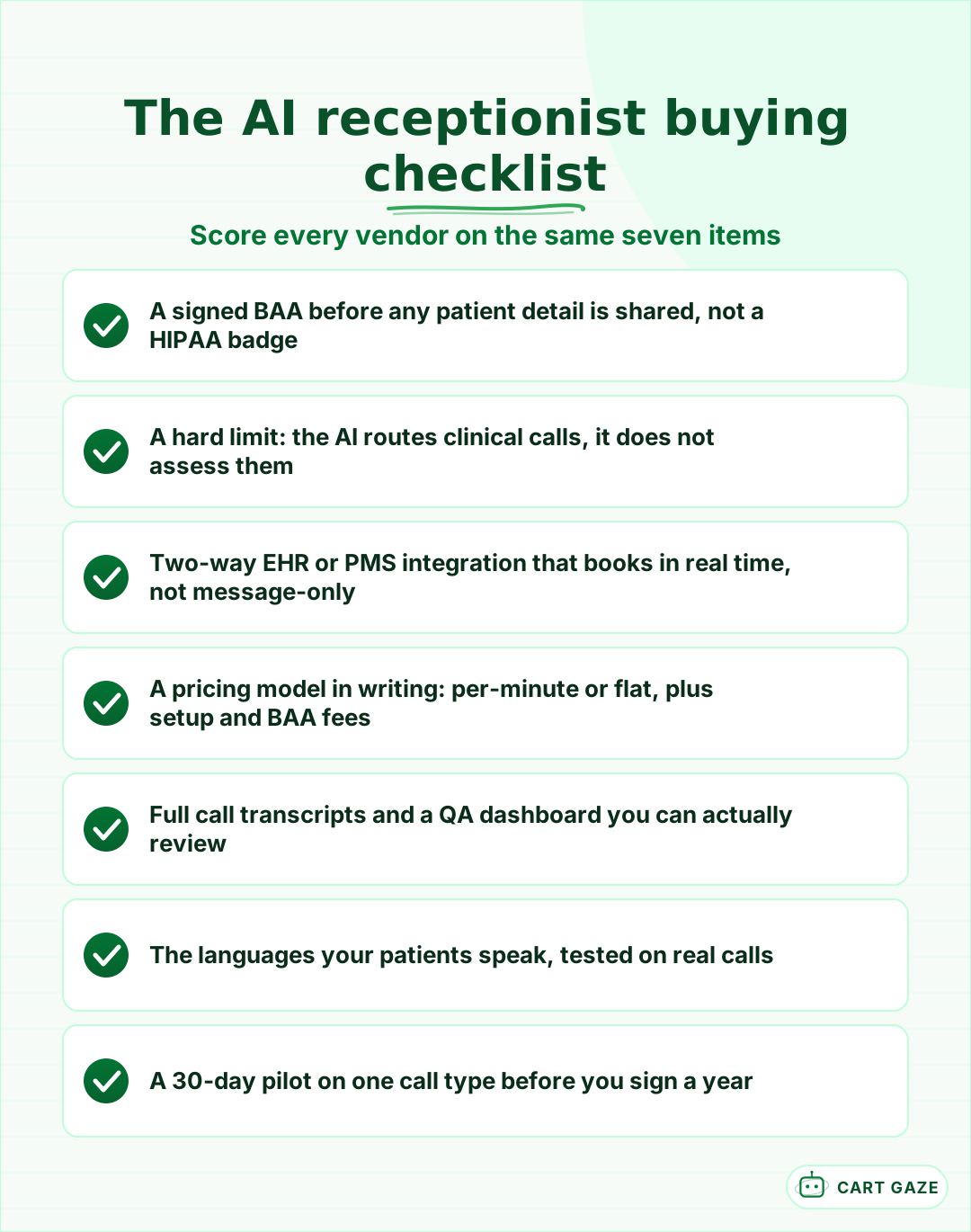 Score every vendor against the same seven checks, not the demo.
Before you score anyone, spend 30 minutes in your own call log. Filter to the calls you miss, tag a sample as routine or clinical, and count how many wanted to book. That tells you which checks matter most for your practice: a booking-heavy log rewards deep calendar integration, while a clinical-heavy log rewards a rock-solid escalation path. Bring that one-page summary to every demo. It keeps the conversation on your reality instead of the vendor's highlight reel, and it makes two very different vendors genuinely comparable.
Start with the BAA and real HIPAA posture, not a badge
Start with compliance, because it disqualifies vendors fastest. Any vendor that handles patient health information is a business associate under HIPAA and must sign a Business Associate Agreement. That signed BAA is the real commitment, and a logo is not. Treat "HIPAA certified" as a warning sign, because no such certification exists.
The Department of Health and Human Services, through its Office for Civil Rights, certifies no product and endorses no vendor as compliant. When a company says it is "HIPAA certified" or shows a HIPAA seal, that is a self-assessment and nothing more. What actually protects you is the signed BAA plus documented controls you can read.
On the demo, ask four questions and write down the answers. Will you sign a BAA before we send any patient data? Who are the subcontractors that could touch that data? Is call audio and every transcript encrypted in transit and at rest? Do you redact patient details from stored transcripts? For the deeper version of this, see what a HIPAA-aware setup requires.
Check where the AI stops: escalation, not triage
The safety boundary decides whether the tool is fit for a patient line. A good AI receptionist recognizes urgent keywords and routes the call to a human within seconds. It must never assess how sick someone is, decide urgency, or give medical advice. Recognition and redirection is safe. Assessment is not.
A safe escalation does three things. It pages your on-call provider with a structured handoff, meaning name, date of birth, callback number, and reason. It tells the caller to hang up and call 911 when the situation is an emergency. And it logs the whole interaction for follow-up the next morning. Test this before you trust it: call the line yourself, describe an urgent symptom in plain words, and confirm a real person reaches you inside the window the vendor promised.
Look at how a serious vendor draws the line. Simbie, for one, flags first-trimester bleeding and fertility medication-timing questions to clinical staff rather than trying to answer them. That is the behavior you want: the system knows what it is not allowed to handle, and it hands those calls off every single time.
Make sure it books in real time, not just takes messages
The feature that separates a booking system from fancy voicemail is two-way integration with your EHR or practice management system. Real integration reads live availability and writes the appointment back automatically, so a patient books at 9 p.m. without anyone lifting a finger. Message-only tools just leave you a callback to chase in the morning.
So ask which systems it writes to, and whether that write-back is two-way or one-way. Some top platforms advertise 80+ EHR and practice management integrations, which sounds impressive until you find out yours is not one of them. Confirm your specific system is on the list, then test a real booking end to end during the pilot. A demo booking into the vendor's sandbox is not the same as a live write-back into your calendar, so insist on seeing the real thing.
This is also the honest line between an AI receptionist and a plain answering service. A message-only service is safe and simple, but it does not book, so a booking-heavy practice ends up paying for a tool that does half the job. We compare the two categories directly in AI receptionist vs answering service.
Compare the pricing model, not just the sticker
Pricing models differ more than prices do, and the model you pick changes what a busy month costs. Usage-based plans bill per minute, so cost rises with every long call. Flat plans charge the same whether the phone rings 50 times or 500. Match the model to your call volume first, then read the fees line by line.
Here is how the common models compare, using published 2026 ranges. Treat every number as directional and get your own quote in writing.
| Pricing model | Typical range | Setup and BAA fees | Real-time booking | Best when |
|---|---|---|---|---|
| Per-minute voice AI | $0.10 to $0.50 per minute | BAA may gate access | Varies by vendor | Low or unpredictable volume |
| Per-minute human service | $1 to $2, up to $3.50 live | Setup fee common | Rarely, messages only | You need clinical triage |
| Flat monthly AI receptionist | $49 to $300 per month | BAA adds 10 to 30% | Yes, with EHR write-back | Steady, booking-heavy volume |
| Enterprise or multi-site | $600 to $10,000+ per month | Custom BAA and onboarding | Yes, deep integration | Multiple locations |
For comparison, an in-house receptionist runs $35,000 to $55,000 a year, which is why even a $300-a-month tool looks cheap on paper. But cheap is only cheap if the tool does your job. A $99 plan that cannot safely route a clinical call is not a bargain, it is the wrong tool at a lower price. We break down the full cost picture in what an AI receptionist costs.
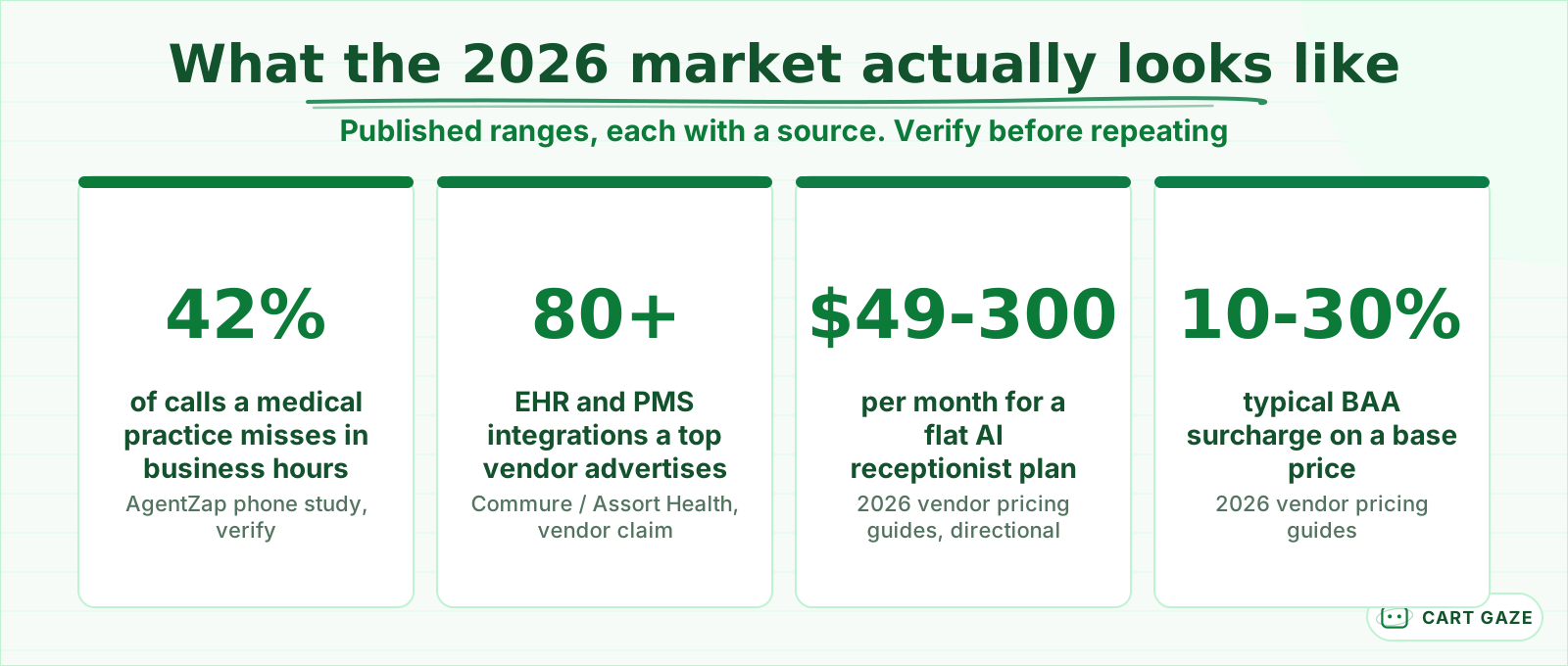 Published ranges, each sourced. Reasons to measure your own numbers, not your result.
Spot the red flags before you sign
Some vendor claims should end the conversation on the spot. Four come up again and again: a "HIPAA certified" badge, an AI that says it triages emergencies by itself, a refusal to sign a BAA, and a message-only tool sold as if it books appointments. Each one hides a real risk you would inherit.
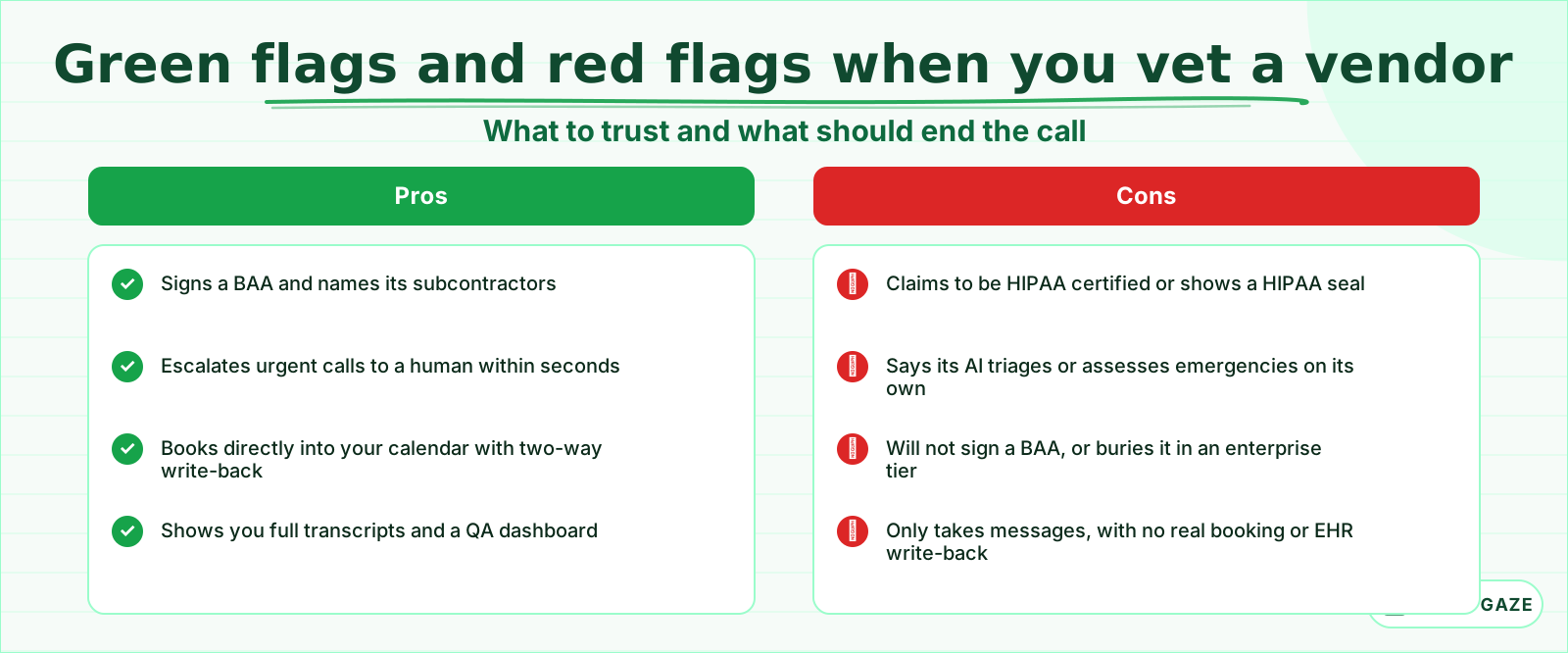 Two green flags to trust, four red flags to walk away from.
Map each red flag to what it costs you. A certification badge means the vendor is comfortable overstating its compliance, which tells you how it will behave when something goes wrong. An AI that triages on its own is a clinical-safety event waiting to happen. No BAA means you have no enforceable protection for PHI. And message-only dressed up as booking means you pay for a booking system and get a note-taker.
The green flags are the mirror image. A vendor that signs a BAA and names its subcontractors, escalates urgent calls in seconds, writes bookings straight into your calendar, and shows you the transcripts is a vendor with nothing to hide. Ask to see each of those live, not on a slide. If a vendor cannot show you one of them, treat that gap as your answer.
Pilot on one call type, then choose
Do not sign a year-long contract off a polished demo. Run a 30-day pilot on one call type and one time window, read the first week of transcripts yourself, and measure recaptured bookings in your own log after 30 to 60 days. Your practice is not the vendor's reference slide, so your numbers are what count.
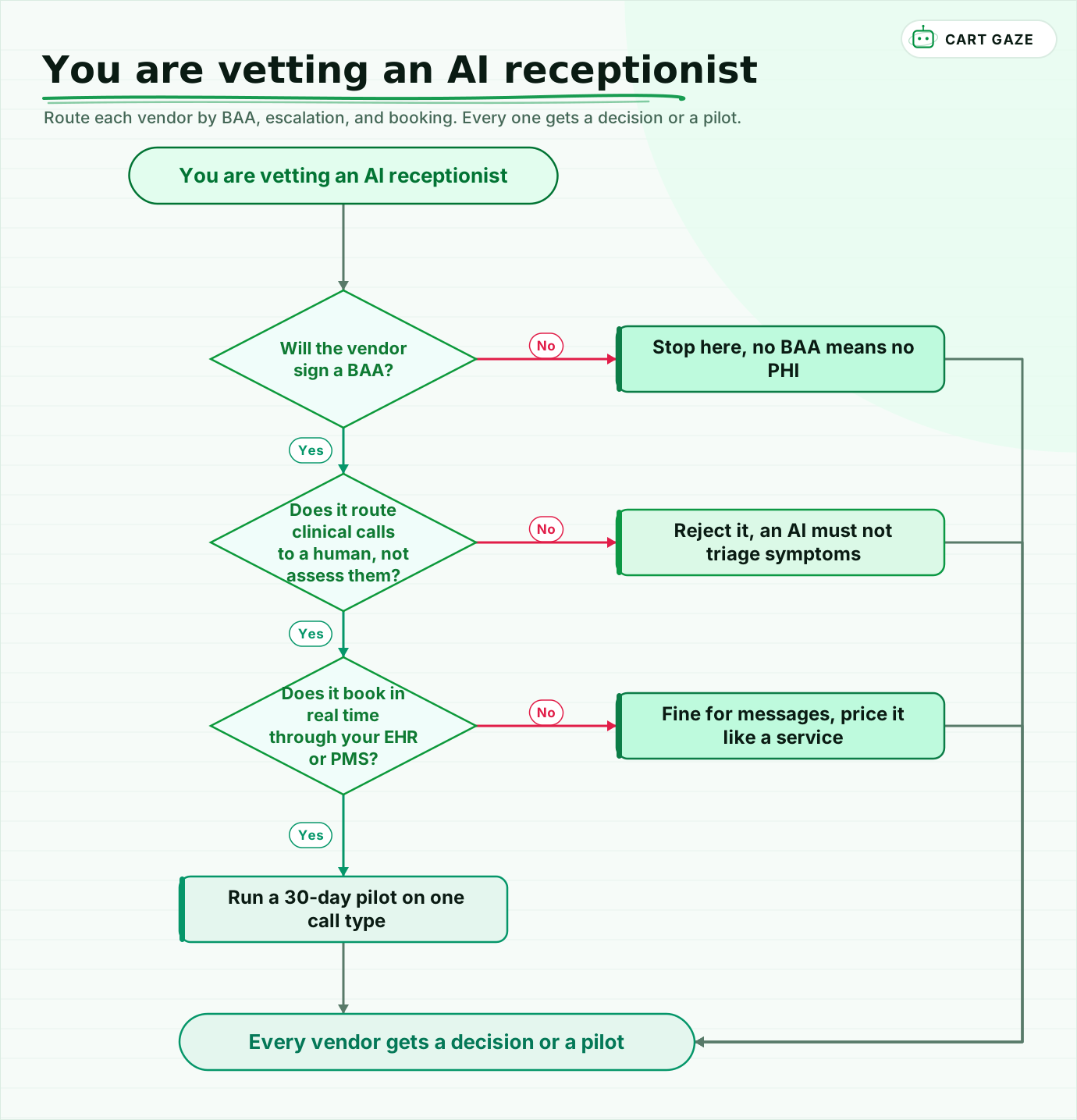 Route each vendor by BAA, escalation, and booking. Every one gets a decision or a pilot.
Walk the flow once. If a vendor will not sign a BAA, stop there, because no BAA means no PHI, full stop. If it cannot keep clinical calls away from the AI, reject it. If it will not book through your systems in real time, it can still be useful, but price it like a message service, not a booking engine. Only the vendor that clears all three earns a pilot.
Whatever you choose, decide with a number, not a demo. If you would rather see the size of the opportunity before you talk to a single vendor, the free Growth Leak Audit estimates the bookings your phone is losing from your own numbers, so you know exactly what a good AI receptionist has to earn back.
Fair questions.
How do I choose an AI receptionist for a medical practice?
Score every vendor on the same seven checks: a signed BAA, a hard escalation limit for clinical calls, two-way EHR or practice management booking, a clear pricing model, full transcripts and quality review, the languages your patients speak, and a 30-day pilot. Rank the compliance and safety checks first, because a vendor that fails those is out before features even matter.
Is an AI receptionist HIPAA compliant?
HIPAA compliance is a configuration and contract question, not a product badge, and no vendor is HIPAA certified because that certification does not exist. Any tool that handles patient details is a business associate and must sign a Business Associate Agreement. Ask what it records, reads back, and deletes, and get the BAA signed before any patient data reaches it.
Can an AI receptionist triage emergencies?
No, and you should walk away from any vendor that claims it does. A safe AI receptionist recognizes urgent keywords and routes the call to a human within seconds, or tells the caller to call 911. It must never assess how urgent a symptom is or give medical advice, because deciding acuity is a clinical act that belongs to a licensed person.
What should an AI receptionist integrate with?
It should connect two-way with your EHR or practice management system so it reads live availability and writes appointments back automatically. That is the difference between booking a patient at 9 p.m. and leaving you a message to return. Confirm your specific system is supported, ask whether the write-back is bidirectional, and test a real booking during the pilot.
How much does an AI receptionist cost?
It depends on the pricing model. Usage-based plans run roughly $0.10 to $0.50 a minute, human services $1 to $2 and up, and flat AI plans sit around $49 to $300 a month, with a BAA adding 10 to 30%. Match the model to your call volume, because per-minute pricing costs the most on your busiest days.
Sources.
- [1]Medical practice phone statistics: missed-call and after-hours benchmarks
- [2]How healthcare organizations must vet AI vendors that overstate HIPAA compliance
- [3]HIPAA Business Associate Agreement, 2026 update
- [4]5 best virtual medical receptionist platforms for 2026 (features and EHR integration)
- [5]AI receptionist pricing 2026: vendor rates
- [6]AI receptionist pricing: 2026 cost guide
- [7]How much does a medical answering service cost in 2026
- [8]Best AI medical receptionist in 2026, ranked and reviewed
- [9]12 best AI voice agents for healthcare: transcripts, QA, and languages
Written by

Muhammad Qasim Hammad
Founder, Cart Gaze
Qasim builds AI receptionists and front-office automation for medical and dental practices at Cart Gaze. Posts here start from published sources and real call data, not vendor claims, and every number links back to where it came from.
Keep reading.
 AI ReceptionistsAI Receptionist vs Answering Service: Which Fits Your Practice?11 min read
 AI ReceptionistsAI Receptionist Knowledge Base: What Your Practice Must Load10 min read
 AI ReceptionistsMulti-Provider Call Routing: Get the Right Doctor on Every Call10 min read
 AI ReceptionistsAI Receptionist Escalation: Designing the Handoff to a Human10 min read
 AI ReceptionistsAI Receptionist EHR Integration: What the Word Hides10 min read
 AI ReceptionistsAI Receptionist for Medical & Dental Practices: What It Really Does13 min read