
Why Your Practice's Calls Show as Spam Likely to Patients
Reminder calls stop getting answered and Spam Likely appears above your practice name. Here is what actually triggers the label, why automating outbound calls makes it worse first, and how to clear it.
Table of Contents8 sections
Your reminder calls used to get answered. Now patients say they never heard from you, and the ones who look at their phone see "Spam Likely" sitting above your practice name. Nothing about your intent changed. What changed is how your calling behavior looks to an analytics engine.
This is an expensive problem to ignore, because outbound calling is how most practices defend their schedule. MGMA's December 2025 access poll put no-shows at the top of practice priorities for 2026, named by 27% of 236 respondents, alongside industry estimates that no-shows and cancellations take roughly 14% of medical group revenue. A labelled number quietly disables the main tool you use against that.
This post explains what actually triggers the label, what call attestation is in plain terms, why switching on automated outbound calling usually makes it worse first, and the order of operations for getting a label removed and keeping it off.
What "Spam Likely" actually is, and who decides it
No single authority marks your number. Carriers and third-party analytics providers score numbers from calling behavior, consumer reports, and number history, then the label appears on the recipient's handset. It is a reputation score rendered as a warning, and it is reversible.
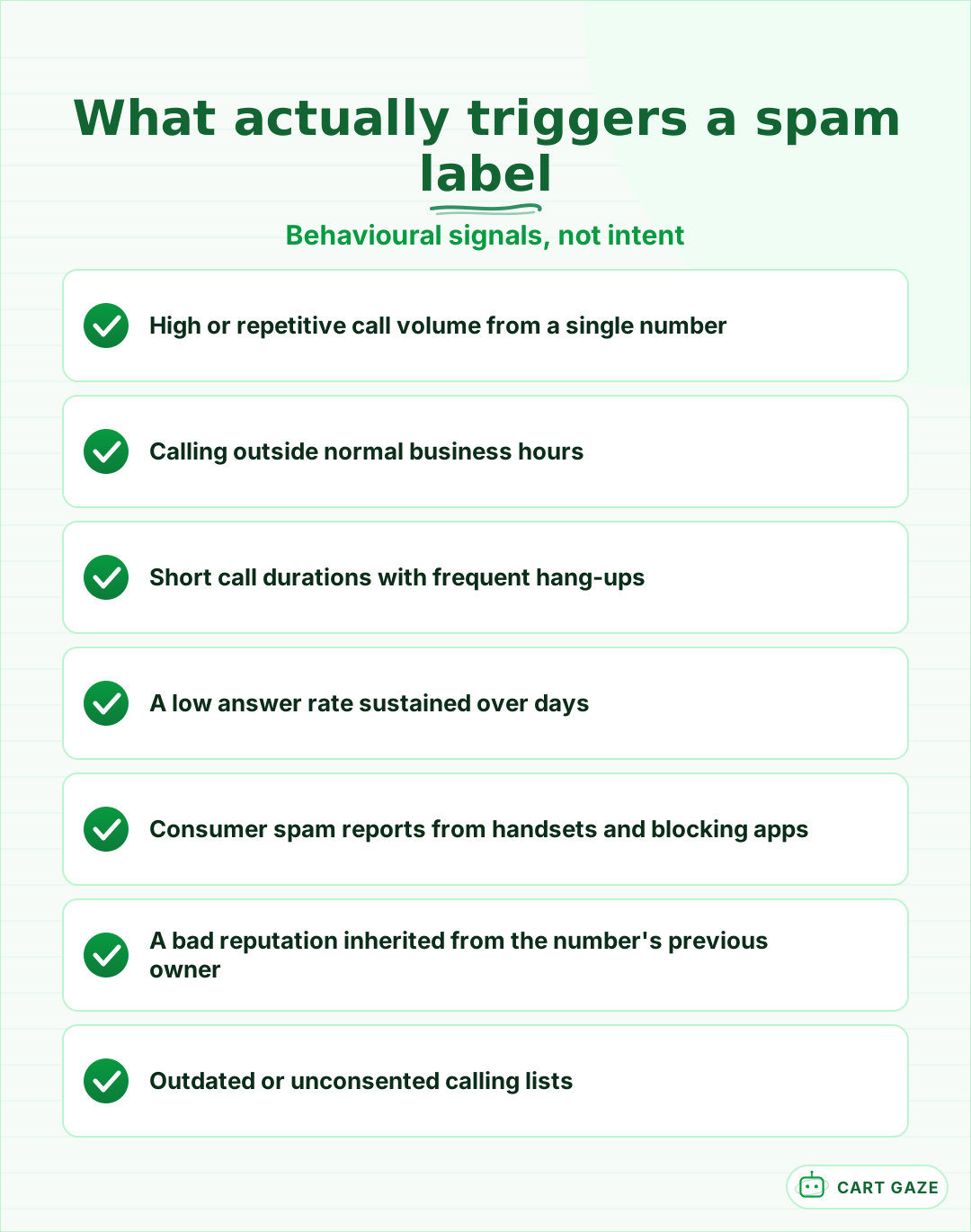 Six triggers. An automated outbound rollout produces the first three in its first week.
The behavioral triggers are consistent across providers. High or repetitive call volume from a single number, calling outside normal business hours, and short call durations with frequent hang-ups all read as automated nuisance traffic. None of those signals knows or cares that you are confirming a colonoscopy.
Number history matters more than practices expect. A number that carried a previous owner's bad reputation arrives already tainted, which is why a newly ported or newly purchased number can be labelled from the first call you ever make on it.
Consumer reports do the rest. When enough people tap "report spam" on their phone or through a blocking app, the score moves. Patients who have forgotten they are your patient, or who are annoyed by a fourth reminder, will do exactly that.
Worth saying plainly: this is not a punishment for doing something wrong. The scoring systems were built to stop fraud and nuisance dialers, and they read behavior because behavior is all they can see. A recall campaign for overdue mammograms and a cold sales dialer produce a very similar shape on the wire.
Attestation, in plain terms
Attestation is your phone provider's signed statement about how well it knows you. It is stamped on every call as it leaves their network, and it travels with the call. Downstream carriers use it as one input when deciding whether to deliver your call cleanly, label it, or block it.
| Attestation | What your provider is saying | Typical treatment |
|---|---|---|
| A, full | It knows you and confirmed you may use this number | Usually arrives clean, no label |
| B, partial | It knows where the call entered, not that you own the number | Usually delivered, may pick up a neutral label |
| C, gateway | It cannot authenticate the caller at all | Least favorable, most likely to be labelled |
| Unsigned | Nothing was stamped | Screened harder than C |
Unsigned calls are treated worst of all, which matters if any of your outbound traffic leaves through an older system or a third-party dialer that was never wired into your main carrier. Practices often discover that their reminder platform routes through a completely different path than their handsets do.
The level is chosen by the originating provider at the moment of signing, so it is a property of how your phone service is set up rather than something you control call by call. If your calls leave on B-level because your provider has not verified you are authorized to display the number you display, remediation will not hold, because the underlying signal keeps re-appearing.
Automating outbound calls makes this worse before it makes it better
This is the part vendors in our own category skip. Turning on automated reminders, recall, and waitlist backfill produces the three highest-weighted spam signals at once: a large volume of calls from one number, short average durations, and a low answer rate while patients get used to it.
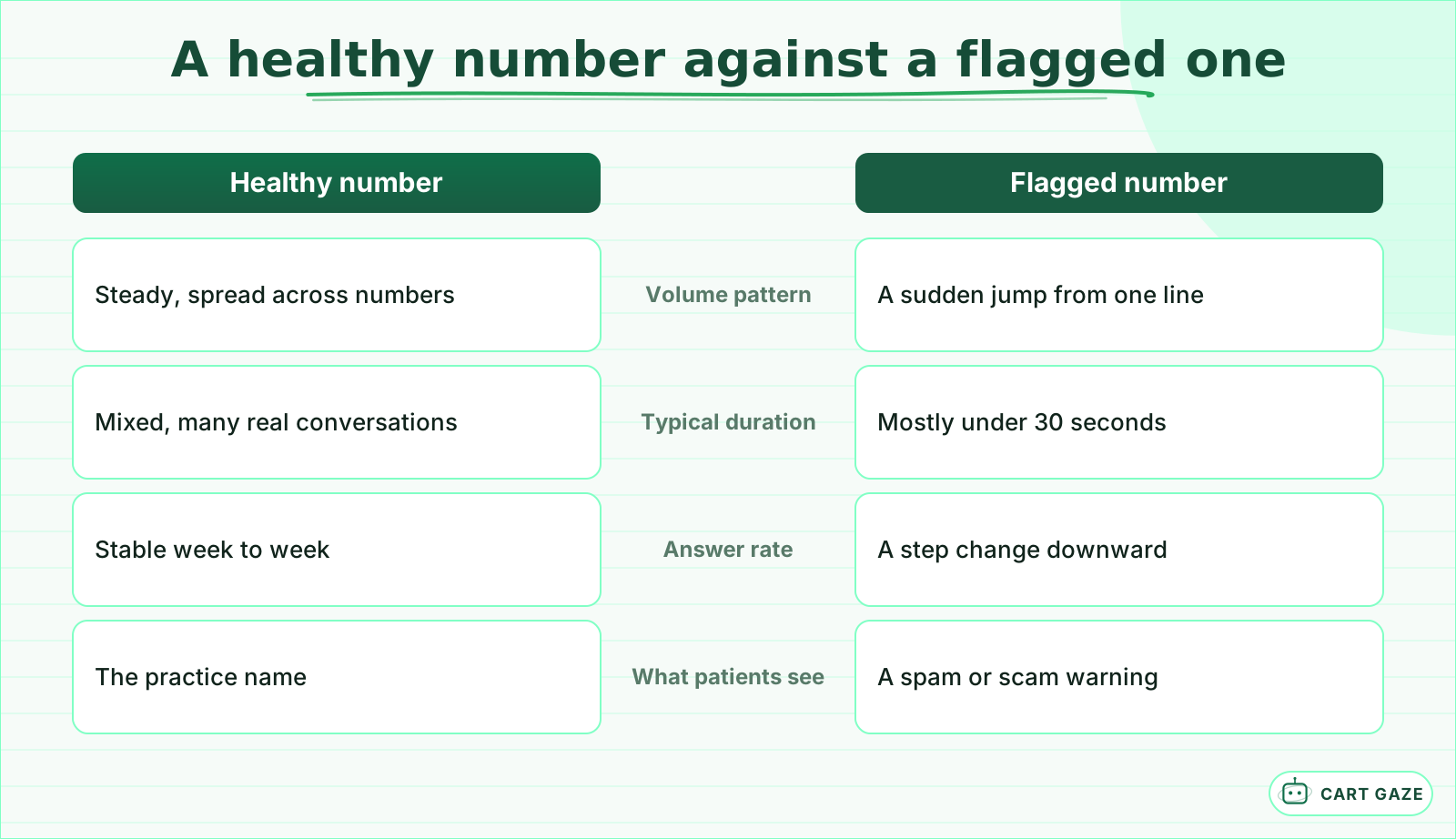 The signals carriers read are behavioural. Your intent is not visible to an analytics engine.
The pattern is worth seeing clearly. A practice that made 40 outbound calls a day from the front desk switches on automation and makes 400, most under 30 seconds, many unanswered. To an analytics engine that is indistinguishable from a dialer working a cold list, because behaviorally it is the same shape.
That is not an argument against automating. MGMA's February 2026 poll found scheduling and calls are the top two front-office automation targets at 31% and 27%, and the workload case is real. It is an argument for staging the rollout and watching your answer rate as a health metric, not just as an outcome.
Consent and list quality sit underneath all of it. Calling numbers that are stale, wrong, or never consented generates complaints faster than any other behavior, and complaints are the signal that moves a score hardest. The messaging rules that govern this are covered in TCPA compliance for automated patient texting.
How to see what your number looks like from the outside
You cannot diagnose this from your own handset, because your phone knows the number and will not show you the label a stranger sees. You need to check what carriers and analytics providers are publishing about the number, on each major network, before you spend anything on remediation.
The cheapest first test costs nothing. Ask three or four patients or staff on different carriers to tell you exactly what appears when you call them, including whether your practice name shows at all. Different networks use different analytics providers, so a number can be clean on one and labelled on another.
Then check the free registration and lookup portals the major carriers and analytics providers operate for business numbers. Registering your practice name, address, and call purpose against your numbers is free, it is the step most practices have never done, and an unregistered number with no business identity attached is easier to mislabel.
Pull your own answer-rate history at the same time. A number that has been labelled shows a step change, not a drift, and finding the week it dropped usually identifies what caused it. If the drop lines up with the week you switched on a new reminder platform or ported a number, you have your answer without paying anyone to investigate.
Keep the evidence. Screenshots of what the label looks like on each carrier, the date the answer rate moved, and your registration records are exactly what a remediation request needs, and gathering them afterwards is much harder than gathering them now.
Getting a label removed
Remediation means going to the entities that publish the label, which are the analytics providers and the carriers, and asking for a correction with evidence that the number belongs to a legitimate practice. It works, but only if the behavior that caused the label has already changed.
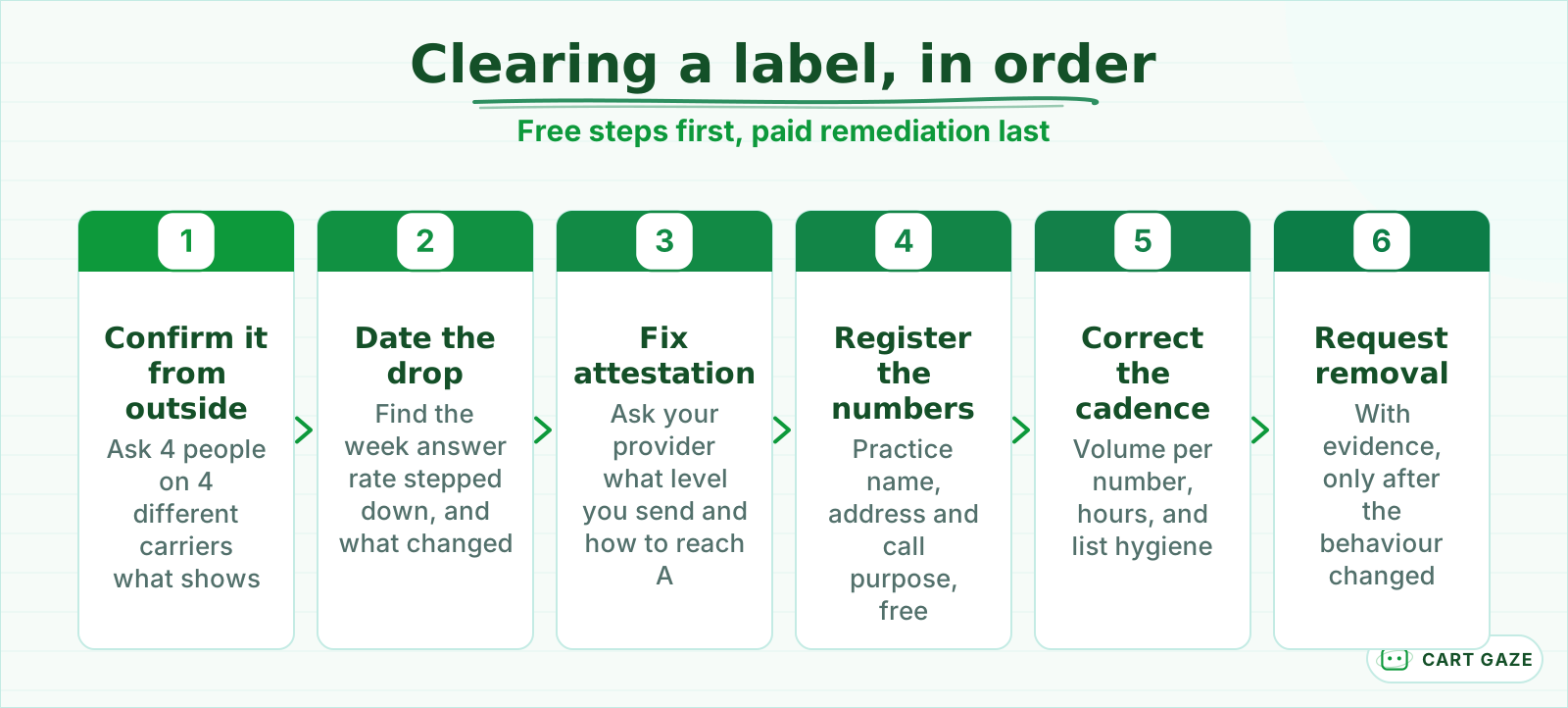 Check, register, correct the behaviour, then request removal. The order is what makes it hold.
Order matters here more than effort. If you request removal while still running the calling pattern that triggered the label, the score re-forms and you pay for the same work twice. Fix the attestation, register the number, correct the cadence, then request removal.
Paid remediation services exist and can be worth it at scale. One provider claims to manage more than 15,000 cases a month across close to half a million numbers, which is a vendor's own figure rather than an audited one. For a single-location practice with two or three numbers, the free registration route usually gets you most of the way.
Expect this to take days to weeks rather than hours, and expect to repeat it. Reputation is continuously recalculated, so a clean result is a state you maintain rather than a task you finish.
Operating rules that keep a number clean
The durable fix is behavioral. Keep outbound volume per number within a sane range, keep calls inside business hours, keep lists current, and give patients an easy way to opt out so they stop reporting you instead. These rules cost nothing and they prevent the whole cycle.
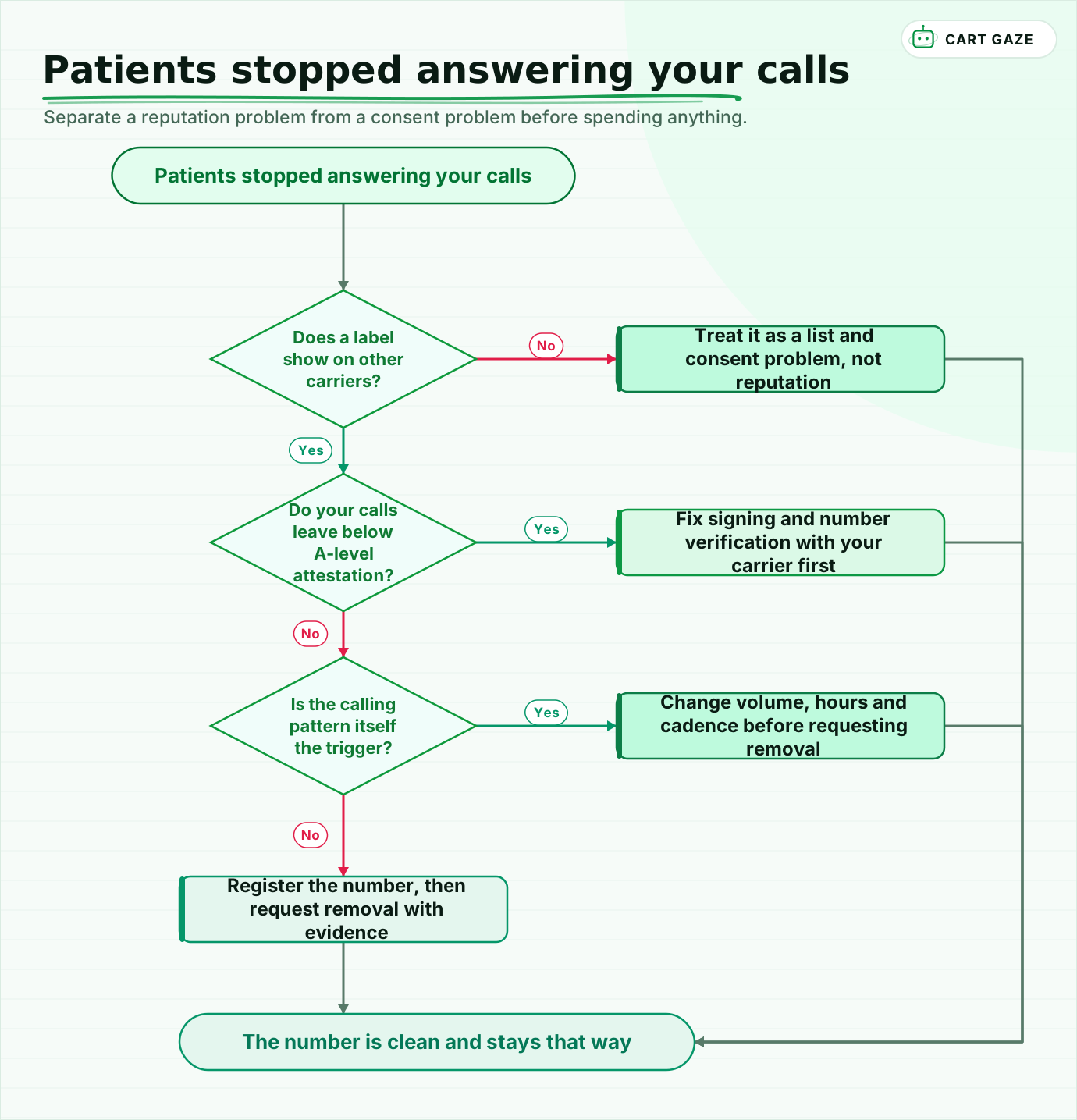 Separate a reputation problem from a consent problem before spending anything.
Watch the cadence rules as closely as the volume. A patient who gets a reminder, a confirmation, a recall, and a review request in the same week is the patient who reports you, and each of those campaigns was probably switched on by a different person for a different good reason.
If you are evaluating an automated calling system now, make number reputation part of the buying conversation. Ask how outbound traffic is distributed, whether the vendor registers numbers on your behalf, and what happens to your inbound line. The general scope questions are in what an AI receptionist does and where it stops, and the contract side in what to settle before signing.
Where to start
Start with the free diagnostic. Ask four people on four different carriers what your caller ID shows, then pull 90 days of answer-rate history and look for a step change. Those two checks take an afternoon and they tell you whether you have a reputation problem, a consent problem, or neither.
If the label is confirmed, do the free work in order before buying anything: attestation with your provider, registration with the carriers, then cadence. If the label is clean but answer rates are still poor, the issue is who you are calling and how often, which is a list and consent question rather than a technical one.
When you want a second read on which of those is costing you appointments, the free Growth Leak Audit walks the numbers with you.
Fair questions.
Why do my practice calls show as Spam Likely?
Carriers and analytics providers score your number on behavior rather than intent. High call volume from a single number, calls outside business hours, short durations with frequent hang-ups, consumer spam reports, and a bad history from the number's previous owner all push the score down until a label appears on the recipient's handset.
What is call attestation and why does it matter?
Attestation is your phone provider's signed statement about how well it knows you, stamped on each outbound call. A-level means it verified you are authorized to use the number and usually arrives clean. B-level means it knows only where the call entered the network. C-level and unsigned traffic get the harshest screening.
Will automated reminder calls get my number flagged?
They can, because automation produces the exact pattern analytics engines penalize: a jump in volume from one number, short average call length, and a low answer rate while patients adjust. Stage the rollout, split traffic across a small pool of numbers, and never run campaigns from the line patients call back on.
How do I get a spam label removed from my practice number?
Go to the analytics providers and carriers that publish the label with evidence the number belongs to a legitimate practice. Change the calling behavior first, because a removal request granted while the triggering pattern continues simply re-forms. Expect days to weeks, and expect to maintain it rather than finish it.
How can I see what my caller ID looks like to patients?
Not from your own handset, which already knows the number. Ask three or four people on different carriers what appears when you call, including whether your practice name shows at all. Networks use different analytics providers, so a number can be clean on one carrier and labelled on another.
Sources.
Written by

Muhammad Qasim Hammad
Founder, Cart Gaze
Qasim builds AI receptionists and front-office automation for medical and dental practices at Cart Gaze. Posts here start from published sources and real call data, not vendor claims, and every number links back to where it came from.
Keep reading.
 Missed Calls & Front DeskReplacing a Medical Office Phone Tree: What Actually Fixes It10 min read
 Missed Calls & Front DeskCall Quality Scoring for a Medical Front Desk, Done Legally10 min read
 Missed Calls & Front DeskFront Desk Call Metrics Every Practice Should Track in 202610 min read
 Missed Calls & Front DeskMedical Office Phone Scripts That Book Patients: 6 Templates11 min read
 Missed Calls & Front DeskPrescription Refill Automation That Keeps Providers in Control10 min read
 Missed Calls & Front DeskAfter-Hours Call Handling: Cover the 41% Nobody Answers11 min read