
Workers Comp Intake Automation: Capture What Gets Paid
Workers compensation runs on a data set group health never asks for, and the fields that decide reimbursement are captured before anyone sees the patient. Here is what intake must collect and what automation can take.
Table of Contents8 sections
- Workers comp intake is a different data set
- Why the first phone call decides whether you get paid
- The rules are state by state, and they keep moving
- What phone automation captures, and what it cannot
- The denial patterns a good intake prevents
- How to build it without slowing the call down
- Where to start
- Fair questions
A patient calls and says they hurt their back at work. Your front desk books them like any other new patient, and four months later the bill comes back denied because nobody captured a claim number, nobody confirmed the employer network, and the payer says the treatment was never authorized.
That denial was created on the first phone call, not in billing. Workers compensation runs on a data set that has almost nothing in common with group health, and the fields that decide reimbursement are collected before anyone sees the patient. California's own intake guidance is blunt about it: any error or missing information gives a payer the opportunity to delay or deny.
This post covers the field set that actually matters, why the phone call is the point of failure, how much the rules vary by state, and the honest boundary of what a phone system can capture on your behalf.
Workers comp intake is a different data set
A group health intake needs a member ID, a date of birth, and a copay. A workers compensation intake needs the employer, the date of injury, the body part, the claim number, the claims administrator, the adjuster, the network the employer uses, and whether the claim is accepted, disputed, or denied.
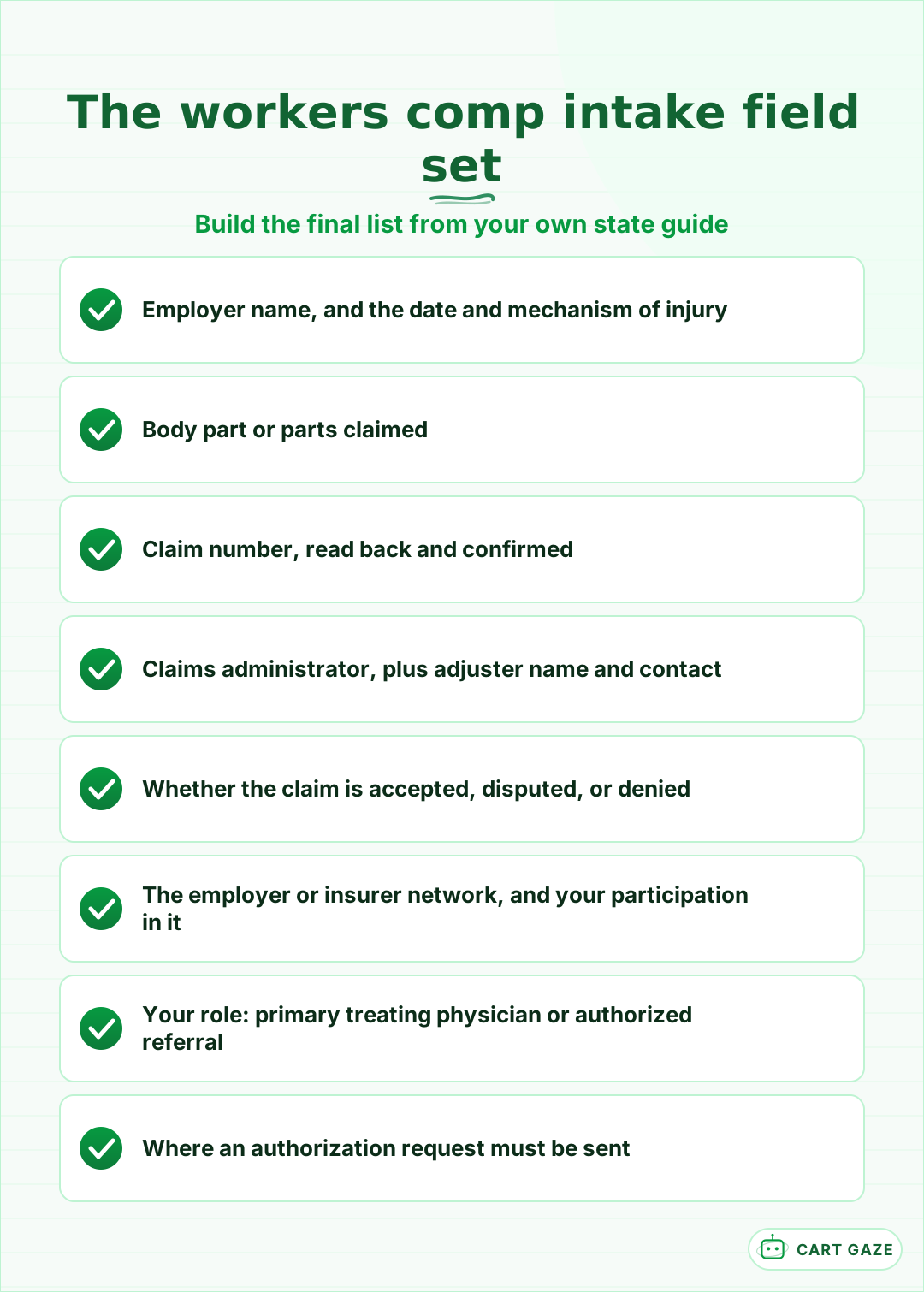 None of this appears on a group health intake. All of it decides whether you get paid.
Two of those fields carry most of the risk. The claim number is what the payer matches the bill against, and a bill without one has nowhere to land. Network participation decides whether you are an eligible provider at all, and California's guidance notes that establishing participation early avoids denials based on non-participation in the employer or insurer's network.
The claim status field is the one practices skip most often. An accepted claim, a disputed claim, and a denied claim are three completely different financial situations, and booking all three the same way means you are treating some patients for free without knowing it.
Provider role matters too. Whether you are the Primary Treating Physician or seeing the patient on an authorized referral changes what you may bill and what documentation is expected, and it is a question the caller can usually answer in one sentence.
Volume is what makes this worth systematising. For an orthopaedic, physical therapy, or occupational medicine practice, work injuries are not an occasional oddity, they are a standing share of the schedule. A field your intake skips once is a nuisance. A field your intake skips every time is a recurring write-off that nobody has attributed to the phone.
Why the first phone call decides whether you get paid
Everything above is knowable at intake and expensive to reconstruct later. Once a visit has happened, chasing an adjuster for a claim number competes with every other task in your billing queue, and the patient has less reason to help you than they did when they wanted an appointment.
Authorization is the sharpest version of this. Payers frequently deny reimbursement by claiming that the treatment was never authorized, which makes the authorization trail something you build before the visit rather than defend after it. The request path, including where an authorization request is sent, belongs in your intake record from day one.
The workload context is worth naming. When MGMA polled 294 practice leaders in March 2026, eligibility and prior authorization was the most time-consuming phone task at 45%, ahead of scheduling at 31%. Workers comp sits inside that 45% and is the least forgiving part of it.
There is a patient-experience cost too, and it lands on someone who is already having a bad month. An injured worker who is booked, treated, and then billed personally because a claim was disputed will remember that as something your office did to them. Capturing the status up front turns that into a two-minute conversation before the visit instead of a collections problem after it.
The rules are state by state, and they keep moving
There is no national workers compensation rulebook. Each state runs its own system, its own forms, and its own authorization process, so any guidance that gives one answer for the whole country is wrong somewhere. New York is a useful example precisely because it has changed so much recently.
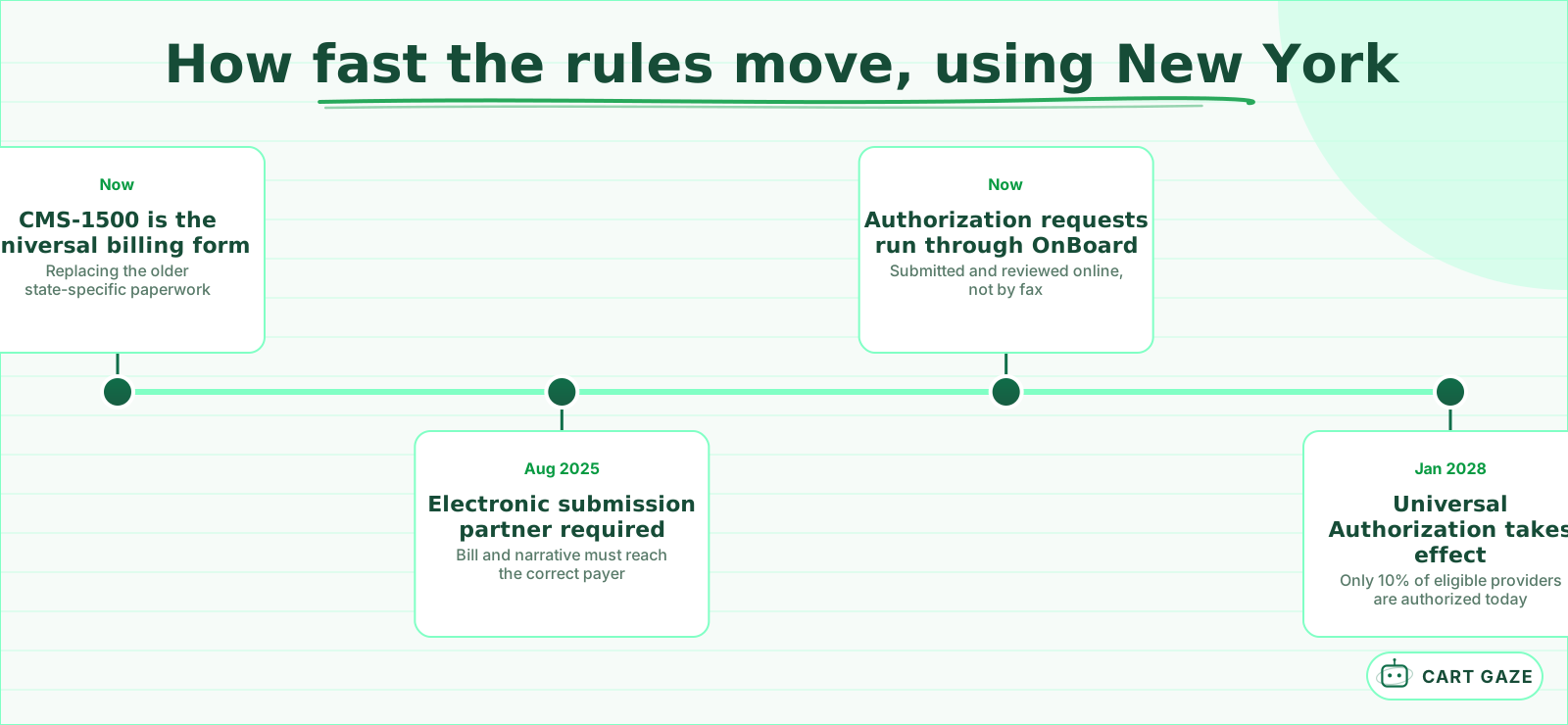 One state, three changes in three years. Verify your own before relying on any of it.
New York now uses CMS-1500 as its universal billing form. Since 1 August 2025, providers have been required to partner with an electronic submission partner who ensures the bill and its narrative attachment reach the correct payer. All prior authorization requests are submitted and reviewed online through the Board's OnBoard system rather than by fax.
The state has also proposed removing provider authorization entirely. Under its Universal Authorization plan, effective 1 January 2028, any eligible licensed provider in good standing could treat injured workers without separate Board authorization. The reason given is access: only 10% of eligible providers are currently Board-authorized, and rural patients travel an average of 35 miles to reach one, with up to 40% crossing into another county.
What phone automation captures, and what it cannot
An AI receptionist is genuinely good at the capture half of this. It can ask every required question in the same order every time, refuse to move on when a field is empty, read a claim number back for confirmation, and write the whole set into your system before the call ends.
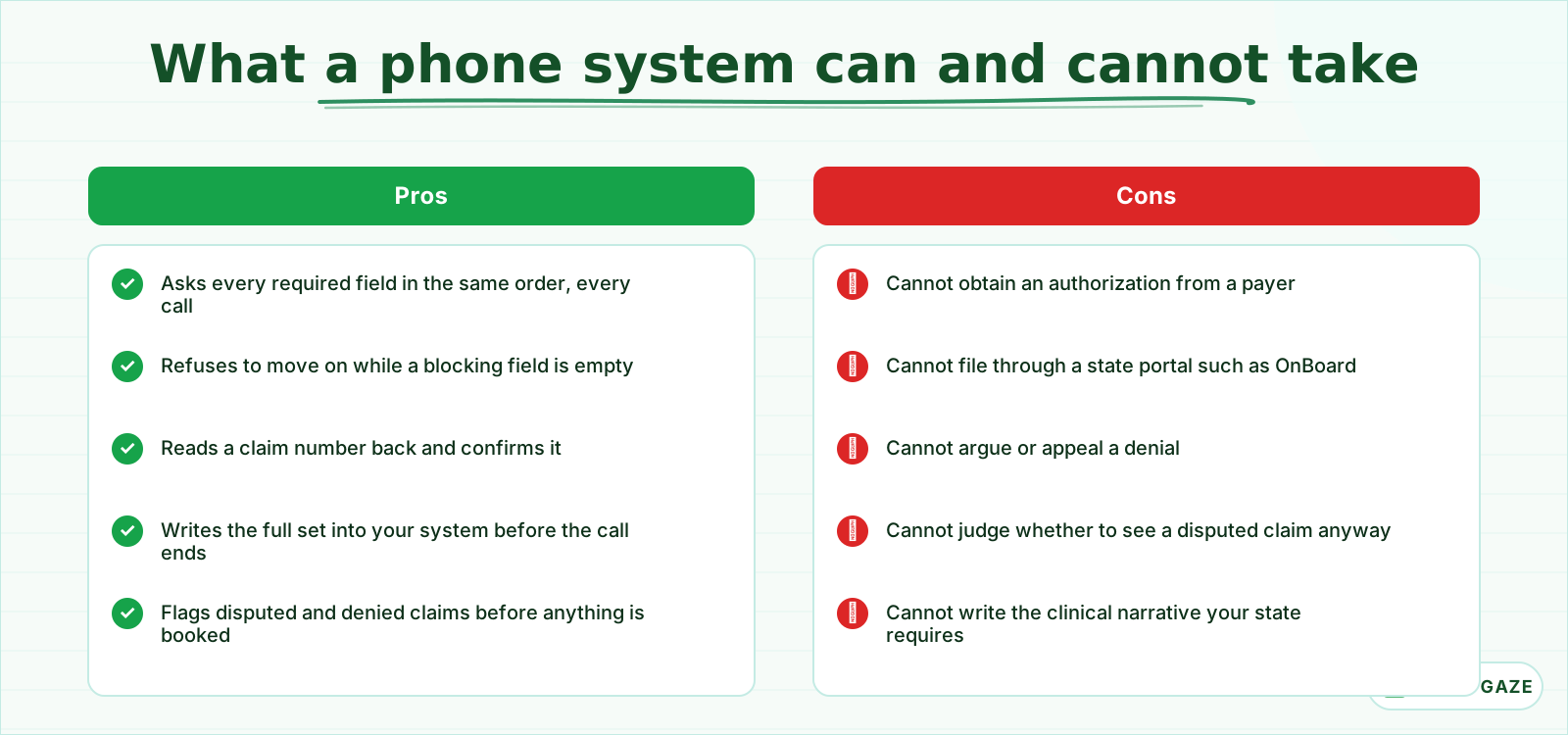 Capture and route is the whole scope. Authorization and appeals stay with a person.
Consistency is the actual value. A front desk skips fields under pressure, and workers comp intake is longest exactly when the phone is busiest. A script does not shorten itself at 9 a.m. and it does not decide that the adjuster's number can be chased later.
What it cannot do is the part that comes next. It does not obtain an authorization, file through a state portal, argue a denial, or decide whether a disputed claim should be seen anyway. Those are judgement and portal work, and they belong to a person. That boundary is the same one described in what an AI receptionist does and where it stops.
It also should not decide clinical urgency. A work injury call can be an emergency, and the same escalation rules apply as on any other line, which routing emergency calls against routine ones covers in full.
The denial patterns a good intake prevents
Most workers comp denials trace back to a small number of repeatable intake gaps. Naming them turns a vague sense that comp is difficult into a checklist your phone process can actually enforce, and it tells you which fields are worth blocking the call over.
| What went wrong | Where it was created | What intake should have done |
|---|---|---|
| No claim number on the bill | The first call | Capture and read it back, or flag it as pending |
| Treatment never authorized | Before the visit | Record the request path and confirm before booking |
| Provider not in the employer network | The first call | Verify network participation before scheduling |
| Claim disputed or denied | The first call | Capture status and route to billing before booking |
| Wrong or missing adjuster contact | The first call | Capture claims administrator and adjuster together |
| Documentation missing required elements | The visit | Match the template your state expects |
Read the middle column first. Five of these six were created at intake, which is why intake is the cheapest place to correct them, and why the phone is the right layer to invest in. The sixth, documentation, is a clinician workflow question rather than a front-desk one, and it needs a template rather than a script.
How to build it without slowing the call down
The design goal is completeness without a five-minute interrogation. Split the capture: take the fields that block booking on the call, and collect the rest through a follow-up link or a callback before the visit. Blocking on everything drives callers away, and blocking on nothing recreates the denial.
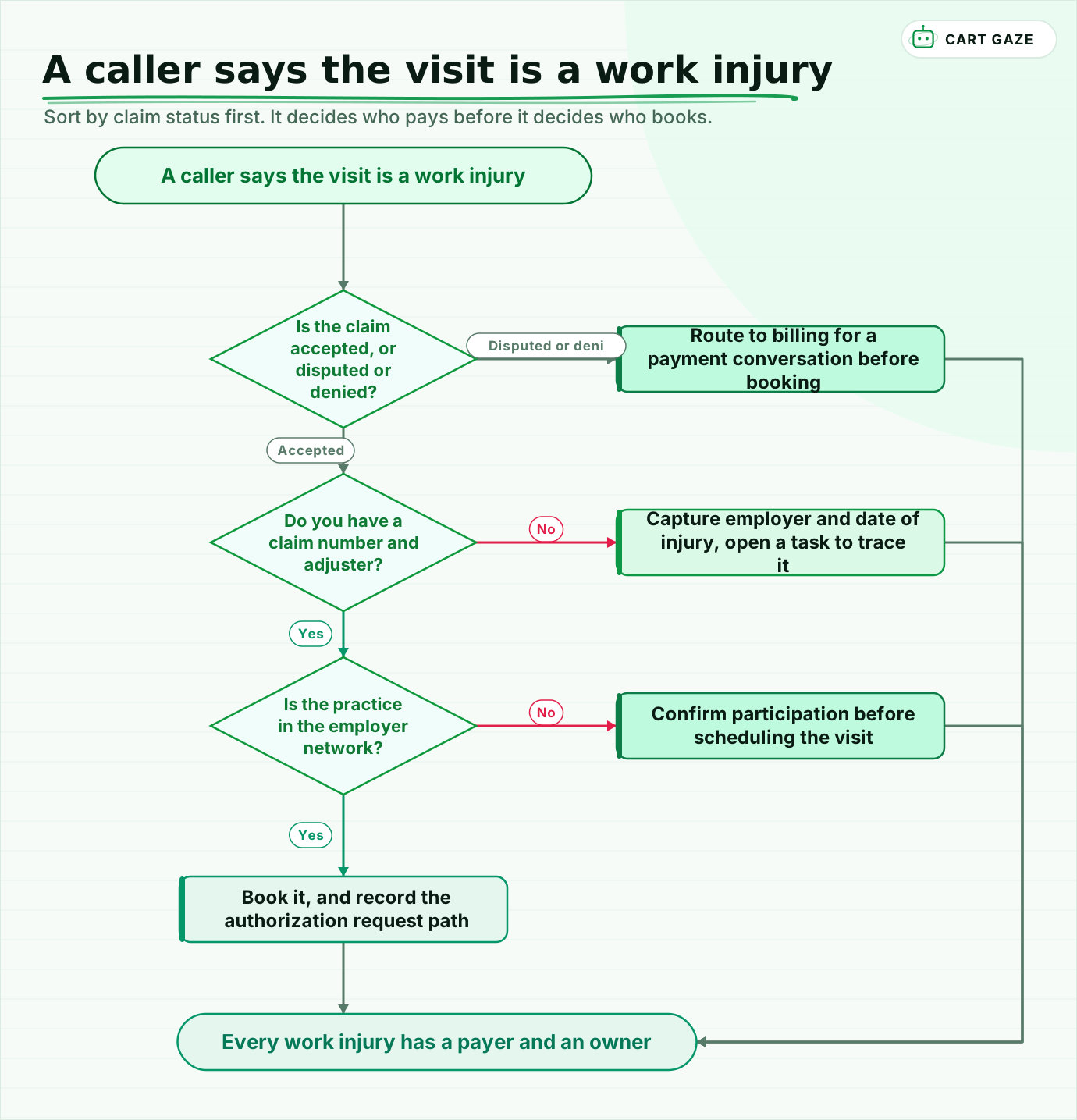 Sort by claim status first. It decides who pays before it decides who books.
Test the script on real calls before it goes live. Injured workers often do not know their claim number, their adjuster, or which insurer their employer uses, and a script that assumes they do will strand people. The right behavior is to capture what exists, mark what is missing, and create a task rather than a dead end.
Employers are the second source of the same data, and they are usually easier to reach than an adjuster. If a caller cannot produce a claim number, capturing the employer name and the date of injury gives your billing team enough to find it. Design the script so a partial answer still produces a workable record.
Keep the patient-data agreement in place before any of this runs. A vendor handling injury details and employer information is handling protected information, and that means a signed agreement first, as the HIPAA breakdown sets out.
Where to start
Start with the denial sample. Twenty denied workers comp claims, sorted by which field caused the denial and whether that field was knowable at intake, gives you a precise target and a number to measure against later. It takes an afternoon and it costs nothing.
Then rebuild the intake script against your own state guide, decide the blocking fields, and run it manually for two weeks before automating it. If the script works when a person reads it, automation makes it consistent. If it does not work when a person reads it, automating it just makes the same gaps happen faster.
When you want a second read on where the leak sits between intake, scheduling, and billing, the free Growth Leak Audit walks it with you.
Fair questions.
What information does a workers comp intake need that regular intake does not?
Employer, date of injury, body part, claim number, claims administrator, adjuster contact, the network the employer uses, whether the claim is accepted, disputed or denied, and your role as primary treating physician or authorized referral. Missing any of these gives a payer grounds to delay or deny reimbursement.
Why do workers comp claims get denied so often?
Most denials trace to gaps created at intake rather than errors in billing. A missing claim number leaves the bill with nowhere to land, unverified network participation makes you an ineligible provider, and payers frequently deny by asserting the treatment was never authorized. All three are knowable on the first call.
Can an AI receptionist handle workers comp intake?
It handles the capture half well. It asks every required question in the same order, refuses to skip an empty field, reads the claim number back, and writes the set into your system before the call ends. It does not obtain authorizations, file through state portals, or argue denials, which stay with a person.
Are workers comp rules the same in every state?
No, and copying another state's intake form is a common mistake. Each state runs its own forms, portals and authorization process. New York uses CMS-1500 with a required electronic submission partner and the OnBoard portal, while California expects fields such as the authorization request path and employer network that New York forms do not carry.
What should we do when a patient does not know their claim number?
Capture what exists and mark what is missing rather than stopping the call. The employer name and date of injury are usually enough for billing to trace the claim, and employers are often easier to reach than adjusters. Design the script so a partial answer still produces a workable record and a task.
Sources.
Written by

Muhammad Qasim Hammad
Founder, Cart Gaze
Qasim builds AI receptionists and front-office automation for medical and dental practices at Cart Gaze. Posts here start from published sources and real call data, not vendor claims, and every number links back to where it came from.
Keep reading.
 Billing & Revenue CycleCash-Pay Patient Intake vs. Insurance: Branch the Call First10 min read
 Billing & Revenue CycleYear-End Dental Benefits Reminder Automation for Practices11 min read
 Billing & Revenue CyclePatient Payment Plan Automation: Sign Financing Before They Leave10 min read
 Billing & Revenue CycleUnscheduled Treatment Follow Up That Recovers Real Revenue10 min read
 Billing & Revenue CyclePrior Authorization Automation: Cut the 13-Hour Weekly Load10 min read
 Billing & Revenue CycleClaim Denial Management: Triage, Appeal, or Write Off Fast10 min read