
Provider Credentialing Automation: Never Miss a Deadline
Credentialing rarely fails on paperwork. It fails because a date passed. Four independent clocks run per provider at once, and this is what each one costs when it slips, plus what automation can actually take.
Table of Contents8 sections
Credentialing does not usually fail because someone filled a form in wrong. It fails because a date passed while everyone was busy. A profile went stale, a verification aged out, a recredentialing window opened and closed, and the first anyone noticed was a denied claim.
The reason it happens to careful practices is arithmetic. Every credentialed provider carries four independent recurring deadlines at once, and none of them line up. A 120-day cycle comes round about 3 times a year, so a group with 12 providers is already managing roughly 36 attestation deadlines annually before anything else is counted.
This post lays the four clocks out side by side, walks what a lapse actually costs, covers what changed in the standards during 2025, and is specific about the part automation can genuinely take off your desk.
Credentialing fails on dates, not on documents
Four separate cycles run per provider, continuously. CAQH attestation renews every 120 days. Recredentialing lands every 36 months. Primary source verifications have their own validity window. Exclusion screening is monthly. Each has a different length, and each restarts from a different anchor date.
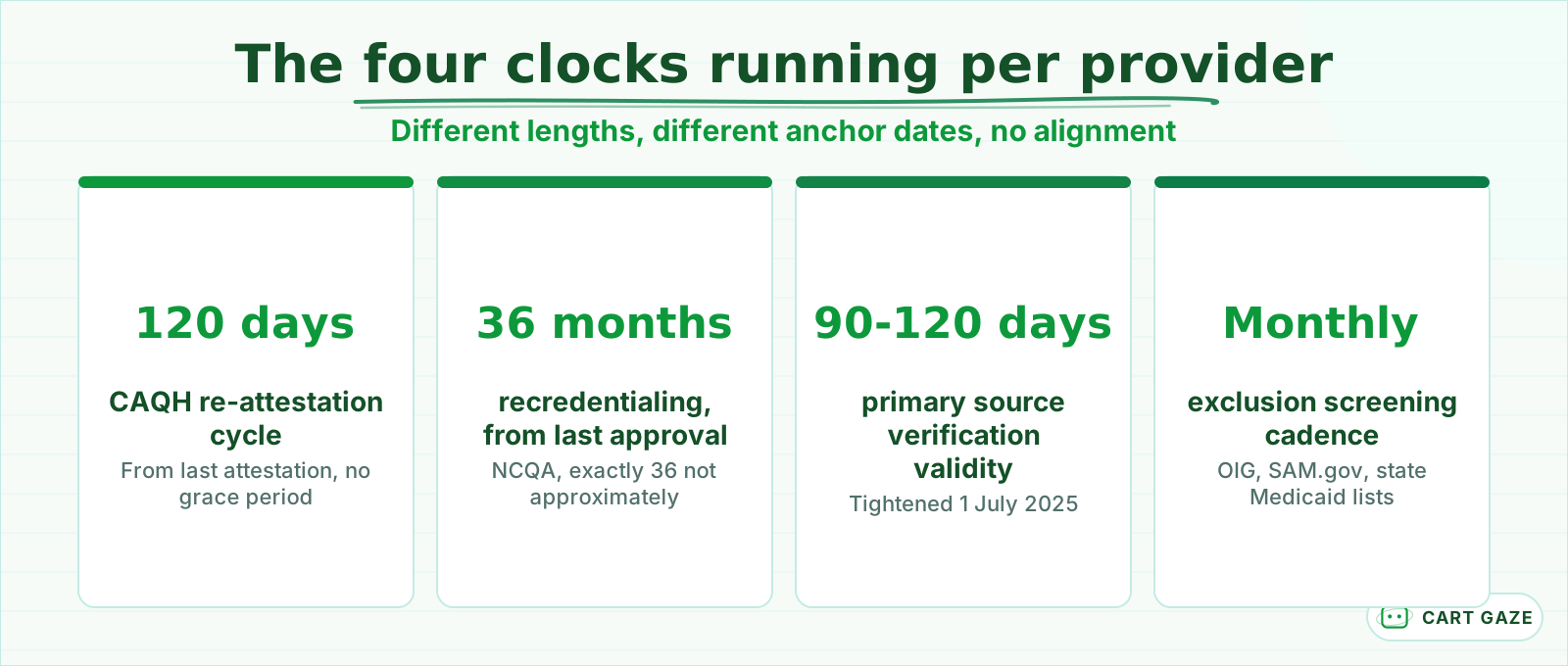 Four independent clocks per provider. Multiply by your provider count before deciding it is manageable.
The 120-day CAQH cycle is the one that bites most often, because it runs from your last attestation date rather than from a fixed calendar quarter. There is no automatic grace period that extends it. The deadline does not move until you actually attest, so a profile that slipped by a week stays slipped.
Recredentialing is the least forgiving in a different way. NCQA requires it every 36 months from the last approval date, exactly 36 months rather than approximately three years, and the work should start 90 to 120 days ahead. A cycle you begin in month 35 is already late.
Multiply before you decide this is manageable by hand. Twelve providers on a 120-day attestation cycle is about 36 attestations a year, plus roughly 4 recredentialing cycles a year if the group is evenly staggered, plus 12 monthly screening runs, plus every individual license, DEA registration and board certification expiry underneath.
Add a payer dimension and it grows again. Each provider is enrolled with several payers, and enrollment status is tracked per payer rather than per provider, so a 12-provider group contracted with 8 payers is maintaining close to 100 provider-payer relationships, each of which can lapse on its own.
What a CAQH lapse actually costs
A lapsed attestation is not a paperwork nuisance. It flips the profile inactive, and every payer that pulls your data during the lapse receives a flag saying the record is not current. Payers hold credentialing and recredentialing decisions until attestation is complete, so the delay compounds.
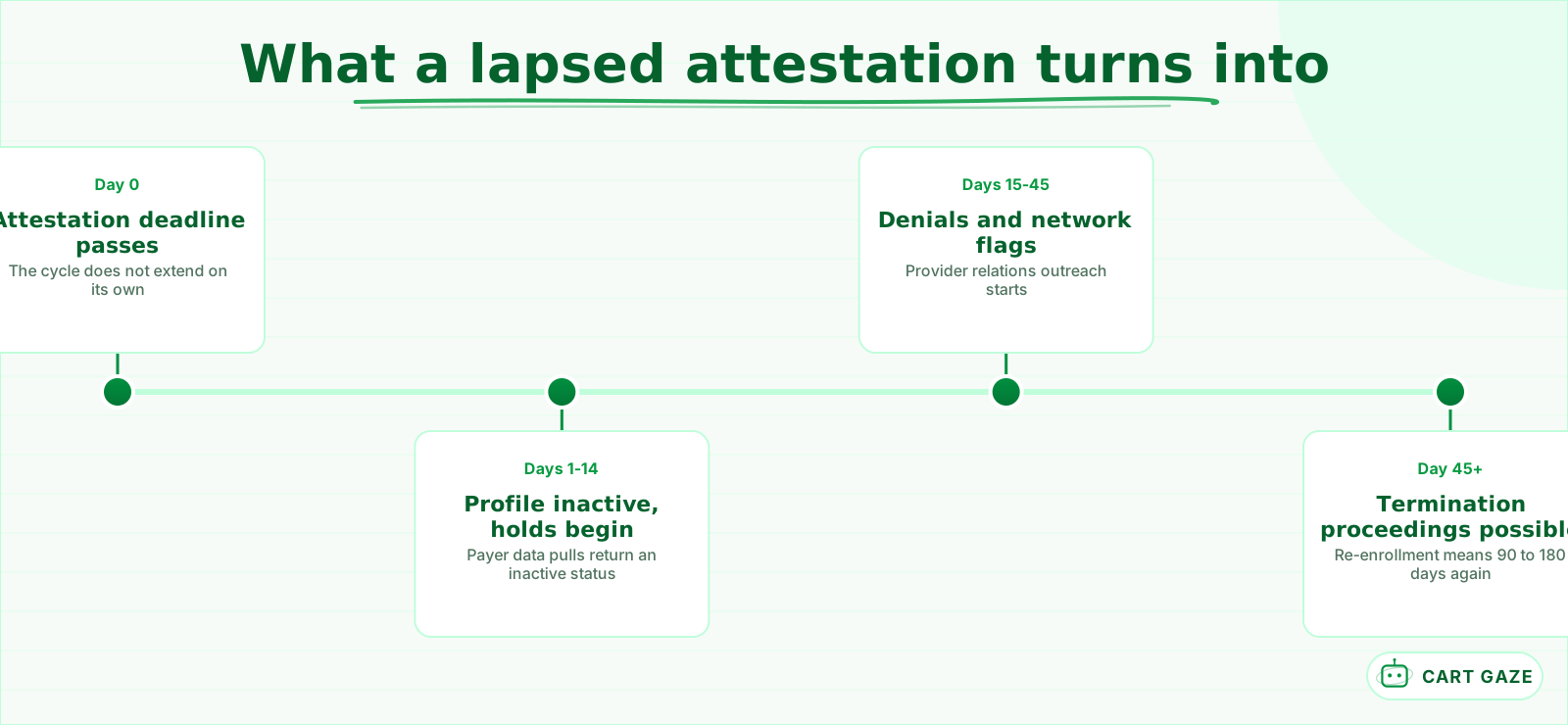 Vendor-documented escalation. Confirm the specifics with each of your own payers.
One credentialing vendor documents the escalation in stages, and it is worth reading as a warning rather than as a guarantee: in the first two weeks the profile goes inactive and some payers place administrative holds. Between roughly two and six weeks, claims start being denied by certain payers and network participation flags trigger.
Past about 45 days the vendor describes network termination proceedings beginning, with re-enrollment requiring full credentialing again at 90 to 180 days. Confirm the specifics with your own payers rather than assuming that timeline, but the shape is the point: a missed date can convert into a two-quarter revenue problem.
What changed in 2025 and 2026
The standards tightened, and the changes make manual tracking harder rather than easier. Effective 1 July 2025, the primary source verification window narrowed from 180 days to 120 for Credentialing Accreditation, and from 120 days to 90 for CVO Certification, covering licenses, board certifications, work history and other verified elements.
That change matters operationally because verification now expires faster than many credentialing files move. A verification collected at the start of a slow payer enrollment can age out before the decision arrives, which means the work gets redone rather than merely delayed.
The practical consequence is ordering. Collect verifications as late as the process allows rather than as early as possible, which is the opposite of how most coordinators are trained to work. Gathering everything up front used to be diligence. With a 90 to 120 day validity window against enrollment timelines that commonly run 90 to 180 days, it now guarantees rework on the slower files.
Monthly exclusion screening is the second change worth planning around. Organizations are expected to screen against the OIG exclusion list, SAM.gov, and applicable state Medicaid exclusion databases every month rather than quarterly, with timestamped documentation retained for audit.
The revenue math nobody puts in the budget
Credentialing delay is usually discussed as an administrative problem, which hides its cost. A provider who is not enrolled cannot bill that payer, so every week of delay is a week of that provider's payer-mix revenue that simply does not exist.
The table below is modelled, not measured. It assumes a provider whose collections run $30,000 a month across all payers, and that a single payer represents 25% of their mix, which is $7,500 a month. Substitute your own numbers before quoting this to anyone.
| Scenario | Delay | Modelled revenue at risk |
|---|---|---|
| Enrollment starts on time | 90 days | Planned, absorbed in onboarding |
| Enrollment starts 30 days late | 120 days | About $7,500 |
| CAQH lapse during enrollment | Add 30 to 60 days | About $7,500 to $15,000 |
| Lapse leading to re-enrollment | 90 to 180 days again | $22,500 to $45,000 |
Read the bottom row carefully, because it is the one that turns a missed reminder into a genuine financial event. The same vendor guidance notes that fully complete profiles see credentialing turnaround 30 to 45 days faster, which is the flip side of the same arithmetic.
What automation genuinely does here
Automation here is calendar work, document expiry tracking, and follow-up. It watches every date, tells the right person before the window opens rather than after it closes, and chases the outstanding items on a schedule that does not depend on anyone remembering.
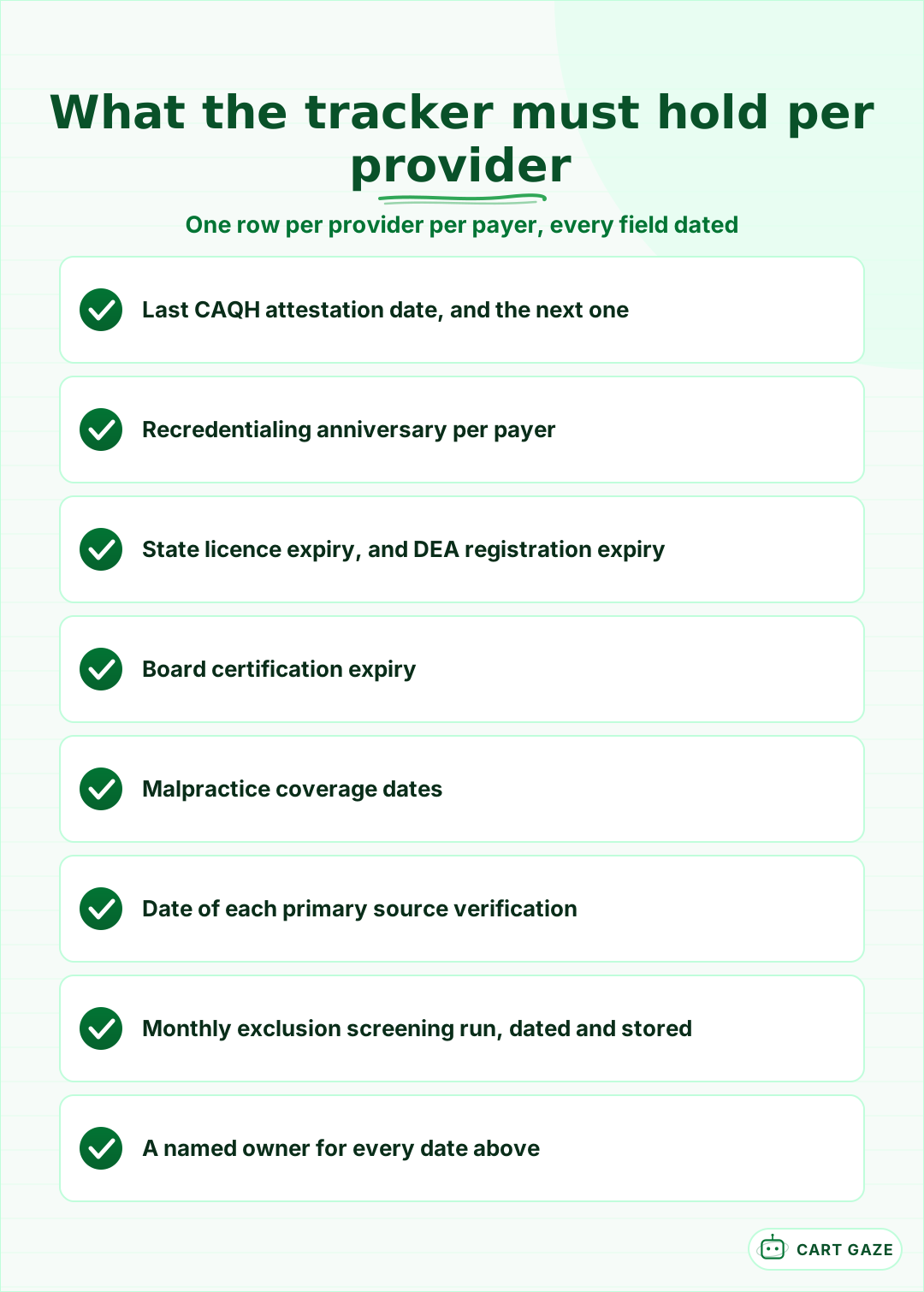 If it is not in one place with a date attached, it is not being tracked.
Follow-up is the underrated half. Payer enrollment stalls quietly, and the practices that get enrolled fastest are the ones that call every fortnight. That is repetitive outbound contact against a list, which is exactly the shape of work software handles without getting bored or reprioritising it.
Document expiry tracking is the other half that pays for itself. Licenses, DEA registrations, board certifications and malpractice coverage all expire on their own schedules, and a single expired document can stall a file that was otherwise complete. Watching those dates is pure bookkeeping, and it is the kind of bookkeeping people are reliably bad at across 12 providers and 4 document types each.
What it does not do is credential anybody. It does not make a verification decision, it does not satisfy a payer's review, and it does not replace the person who knows which payer wants which form. The honest scope is that it removes the reason deadlines get missed, not the work of meeting them. The same boundary applies across our tooling, as what an AI receptionist does and where it stops sets out for the phone side.
Any system holding provider identifiers, license numbers and exclusion screening results is holding sensitive data, so the vendor agreement matters here as much as anywhere else. The HIPAA breakdown covers what to ask for.
Building the tracker
A tracker that works holds one row per provider per payer, with a date on everything and an owner on every date. Most practices already have the information; what they lack is a single place where the next deadline is visible without opening four systems.
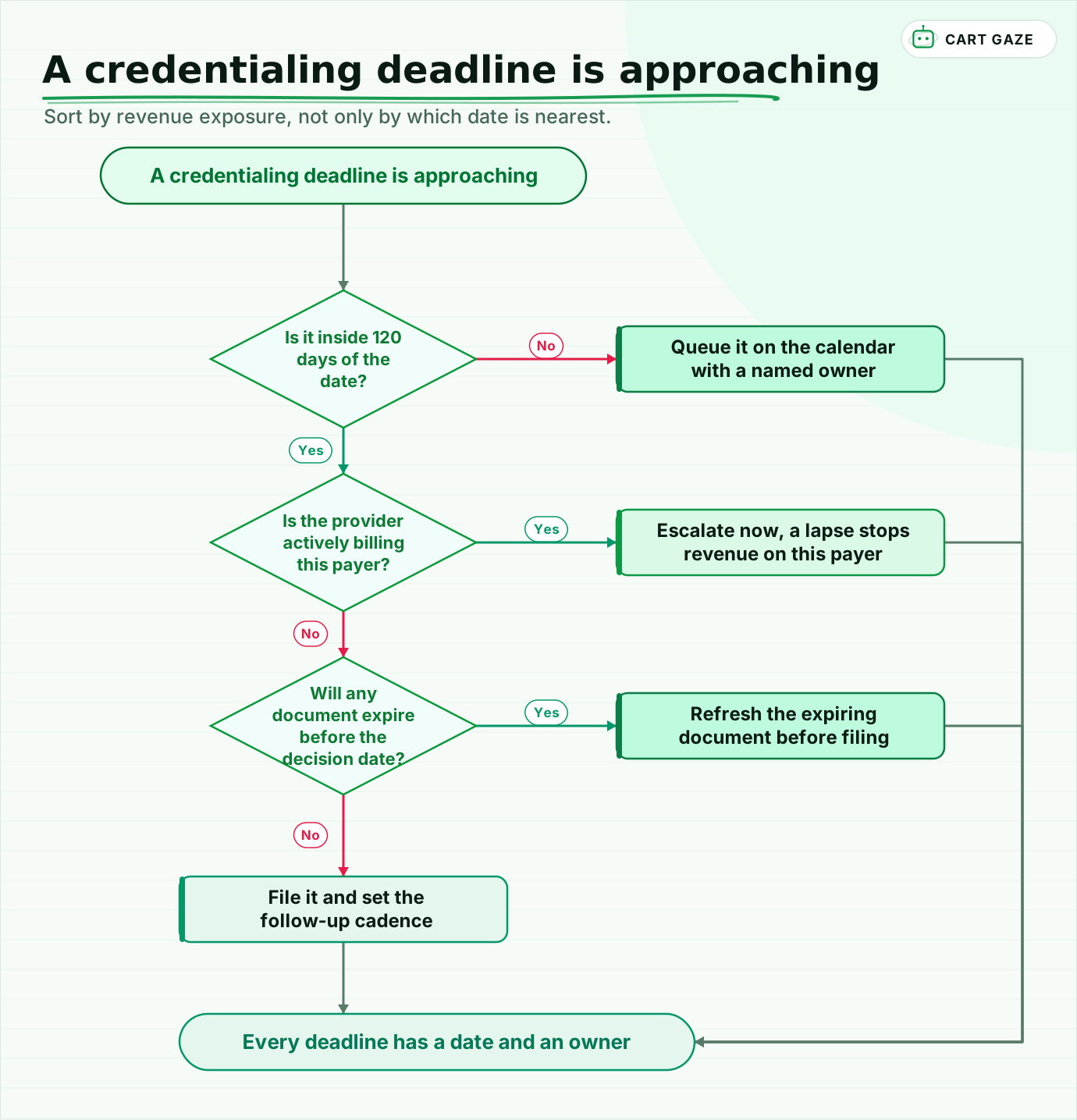 Sort by revenue exposure, not only by which date is nearest.
Start the reminder window earlier than feels necessary. A 120-day lead on recredentialing sounds generous until a verification expires mid-process and the file restarts, which is now more likely given the shortened validity windows.
Build it where people already look. A credentialing tracker living in a spreadsheet nobody opens is functionally the same as no tracker, and the practices that never lapse are usually the ones where the next three deadlines appear somewhere a manager sees weekly without going looking for them.
Keep the artifacts with the dates. Audit questions are rarely about whether you did the work and almost always about whether you can show when you did it, against which source, and for which provider.
Decide who owns the calendar before you build it. Credentialing tends to sit between the practice manager, the billing lead, and whoever onboarded the last provider, which means it is genuinely nobody's job until a claim is denied. One named owner with visible deadlines fixes more lapses than any tool does. The same principle applies to every queue in the practice, as where practice automation breaks down works through.
Where to start
Build the list before you buy anything. One row per provider, with the last attestation date, the recredentialing anniversary, every license and certification expiry, and the payers each provider is enrolled with. Most practices discover at least one date already inside its window while assembling it.
Assembling that list is also the cheapest test of whether you need software at all. If it fits on one page and nothing is overdue, a calendar with owners may be enough. If it runs to several pages and two dates are already past, you have a systems problem rather than a diligence problem.
Then sort by nearest deadline and work the top of the list. If several are already close, prioritise by the payer share of that provider's revenue rather than by which is soonest, because a lapse on your largest payer costs more than a lapse on your smallest.
When you want a second read on where administrative delay is costing you revenue across the practice, the free Growth Leak Audit walks the numbers with you.
Fair questions.
How often does a CAQH profile need re-attestation?
Every 120 days, counted from your last attestation date rather than from a fixed calendar quarter. There is no automatic grace period, and the deadline does not reset until you actually attest. A missed attestation flips the profile inactive, and payers pulling your data during the lapse see that the record is not current.
How often do payers recredential providers?
NCQA requires recredentialing every 36 months from the last approval date, described as exactly 36 months rather than approximately three years. The work should begin 90 to 120 days ahead, so a cycle started in month 35 is already behind. Between cycles, organizations must monitor sanctions and license actions continuously.
What changed in credentialing standards in 2025?
Effective 1 July 2025, the primary source verification window narrowed from 180 days to 120 for Credentialing Accreditation and from 120 to 90 for CVO Certification, covering licenses, board certifications and work history. Monthly exclusion screening against OIG, SAM.gov and state Medicaid lists also became the expected cadence, with timestamped documentation.
What does a credentialing lapse actually cost a practice?
A provider who is not enrolled cannot bill that payer, so the cost is that provider's revenue from that payer for the length of the delay. If a lapse forces full re-enrollment at 90 to 180 days, the exposure runs to several months of one payer's share. Model it against your own collections and payer mix.
Can credentialing actually be automated?
The calendar can. Software tracks every deadline, watches document expiry dates, reminds the right owner before a window opens, and chases stalled payer enrollments on a fixed cadence. It does not make verification decisions, satisfy a payer review, or replace the person who knows which payer wants which form.
Sources.
Written by

Muhammad Qasim Hammad
Founder, Cart Gaze
Qasim builds AI receptionists and front-office automation for medical and dental practices at Cart Gaze. Posts here start from published sources and real call data, not vendor claims, and every number links back to where it came from.
Keep reading.
 Billing & Revenue CycleWorkers Comp Intake Automation: Capture What Gets Paid10 min read
 Billing & Revenue CycleDental Membership Plan Automation: Renewals Beat Signups10 min read
 Billing & Revenue CycleYear-End Dental Benefits Reminder Automation for Practices11 min read
 Billing & Revenue CycleCash-Pay Patient Intake vs. Insurance: Branch the Call First10 min read
 Billing & Revenue CyclePatient Payment Plan Automation: Sign Financing Before They Leave10 min read
 Billing & Revenue CycleUnscheduled Treatment Follow Up That Recovers Real Revenue10 min read