
Section 1557 Language Access: What Practices Must Provide
Section 1557 defines who counts as a qualified interpreter, limits when a family member may translate, requires a notice in 15 languages, and addresses machine translation. Here is what a practice owes.
Table of Contents8 sections
- What Section 1557 actually requires
- Who counts as a qualified interpreter, and who does not
- The machine translation rule, and why it matters for AI
- Where an AI receptionist fits, and where it does not
- The notice requirement most practices missed
- Building a language access process
- Where to start
- Fair questions
Most practices meet a patient who speaks little English by finding whoever on staff speaks the language, or by asking the adult who came along to translate. Both of those are restricted under Section 1557, and one of them is restricted almost to the point of prohibition.
The rule is more specific than the interpreter agencies pitching you suggest. It defines who counts as qualified, it limits when a family member may be used at all, it sets a notice requirement in English plus at least 15 other languages, and it addresses machine translation directly. That last part now lands on any practice using AI to talk to patients in another language.
This post covers what the rule asks for, who qualifies as an interpreter, what the machine translation provision means for automated systems, and how to build a process. Section 1557 applies to entities receiving federal financial assistance, so confirm your own status first, and treat this as general information rather than legal advice.
What Section 1557 actually requires
The obligation is meaningful access, not merely offering an interpreter line. In practice that means free language assistance, qualified people providing it, translated vital documents, a posted notice of availability, and a documented process that staff actually follow when someone with limited English proficiency arrives.
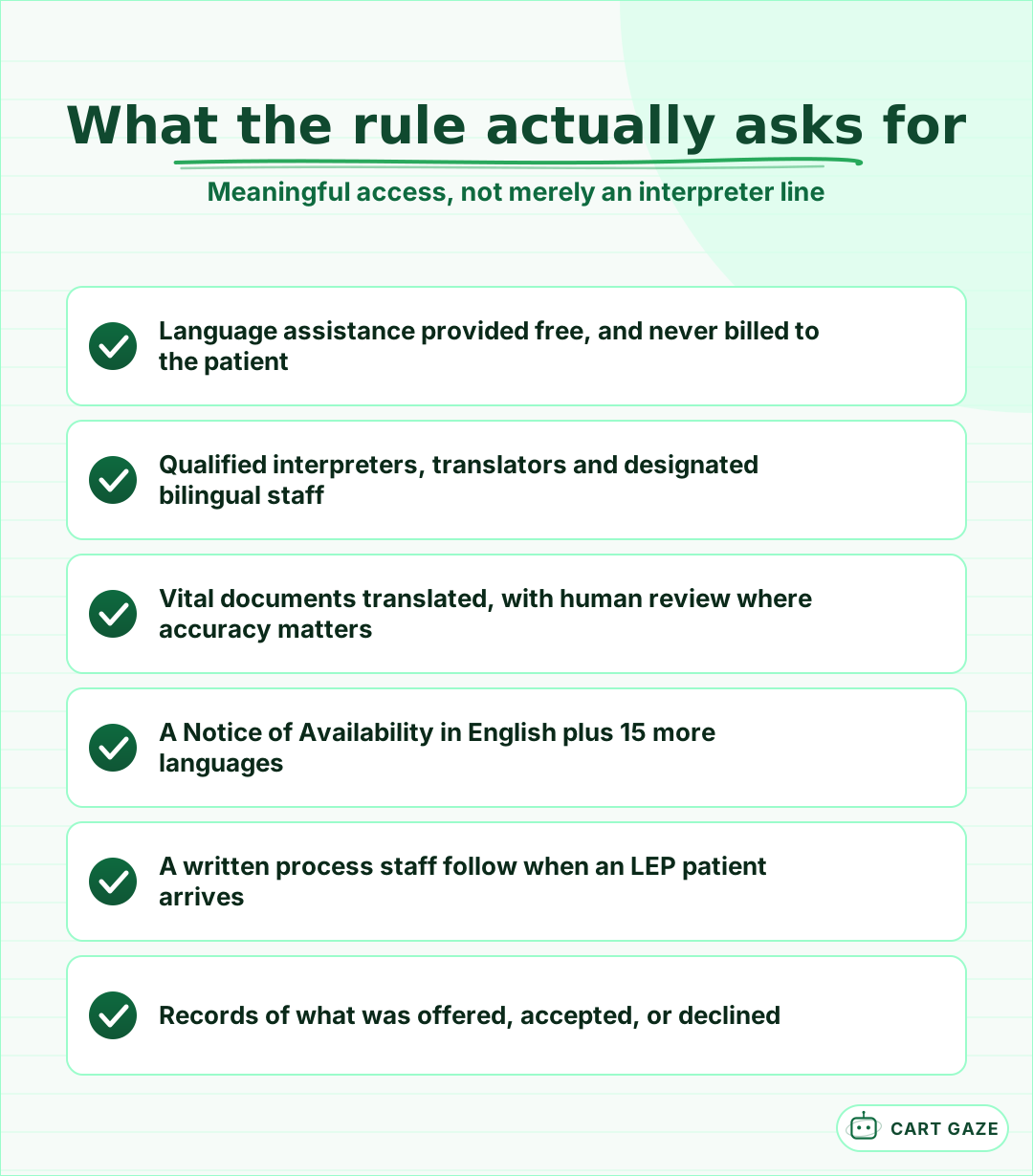 Six obligations. Most practices have done the first and missed several of the rest.
The word doing the work is qualified. The rule defines qualified interpreters, qualified translators, and qualified bilingual staff separately, and it is explicit that being bilingual alone does not make an employee an interpreter. Fluency in conversation is not the same as accurate interpretation of clinical or consent language.
Free is the other operative word. Language assistance cannot be billed to the patient and cannot be conditioned on anything, which rules out asking a patient to bring their own interpreter as a matter of routine practice.
Scope is the first thing to settle. Section 1557 applies to health programs and activities receiving federal financial assistance, which for most outpatient practices means participation in Medicare or Medicaid brings you inside it. The safer working assumption is that you are covered, verified with counsel, rather than deciding you are not and discovering otherwise during a complaint.
Who counts as a qualified interpreter, and who does not
A qualified interpreter is a proficient bilingual person who interprets effectively, accurately, and impartially, knows the specialized vocabulary involved, keeps the message intact including tone and sentiment, and follows ethical principles. That is a professional standard, not a description of a helpful colleague.
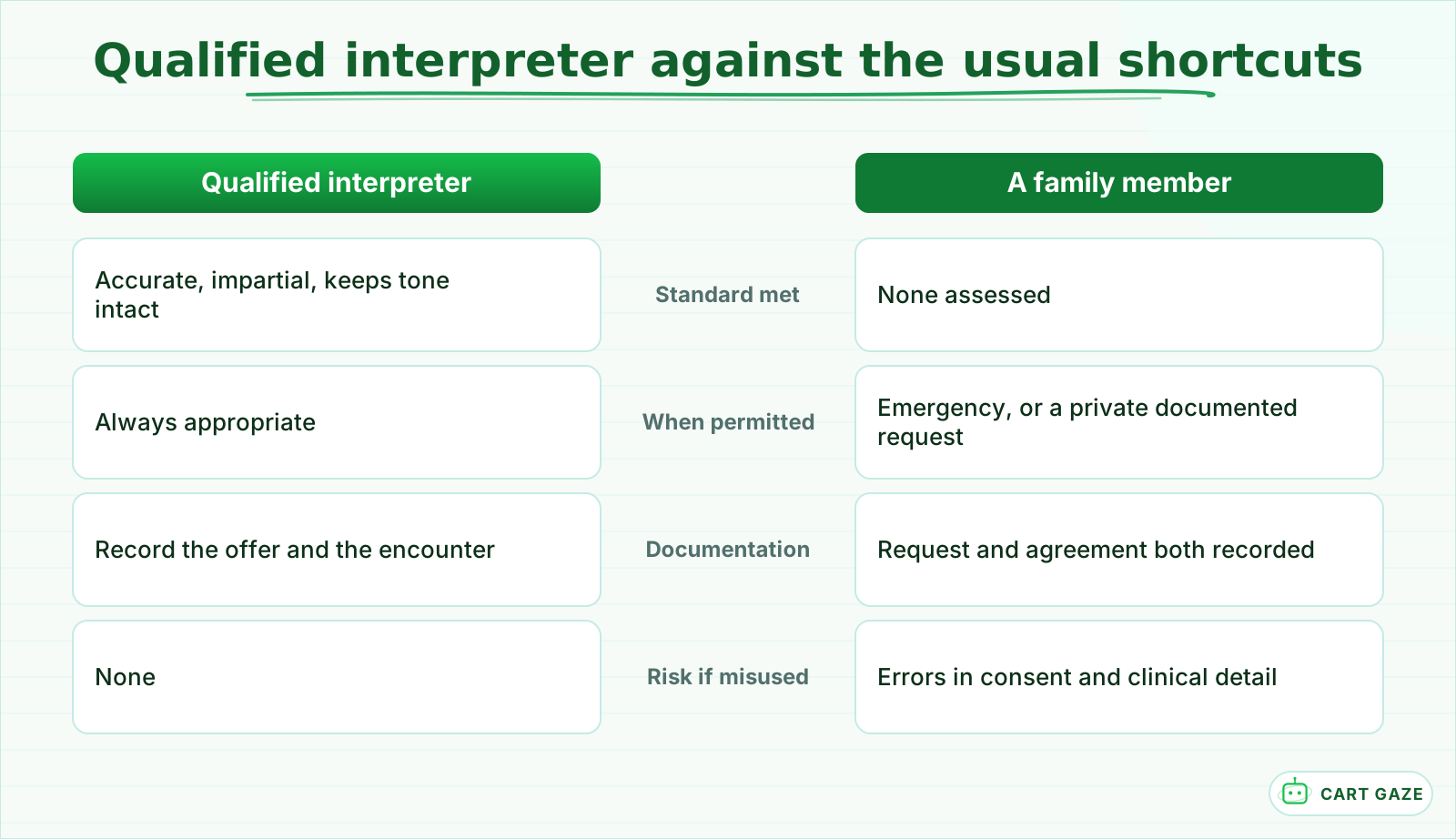 Being bilingual is not the same as being qualified. The rule says so explicitly.
Family members are the sharp edge. They may not provide language services except in two narrow situations: temporarily during an emergency while a qualified professional is being located, or where the patient specifically requests it, in private, with an interpreter present and no other adults nearby, with both the request and the agreement documented.
Children are narrower still. A minor may interpret only in certain emergencies, and only while a qualified interpreter is being found. The common scene of a teenager translating for a parent at check-in is not a compliant process, however willing everyone is.
Qualified bilingual staff are a real and useful category, and worth investing in. Staff may communicate directly with patients in another language if they are proficient in both languages, have the necessary vocabulary, and can communicate effectively, accurately and impartially. That is a designation you assess and record, not one you assume.
Note the difference between the two roles, because practices routinely blur them. Qualified bilingual staff communicate directly with a patient in that patient's language. An interpreter relays between two other people. A receptionist who books an appointment in Spanish is doing the first. The same receptionist standing between a physician and a patient during an examination is doing the second, and that is the role the qualification standard was written for.
The machine translation rule, and why it matters for AI
Machine translation is permitted, with a condition that is easy to read past. It must be reviewed by a qualified human translator when the underlying text is critical to the rights, benefits or meaningful access of a person with limited English proficiency, when accuracy is essential, or when the source contains complex, non-literal or technical language.
Read that against what practices actually machine-translate. Consent language, financial responsibility forms, discharge and preparation instructions, and appointment notices all sit inside at least one of those three conditions. A translated consent form produced by software and never reviewed is the clearest example of what the provision addresses.
The everyday version is subtler. Practice websites and patient portals often offer an automatic translation widget, and clinical or billing content served through one is machine translation of material where accuracy is essential. Nobody chose that as a policy; it arrived with the theme.
The rule does not ban the technology, which is worth saying plainly, because the vendor framing tends to be all or nothing. Machine translation is explicitly permitted. What it requires is a qualified human in the loop for the categories of text where being slightly wrong changes what a patient understands about their care, their money, or their rights.
Where an AI receptionist fits, and where it does not
We sell automated phone systems, so this needs to be direct. An AI voice agent speaking Spanish to a patient is not a qualified interpreter under this rule and does not satisfy your interpreter obligation. It is bilingual self-service, which is a genuinely useful thing and a different thing.
| Interaction | Can a bilingual voice agent handle it? | Why |
|---|---|---|
| Booking, rescheduling, directions, hours | Yes | Routine administrative content |
| Reading approved visit preparation text | Yes, if a qualified translator reviewed the wording | The script is translated material |
| Explaining a consent form | No | Accuracy is essential, and it is clinical |
| Any symptom or clinical conversation | No | Requires a qualified interpreter |
| Financial responsibility discussions | No | Critical to the patient's rights and benefits |
| Offering to connect a qualified interpreter | Yes | This is the correct behavior |
The defensible posture is narrow and workable: the agent handles routine administrative interactions in the patient's language using wording a qualified human translator has reviewed, and it offers to connect a qualified interpreter for anything else. Configured that way it improves access without pretending to discharge an obligation it cannot.
That distinction is worth holding onto when a vendor demonstrates a fluent Spanish conversation. Fluency is not the regulated quality. The rule asks about accuracy, impartiality, specialized vocabulary, and preserving tone and sentiment, and it asks who is accountable for those things. A demo answers none of that.
The practical build detail is in running a bilingual AI receptionist, the related question of callers who need more time and patience is in designing for elderly callers, and the general scope boundary is in what an AI receptionist does and where it stops.
The notice requirement most practices missed
There is a specific, checkable obligation that many small practices have not met. A Notice of Availability of free language assistance services and auxiliary aids must be provided in English and in at least the 15 languages most commonly spoken by individuals with limited English proficiency in the states where you operate.
It is not only a poster. The notice must accompany a list of routine communications including application forms, notices about eligibility, consent forms for medical procedures, billing materials, and patient handbooks. The compliance date for providing it was 5 July 2025, so this one is already live rather than upcoming.
There is an opt-out. An individual may decline to keep receiving the notices in their primary language, provided they were informed of their right to receive them and receipt of services is not conditioned on opting out. That condition matters: an opt-out collected by handing someone a form they cannot read is not an informed one.
Building a language access process
Start from data rather than from a vendor's package. Count the languages your own patients actually speak, identify which documents are vital, decide which staff are formally designated as qualified bilingual, and write down what the front desk does when someone arrives who needs an interpreter.
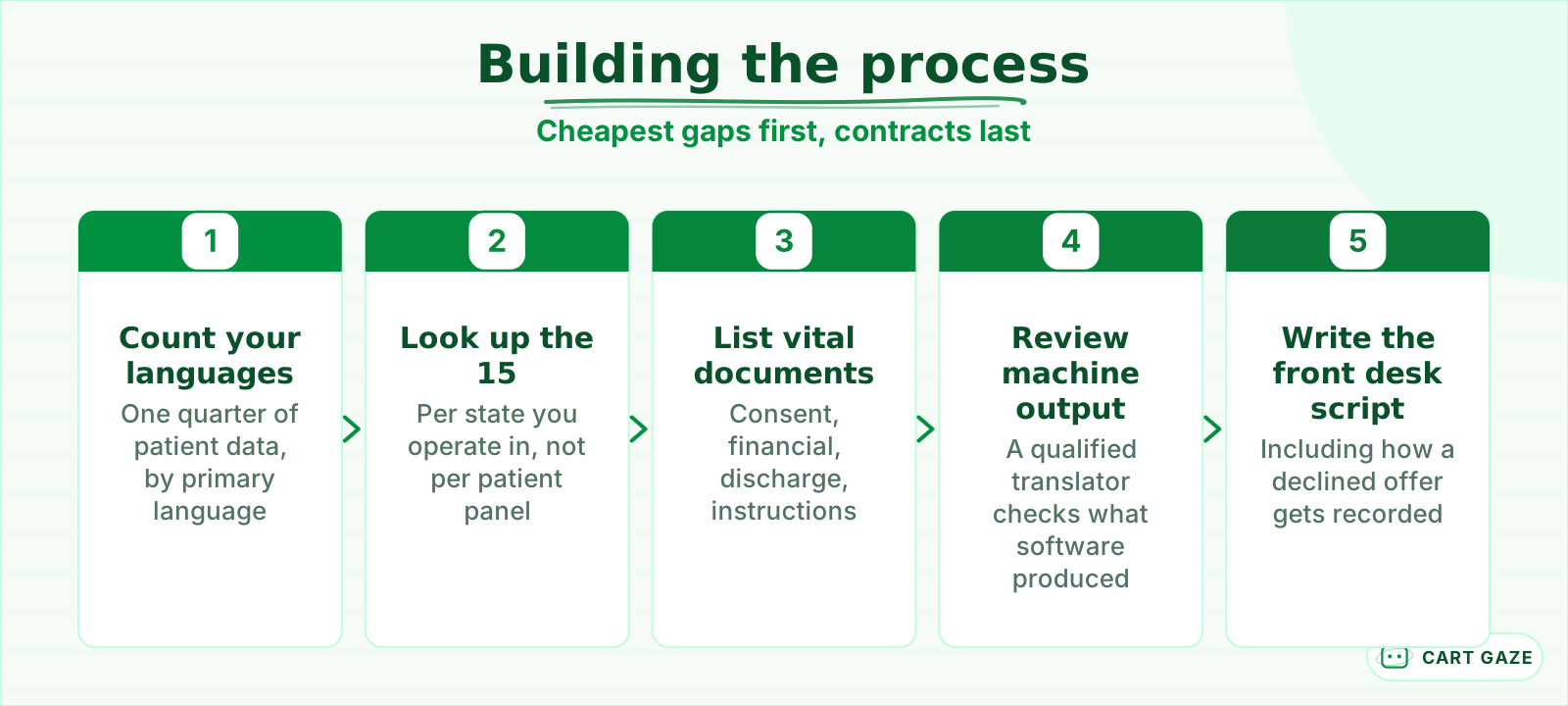 Start from who your patients actually are, not from a vendor language list.
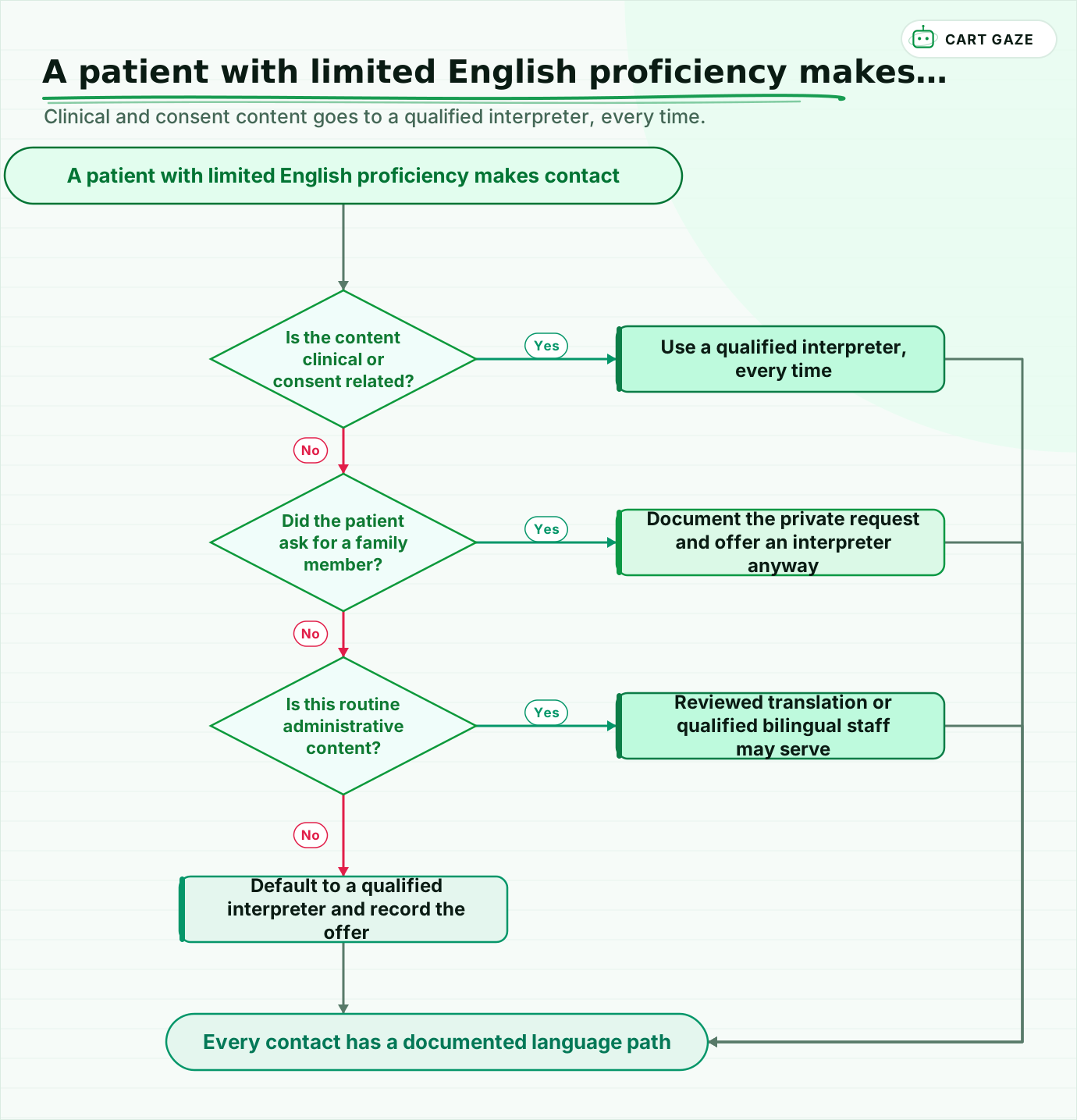 Clinical and consent content goes to a qualified interpreter, every time.
Train the front desk on the refusal path as much as the offer path. The hardest real moment is a patient who wants their relative to translate and finds the offer of an interpreter insulting, and staff need a sentence for that which is respectful and still results in a documented process.
Keep the records with the encounters. Whether an interpreter was offered, whether it was declined, and how a family-member request was handled are exactly the facts a complaint would turn on, and they are almost impossible to reconstruct later. The same recordkeeping logic behind a HIPAA-aware setup applies here.
Where to start
Do the inventory first, because it is free and it tells you the size of the problem. Count patient languages for one quarter, list your vital documents, and check whether your notice of availability exists and carries the right 15 languages for your state.
Then close the cheapest gap. For most practices that is the notice, followed by getting a qualified translator to review the documents that were machine-translated at some point by somebody. Interpreter contracts are the expensive part and they are easier to scope once you know which languages actually appear.
If you are also weighing where automation fits alongside all of this, the free Growth Leak Audit walks through which parts of your front office are worth changing first.
Fair questions.
Can a family member interpret for a patient under Section 1557?
Only in two narrow situations. Temporarily during an emergency while a qualified professional is located, or where the patient specifically requests it in private, with an interpreter present and no other adults nearby, with both the request and the agreement documented. A child may interpret only in certain emergencies while a qualified interpreter is found.
Does bilingual staff count as a qualified interpreter?
Not automatically. The rule states that being bilingual alone does not qualify an employee to interpret. Qualified bilingual staff may communicate directly with patients in that language if proficient with the necessary vocabulary. Interpreting between a clinician and a patient is a different role with a higher standard covering accuracy, impartiality and tone.
Is machine translation allowed for patient materials?
Yes, with a condition. A qualified human translator must review the output when the underlying text is critical to the rights, benefits or meaningful access of a person with limited English proficiency, when accuracy is essential, or when the source contains complex, non-literal or technical language. Consent and financial documents sit squarely inside that.
What is the Notice of Availability requirement?
A notice of free language assistance services and auxiliary aids, provided in English and at least the 15 languages most commonly spoken by individuals with limited English proficiency in the states where you operate. It must accompany routine communications including consent forms, billing materials and patient handbooks, with a compliance date of 5 July 2025.
Can an AI receptionist satisfy language access requirements?
No. A bilingual voice agent is self-service rather than a qualified interpreter, and it does not discharge the interpreter obligation. It can handle routine administrative interactions using wording a qualified translator reviewed, and it should offer to connect a qualified interpreter for anything clinical, consent related or financial.
Sources.
Written by

Muhammad Qasim Hammad
Founder, Cart Gaze
Qasim builds AI receptionists and front-office automation for medical and dental practices at Cart Gaze. Posts here start from published sources and real call data, not vendor claims, and every number links back to where it came from.
Keep reading.
 Trust & ComplianceA2P 10DLC Registration for Medical Practices: A 2026 Guide10 min read
 Trust & ComplianceCall Recording Consent Laws for Medical Practices in 202610 min read
 Trust & ComplianceGood Faith Estimate Rules: What Your Front Desk Owes Patients10 min read
 Trust & ComplianceTCPA Compliance for Patient Texting: The Rule HIPAA Misses10 min read
 Trust & ComplianceMedical Records Release Automation: Meet the 30-Day Deadline11 min read
 Trust & ComplianceAI Receptionist Security: What a Signed BAA Doesn't Tell You9 min read