
AI Receptionist for Urgent Care: Wait Times, Not ER Triage
Urgent care sits between primary care and the ER. Here is what an AI receptionist should handle on wait times and logistics, and what it must never decide.
Table of Contents8 sections
- What an urgent care front desk is actually handling
- Why urgent care's call volume spikes exactly when it is hardest to staff
- Wait-time logistics versus ER-or-not triage: the line an AI receptionist must never cross
- The avoidable-ER-visit problem urgent care could honestly help fix, carefully
- Where an AI receptionist fits an urgent care clinic, and where it must not
- Measure your own call and wait-time gap before you buy
- Match the fix to your own numbers
- Fair questions
Urgent care sits in the riskiest spot in the whole referral chain: too urgent for a next-week primary care appointment, but not always an emergency either. One vendor page selling AI receptionists for this exact vertical promises the system "helps patients decide whether to come in or go to the ER." That sentence should stop a compliance-cautious operator cold.
Deciding urgent care versus the emergency room is a clinical severity judgment, not a routing decision, and no phone system should ever imply it can make that call. What an AI receptionist can safely do here is different, and arguably more valuable day to day: quote a real wait time, hold a caller's place in line, and answer the logistics questions that make up most urgent care call volume.
This post separates those 2 things cleanly, prices urgent care's real call and wait-time numbers, and covers the genuinely large avoidable-ER-visit problem without ever suggesting an AI should be the one deciding where a specific caller belongs.
None of this is a hypothetical concern. Urgent care exists precisely because a symptom that is not a true emergency still cannot wait for a scheduled primary care visit next week, and getting that middle category wrong in either direction has real consequences: sending someone to a crowded ER unnecessarily, or worse, keeping someone with a genuine emergency on a wait-time call instead of an ambulance.
What an urgent care front desk is actually handling
Urgent care clinics average 56 patient visits a day nationally, and volume climbed into the mid to high 30s per clinic per day during a flu-season surge at the start of 2026. Weekday afternoons from 1 to 3 p.m. see the shortest waits, with 70% of patients seen within 15 minutes.
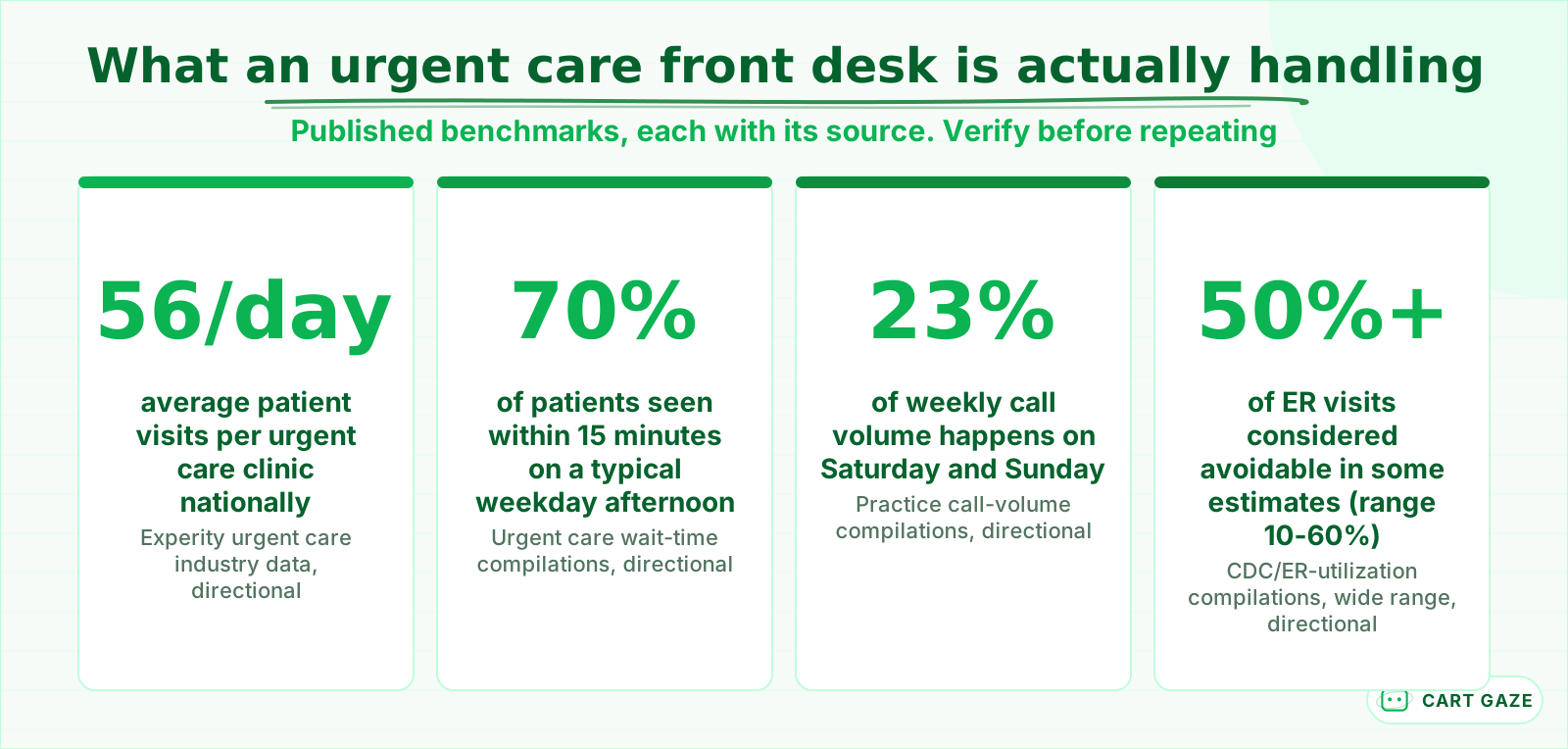 Published ranges, each sourced. Reasons to measure your own clinic, not to repeat as fact.
Mondays and Saturdays run the highest volume, largely from patients who put off care over the weekend and then arrive all at once. That pattern alone means a clinic's staffing and phone capacity need to flex by day of week, not just by hour, or the busiest days end up with the worst call coverage precisely when demand peaks.
Flu season is not a minor seasonal bump for this vertical. It periodically pushes visit counts well above the yearly average and strains exactly the front-desk capacity that call handling depends on. A clinic that budgets phone coverage for an average day gets caught flat during the very weeks patients need it most.
This is also where the dual demands of urgent care show up physically, not just on the phone. The same staff checking in a waiting room full of walk-ins are often the ones the phone is competing against for attention, and during a surge, the phone tends to lose that competition.
Why urgent care's call volume spikes exactly when it is hardest to staff
Weekend calls make up about 23% of weekly call volume, and roughly 41% of patient calls to medical practices land outside standard weekday business hours. The busiest single window is often 4 to 7 p.m. on weekdays, exactly when many clinics run thinnest on front-desk staff.
| Coverage option | Wait-time accuracy | ER-routing safety | Rough monthly cost |
|---|---|---|---|
| Voicemail only | None, caller gets no wait information | None | $0 |
| Generalist human answering service | Inconsistent, often outdated | Inconsistent, not clinically trained | Per-minute, variable |
| Urgent-care-configured AI receptionist | Real-time, pulled from your system | Consistent red-flag routing, never judges | Flat, roughly $249+ per seat/month |
That last column is worth noting on its own: urgent care AI receptionist pricing tends to start higher than in some other verticals, which tracks with the higher call volume and the added logistics work of wait-time integration. It is still worth weighing against what a missed call or a frustrated walk-in costs you today.
The staffing mismatch is the real story behind most urgent care phone complaints. It is rarely that nobody wants to answer the phone; it is that the same 2 or 3 people are simultaneously checking in walk-ins, verifying insurance, and trying to field calls during the exact hours when all 3 tasks peak together.
None of this is a staffing failure in the usual sense. It is a mismatch between when patients actually need care and when a typical small clinic schedules its heaviest coverage, and phone volume simply inherits that same mismatch rather than smoothing it out on its own.
Wait-time logistics versus ER-or-not triage: the line an AI receptionist must never cross
Quoting an accurate current wait time and holding a caller's place in line is safe, high-volume, and exactly what most callers want. Deciding whether a symptom belongs at urgent care or the emergency room is a clinical severity judgment, and that judgment must never be automated, no matter how the pitch is worded.
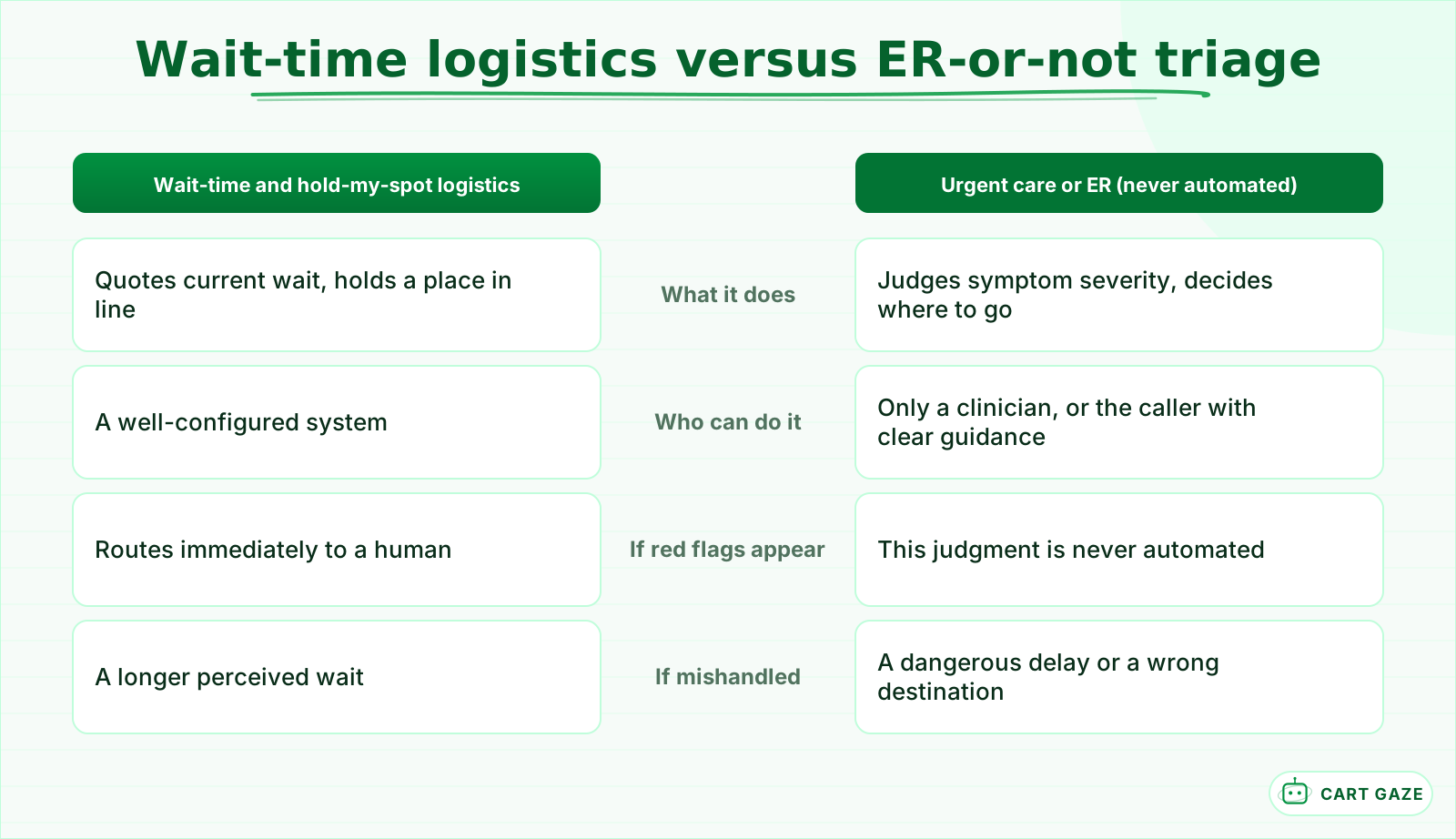 Quoting a wait time is safe. Whether a symptom belongs at urgent care or the ER never belongs to software.
The safest version of the ER-routing boundary is almost boring by design: a fixed list of red-flag words and phrases, tested repeatedly, that always routes to a human or 911 regardless of how the rest of the call is going. Anything that requires interpretation or judgment beyond that fixed list has already crossed into territory an AI receptionist should not occupy.
The avoidable-ER-visit problem urgent care could honestly help fix, carefully
Estimates of avoidable ER visits vary widely, from roughly 10% to 60% depending on the study, but even conservative figures point to a meaningful share of ER volume that urgent care could safely absorb. One estimate puts the potential savings from diverting that volume at $4.4 billion a year.
The honest way for urgent care to help with that number has nothing to do with an AI making judgment calls on the phone. It is publishing clear, consistent guidance on what urgent care actually treats, sprains, minor cuts, sinus infections, mild fevers, versus what needs the ER, and having every channel, human or automated, repeat that same guidance instead of freelancing an answer.
Consistency is the underrated lever here. A caller who gets a different answer from the website, the receptionist, and a friend's advice ends up more confused, not less, and confusion is exactly what pushes people toward the ER out of caution. A single, clearly published standard reduces that noise without anyone ever having to assess a symptom on the phone.
Age and access matter here too. Older patients and those with limited primary care access are more likely to default to the ER out of habit or uncertainty, which is exactly the population a clear, repeated urgent-care-versus-ER message could reach most effectively, without a single phone call needing to assess anyone's actual condition.
None of this is about urgent care marketing itself as an ER substitute. It is about removing the confusion that pushes people toward the more expensive, more crowded option by default, simply because nobody gave them a clear enough answer beforehand.
Where an AI receptionist fits an urgent care clinic, and where it must not
An AI receptionist fits an urgent care front desk on the logistics side: quoting real-time wait, hold-my-spot registration, hours, location, and insurance questions. It must never advise a caller on whether a specific symptom needs the ER instead of urgent care. That guidance stays generic and published, never personalized on the call.
Insurance and payment questions round out the safe list well. A caller asking whether a clinic takes their plan, or what a visit costs without insurance, is asking a logistics question with a factual answer, not a clinical one, and belongs firmly on the automatable side of this line.
If you have never evaluated one of these systems before, start with what an AI receptionist does and where it stops for the boundary this vertical builds on directly.
For the pricing picture across verticals, including why urgent care tends to run at the higher end, see what an AI receptionist costs. Weigh that figure against the real cost of missed calls, since urgent care's call volume means the missed-call math compounds faster here than in a lower-volume specialty.
Measure your own call and wait-time gap before you buy
Before evaluating any vendor, spend 30 minutes on your own numbers. Pull last week's call log, check your weekend call share against the 23% benchmark, time your actual waits across weekday afternoons versus Monday and Saturday peaks, and audit 20 recent calls for anything that should have been routed straight to the ER.
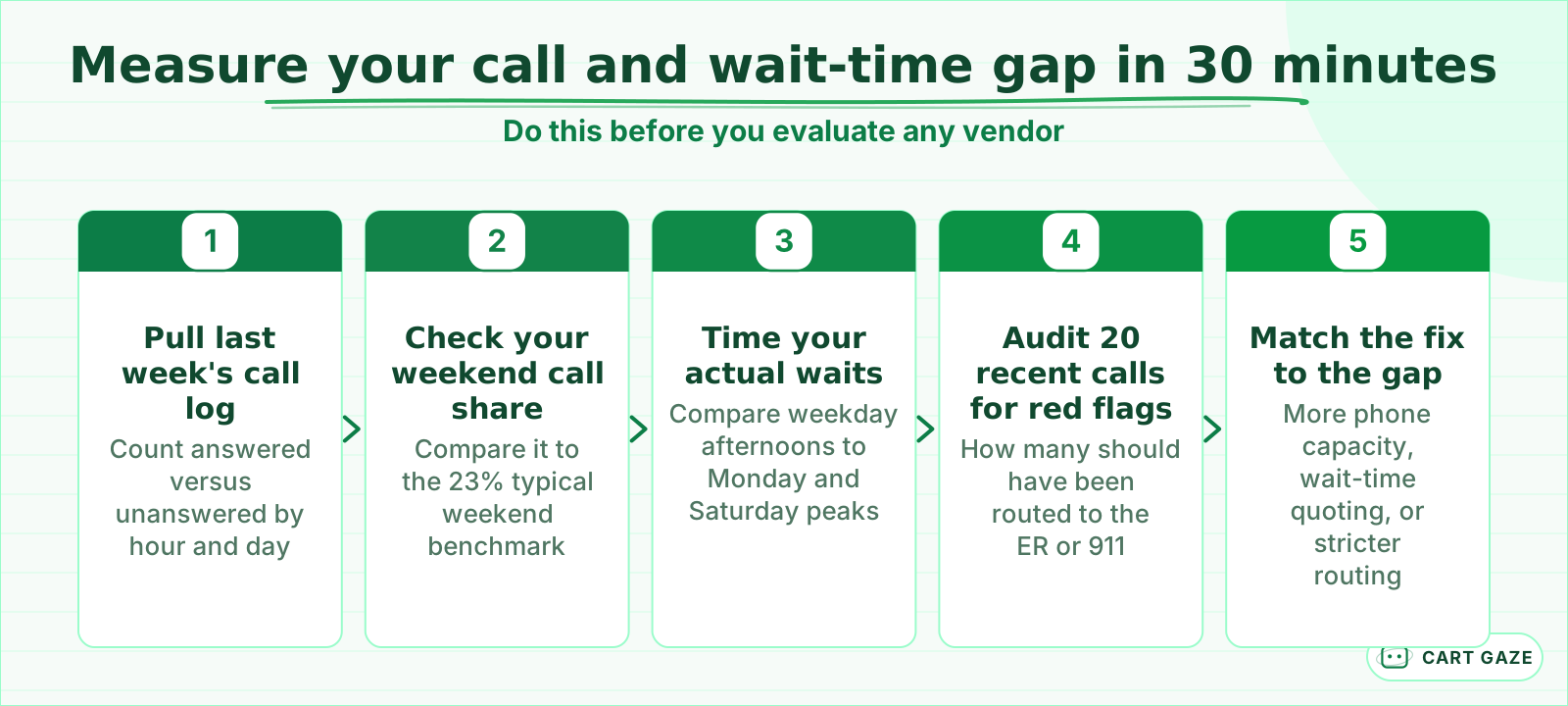 Thirty minutes in your own call log shows whether the fix is phone capacity or clearer wait-time communication.
A clinic with strong weekday coverage but a rough weekend can look fine on a monthly average while still losing real patients every Saturday, which is exactly why the day-of-week breakdown matters more than a single overall number.
Match the fix to your own numbers
The right fix depends on your own call and wait-time numbers, not a vendor's demo. A clinic missing calls during weekend and evening peaks needs more phone capacity first. A clinic answering fine but fielding confused urgent-care-or-ER questions needs clearer published guidance, not a system that tries to decide for the caller.
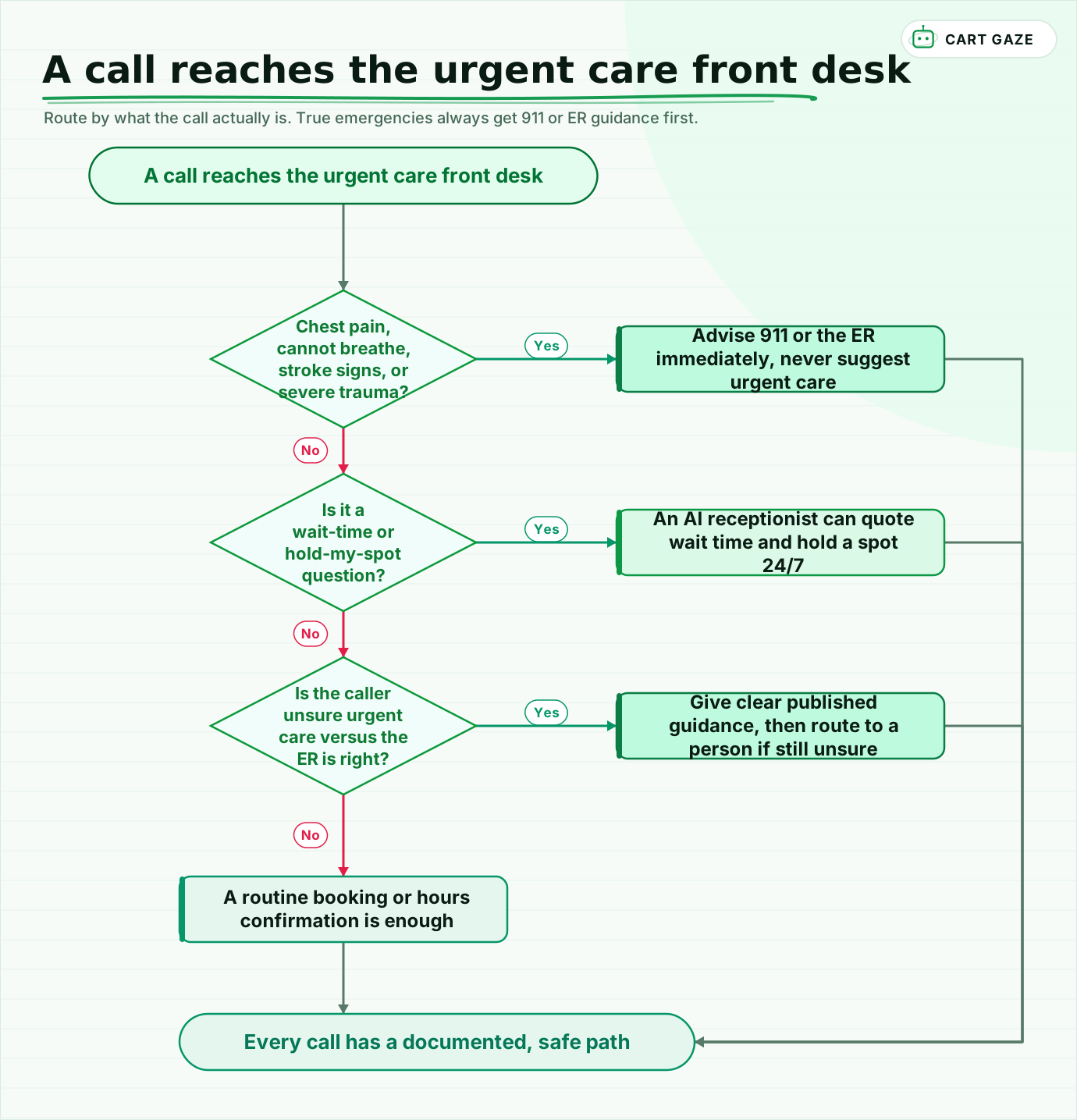 Route by what the call actually is. True emergencies always get 911 or ER guidance first.
Walk the flow once: anything resembling a true emergency gets a clear, immediate 911 or ER recommendation, every time, with no automated judgment involved. Wait-time and hold-my-spot questions can go to an AI receptionist around the clock. A caller genuinely unsure whether they need urgent care or the ER gets consistent published guidance and, if still unsure, a person. Everything else is a routine confirmation.
Pilot on wait-time and hold-my-spot calls first, since that is the highest-volume and lowest-risk win, and read the first month of transcripts before expanding scope any further. None of this requires an all-or-nothing rollout. Most clinics start with wait-time quoting alone and only expand into hold-my-spot registration and other logistics once the first month of transcripts proves the basics are solid.
If you would rather have the gap sized for you first, the free Growth Leak Audit works from your own numbers before anyone talks tools.
Fair questions.
Can an AI receptionist tell a patient whether to go to urgent care or the ER?
It should never make that judgment call. Deciding between urgent care and the emergency room is a clinical severity assessment, not a logistics question. A safely configured system recognizes red-flag language, chest pain, trouble breathing, stroke signs, and advises 911 or the ER immediately. For anything else, it repeats clear, published guidance rather than personalizing an answer to a specific caller's symptoms.
What is a typical wait time at an urgent care clinic?
Weekday afternoons between 1 and 3 p.m. tend to have the shortest waits, with about 70% of patients seen within 15 minutes. Mondays and Saturdays run the highest volume, often due to patients delaying care over the weekend. An AI receptionist that pulls real-time wait data from your system can quote this accurately, which is one of the highest-value, lowest-risk things it can do.
Does "hold my spot" at urgent care guarantee an appointment time?
No. It is an estimate of when you will be seen once you arrive and register, not a reservation. A walk-in patient with a more urgent condition can still be prioritized ahead of a held spot. An honest AI receptionist states this plainly rather than implying a guaranteed time, which prevents more frustration than any wait-time accuracy improvement alone.
How many patients does a typical urgent care clinic see per day?
Urgent care clinics average about 56 patient visits a day nationally, though this varies significantly by location and season. Visit counts can climb into the mid-to-high 30s per clinic during flu-season surges, straining exactly the call-handling capacity that already runs thin during evenings and weekends.
What should an AI receptionist never do at an urgent care clinic?
It should never try to assess how serious a caller's symptom is or help decide between urgent care and the ER; that framing, even when marketed as a convenience feature, is a clinical judgment. It should also never imply that a quoted wait time or held spot is a guaranteed appointment, since a more urgent walk-in patient can still be seen first.
Sources.
- [1]Urgent care visit volume data (Experity)
- [2]Average urgent care wait times (Docs Medical Group)
- [3]10 key patient wait time statistics clinics cannot ignore
- [4]Medical practice phone statistics: 15 numbers every provider should know
- [5]Walk-in vs check-in at urgent care
- [6]Urgent care vs ER: most emergency room visits are avoidable
- [7]Emergency Department Utilization report card (NCQA)
- [8]Why AI receptionists in urgent care work better with EHR context
- [9]AI receptionist for urgent care (FrontDesk)
Written by

Muhammad Qasim Hammad
Founder, Cart Gaze
Qasim builds AI receptionists and front-office automation for medical and dental practices at Cart Gaze. Posts here start from published sources and real call data, not vendor claims, and every number links back to where it came from.
Keep reading.
 By Practice TypeAI Receptionist for OB-GYN: Cadence, Not Symptom Triage10 min read
 By Practice TypeAI Receptionist for Pediatrics: The Caller Is a Parent10 min read
 By Practice TypeAI Receptionist for an ENT Practice: The 14-Day Clock10 min read
 By Practice TypeAI Receptionist for Orthopedics: What It Fixes, What It Cannot10 min read
 By Practice TypeAI Receptionist for a Cardiology Practice: Safe Call Routing10 min read
 By Practice TypeAI Receptionist for Direct Primary Care: Protect the Promise10 min read