
AI Receptionist for Pediatrics: The Caller Is a Parent
In pediatrics the caller is a parent, not the patient. Here is what an AI receptionist should handle on scheduling and vaccine recall, and what it must never touch.
Table of Contents8 sections
- What a pediatric front desk is actually handling
- The caller is a parent, not the patient, and that changes everything
- Administrative calls versus any symptom call: the line an AI receptionist must never cross
- Vaccine reminder and recall: the real, proven automation opportunity
- Where an AI receptionist fits a pediatric practice, and where it must not
- Measure your own call and vaccine-recall gap before you buy
- Match the fix to your own numbers
- Fair questions
In every other vertical this series has covered, the caller is usually the patient. In pediatrics, the caller is a parent, describing symptoms they observed rather than felt, often at 9 p.m. often scared. One page-one vendor markets its system as able to "safely triage" that exact call by capturing fever duration and red-flag responses. It cannot, and no AI receptionist should try.
Search "AI receptionist for pediatricians" and you will find that phrase, or something close to it, more than once. Capturing clinical detail to decide a routing path is an assessment, however gently it is worded, and pediatrics is precisely the wrong place to blur that line, because children can deteriorate faster than adults and a parent's secondhand description is a less reliable signal to begin with.
This post keeps the boundary simple rather than clever: any symptom call routes straight to a nurse or clinician, always. It also points at the automation opportunity competitors undersell, vaccine reminder and recall, which is proven, high-value, and carries essentially none of that risk.
None of this is about being anti-automation in pediatrics. It is about being precise regarding which half of the front desk's workload is genuinely administrative and which half only looks administrative until a call turns out to be about a sick child.
What a pediatric front desk is actually handling
Pediatrics and OB/GYN receive more calls relative to panel size than most other specialties, and 89% of pediatricians reported non-physician staffing shortages in a 2024 AAP survey. Fever calls are the single largest driver of after-hours volume, often driven more by parental anxiety than actual clinical acuity.
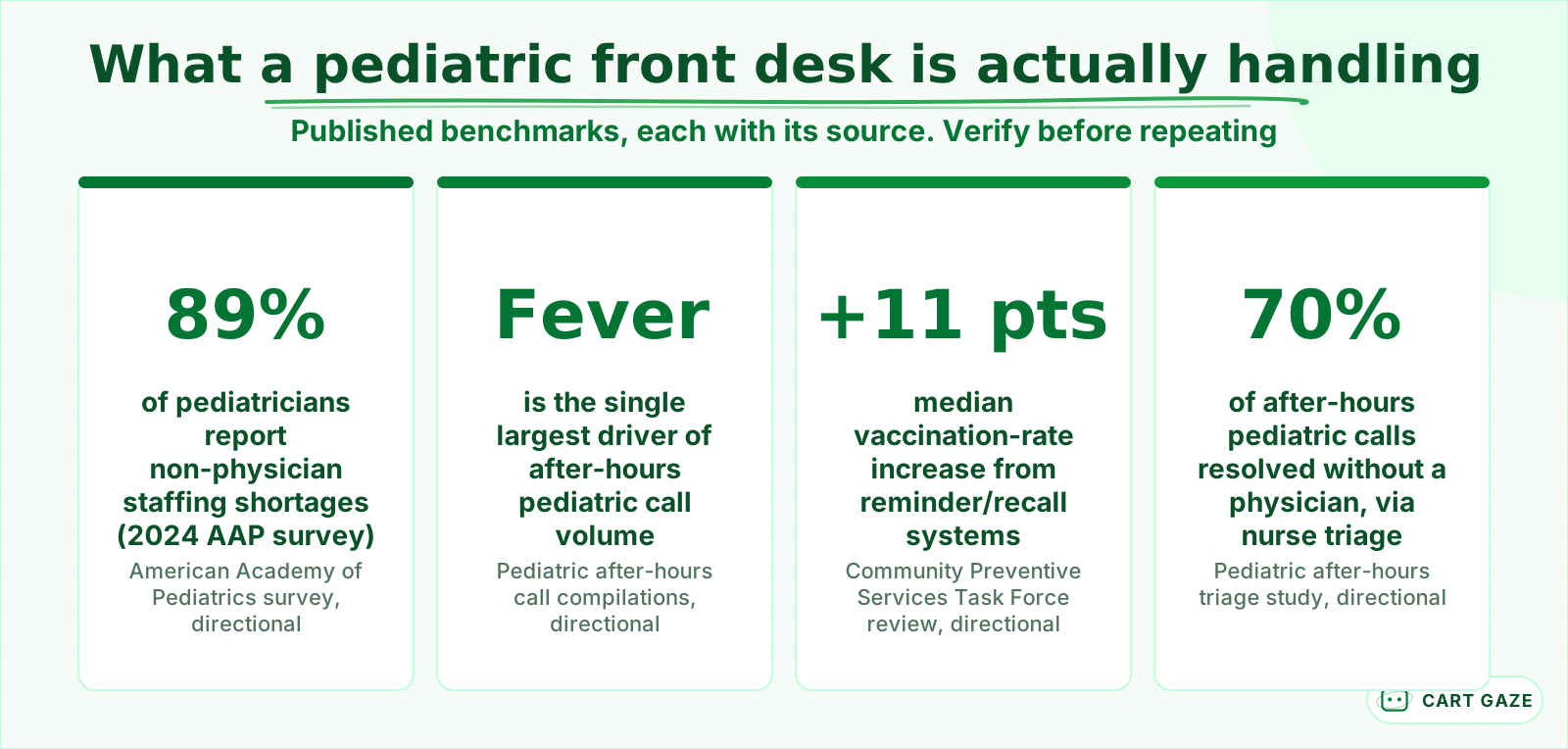 Published ranges, each sourced. Reasons to measure your own practice, not to repeat as fact.
Staffing shortages hit parent-facing communication first, ahead of clinical roles, because it is the function most easily deferred when a practice is short-handed. The result is longer hold times and slower callbacks precisely when parents are already anxious, which tends to make every subsequent call a little more urgent-sounding than the last, whether or not the underlying symptom has changed.
Vaccine schedules, school physical forms, developmental milestone questions, and sick-visit availability all compete for the same phone line, often within the same hour. None of that is inherently a crisis, but the volume alone means a front desk running on the same staffing model as a lower-call-volume specialty will fall behind.
This is worth sitting with for a moment, because it changes what "fixing the phones" should even mean here. In a lower-volume specialty, adding capacity might close most of the gap on its own. In pediatrics, capacity helps, but the deeper fix is separating the high-volume administrative traffic from the smaller, higher-stakes symptom traffic, so that neither one slows the other down.
The caller is a parent, not the patient, and that changes everything
A parent describing a child's symptoms secondhand is a fundamentally less reliable signal than a patient describing their own symptoms, and children can deteriorate faster than adults. That combination is exactly why the safe threshold for escalation sits earlier in pediatrics than in adult primary care, not later.
| Coverage option | Symptom-call routing safety | Vaccine recall capability | Rough monthly cost |
|---|---|---|---|
| Generalist human answering service | Inconsistent, not pediatric-trained | No | Per-minute, variable |
| Non-configured AI receptionist | Risky if it tries to capture symptom detail | Rarely built in | Flat, low |
| Pediatric-configured AI receptionist | Routes symptom calls immediately, captures nothing clinical | Can run systematic reminders | Flat, similar to other verticals |
That middle row is the one to watch closely when evaluating a vendor. A system that was built for a generic medical practice and relabeled for pediatrics may still try to gather a few clinical details before handing off a call, on the theory that it helps the nurse or clinician. In pediatrics specifically, that theory does not hold up, because the risk of a subtly wrong automated judgment outweighs the convenience of a slightly faster handoff.
Ask a vendor directly what data their system collects before a symptom call reaches a human. The honest answer is "the fact that it is a symptom call, and nothing else." Any longer answer is worth pushing back on, since every additional clinical detail an AI receptionist gathers is a detail it also had to interpret, even briefly, to know it was worth gathering.
Administrative calls versus any symptom call: the line an AI receptionist must never cross
Scheduling, forms, vaccine questions, and well-visit booking are safe to automate in a pediatric practice. Any symptom or sick-child call, fever, vomiting, injury, or any parent worry about illness, routes immediately to a nurse triage line or on-call clinician, with no exception for how minor the symptom sounds.
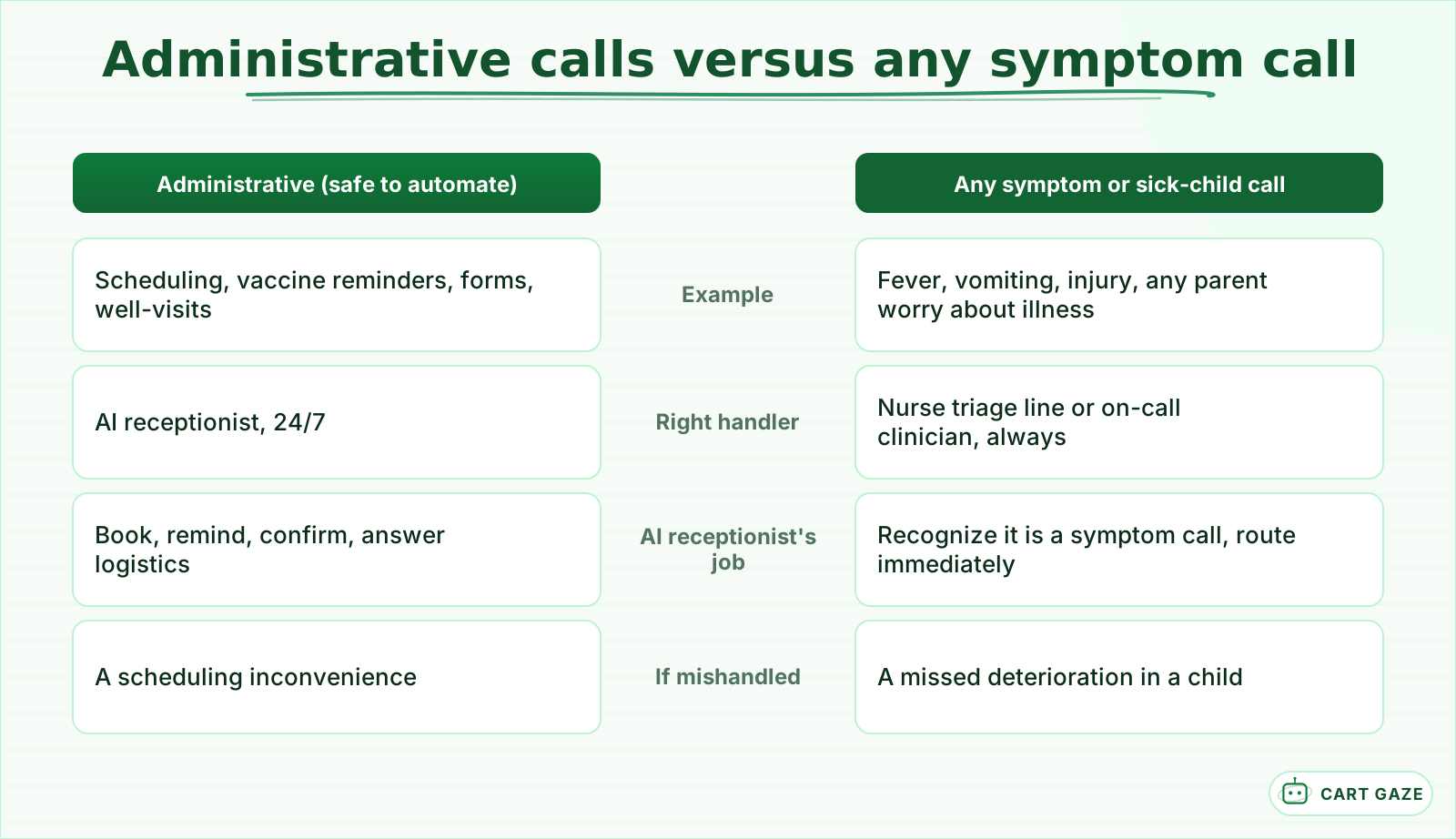 In pediatrics a parent describes the child secondhand, so the safe line sits earlier than in adult care.
A one-year study of a pediatric after-hours call center logged 141,922 calls, 88% for a clinical illness, with fever, vomiting, cough, and earache among the most common reasons. Nurse triage resolved 70% of those calls without physician involvement, and no patient sent home after triage in that study later needed an ER visit or hospitalization. That is a strong result, but it belongs to licensed nurses working structured protocols, not to an AI receptionist standing in for one.
Vaccine reminder and recall: the real, proven automation opportunity
Reminder and recall systems lift vaccination rates by a median of 11 percentage points, and one study found 79.2% on-time compliance with reminders versus 46.4% without them. Most pediatric practices still do not run one systematically, which makes this the highest-value, lowest-risk automation opportunity in the entire practice.
The barriers are mundane rather than technical: cost, staff time, and the difficulty of reliably identifying which patients are actually due. An AI receptionist configured for this can check due dates against a schedule and place the reminder consistently, which is precisely the kind of repetitive, rules-based task automation is good at, with zero clinical judgment involved anywhere in the process.
Telephone reminders were the most effective single channel in the research behind that 11-point figure, ahead of mail and even text in some comparisons, which is a useful data point when deciding how to configure outreach rather than defaulting to whichever channel is cheapest to set up.
The return here compounds in a way a single reminder does not capture. A child who stays on schedule for one vaccine is more likely to stay on schedule for the next, and a practice that closes this gap once tends to keep it closed with far less ongoing effort than the initial fix required.
None of this requires a sophisticated rollout either. A practice can start by identifying the patients most overdue, running a single reminder pass, and measuring the response before expanding to a full recurring cadence covering the whole immunization schedule.
Where an AI receptionist fits a pediatric practice, and where it must not
An AI receptionist fits scheduling, vaccine and well-visit reminders, school and sports-physical form requests, and insurance questions. It must never capture or weigh any symptom detail for a sick or injured child. That call goes straight to a nurse triage line or on-call clinician, every time, no exceptions.
If you have never evaluated one of these systems before, start with what an AI receptionist does and where it stops for the general boundary this vertical builds on, then apply the stricter pediatric version of it.
For the pricing picture across verticals, see what an AI receptionist costs. Weigh it against the real cost of missed calls, since a pediatric practice's higher relative call volume tends to make that math land differently than in a lower-volume specialty.
Confirm integration with your practice-management or EHR system before signing anything, specifically around immunization schedules. A reminder system that cannot see which vaccine is actually due next will either send a generic nudge that gets ignored or, worse, the wrong information entirely.
Measure your own call and vaccine-recall gap before you buy
Before evaluating any vendor, spend 30 minutes on your own numbers. Pull last week's call log and tag calls as administrative or symptom-related, check your after-hours fever-call share, and audit whether your practice runs any systematic vaccine reminder or recall program at all before you decide what to fix.
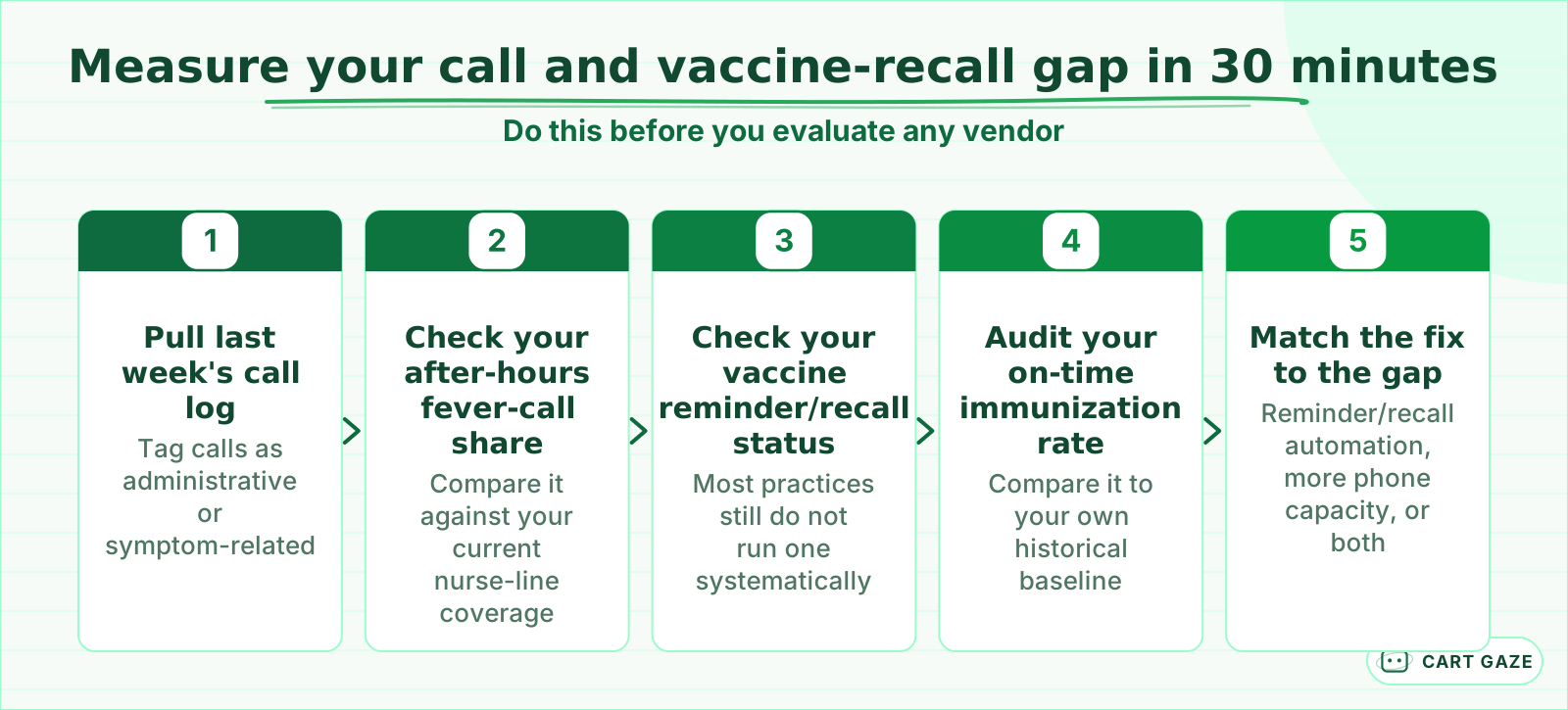 Thirty minutes in your own call log and immunization records shows exactly where the gap actually is.
Do this measurement even if a previous vendor conversation left you skeptical of the category entirely. The administrative and clinical sides of this problem are genuinely separable, and a practice can capture most of the value on the administrative side alone without ever touching symptom-call automation.
Match the fix to your own numbers
The right fix depends on your own call and immunization numbers, not a vendor's demo. A practice with no reminder/recall program has the clearest, safest win available. A practice already running reminders but still missing after-hours symptom calls needs a proper nurse triage line, not an AI trying to fill that role.
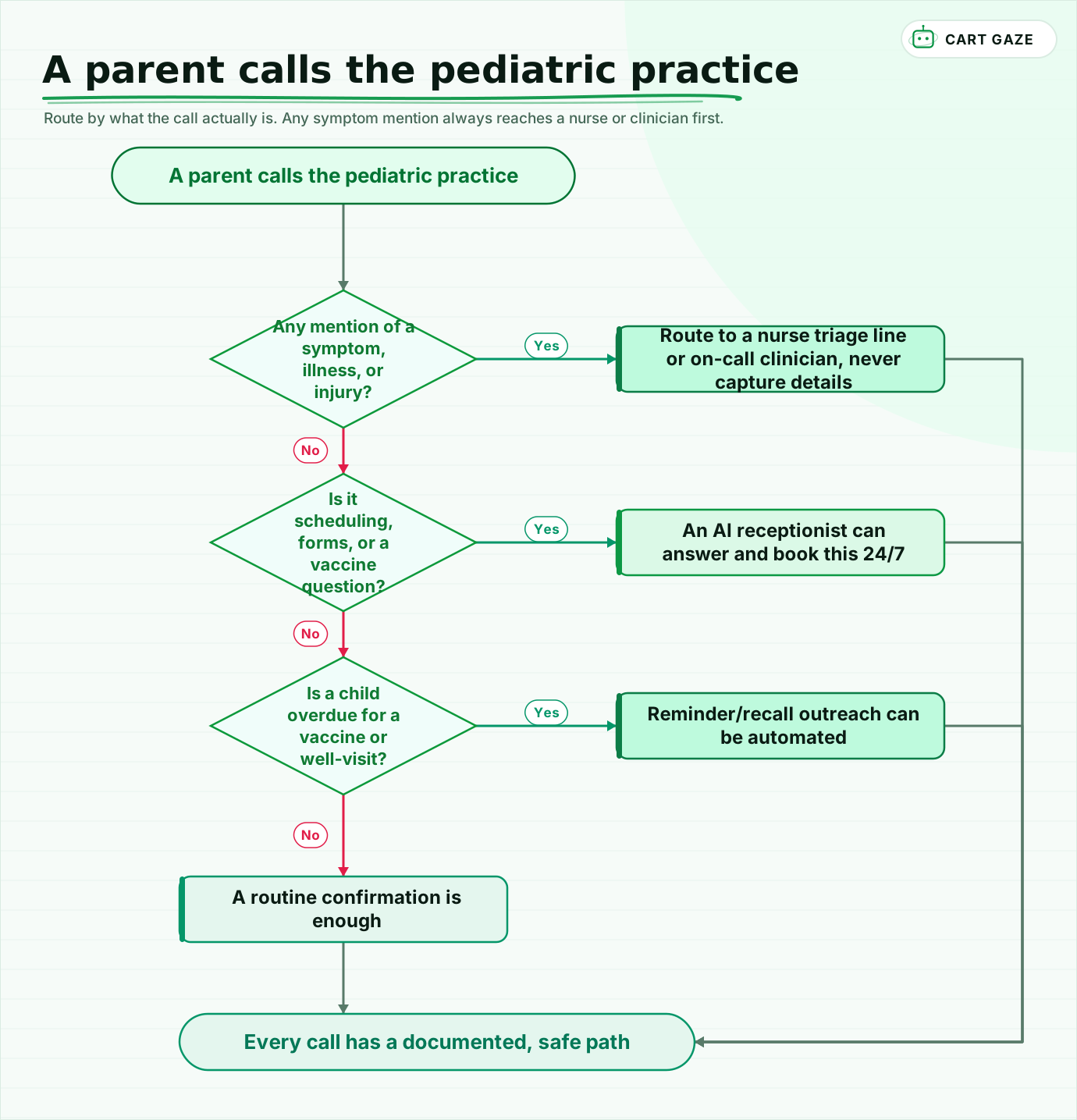 Route by what the call actually is. Any symptom mention always reaches a nurse or clinician first.
Walk the flow once: any symptom mention routes to a nurse line or on-call clinician immediately, with nothing clinical captured along the way. Scheduling, forms, and vaccine questions can go to an AI receptionist around the clock. A child overdue for a vaccine or well-visit gets automated reminder outreach. Everything else is a routine confirmation.
Pilot on vaccine reminder and recall first, since it is the highest-value, lowest-risk win, and read the first month of outreach results before touching anything symptom-adjacent. None of this requires solving the phones and the recall gap at the same time. Most practices get more value, faster, by closing the recall gap alone before deciding whether call-volume automation is worth adding on top.
If you would rather have the gap sized for you first, the free Growth Leak Audit works from your own numbers before anyone talks tools.
Fair questions.
Can an AI receptionist safely triage a sick child call?
No. Any call involving a symptom, illness, or injury should route immediately to a nurse triage line or on-call clinician, with the AI receptionist capturing nothing clinical along the way. Vendor language describing "safe triage" via capturing fever duration or red-flag responses is describing a clinical assessment, not a routing rule, and pediatrics is the wrong vertical to blur that line given how quickly children can deteriorate.
What should an AI receptionist handle in a pediatric practice?
Scheduling, vaccine and well-visit reminders, school and sports-physical form requests, and insurance questions are all safe to automate. These are administrative tasks with factual answers, not clinical judgments, which is exactly why they carry little risk compared to any call involving a child's symptoms.
How effective are vaccine reminder and recall systems?
Reminder and recall systems increase vaccination rates by a median of 11 percentage points, and one study found 79.2% on-time compliance with cellphone reminders versus 46.4% without them. Most pediatric practices still do not run one systematically, citing cost, staff time, and difficulty identifying eligible patients, which makes this a high-value, low-risk automation opportunity.
Why is pediatric call handling different from adult primary care?
The caller is almost always a parent describing a child's symptoms secondhand, a less reliable signal than a patient describing their own condition, and children can deteriorate faster than adults. That combination means the safe threshold for escalating a call to a human sits earlier in pediatrics than in adult care, with no automated symptom capture at all.
What is the single biggest driver of after-hours pediatric calls?
Fever calls are the single largest driver of after-hours pediatric call volume, often driven more by parental anxiety than actual clinical acuity. A one-year study of a pediatric after-hours call center found 88% of calls were for a clinical illness, with nurse triage resolving 70% without physician involvement.
Sources.
- [1]AI for pediatric practices: automating parent communication (Confido Health)
- [2]Vaccination programs: client reminder and recall systems (Community Guide)
- [3]Reminder systems and strategies for increasing childhood vaccination rates (CDC)
- [4]An assessment of pediatric after-hours telephone care: a 1-year experience
- [5]Pediatric after-hours nurse triage service (TriageLogic)
- [6]Pediatricians AI answering service (ElevenLabs)
Written by

Muhammad Qasim Hammad
Founder, Cart Gaze
Qasim builds AI receptionists and front-office automation for medical and dental practices at Cart Gaze. Posts here start from published sources and real call data, not vendor claims, and every number links back to where it came from.
Keep reading.
 By Practice TypeAI Receptionist for OB-GYN: Cadence, Not Symptom Triage10 min read
 By Practice TypeAI Receptionist for Urgent Care: Wait Times, Not ER Triage10 min read
 By Practice TypeAI Receptionist for a Gastroenterology Practice: Prep Calls10 min read
 By Practice TypeAI Receptionist for an ENT Practice: The 14-Day Clock10 min read
 By Practice TypeAI Receptionist for Orthopedics: What It Fixes, What It Cannot10 min read
 By Practice TypeAI Receptionist for a Cardiology Practice: Safe Call Routing10 min read