
AI Receptionist for Primary Care: Volume Meets Triage
Primary care fields the widest call mix of any specialty, and a real share needs same-day clinical judgment. Here is what an AI receptionist should handle, and what it must never touch.
Table of Contents8 sections
- What a primary care front desk is actually handling
- The call mix nobody else's front desk has to juggle
- Same-day sick visit versus a true emergency: the line an AI receptionist must never cross
- The referral gap most vendors never mention
- Where an AI receptionist fits a primary care practice, and where it must not
- Measure your own call and referral gap before you buy
- Match the fix to your own numbers
- Fair questions
No other front desk fields this many different kinds of calls in a single shift. A single hour at a family medicine practice might bring a refill request, a sick 4-year-old, a school physical form, a referral question, and a billing dispute, back to back. Most AI receptionist pitches skip straight past that variety to a generic "never miss a call" promise.
Search "AI receptionist for primary care" and the page-one results, Zocdoc's Zo, healow Genie, OmniMD, Confido Health, CallMyDoc, and others, all lead with the same pitch. None grapple with what actually makes this vertical hard: the call mix is the widest of any specialty, and a real share of those calls need a same-day clinical judgment, not just a booking.
This post prices that volume and diversity honestly, draws the line on same-day sick visits versus true emergencies, and calls out a gap most vendor pages never mention: whether a referral it helped schedule ever actually happened.
What a primary care front desk is actually handling
Primary care physicians field about 53 inbound calls a day each, and a 5-physician practice sees 150 to 200 calls a day, peaking 8 to 10 a.m. and 1 to 3 p.m. One study of 7,000 calls across 22 practices found 42% went unanswered, well above the sub-10% target most practices aim for.
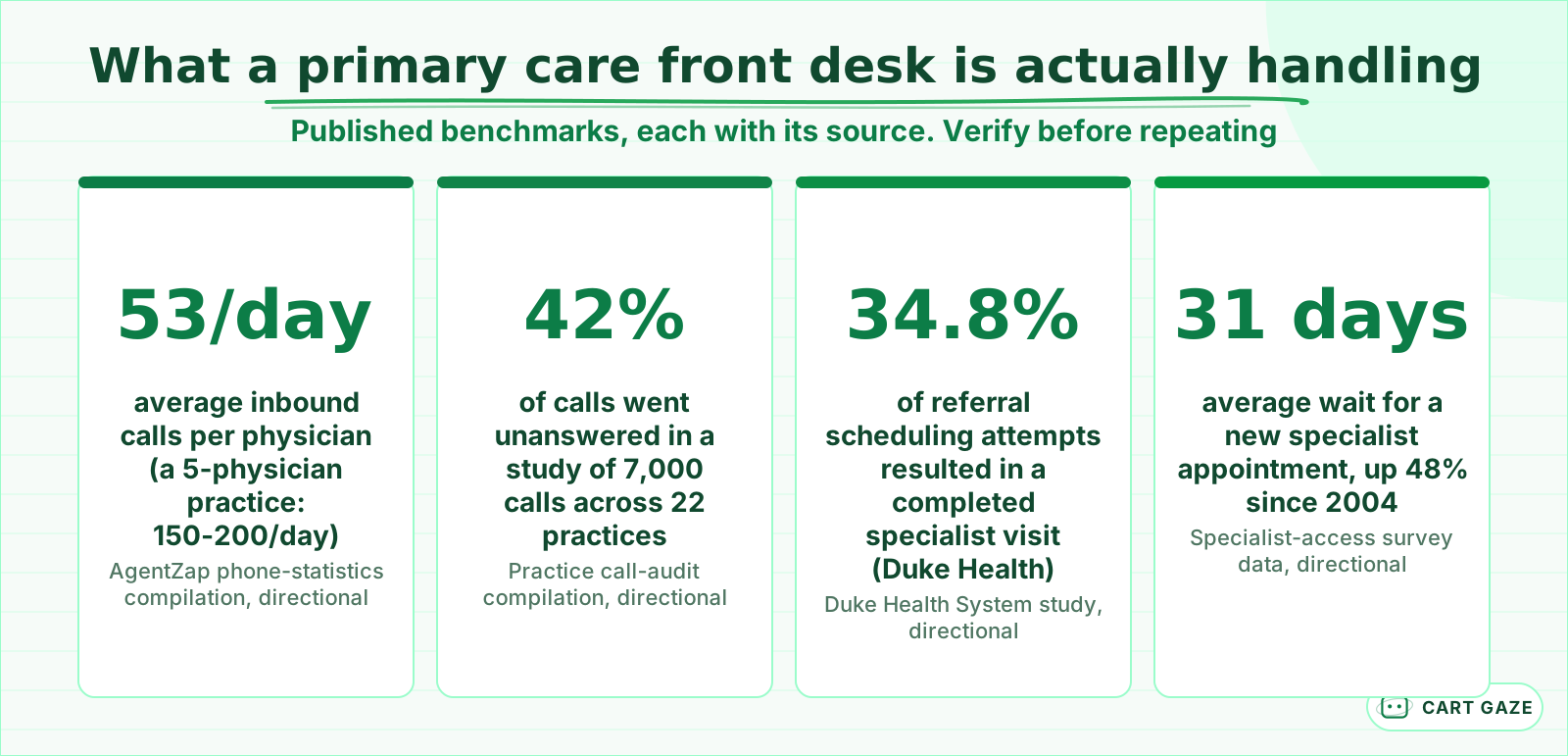 Published ranges, each sourced. Reasons to measure your own practice, not to repeat as fact.
Patients rarely wait around for a callback either: 62% hang up without leaving a voicemail, and a missed new-patient call represents roughly $200 to $300 in immediate revenue. For a 5-physician practice missing even 30 calls a day, that adds up to thousands of missed opportunities a year, not a rounding error.
This volume does not happen in isolation. One widely cited estimate found a physician would need about 21.7 hours a day to deliver all recommended care to a panel of 2,500 patients, a blunt way of saying there was never enough time built into the day for unlimited phone triage on top of everything else. The call volume is not a staffing failure so much as the structural reality of the specialty.
Peak-hour understaffing compounds the problem specifically. A practice adequately staffed at 11 a.m. can still miss 15% to 30% of calls at 8:30 a.m. if the same staff member is also handling check-in for patients already sitting in the waiting room.
The call mix nobody else's front desk has to juggle
Family medicine handles the widest call variety of any specialty: scheduling, refills, sick visits, preventive questions, school forms, billing, and referral coordination, often within the same hour. A vendor that answers scheduling calls well can still fumble refills or referrals if it was never actually configured for this specific mix.
| Coverage option | Handles the full call mix | Referral follow-up | Rough monthly cost |
|---|---|---|---|
| Generalist human answering service | Inconsistently, message-only for most types | No | Per-minute, variable |
| Non-configured AI receptionist | Books scheduling, often weak on refills/referrals | Rarely | Flat, low |
| Primary-care-configured AI receptionist | Handles all 5 core call types | Can track and follow up | Flat, similar to other verticals |
That table is the honest reason to ask a vendor for specifics rather than a feature list. "Handles patient calls" describes almost every product on page one; the real question is whether it was actually built for a practice that does scheduling, refills, sick visits, referrals, and billing questions on the same line.
This is also why a one-size-fits-all vendor demo can be misleading. A demo built around a dental office's booking flow, retrofitted with a primary care label, will handle the scheduling call fine and then visibly struggle the moment a refill or a referral question comes in, because those call types were never actually designed for.
Billing questions round out the mix and are easy to underestimate. A caller asking about a statement or a copay is not a clinical call at all, but routing it badly, or worse, leaving it unanswered, still reads to the patient as the practice not having its act together.
Same-day sick visit versus a true emergency: the line an AI receptionist must never cross
A same-day sick visit, like a fever or a minor injury, can be captured by an AI receptionist and handed to staff to slot into today's schedule. A true emergency, chest pain, difficulty breathing, stroke signs, or severe bleeding, must route straight to 911 or the ER, with zero automated judgment in between.
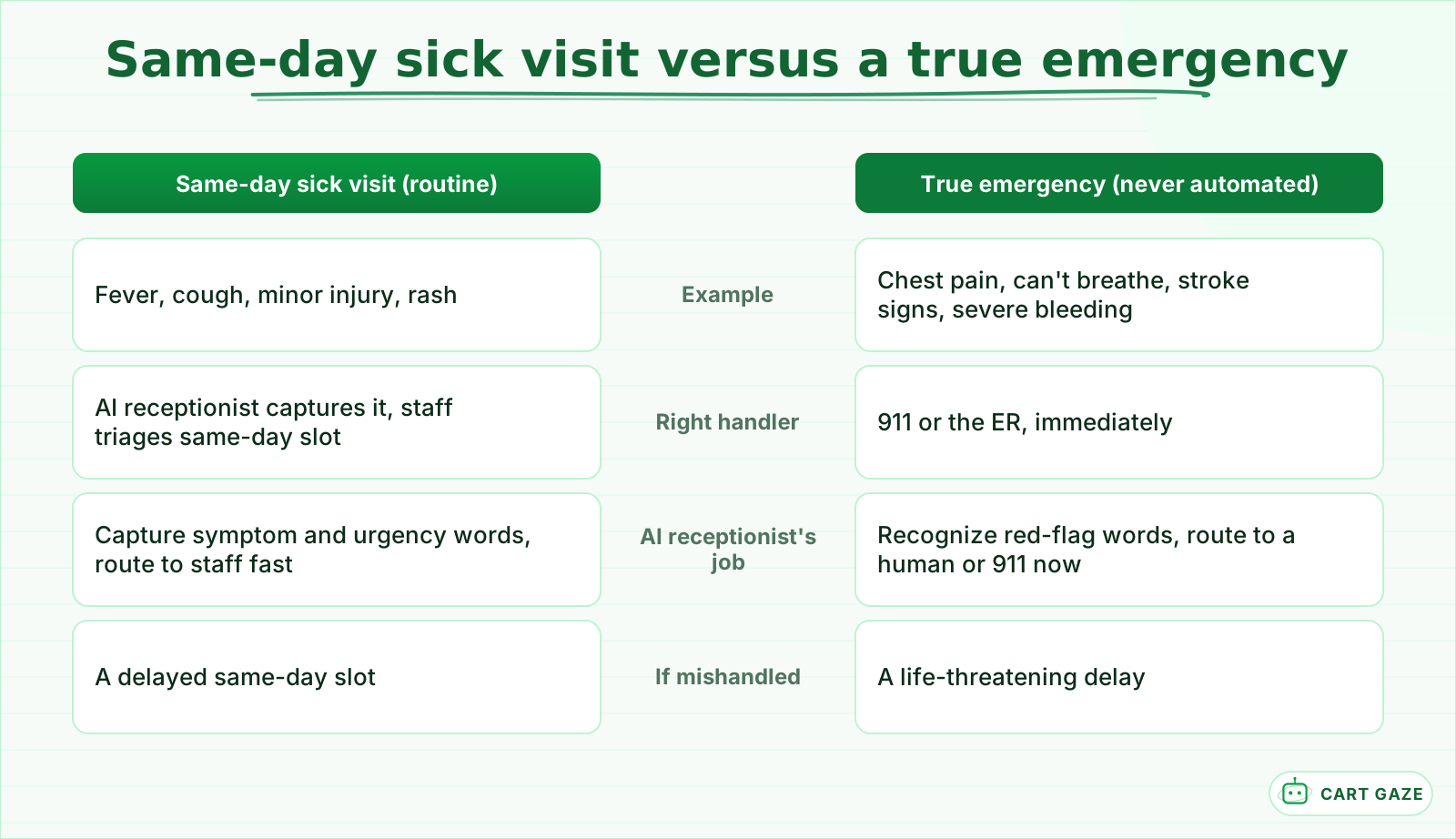 Recognizing red-flag words and routing them is safe. Deciding how urgent a symptom is never belongs to software.
Same-day sick visits sit in a gray zone that deserves its own care. The AI receptionist's job is to capture what the caller described and get it to staff fast, not to decide whether today's schedule can absorb it. That decision needs a person who knows the day's actual capacity and the patient's history.
This distinction matters more here than in most verticals precisely because the call volume is so high. A front desk fielding 150 calls a day cannot manually triage every one for urgency, which is exactly why a hard, automatic rule for true emergencies, not a judgment call, has to be built into whatever answers the phone.
The referral gap most vendors never mention
Only about 34.8% of referral scheduling attempts at one large health system ended in a completed specialist visit, and the average wait for a new specialist appointment is 31 days. An AI receptionist that books the referral call but never checks whether the patient actually got seen is solving half the problem.
Family medicine's overall referral rate runs under 20%, but the referrals that do happen carry real consequences when they stall: a patient who never made it to a specialist is a patient whose actual problem is still unresolved, quietly, off the practice's radar. Non-surgical referrals, like nutrition or dermatology, tend to move faster than surgical ones, but the completion problem shows up across the board regardless of specialty.
This is not a hypothetical scenario. It happens every time a specialist's office cannot reach the patient to confirm, the patient forgets amid a busy week, or nobody at either practice owns the follow-up, and it happens quietly enough that it rarely shows up in a monthly report.
If you have never evaluated one of these systems before, start with what an AI receptionist does and where it stops for the general boundary this vertical builds on.
Where an AI receptionist fits a primary care practice, and where it must not
An AI receptionist fits scheduling, prescription refill routing, referral coordination and follow-up, preventive-care reminders, and answering during the 8 to 10 a.m. and 1 to 3 p.m. peaks. It must never decide whether a sick-visit symptom is urgent, an emergency, or can wait. That judgment belongs to staff or a clinician.
Refill routing deserves special mention because it is high-volume and low-risk when done right: confirm the medication and pharmacy, flag anything that sounds like a new symptom rather than a routine renewal, and hand structured requests to clinical staff for the actual approval. The AI receptionist's role is capturing accurately, not approving anything.
The same logic extends to preventive-care outreach, like flu shot reminders or annual wellness visit scheduling. These are high-volume, low-risk, and a natural fit for automation, as long as the system is prompting and booking rather than making any clinical recommendation about what care a specific patient needs.
For the full pricing picture across verticals, see what an AI receptionist costs. Compare that flat monthly figure to what the practice already loses to unanswered calls; the math in the real cost of missed calls applies directly here, just at primary care's higher call volume.
Measure your own call and referral gap before you buy
Before evaluating any vendor, spend 30 minutes on your own numbers. Pull last week's call log and tag calls by type, count how many went unanswered by hour of day, and check your referral completion rate against the roughly 35% benchmark before you decide what actually needs fixing.
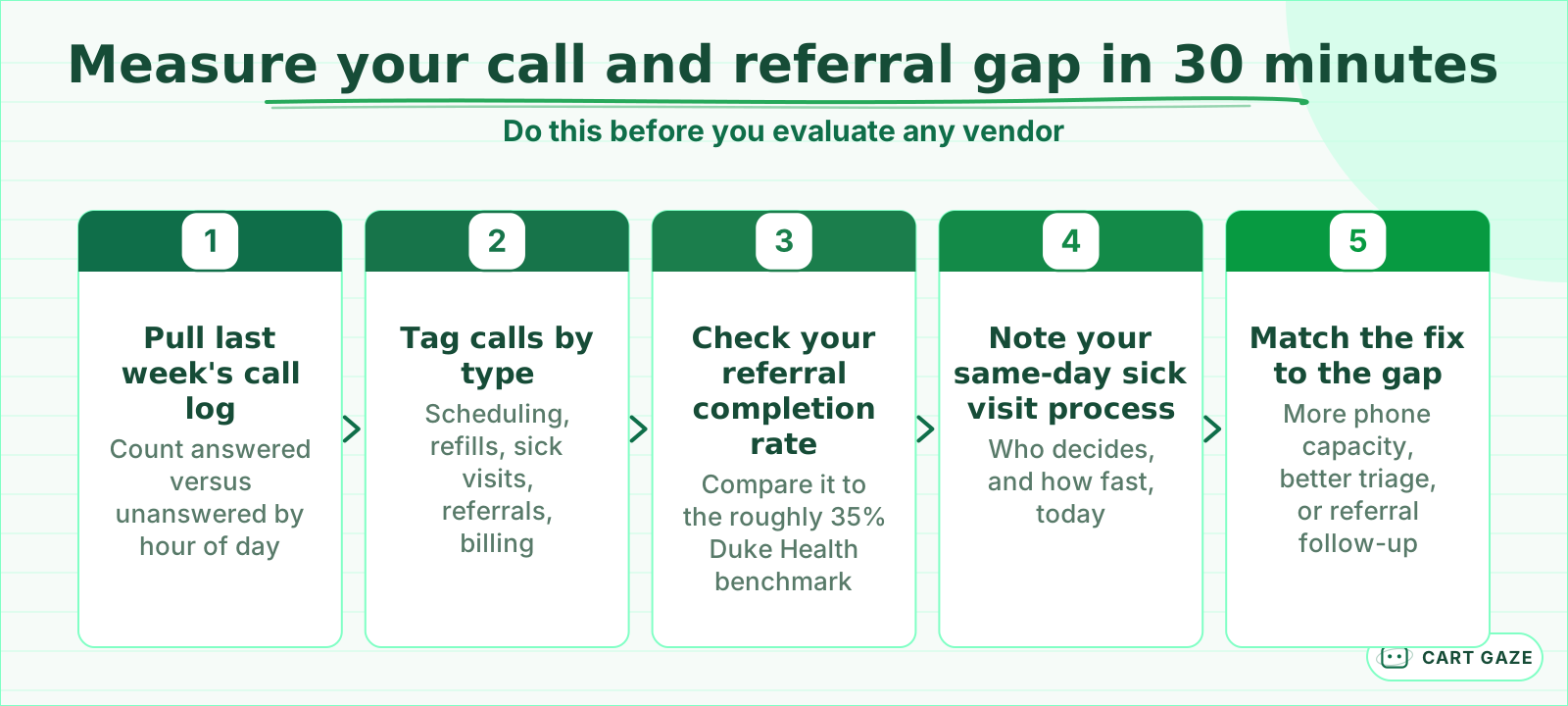 Thirty minutes in your own call and referral logs shows exactly where the volume is breaking down.
Do this measurement even if your current phone system already reports call volume. Most systems count rings and duration, not which call type went unanswered or which referral quietly stalled, and those 2 blind spots are usually where the real revenue and continuity-of-care leakage sits.
Match the fix to your own numbers
The right fix depends on your own call and referral numbers, not a vendor's demo. A practice missing calls during the morning and afternoon peaks needs more phone capacity first. A practice answering fine but losing referrals to follow-up needs tracking, not a bigger phone system.
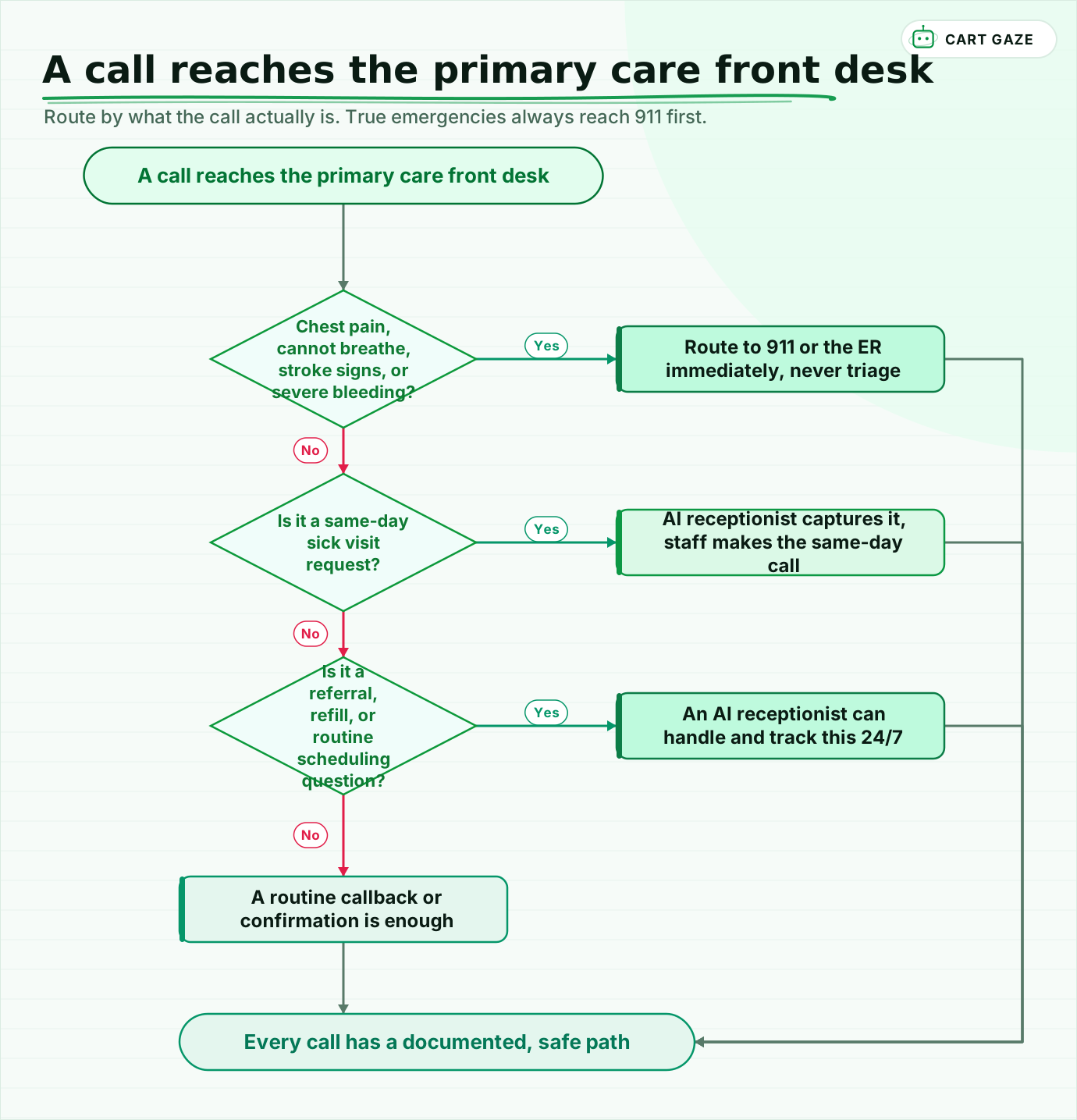 Route by what the call actually is. True emergencies always reach 911 first.
Walk the flow once: any true emergency routes to 911 or the ER immediately, every time. A same-day sick visit gets captured and handed to staff fast. Scheduling, refills, and referrals can go to an AI receptionist configured for the full mix. Everything else is a routine callback.
Pilot on your highest-volume call type first, usually scheduling or refills, read the first month of transcripts, and re-measure both your missed-call rate and referral completion after 30 to 60 days. None of this requires solving every call type on day one. Most practices start with the single highest-volume type, prove it out, and expand into refills and referral tracking once the first month of transcripts backs up the approach.
If you would rather have the gap sized for you first, the free Growth Leak Audit works from your own numbers before anyone talks tools.
Fair questions.
How many calls does a typical primary care practice receive?
Primary care physicians field about 53 inbound calls a day each, so a 5-physician practice sees roughly 150 to 200 calls a day, peaking between 8 and 10 a.m. and 1 and 3 p.m. One study of 7,000 calls across 22 practices found 42% went unanswered, well above the sub-10% target most practices aim for.
Can an AI receptionist tell a same-day sick visit from a real emergency?
It can recognize red-flag words like chest pain, trouble breathing, or stroke signs and route those immediately to 911 or the ER, no automated judgment involved. For a same-day sick visit like a fever, it should capture the details and hand them to staff to decide whether today's schedule can absorb it. It should never make that clinical call itself.
Does an AI receptionist help with specialist referrals?
A primary-care-configured one can book the referral call and, ideally, track whether the patient actually completed the visit. That follow-up step matters because only about 34.8% of referral scheduling attempts at one large health system ended in a completed specialist visit. A vendor that only books the call and never checks completion is solving half the problem.
What should an AI receptionist never do in a primary care practice?
It should never decide whether a sick-visit symptom is urgent, a true emergency, or can wait; that judgment belongs to staff or a clinician. It should also never approve a prescription refill itself, only capture the request accurately and route it for clinical sign-off.
Why do generic AI receptionists struggle with primary care specifically?
Primary care handles the widest call variety of any specialty: scheduling, refills, sick visits, preventive questions, school forms, billing, and referrals, often within the same hour. A system built around a single-service booking flow, like a dental office, can handle scheduling fine and then visibly struggle the moment a refill or referral question comes in.
Sources.
- [1]Medical practice phone statistics: 15 numbers every provider should know
- [2]Outpatient referral rates in family medicine
- [3]Referral follow-up: preventing lost referrals
- [4]Factors affecting waiting time of patients referred to specialty clinics
- [5]Meeting the competitive pressure on patient digital self-scheduling (MGMA)
- [6]A primary care panel size of 2500 is neither small nor large
- [7]How many patients are most primary care physicians seeing
- [8]AI phone assistant for practices (Zocdoc's Zo)
- [9]AI for family medicine: multi-location groups (Confido Health)
Written by
Muhammad Qasim Hammad
Founder, Cart Gaze
Qasim builds AI receptionists and front-office automation for medical and dental practices at Cart Gaze. Posts here start from published sources and real call data, not vendor claims, and every number links back to where it came from.
Keep reading.
 By Practice TypeAI Receptionist for Veterinary Clinics: An Honest 2026 Guide10 min read
 By Practice TypeAI Receptionist for Orthodontic Practices: What It Handles10 min read
 By Practice TypeAI Receptionist for a Cardiology Practice: Safe Call Routing10 min read
 By Practice TypeAI Receptionist for Direct Primary Care: Protect the Promise10 min read
 By Practice TypeAI Receptionist for Home Health: The 48-Hour Referral Clock10 min read
 By Practice TypeAI Receptionist for Fertility Clinics: What It Must Never Do10 min read