
Insurance Verification Automation for a Faster Front Desk
A manual eligibility check costs 10 to 30 minutes and about $14 in staff time, while eligibility errors drive 15% to 30% of denials. Here is how automated 270/271 verification runs the check, and what it cannot promise.
Table of Contents8 sections
- Why insurance verification is the most expensive 30 minutes at your front desk
- What automated insurance verification actually means
- How a real-time eligibility check runs during patient intake
- What automation catches, and what it cannot promise
- Keep it compliant: BAAs, PHI, and the "HIPAA certified" myth
- What it costs and how the math works
- Choose the right level of verification automation
- Fair questions
Your front desk spends the first hour of every day on hold with insurance companies. A single manual eligibility check runs 10 to 30 minutes per patient and costs about $14 in staff time, according to CAQH, so a practice seeing 60 patients a day can lose 1 to 3 hours before the first appointment even starts.
Skipping the check is worse. Eligibility and registration errors drive an estimated 15% to 30% of claim denials, and each denied claim costs $25 to $181 to rework. The verification is cheap to skip and expensive to get wrong, which is exactly why it is worth automating with care rather than all at once.
This post explains what insurance verification automation actually does, walks the real-time 270/271 flow that runs it, prices it honestly, and marks the line that keeps you safe: automation handles the routine checks in seconds and flags the messy ones for a person. Verifying eligibility is not the same as guaranteeing payment, and it never will be.
Why insurance verification is the most expensive 30 minutes at your front desk
Insurance verification is expensive both ways. Done by hand it costs 10 to 30 minutes and about $14 in staff time per patient. Skipped or rushed, it feeds the eligibility errors behind 15% to 30% of denials, each costing $25 to $181 to rework. The task is small; the mistakes it prevents are not.
Start with the labor. A front desk that verifies coverage by phone or payer portal spends 10 to 30 minutes on each patient, and CAQH puts the staff-time cost at roughly $14 per manual check. Line up a 60-patient day and that is 1 to 3 hours of work before the waiting room fills, repeated every morning.
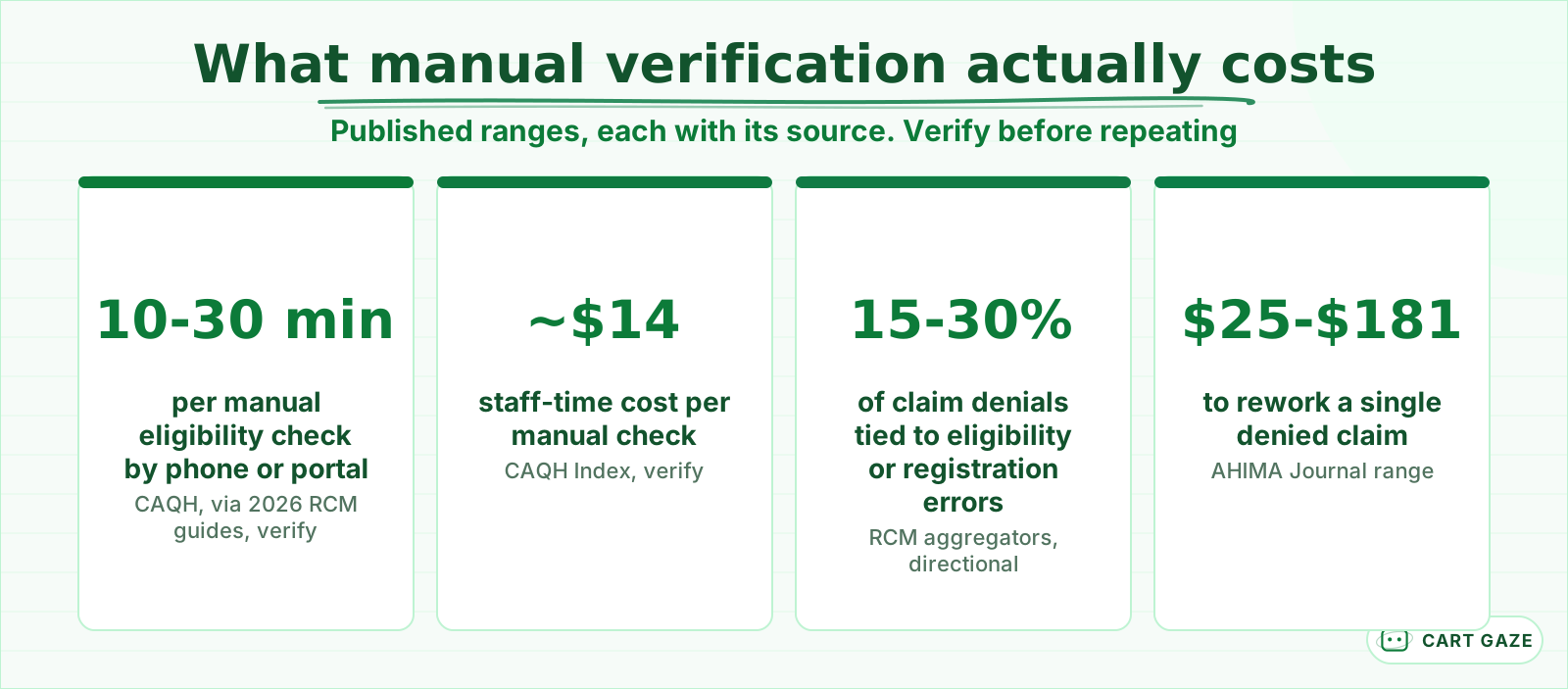 Published ranges, each sourced. Reasons to measure your own numbers, not your result.
The downstream cost is the one that hurts. Industry denial rates now sit near 12% of first submissions (2024 data, still climbing), and eligibility or registration errors account for an estimated 15% to 30% of those denials. Experian reports that 68% of practices name inaccurate or incomplete intake data as a primary driver of the claims they lose.
Then you pay to fix each one. Reworking a single denied claim costs $25 to $181 (AHIMA), about $57 on average (Premier), and the appeal can take 45 to 90 days to land. A wrong copay or an inactive plan caught at intake is a five-minute fix; caught after the claim bounces, it becomes a month-long chase. The same front-desk leak shows up on the phones, which we price out in the real cost of missed calls.
What automated insurance verification actually means
Automated insurance verification is the 270/271 loop. Your software sends a 270 eligibility inquiry to the payer through a clearinghouse, and the payer returns a 271 with active status, copay, deductible balance, and out-of-pocket maximum. Real-time responses land in seconds instead of the 10 to 30 minutes a phone call takes.
The 270 and 271 are standardized EDI transactions mandated under HIPAA, so nearly every US payer speaks them. You do not log in to each insurer's website one at a time; your system sends one structured question and reads one structured answer.
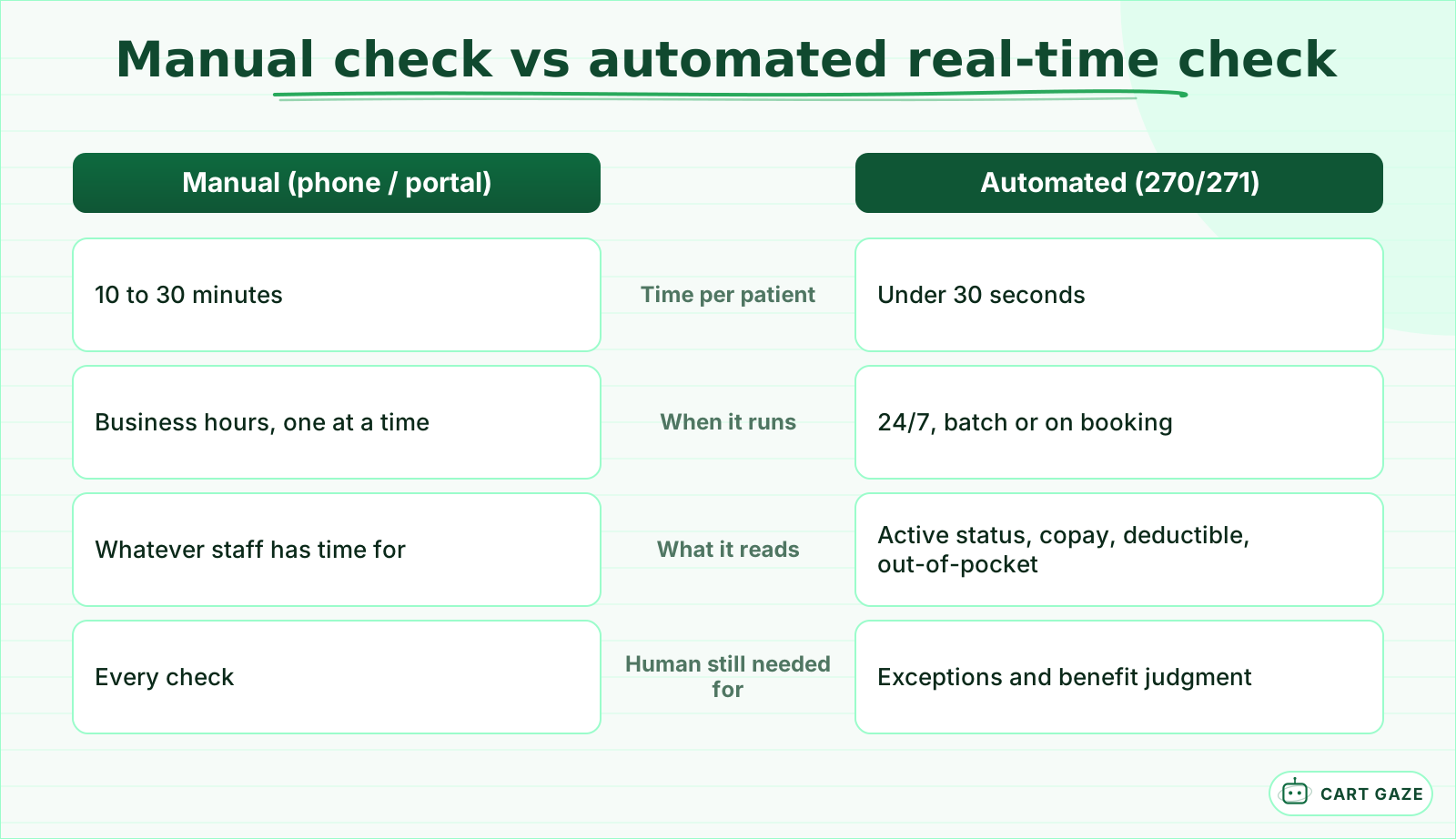 Automation compresses the routine check. The judgment calls still route to a person.
Two modes exist. Real-time checks return in roughly 2 to 30 seconds, which fits a patient booking online or standing at the desk. Batch checks run overnight against tomorrow's schedule. Major clearinghouses such as Availity, Waystar, Experian Health, and Change Healthcare support both, and most eligibility platforms sit on top of one of them.
This is where patient intake automation extends the same loop. Instead of a staff member keying the member ID and dialing the payer, the system pulls identity straight from the online booking, fires the check, pre-fills the cost estimate, and only surfaces the patient when something does not line up. The routine majority never needs a human hand, which is the entire point.
How a real-time eligibility check runs during patient intake
A real-time check runs in five quick moves at intake. The system pulls the patient's identity, sends a 270 to the payer through a clearinghouse, reads the 271 that returns in seconds, parses the copay and deductible, then posts clean results to the chart or routes anything unclear to a staff queue for a person to work.
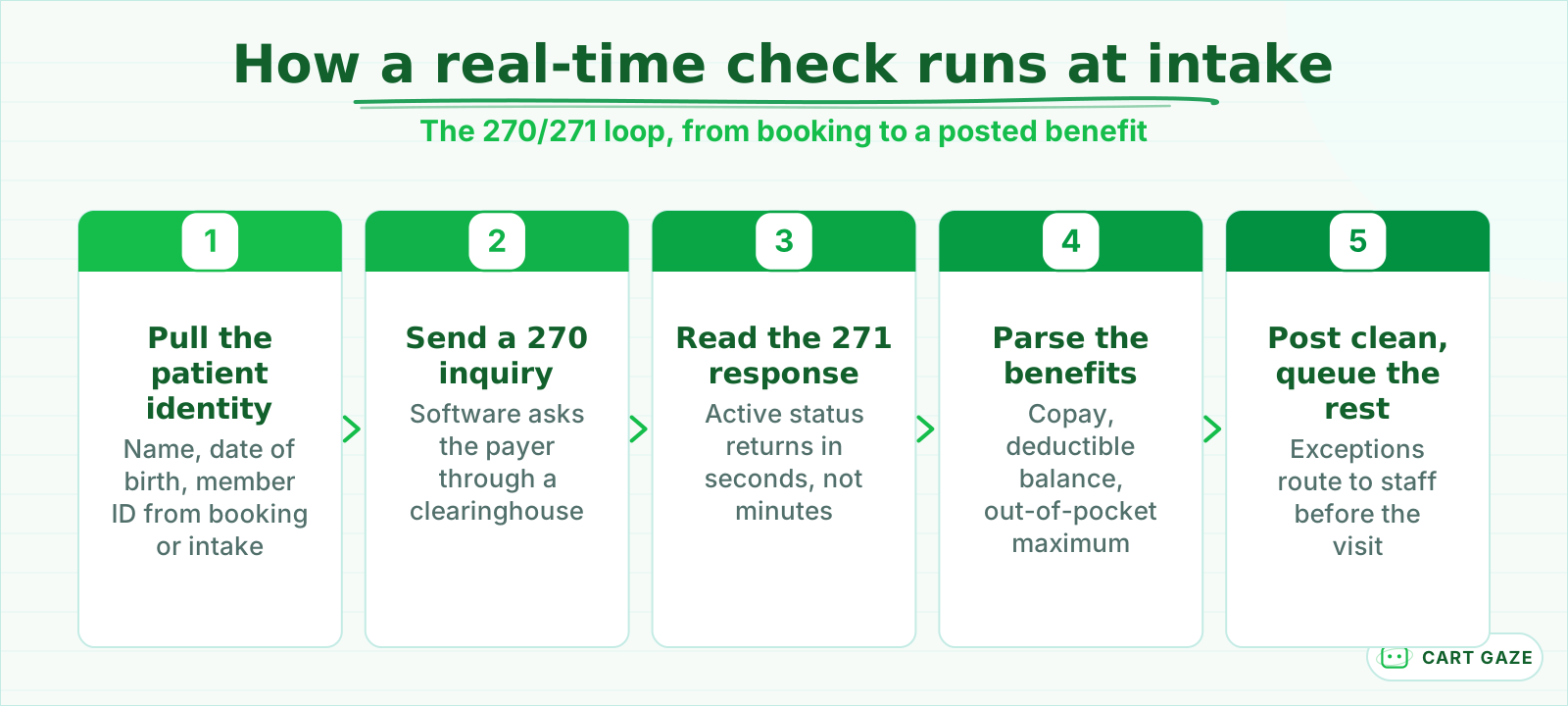 The routine path is automatic. Anything unclear lands in a staff queue before the visit.
None of this removes the front desk. It removes the hold music. Staff stop dialing payers for routine confirmations and start working only the exceptions the check kicks back, which is a far better use of a trained person's day.
The approaches are not all-or-nothing. They climb a ladder from a manual phone call to full intake automation, and most practices settle somewhere in the middle.
| Approach | Speed per patient | Auto re-verify | Staff role | Cost model |
|---|---|---|---|---|
| Phone to payer | 10 to 30 min | No | Runs every check | Staff time, about $14 each |
| Payer web portal | 5 to 15 min | No | Logs in per patient | Staff time |
| Clearinghouse batch | Overnight | Nightly | Reviews the flags | Per transaction |
| Real-time 270/271 | Under 30 seconds | Yes, at booking | Works exceptions | Per check or flat |
| Full intake automation | Under 30 seconds | Yes, plus estimate | Edge cases only | Flat monthly |
What automation catches, and what it cannot promise
Automation reliably catches the mechanical facts: whether a plan is active, the plan type, the copay, the deductible balance, the out-of-pocket maximum, and obvious data mismatches. It cannot promise the claim will pay. A 271 confirms coverage at that moment, not that this specific service is covered, medically necessary, or clear of prior authorization.
That gap is the whole reason a human stays in the loop.
So the exceptions matter more than the confirmations. A patient carrying two plans, a benefit that reads one way in the 271 and another in the policy, a service that needs prior authorization, an inactive or termed plan: each should route to a person, not get auto-posted and forgotten. A good setup makes that routing obvious and logs who resolved what.
This is the same boundary an AI receptionist works inside. It handles the repeatable, rules-clear tasks and hands the judgment calls to staff. If you have not mapped where that line sits for your practice, start with what an AI receptionist does and where it stops before you wire anything to your schedule.
Keep it compliant: BAAs, PHI, and the "HIPAA certified" myth
A 270/271 transaction carries protected health information: the member ID, date of birth, and coverage details. That makes the clearinghouse and any verification vendor business associates under HIPAA, so each one must sign a Business Associate Agreement before it touches your patient data. Compliance is a contract and a configuration, not a badge on a website.
Three questions separate a real compliance posture from a marketing one. Ask what the system stores and for how long. Ask who the named subcontractors are, meaning the clearinghouse, the cloud host, and any model provider. Ask where the data physically lives. A vendor that cannot answer those in writing is not ready for your patient list.
Watch the language, too. Any page that calls a product "HIPAA certified" is describing something that does not exist, because no government body issues a HIPAA certification. Treat the phrase as a reason to look harder, not a reassurance. The real questions are the BAA and the configuration, which we cover in what a HIPAA-aware setup requires.
What it costs and how the math works
The cost math is mostly about staff hours, not software fees. Model your own: 50 manual checks a day at about $14 each is roughly $700 a day, near $14,000 a month across 20 working days. Real-time checks through a clearinghouse run cents to a few dollars each, or fold into a flat platform fee.
That $700-a-day figure is modeled, not measured, so plug in your real volume and pay rate before you quote it to anyone. The point holds at any size: the expensive input is the person on hold, and automation moves them off the phone and onto the exceptions that need judgment.
There is a wrong way to save here. Automation that posts a wrong benefit quickly is worse than a slow correct one, because it hands the patient a bad estimate and the biller a bad claim. The review queue and the first-week audit are the product, not the raw speed. Pricing for this kind of automation, flat versus per-check versus build-your-own, breaks down the same way as an AI receptionist, which we detail in what an AI receptionist costs.
Choose the right level of verification automation
The right level depends on two things your schedule already knows: how many verifications you run a day and how messy your payer mix is. A small practice with clean payers may only need real-time checks at booking. A high-volume clinic with tangled benefits needs full intake automation plus a staffed exception queue behind it.
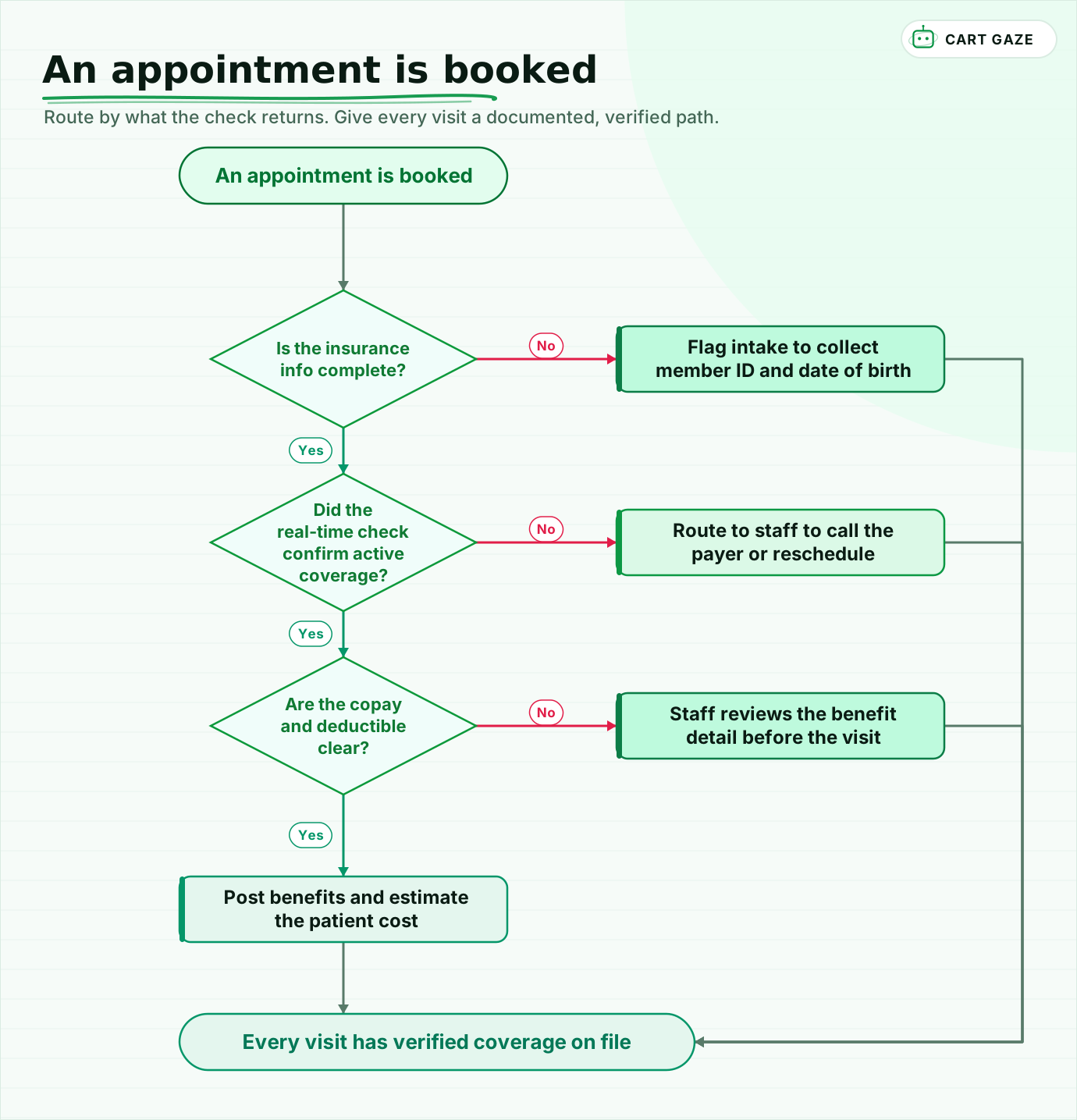 Route by what the check returns. Give every visit a documented, verified path.
Walk the flow once. An appointment with incomplete insurance details goes back to intake to collect the member ID and date of birth. A completed one runs the real-time check. If coverage is inactive, staff call the payer or reschedule. If it is active but the benefits read unclear, a person reviews before the visit. Clean checks post the benefit and an estimate, and every path ends with verified coverage on the chart.
Whatever level you choose, pilot it on one payer and one appointment type, read the first week of results against the payer portal, and widen only once the exceptions are rare and well-handled. Someone else's demo is not your payer mix. If you would rather see the size of the leak first, the free Growth Leak Audit sizes your front-desk gap from your own numbers before anyone talks tools.
Fair questions.
What is insurance verification automation?
Insurance verification automation uses software to confirm a patient's coverage electronically instead of by phone. It sends a standardized 270 eligibility inquiry to the payer through a clearinghouse and reads the 271 response, which returns active status, copay, deductible balance, and out-of-pocket maximum in seconds. Staff then handle only the checks that come back unclear or inactive.
How does real-time eligibility verification with 270/271 work?
The 270 and 271 are HIPAA-standard EDI transactions. Your system sends a 270 asking whether a plan is active and what it covers, and the payer returns a 271 with the answer, usually within 2 to 30 seconds. Clearinghouses like Availity and Waystar carry the message, so you query one place instead of every insurer's portal.
Does automated insurance verification guarantee the claim will be paid?
No. A clean 271 confirms the plan was active and returned benefits at that moment, not that the payer will reimburse this specific visit. Coordination of benefits, medical necessity, and prior authorization all sit outside the eligibility check. Automation catches the routine facts fast, but a human still resolves the exceptions and the judgment calls.
Is automated insurance verification HIPAA compliant?
It can be, with the right contracts. A 270/271 transaction carries protected health information, so the clearinghouse and any vendor are business associates and must sign a Business Associate Agreement. "HIPAA compliant" describes a configuration and contract, not a product badge, and "HIPAA certified" does not exist. Confirm the BAA and what the system stores before go-live.
How much time and money can automating verification save?
Most of the savings are staff hours. Modeled from the CAQH figure, 50 manual checks a day at about $14 each is roughly $700 a day in labor. Real-time checks cost cents to a few dollars each or fold into a flat fee. The bigger payoff is fewer eligibility-driven denials, which run $25 to $181 each to rework.
Sources.
- [1]Medical insurance eligibility verification software guide (CAQH manual time and cost)
- [2]2024 CAQH Index Report key takeaways (eligibility and benefit transactions)
- [3]EDI 270/271: eligibility and benefit inquiry and response (UnitedHealthcare)
- [4]Real-time eligibility check (270/271) response times (Stedi docs)
- [5]US healthcare denial rates and reimbursement statistics (denial rate, rework cost)
- [6]Common causes of eligibility-related claim denials (Experian Health)
- [7]Insurance eligibility verification and preventable denials (OutsourceRCM)
- [8]HIPAA compliance for electronic eligibility verification 270/271 (AccountableHQ)
Written by

Muhammad Qasim Hammad
Founder, Cart Gaze
Qasim builds AI receptionists and front-office automation for medical and dental practices at Cart Gaze. Posts here start from published sources and real call data, not vendor claims, and every number links back to where it came from.
Keep reading.
 Missed Calls & Front DeskInsurance Card Capture: Why Scanning Is Not Verifying10 min read
 Missed Calls & Front DeskNew Patient Intake Automation: Denials Cost More Than Time10 min read
 Missed Calls & Front DeskCall Quality Scoring for a Medical Front Desk, Done Legally10 min read
 Missed Calls & Front DeskPatient Complaint Triage: Catch It Before It Costs You a Review10 min read
 Missed Calls & Front DeskFamily Scheduling Automation: Book Every Kid in One Call10 min read
 Missed Calls & Front DeskCancellation Waitlist Automation: Fill the Empty Slot Fast10 min read