
AI Receptionist vs Hiring a Receptionist: 2026 Payback Math
The vendor pitch says an AI receptionist replaces your front desk and cuts costs 70%. It does not. Here is the honest math: the fully loaded cost of a hire versus a flat AI bill, and where each one actually fits.
Table of Contents8 sections
Your front desk is buried, and the obvious fix is to hire another receptionist. Before you post the job, look at the real number. A full-time medical receptionist earns a median of $37,230 a year (BLS, May 2024), and once you load it with payroll taxes and benefits at 1.25 to 1.4 times the wage, the true cost lands near $49,000. That one hire also covers about 40 hours a week, not the nights and weekends when a large share of your calls arrive.
An AI receptionist is the other option on the table, and the pitch is seductive: a flat monthly bill, coverage around the clock, and a headline promising you can cut front-desk costs by 70%. That framing is wrong, and this post refuses it. An AI receptionist does not replace a person. It covers a different slice of the work.
Here is the honest version: what a human hire actually costs once you load it fully, what an AI receptionist actually costs once you get past the teaser price, one clearly modeled side-by-side, and a plain rule for deciding whether to hire, automate, or run both.
Why "replace your receptionist" is the wrong question
The choice is not AI versus a person, because the two do not do the same job. An AI receptionist handles routine, repetitive, and after-hours contact at scale. A human owns the in-person, judgment-heavy, and emotional work no script should touch. Framing it as a swap hides the real decision, which is coverage.
The "replace your front desk and save 70%" line you see on vendor sites sells a swap that does not exist in a real clinic. A patient standing at the counter with a clipboard, an upset caller who just got bad news, a tangled insurance question: that is human work. Booking a cleaning at 9 p.m. answering "what are your hours," catching an overflow call while the desk is already on the line: that is automatable work.
So the useful question is not who replaces whom. It is which slice of your phone and desk work each dollar buys. Get that right and the two options stop competing. If you have never mapped where the software stops, start with what an AI receptionist does and where it stops, then come back to the money.
What a front-desk hire really costs in 2026
A front-desk hire costs far more than the wage on the offer letter. Start with a median salary near $37,230, add 25% to 40% for payroll taxes and benefits, then budget for turnover, since front-office roles in small practices leave at 30% to 40% a year. The loaded, all-in number is what you compare.
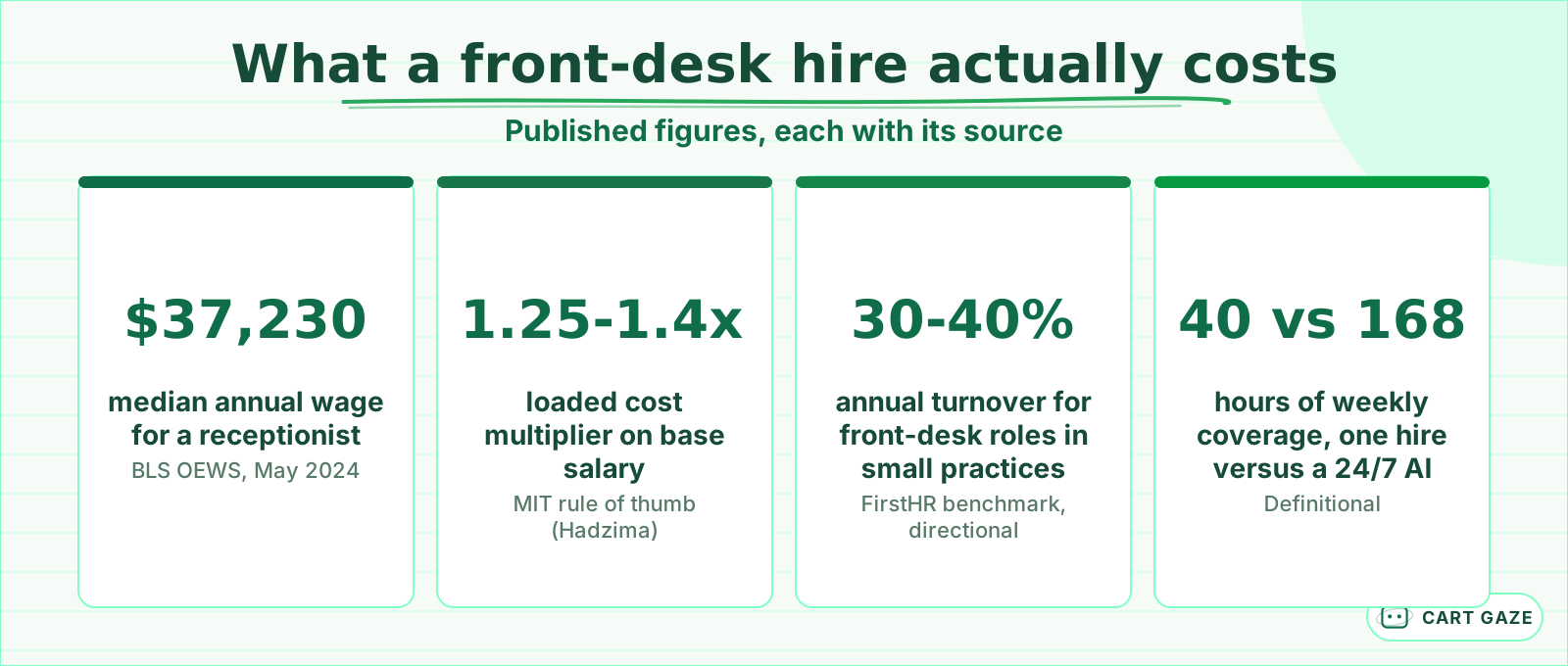 Published figures, each sourced. The wage is the smallest line.
The base wage is the smallest part. A receptionist earns a median of $37,230 a year, about $17.90 an hour (BLS, May 2024), and competitive markets push a medical front desk past $38,000. On top of that sits the employer's load. The widely used MIT rule of thumb puts the true cost of an employee at 1.25 to 1.4 times base salary, once you add the 7.65% you owe in FICA, plus health coverage, paid time off, and the 20% to 30% that benefits typically add.
Turnover is the cost nobody puts in the budget. Front-desk and patient-registration roles in small outpatient practices turn over at roughly 30% to 40% a year, and MGMA's 2025 poll found front-office staff among the most-cited turnover hotspots. Every departure costs money. SHRM estimates replacing an employee runs 50% to 200% of salary, and even the conservative frontline figure of about 40% (Gallup) is near $15,000 for a $38,000 role, once you count the job ad, the interviews, the training weeks, and the slower service while a new hire learns your systems.
What an AI receptionist really costs in 2026
An AI receptionist is priced flat, not per hour, but the teaser number is not the real number. Entry software runs about $49 to $300 a month. A healthcare-ready, single-location setup with a signed BAA lands closer to $400 to $900 a month all in, plus a one-time setup fee. Read the line items.
Vendors advertise a floor price, often $49 to $199 a month, and that figure buys a basic configuration and a capped number of calls or minutes. The real, all-in cost for a single-location medical practice in 2026 sits around $400 to $900 a month once you add scheduling integration, higher call volume, and HIPAA-grade handling, with a one-time setup fee that runs from $0 to $2,500. Expect to pay 20% to 40% more for the security and the BAA a patient line requires.
| AI receptionist tier | Typical monthly cost | What it includes |
|---|---|---|
| Software floor | $49 to $199 | Basic config, capped calls or minutes |
| Healthcare all-in | $400 to $900 | Scheduling, higher volume, HIPAA handling, BAA |
| One-time setup | $0 to $2,500 | Number porting, calendar and EHR wiring |
| Per-call add-ons | $6 to $9 per call | Overage above your plan's included calls |
The modeled annual comparison
Put both on one modeled chart and the gap is real, but the story is not "delete your receptionist." A loaded hire runs about $49,000 a year for 40 hours of weekly coverage. An all-in AI receptionist runs about $6,000 a year for 24/7 coverage. Different jobs, different bills, so read it as coverage, not a swap.
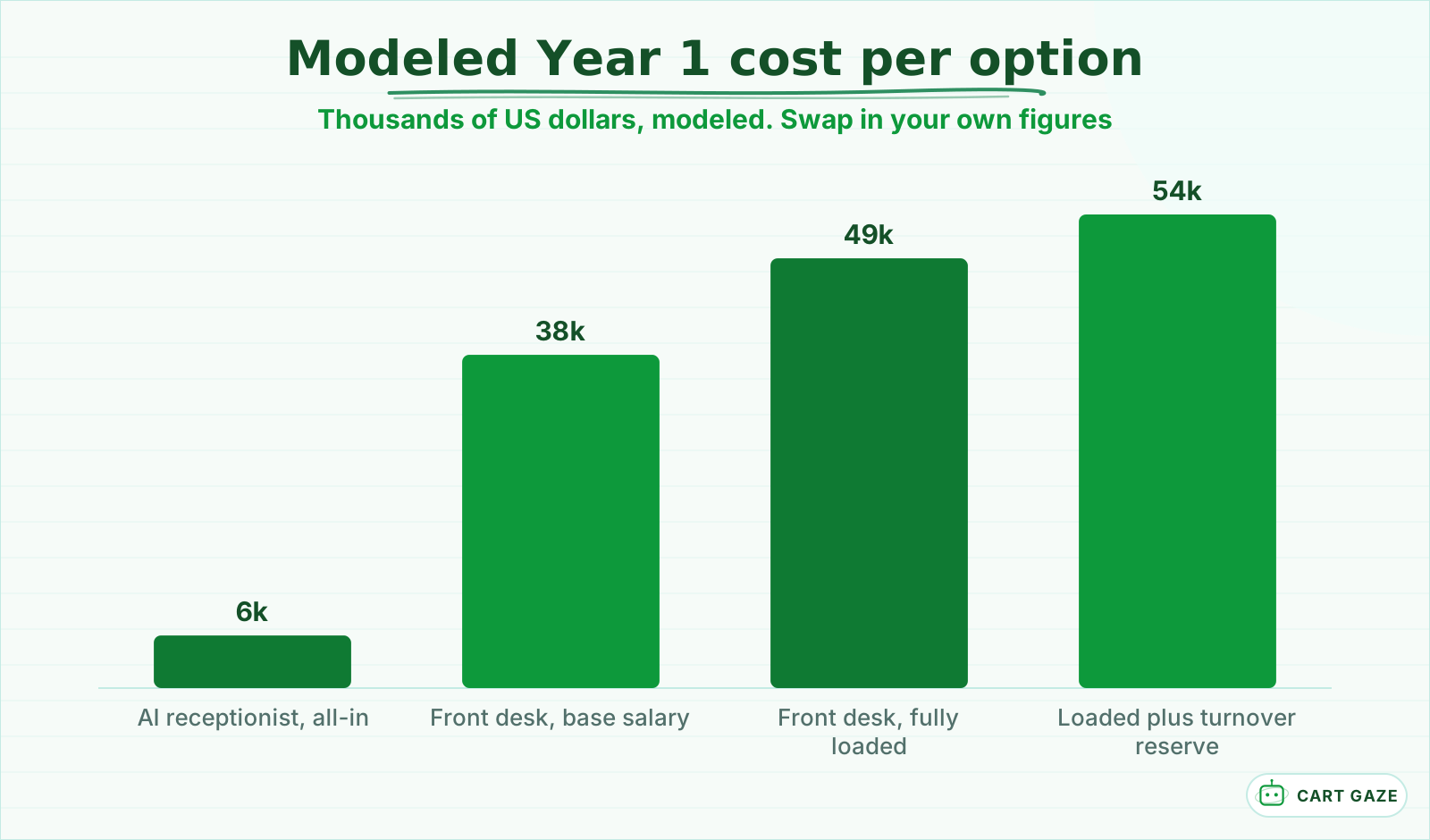 Modeled, in US dollar thousands. Swap in your own numbers.
Here is the math, labeled modeled so you can swap your own figures in. Take a base salary of $38,000. Load it at 1.3 times, the middle of the MIT range, and you reach about $49,000 a year, which is roughly $4,100 a month. Add a turnover reserve: a 35% annual turnover rate against a roughly $15,000 replacement cost sets aside about $5,000 a year, pushing the true annual cost near $54,000. One person still covers only about 40 hours a week, so nights, weekends, and the lunch rush stay open.
Now the AI side. At about $500 a month all in, a healthcare-ready AI receptionist costs roughly $6,000 a year and answers every hour of every day, which is 168 hours a week against 40. On a pure dollar-per-hour-covered basis it is not close. But the AI does not check anyone in at the counter, and it does not steady a frightened patient, which is exactly why the honest read is coverage of a different slice, not a headcount you erase. The dollars only matter next to the calls you are losing today, which is the leak we price in the real cost of missed calls.
What each one is actually good at
Split the work by what it demands, not by title. Routine, high-volume, and after-hours contact is a fit for automation. In-person presence, empathy, and messy judgment stay human. The best-run front desks in 2026 are not all-AI or all-human, they are a hybrid where the AI absorbs overflow and the person owns the room.
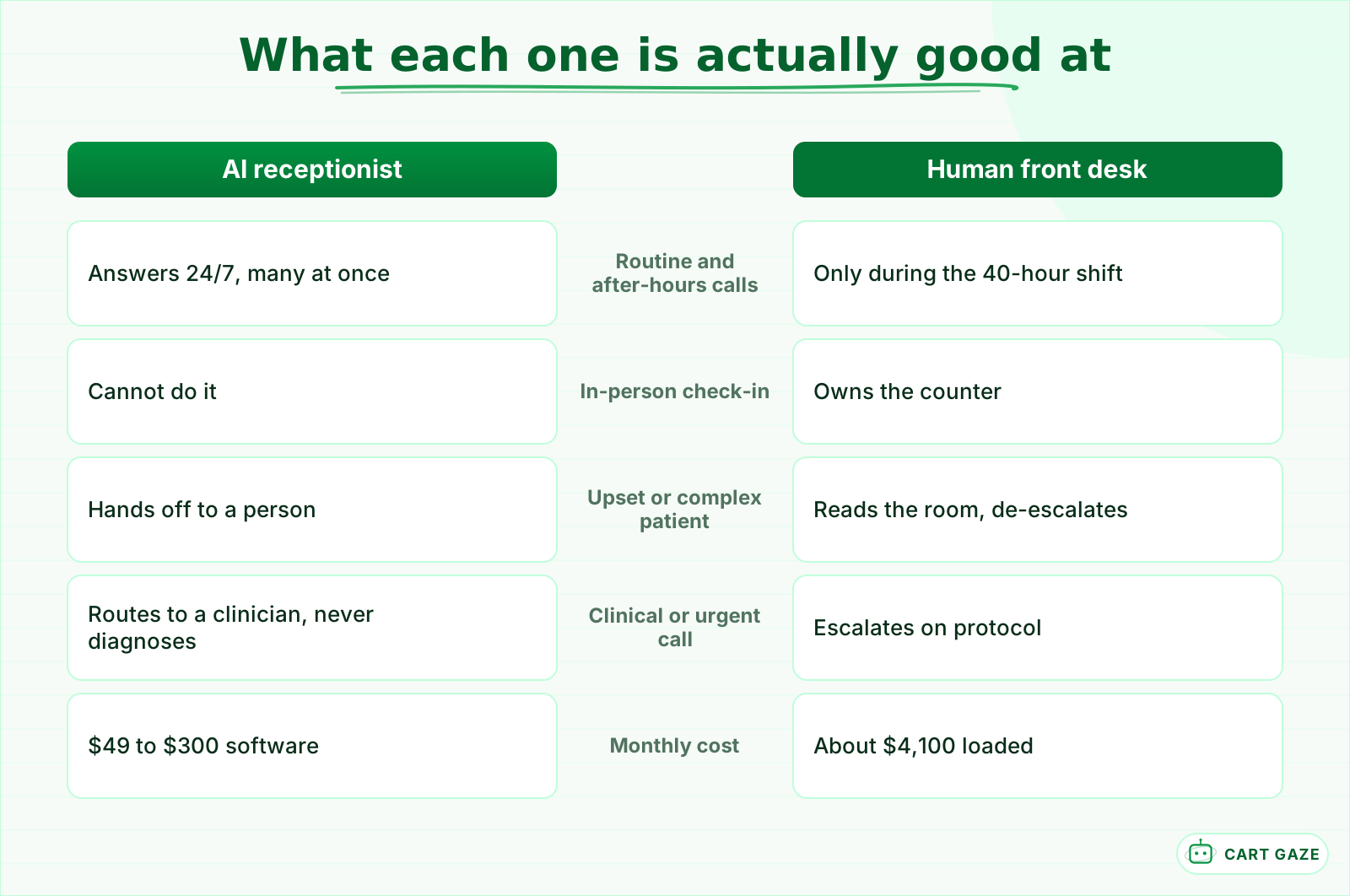 Hybrid, not either-or. Each covers the other weak spot.
An AI receptionist is strongest on work that is repetitive and time-sensitive. It answers on the first ring every time, handles several calls at once, books and reschedules around the clock, and never calls in sick. A human is strongest on everything that needs presence and read-the-room judgment: greeting a patient at the counter, calming someone who is scared or angry, untangling a coverage dispute, and catching the moment a "simple" question turns out to be a clinical one.
Run them together and each covers the other's weak spot. The AI takes the 8 p.m. booking and the third simultaneous call so your person is not buried, and the person takes the walk-in and the hard conversation the AI should never attempt. Neither one alone runs a front desk well, which is why the practices that get this right stop shopping for a winner and start dividing the work.
Where the AI must hand off to a human
One boundary is not negotiable in healthcare. An AI receptionist can recognize an urgent or clinical call, but it must never assess symptoms, give medical advice, or decide how sick someone is. Its safe job is recognition and redirection: name the call, then route it to a human or your on-call path, fast.
A patient describing chest pain, a parent describing an infant's fever, or anyone in real distress must reach a person, not a script. A safe configuration recognizes those triggers and escalates on the spot, paging your on-call clinician with a structured handoff: name, date of birth, callback number, and reason. The AI's role there is to route, never to reassure someone that they are fine.
Compliance sits on the same line. Any vendor that handles patient details is a business associate and must sign a Business Associate Agreement, and there is no such thing as a "HIPAA certified" product, only a configuration plus a BAA. If a page claims a certification, treat it as a marketing tell.
Hire, automate, or do both
You rarely face a clean either-or. Decide task by task: keep a human for in-person and judgment work, route clinical calls to a clinician, and let an AI receptionist cover the routine, after-hours, and overflow contact a single 40-hour hire cannot. Most practices land on both, sized to their real call mix.
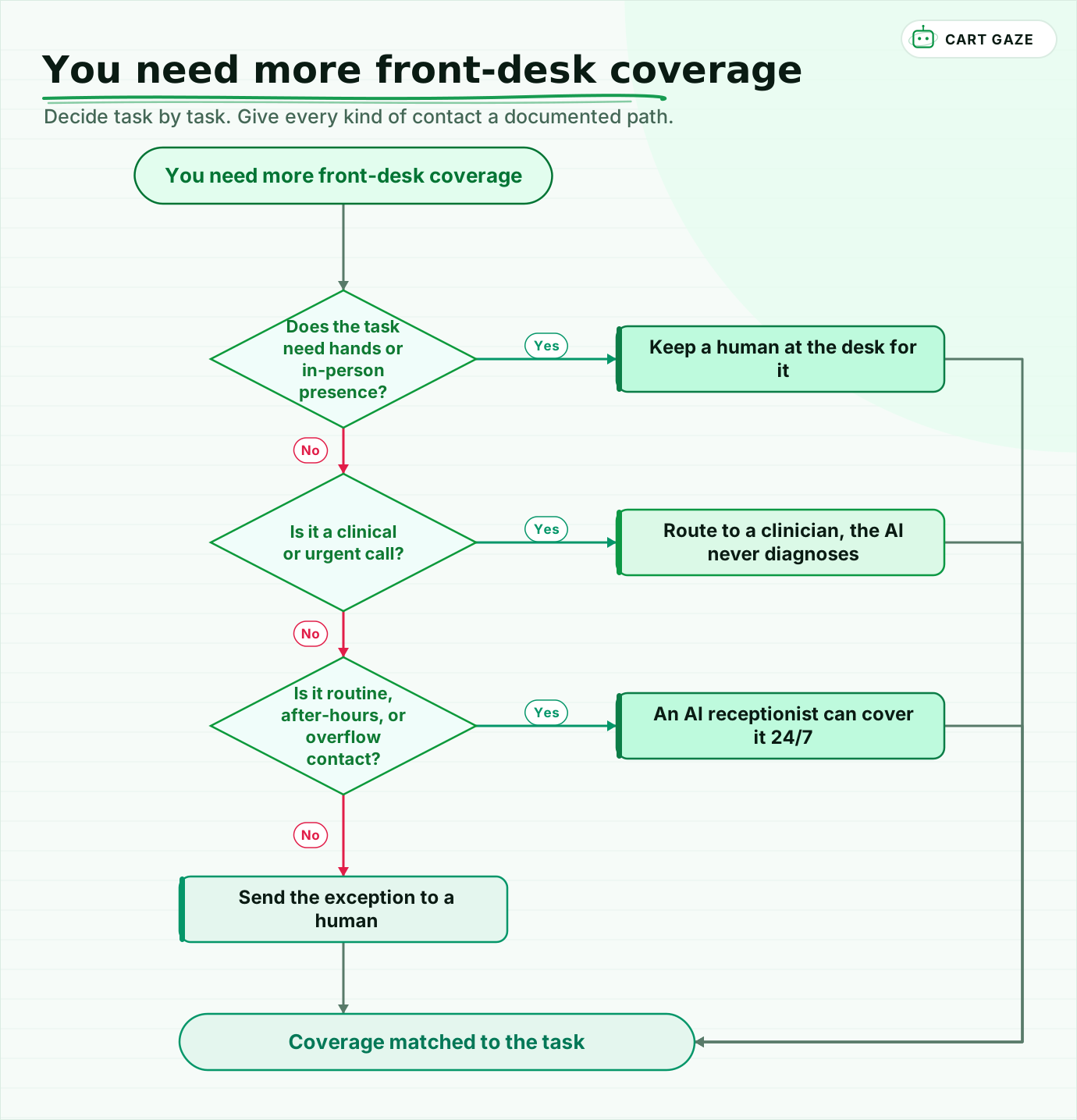 Decide task by task. Give every kind of contact a documented path.
Walk the flow once. A task that needs hands or presence stays with a person. A clinical or urgent call routes to a clinician, and the AI never diagnoses. Routine, after-hours, and overflow contact is where automation pays, because it is exactly the coverage a 40-hour hire structurally cannot give. Everything ambiguous goes to a human.
Start small and measure. Pilot the AI on one call type, say after-hours booking, keep your current front desk in place, and read the first month of transcripts and recaptured bookings in your own numbers before you touch any staffing. Someone else's "70% savings" slide is not your practice. If you want the size of your own front-desk gap measured before you spend a dollar on either option, the free Growth Leak Audit puts a number on it from your real call and booking data first.
Fair questions.
Is an AI receptionist cheaper than hiring a receptionist?
On dollars, usually yes: a loaded front-desk hire runs about $49,000 to $54,000 a year, while an all-in AI receptionist runs roughly $6,000. But they cover different work. The AI handles routine and after-hours calls 24/7 and cannot check patients in or handle complex, emotional cases, so the honest comparison is coverage, not a straight swap.
Can an AI receptionist fully replace a human receptionist?
No. An AI receptionist covers routine, high-volume, and after-hours contact, but it cannot greet a patient at the counter, calm someone who is upset, or untangle a complex insurance dispute. In healthcare it must also route clinical and urgent calls to a person and never diagnose. Most practices run a hybrid: AI for overflow, a human for judgment.
What does it really cost to hire a front-desk receptionist?
Start with a median wage near $37,230 a year (BLS, 2024), then add 25% to 40% for payroll taxes and benefits, which pushes the loaded cost to about $49,000. Budget for turnover too: front-desk roles leave at 30% to 40% a year, and replacing one runs roughly $15,000. One hire still covers only about 40 hours a week.
How much does an AI receptionist cost per month in 2026?
Entry software advertises about $49 to $300 a month, but a healthcare-ready, single-location setup with a signed BAA lands closer to $400 to $900 a month, plus a one-time setup fee of $0 to $2,500. Compare the tier you will actually run against a loaded hire, not the teaser price against a bare wage.
Is an AI receptionist HIPAA compliant?
HIPAA compliance is a configuration and contract question, not a product badge, and there is no such thing as a "HIPAA certified" receptionist. Any vendor handling patient details is a business associate and must sign a Business Associate Agreement. Confirm the BAA is in place, and ask what the system records, reads back, and deletes before it goes live.
Sources.
- [1]Receptionists: median pay and outlook (U.S. Bureau of Labor Statistics)
- [2]Front Desk Medical Receptionist salary, 2026 (Salary.com)
- [3]How much does an employee cost: fully loaded cost, taxes and benefits (Vena)
- [4]Can staff turnover continue to be tamed in medical practices into 2026 (MGMA)
- [5]Employee turnover rate benchmarks for small medical practices (FirstHR)
- [6]SHRM: the cost to replace an employee is 50 to 200% of salary
- [7]AI front desk vs human medical receptionists: costs and use cases 2026 (Freed)
- [8]AI receptionist pricing: complete cost guide 2026 (AgentZap)
- [9]AI receptionist cost: 2026 pricing guide (NextPhone)
Written by

Muhammad Qasim Hammad
Founder, Cart Gaze
Qasim builds AI receptionists and front-office automation for medical and dental practices at Cart Gaze. Posts here start from published sources and real call data, not vendor claims, and every number links back to where it came from.
Keep reading.
 Pricing & ROIAI Receptionist ROI: The Worked Math for a Medical Practice11 min read
 Pricing & ROIAI Receptionist Contracts: The Terms That Set Your Real Bill10 min read
 Pricing & ROIHow Much Does an AI Receptionist Cost a Medical Practice in 2026?11 min read
 Missed Calls & Front DeskFront Desk Call Metrics Every Practice Should Track in 202610 min read
 By Practice TypeAI Receptionist for Medical Weight Loss Clinics: GLP-1 Call Surge10 min read
 Missed Calls & Front DeskPrescription Refill Automation That Keeps Providers in Control10 min read